


You’re comparing two different stones. Quarries cut Belgian block into a regular rectangular sett with flat faces and angular edges, often tapered toward the top. Water and erosion round true cobblestone, so it stays irregular and has no standard size. That regular shape lets Belgian block lay in straight, even courses, while cobbles give you a rustic, bumpier surface. Once you see how each installs and wears, you’ll know which fits your driveway or walkway.
Key Takeaways
- Belgian block is quarried granite cut into regular rectangular units, while true cobblestone is naturally rounded by water and erosion.
- Belgian blocks have flat faces and angular edges, whereas cobblestones are irregular, rounded, and lack standard dimensions.
- Belgian blocks come in standard sizes, such as 4 × 4 × 4 cubes and 5 × 5 × 9 regulation blocks.
- Belgian block creates an orderly, level surface with even joints, while cobblestones produce a rustic, bumpier texture.
- Belgian blocks generally withstand traffic and weather better than rounded cobblestones, though installation quality strongly affects both.
What is the difference between belgium block and cobblestone
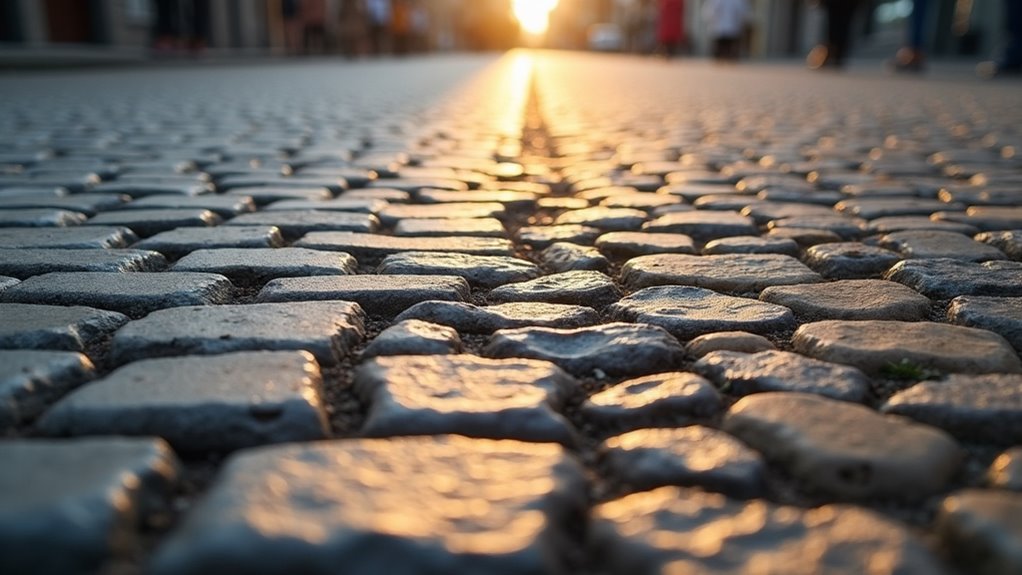
A Belgian block is quarried and cut or dressed into a regular, rectangular unit, also called a sett, and a true cobblestone is naturally rounded by water and erosion. The real difference comes down to shape and origin. A Belgian block has flat faces, angular edges, and sometimes a taper, with the top narrower than the base. A cobblestone keeps an irregular profile.
Color and rock type won’t help you compare belgian block vs cobblestone. Both can be granite, and belgian stone doesn’t have to come from Belgium. Portland’s blocks were Oregon and Washington basalt. People search “belgium block vs cobblestone” because the names blur, and suppliers may label cut pavers as cobblestones. Check specifications and photos to confirm whether you’re buying rounded or cut units.
How do belgian block and cobblestone compare on shape and size
Belgian blocks are cut to a regular shape with flat faces and angular edges in standard sizes, and cobblestones are rounded, irregular stones with no standard dimensions. Many Belgian blocks taper so the top is narrower than the base, a profile seen in Portland’s historic streets. Their regular form lets you lay them in straight, consistent courses with even joints. Rounded cobblestones sit unevenly and make less uniform contact with their neighbors.
| Block Format | Typical Size (inches) |
|---|---|
| Cube | 4 × 4 × 4 |
| Regulation | 5 × 5 × 9 |
| Larger sett | 6 × 9 × 5 |
Cobbles don’t come in standard dimensions. Their size and shape vary because water and erosion formed them. If you need predictable spacing for a driveway or path, choose blocks. If you want an irregular, traditional texture, choose cobbles, but check photos, since sellers often label cut pavers “cobblestone.”
What is true cobblestone and where does it come from
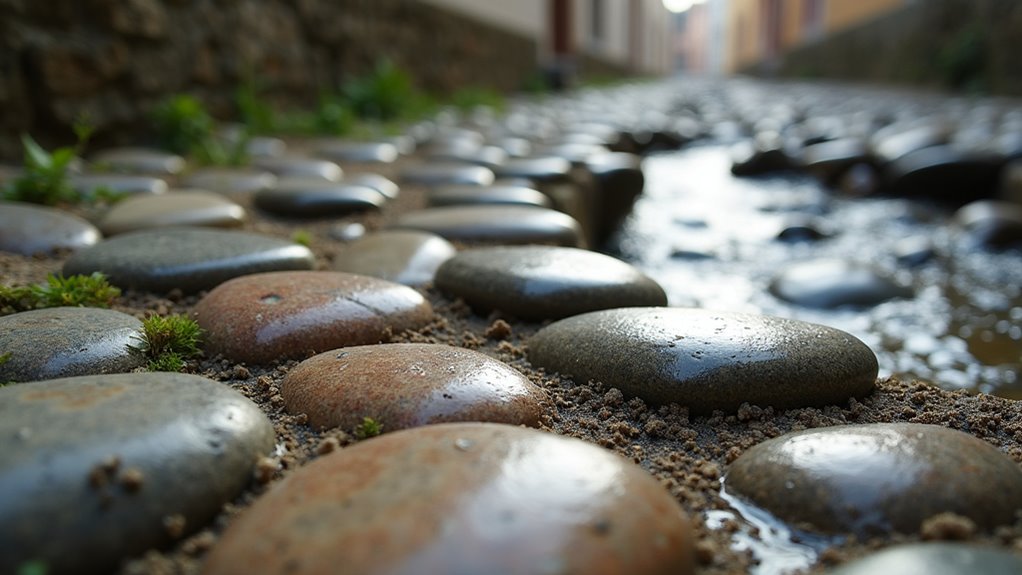
True cobblestone is a naturally rounded stone, shaped by water and erosion long before anyone used it for paving. You won’t find saw marks or dressed faces on a real cobble. Its smooth, irregular form comes from natural wear, not from a quarry cutter.
Belgian block differs in origin, since workers quarry and cut it into regular, angular units. Under the strict distinction, “cobblestone” means only these naturally rounded stones.
Cobbles keep their irregular profiles, so they don’t sit tightly against one another. You’ll get uneven contact and a more rustic, traditional look. Granite cobbles exist, but rock type doesn’t define a cobble. Shape and origin do. Check the photos and specifications as you shop, since many sellers label cut pavers “cobblestone.”
Why are the two names so often confused
The two names are confused mostly out of habit, since historic streets paved with stone get lumped together as “cobblestone streets,” even when they’re made of quarried, rectangular setts. Portland’s 1885-era basalt blocks, for example, are routinely called cobbles.
The stone trade doesn’t help. Suppliers often label cut, block-shaped pavers as “cobblestone,” and both products are sold as granite paving stones, so material alone won’t tell you which you’re getting. The name “Belgian” adds confusion, since it doesn’t mean the stone came from Belgium.
Ignore the label when ordering and check the specifications and photos. Flat faces and angular edges mean Belgian block. A naturally rounded, irregular shape means true cobblestone. If the shape isn’t clear, ask the supplier directly.
How does each one look once installed
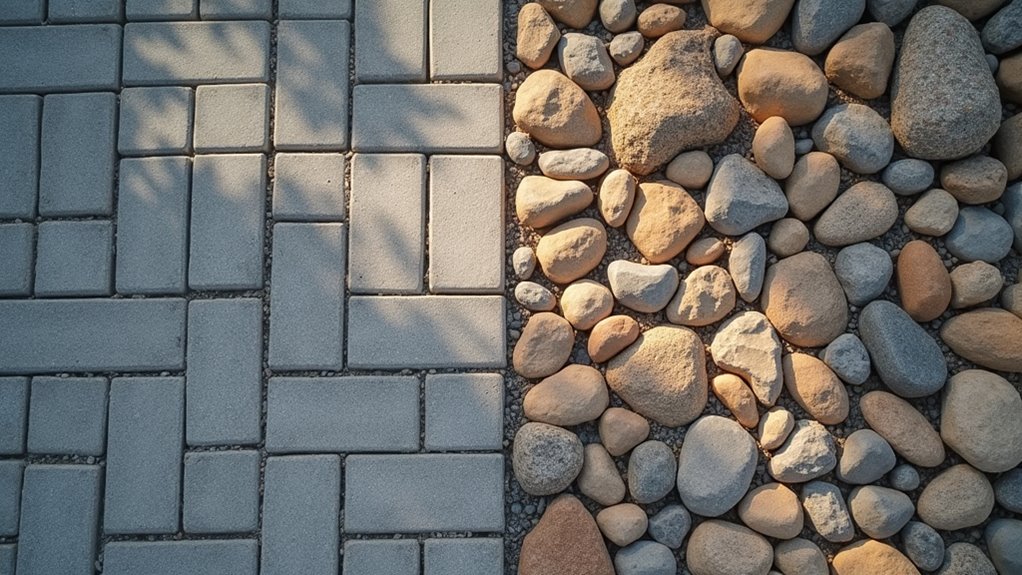
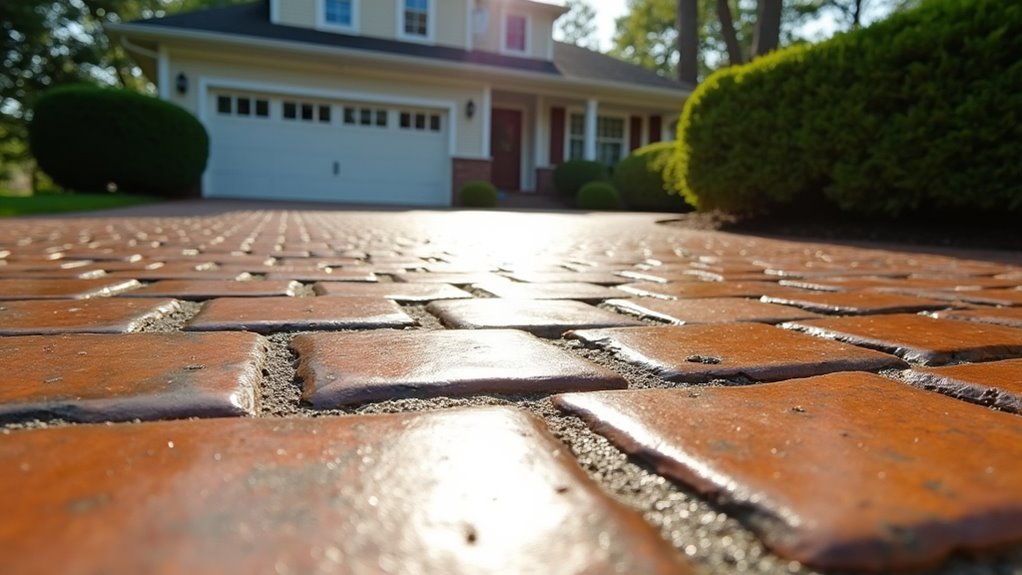
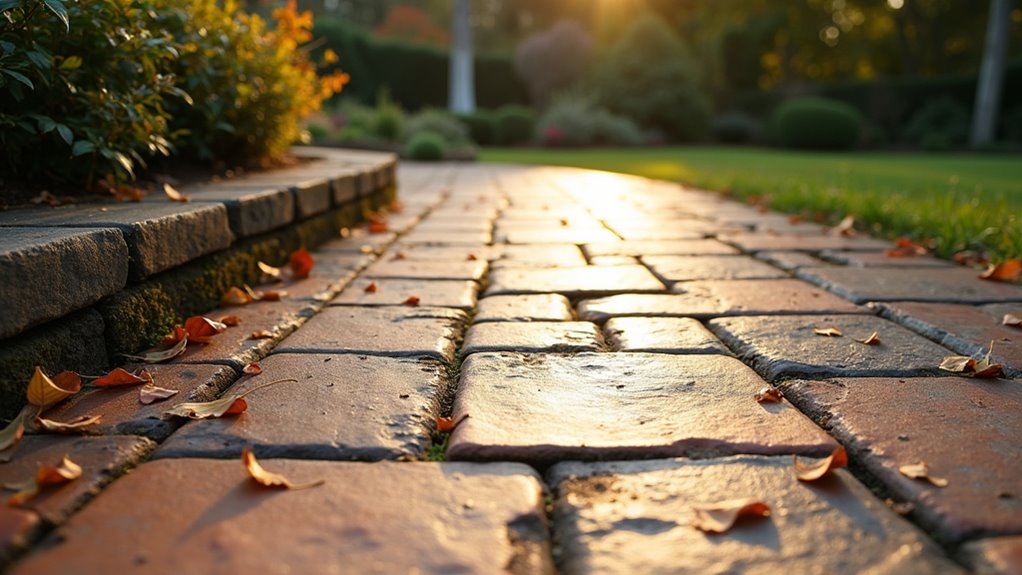
Installed Belgian blocks look orderly and structured, while cobblestones look rustic and textured. Belgian blocks have flat faces and angular edges, so you can lay them in straight, consistent courses with even joints. The finished surface reads as orderly whether you’re paving a driveway or edging a garden bed. Because many blocks taper, with a top narrower than the base, you’ll see slightly wider joints at the surface.
Cobblestones keep their naturally rounded, irregular shape. They don’t sit tightly against each other, so you get uneven contact points, varied joint widths, and a bumpier, more textured surface. The look is rustic and traditional rather than tailored.
If you’re buying online, check photos and specifications. Listings often call cut blocks “cobblestones,” so confirm whether they’re rounded or cut before ordering.
Which holds up better under traffic and weather
Belgian blocks hold up better under traffic and weather than rounded cobbles. Their flat faces and angular edges let each unit bear evenly against its neighbors, giving you a tighter, more stable surface. Rounded cobbles touch at fewer points, so contact between stones is less uniform and the surface is harder to keep level. That’s why cities like Portland relied on Belgian blocks as a primary street surface from about 1885 into the early 1900s, valuing their durability and comparatively regular roadbed.
Installation decides much of the outcome for either stone. Your base and joint construction, along with stone dimensions, determine how level and stable the paving stays over time. Specify a well-prepared, compacted base and confirm each unit’s shape before you place orders.
Which should you choose for your driveway or walkway
Choose Belgian block for a driveway or walkway that needs a level, orderly surface that’s easy to lay in consistent courses. Its flat faces and angular edges create tight, uniform joints, so it suits driveways, courtyards, and paths where you’ll walk, roll bins, or park often. Choose rounded cobbles if you prefer an irregular, traditional look, but expect less uniform contact between stones and a bumpier finish. Either material works well for borders, edging, garden beds, and tree wells.
Check specifications and photos before you buy, since sellers often label cut blocks as “cobblestone.” Confirm the dimensions too, which range from 4 × 4 × 4-inch cubes to 5 × 5 × 9-inch regulation blocks. Whatever you choose, build a solid base and fill the joints properly, because they determine how level and stable your surface stays.
Add a Durable Belgian Block Finish to Your Property
VF Paving provides Belgian block installation, driveway paving, custom edging, walkways, patios, and other residential paving services across Connecticut. Belgian blocks can create a defined border around a driveway, walkway, patio, or landscaped area while adding a durable natural-stone finish. Call (203) 624-2449 to discuss your project and request a free estimate.
Frequently Asked Questions
Do Belgian Blocks Actually Have to Come From Belgium?
No, you don’t need Belgian stone for a true Belgian block. The name describes a quarried, cut paving block with flat faces and angular edges, not its origin. Portland’s historic blocks, for example, were basalt quarried in Oregon and Washington. You’ll also find granite and other hard stones sold under the name. When you’re specifying, check the shape, dimensions, and stone type rather than relying on the label alone.
When Were Belgian Blocks First Used for Paving in the United States?
Belgian blocks first showed up on U.S. streets around 1850, when cities wanted durable paving that beat mud. You’ll find Portland used them as a primary street surface from about 1885 into the early 1900s, until asphalt took over. Their flat faces and angular edges let crews lay consistent courses, and they gave horse hooves better grip on steep grades than smoother surfaces. You’ll still see them reused decoratively.
Can Belgian Blocks or Cobblestones Be Used for Garden Beds and Tree Wells?
Yes, you can use either stone for garden beds and tree wells; product references list both applications. Belgian blocks give you flat faces and angular edges, so you’ll set tighter, more consistent borders. Rounded cobbles create a more irregular, traditional look. Since listings often label cut pavers “cobblestone,” check specifications and photos before you buy. Your base, joints, and stone dimensions determine how stable and level your finished edging stays.
Why Were Stone Setts Preferred on Steep Streets With Horse Traffic?
Stone setts gave horses better footing than smooth surfaces, and on a steep grade you’d need every bit of it. Each block’s edges and joints between them give hooves something to catch, so a loaded team doesn’t slide when climbing or braking downhill. You’d get durability too: quarried setts stand up to iron-shod hooves and wheels, and their regular shape lets you lay a more even, stable roadbed than rounded cobbles.
How Can You Tell if a “Cobblestone” Product Listing Means Cut Blocks?
Check the specifications and photos before you buy. If you see flat faces, angular edges, and listed dimensions like 4 × 4 × 4 or 5 × 5 × 9 inches, you’re looking at cut blocks, or setts. True cobbles look rounded and irregular. Don’t rely on “granite” to tell you, since both forms come in granite. Also look for words like “quarried,” “dressed,” or “tapered,” which signal a cut profile.