



Electric systems suit small areas and retrofits. They heat faster, use simpler equipment, and cost $3,200 to $5,800 upfront, before excavation and electrical upgrades. Hydronic systems cost $4,200 to $8,700 for equipment, but you’ll pay less to run them. On a 1,000-square-foot driveway, expect $120 to $250 per winter versus electric’s $250 to $600. That’s why hydronic delivers better long-term value on large, new driveway builds. Below, you’ll see how utility rates, snowfall, and controls shape which system’s numbers work best for you.
Key Takeaways
- Electric systems suit small areas or retrofits, while hydronic systems offer better long-term value for large new driveway builds.
- Electric upfront costs run $3,200 to $5,800, while hydronic equipment costs $4,200 to $8,700, both before excavation.
- For a 1,000-square-foot driveway, electric costs $250 to $600 per winter versus $120 to $250 for hydronic.
- Electric heats faster using resistance cables, while hydronic responds slower by pumping heated fluid through buried PEX tubing.
- Hydronic boilers can run on gas, propane, oil, electricity, wood, or solar, while electric systems rely solely on electricity.
Should you choose an electric or hydronic heated driveway

Choose electric if you’re heating a small area or retrofitting, and choose hydronic if you’re building a large new driveway. Electric is often the best heated driveway system for smaller or retrofit projects. It warms up faster, uses simpler equipment, and costs about $3,200 to $5,800 before excavation and electrical upgrades. Expect $250 to $600 per winter to operate a 1,000-square-foot driveway.
For a large new driveway, a heated driveway boiler system may serve you better. Hydronic equipment runs about $4,200 to $8,700, but one guide estimates $120 to $250 per winter. Fuel prices and boiler efficiency also matter. You can also connect it to garage or mudroom radiant zones. For most homeowners, the choice comes down to three variables: heated area, local energy prices, and installation conditions. Compare your utility rates and service capacity before choosing between heated driveway options, since those factors often decide long-term value.
How do electric and hydronic systems compare
Electric systems heat the driveway directly and respond faster, while hydronic systems heat fluid in a boiler, respond more slowly, and offer broader fuel flexibility. A heated driveway electric system uses resistance cables or mats that produce heat directly, typically at 36 to 50 watts per square foot. A hydronic system uses a boiler to warm water-and-antifreeze fluid, which a pump circulates through buried PEX tubing loops.
| Electric | Hydronic |
|---|---|
| Cables heat the slab directly; warm-up is fast | Boiler-heated fluid flows through tubing; response is slower |
| Runs only on electricity | Uses gas, propane, oil, electricity, wood, or solar thermal |
Both types of heated driveways perform according to sizing, weather, and automatic or manual control settings. Electric suits you if quick response matters, and hydronic gives you broader fuel flexibility.
How does an electric mat system heat the surface
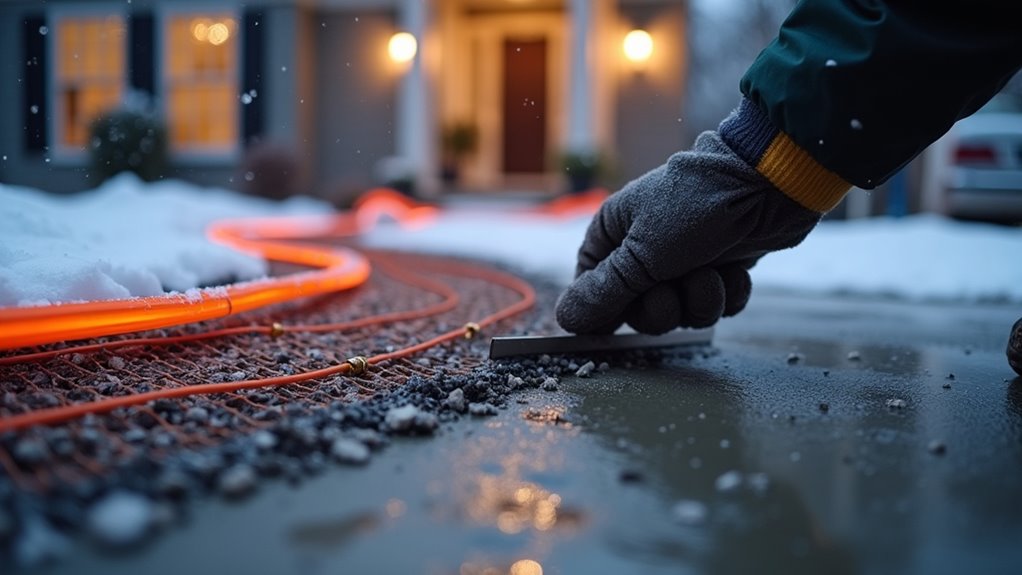
An electric mat system heats the surface by running electrical current through resistance cables or mats beneath the driveway, which convert that current directly into heat, so there’s no boiler, pump, or circulating fluid between the power source and the slab. Heat moves upward through the concrete, asphalt, or pavers until the surface rises above freezing and melts snow and ice. Because the elements generate heat in place, you’ll typically see faster warm-up than you’d get from a hydronic system.
Most snow-melting designs target roughly 36 to 50 watts per square foot, though your site’s exposure, climate, and surface material shift that requirement. You can run the system manually or pair it with automatic snow-and-moisture sensors that start heating when conditions warrant. Depending on total system load, you may also need a dedicated circuit or an electrical-service upgrade.
How does a hydronic boiler system work
A hydronic system works by heating a water-and-antifreeze fluid at a central source, typically a boiler, and using a pump to circulate it through PEX tubing buried beneath the driveway. The warm fluid transfers heat into the surface, melting snow and ice, then returns to the boiler for reheating in a closed loop. Unlike resistance cables, it doesn’t generate heat inside the slab.
You can fuel the boiler with natural gas, propane, electricity, oil, wood, or solar thermal, depending on your equipment. Controls, whether manual or automatic snow-and-moisture sensors, tell the system when to run. Because the fluid and slab take time to warm, you’ll get a slower response than with electric cables, so you may need anticipatory or continuous operation during some winter storms.
How do running costs differ between them
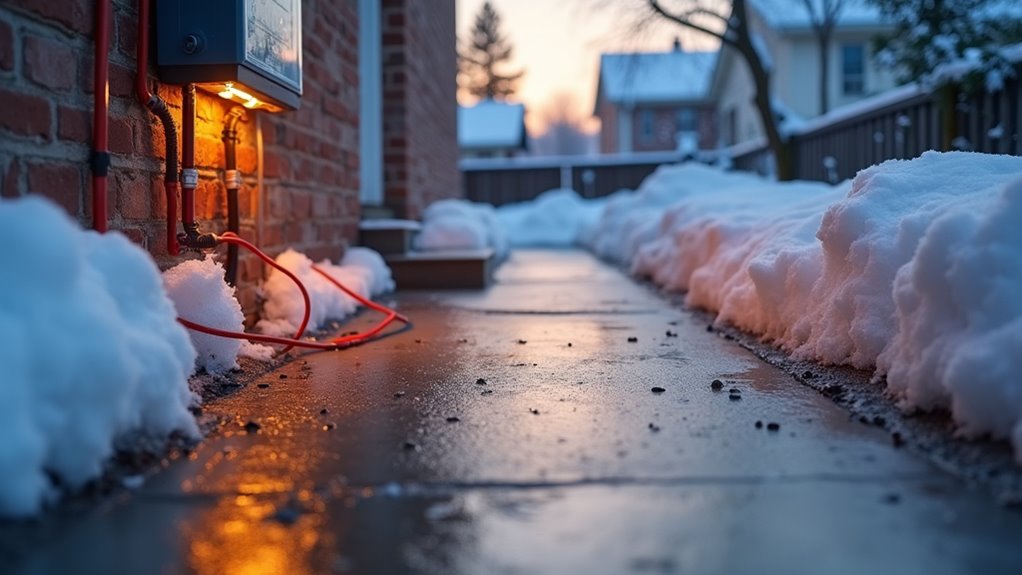
Electric systems can cost more to run than hydronic systems. One cost guide estimates $250 to $600 per winter for electric systems and $120 to $250 for hydronic systems under its assumptions. For a 1,000-square-foot driveway, you can expect seasonal running costs of roughly $120 to $600, depending on system type, snowfall, and utility prices. Your actual bills, however, depend on local rates and runtime.
If you pay high electricity rates, an electric system can cost more to operate. With hydronic, your costs track fuel prices and boiler efficiency. Hydronic may lower your operating costs over time, but that advantage isn’t guaranteed across every climate, fuel price, and system design.
Four major factors drive energy use: snowfall, heated area, control settings, and annual operating hours. Heating only selected zones and tuning sensor settings can cut runtime and reduce seasonal costs.
Which system suits which driveway size
Electric systems usually suit small areas, such as tire tracks, a short apron, or a walkway, and hydronic systems often deliver better long-term value for large driveways. Electric costs less upfront, with one estimate of $3,200 to $5,800 before excavation and electrical upgrades. It also avoids the need to buy a boiler and pumps. Compare these factors:
- Small areas: Electric’s simpler equipment and quicker response suit compact zones.
- Large areas: Hydronic’s potentially lower running costs offset its higher upfront cost.
- Operating costs: For 1,000 square feet, one guide estimates $250 to $600 per winter for electric and $120 to $250 for hydronic.
- Electrical capacity: Electric loads may require a dedicated circuit or service upgrade.
- New construction: Installing during a new pour reduces retrofit costs.
Which heated driveway system is better for you
Electric systems are generally better for small areas, faster response needs, and lower upfront budgets, and hydronic systems are better for large driveways, new construction, and projects where you value fuel flexibility and potentially lower operating costs. You’ll typically pay $3,200 to $5,800 for electric equipment, though you may need a dedicated circuit or electrical-service upgrade. Expect seasonal running costs of $250 to $600 for a 1,000-square-foot driveway, depending on your electricity rates.
Hydronic equipment often runs $4,200 to $8,700 before excavation, but one guide estimates winter operating costs at $120 to $250. You’ll also need to maintain the boiler, pump, and antifreeze circuit, and you can potentially link radiant zones like a garage.
To decide, compare your local electricity and fuel prices, heated area, snowfall, and installation conditions. Choosing zoned heating and automatic sensors can further reduce your energy demand.
Choose the Right Pavement for Your Driveway Plan
Whichever heating system you consider, surface material and driveway construction are important parts of the overall project. V&F Paving installs residential asphalt, concrete, and paver driveways built for Connecticut conditions. Call (203) 624-2449 or contact V&F Paving to discuss the paving side of your project.
Frequently Asked Questions
Can a Heated Driveway System Be Installed Under Pavers or Asphalt?
Yes, you can install either system under pavers or asphalt, though your surface choice affects cost; installed projects typically run $12 to $28 per square foot. You’ll embed electric cables or hydronic PEX tubing beneath the surface, so plan for difficult repair access. If you’re building a new driveway, you’ll avoid removal costs. Electric systems often suit smaller retrofits, while hydronic systems require more extensive subsurface work plus a dedicated boiler setup.
How Long Does a Heated Driveway System Typically Last?
Your embedded cables or PEX tubing sit beneath the surface, so repairs are difficult for either system. Electric systems have fewer mechanical parts to fail. Hydronic systems depend on the boiler, pump, and fluid circuit, so you’ll need to check antifreeze levels regularly and service the boiler every 1 to 2 years to protect performance and longevity.
Do Automatic Snow Sensors Add Much to Installation Costs?
You’re paying for convenience: sensors start heating when conditions warrant, so you don’t need manual activation. They don’t guarantee savings, though. Poor settings or long runtimes increase energy use. To control seasonal costs, you’ll want to calibrate sensors carefully and heat only selected zones, reducing both the heated area and overall energy demand.
Can a Heated Driveway Increase My Home’s Resale Value?
What you can document: installed costs run $12 to $28 per square foot, and seasonal operating costs for a 1,000-square-foot driveway range from $120 to $600. Buyers may weigh those costs against convenience. If you’re installing during new construction, you’ll avoid surface-replacement costs, lowering total project cost. Consult a local appraiser for market-specific figures before you commit funds.
What Happens if a Heating Cable or Tube Gets Damaged?
If a cable or tube gets damaged, you’ll face a difficult repair, because both systems embed their heating elements beneath the driveway surface. Your crew may need to cut into and replace sections of the surface to reach the fault. Electric systems have fewer mechanical parts, but you should inspect controls and heating elements. Hydronic systems need you to check antifreeze-fluid levels regularly and service the boiler every 1 to 2 years.