

To repair your blacktop driveway, you’ll start by pressure washing at 1,200, 2,000 PSI to remove all contaminants and expose the aggregate surface. Next, you’ll fill cracks using cold-pour fillers for openings under 1/4 inch or hot-pour products for larger structural gaps, ensuring you’ve inserted backer rods where needed. Finally, you’ll apply two perpendicular coats of professional-grade sealant between 50, 90°F, which can extend your driveway’s lifespan by up to 50%. The sections below detail each critical intervention.
Clean and Prepare the Driveway Surface for Repair
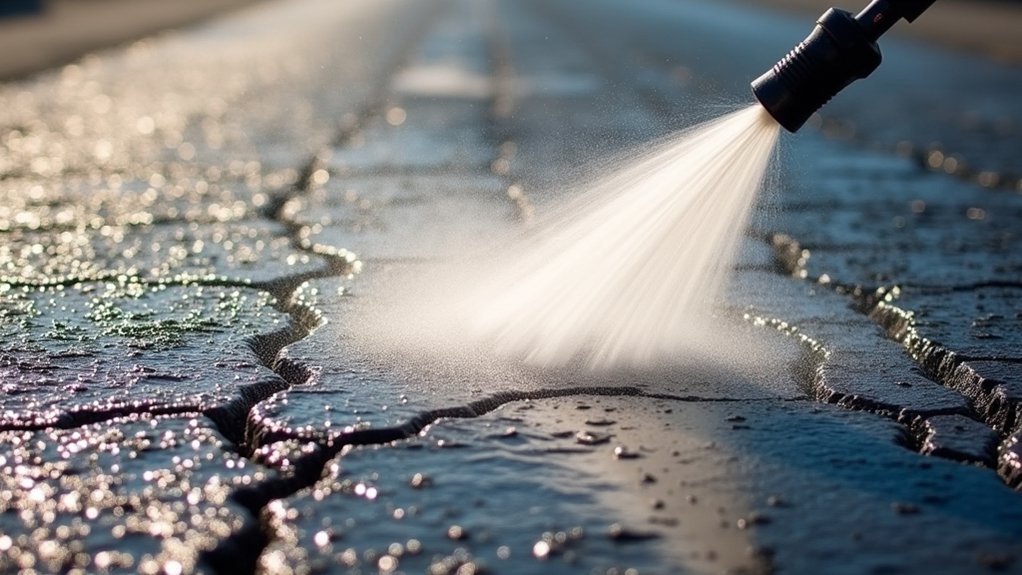
Before applying any crack filler or sealant, you must eliminate all surface contaminants that compromise bonding integrity. Start by sweeping thoroughly with a hard bristle broom to remove leaves, dirt, and debris. Use a weed scraper around edges and cracks to extract vegetation by the roots, which will minimize future problems. Treat oil, transmission fluid, and tire marks with asphalt-safe degreasers, let them soak 10, 15 minutes before scrubbing vigorously with a stiff-bristled brush. Clean cracks using wire brushes or flathead screwdrivers, then vacuum out loosened material. Wash the entire surface with a pressure washer using a wide-angle tip, avoiding prolonged spray that causes erosion. When power washing, maintain a pressure range of 1,200 to 2,000 PSI to clean effectively without damaging the asphalt surface. After washing, use a leaf blower to remove fine particles like dust and sand that can prevent even bonding and create a splotchy finish. Allow 24, 48 hours for complete drying to maximize sealing effectiveness, as moisture inhibits proper adhesion. This thorough cleaning process extends the lifespan of your asphalt driveway by ensuring repairs bond properly and perform as intended.
Fill Cracks and Patch Damaged Areas
Once your driveway surface is clean and fully dry, evaluate each crack’s width, depth, and structural characteristics to determine the correct repair method. Cracks under 1/4 inch accommodate cold-pour fillers, while medium cracks (1/4, 1 inch) require hot-pour products for durability. Choose ideal filler materials based on crack type: rubberized asphalt-emulsion for narrow openings, and epoxy-based solutions to address structural cracks properly. Deep damage needs angular gravel base support before filler application; insert backer rods in parallel-sided cracks to control depth. Apply filler slightly above surface level, then smooth with a trowel or squeegee. Compact repairs thoroughly and distribute sand over fresh compound to strengthen adhesion. Water seepage and freeze-thaw cycles are the primary causes of asphalt driveway cracks, making timely repairs essential. Quality crack fillers provide protection from UV rays, water damage, and extreme weather conditions that can compromise your driveway’s integrity. Allow complete curing, ranging from hours to days, before traffic exposure to prevent premature failure and water intrusion. Consider sealing the repaired area every 1-3 years to maintain protection and prevent future deterioration.
Apply Sealcoat for Long-Term Protection
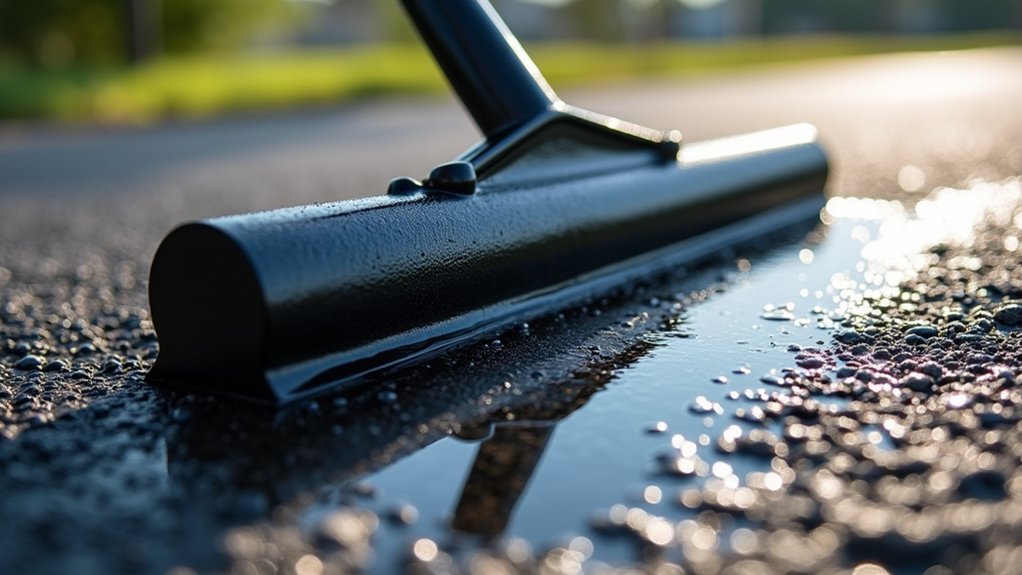
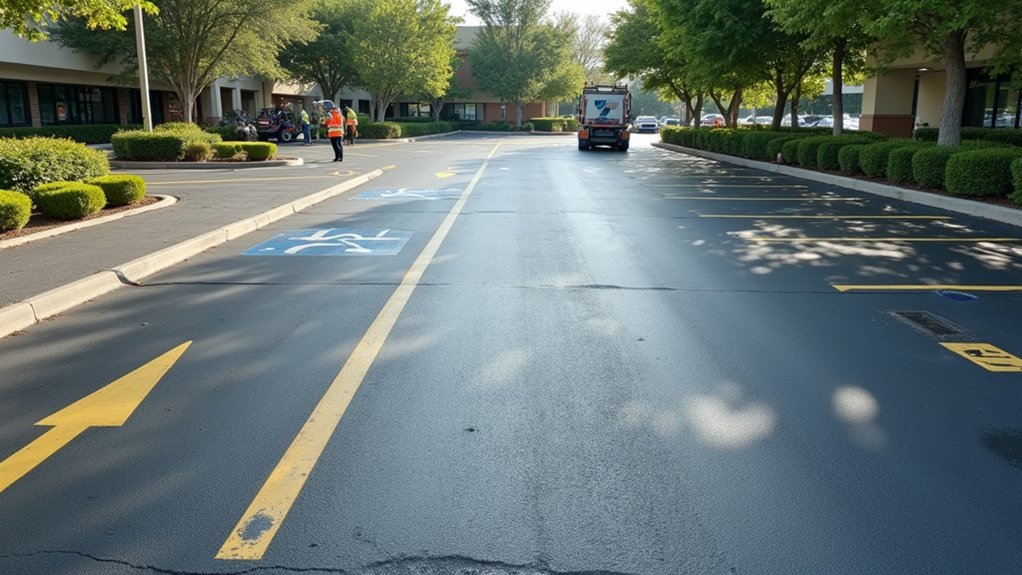
Sealcoating represents the final protective barrier that shields your repaired blacktop from environmental degradation and extends its functional lifespan by up to 50%. Begin with thorough surface preparation, power wash to remove contaminants, then allow complete drying. Apply sealant when temperatures range between 50, 90°F with no precipitation forecasted for 24 hours. Using proper application technique, pour sealer in 6-inch strips and spread with a squeegee, working in overlapping sections from edges to center. Two thin coats applied perpendicular to each other provide superior coverage compared to single thick applications. The sealant also fills small cracks and imperfections during application, creating a smoother, more uniform surface. Professionally applied sealcoating ensures proper adhesion and durability through expert surface preparation and application techniques. Maintain ideal curing conditions by closing the driveway to traffic for 24, 48 hours. This protective layer blocks UV rays, prevents water infiltration, and resists oil penetration. Reapply every 2, 5 years based on traffic patterns and climate exposure.
Frequently Asked Questions
How Long Does a Well-Maintained Asphalt Driveway Typically Last?
A well-maintained asphalt driveway typically lasts 20, 25 years, with exceptional care extending it to 30+ years. Driveway lifespan factors include sealcoating every 2, 3 years, prompt crack repair, and proper drainage systems. Asphalt durability estimates depend on base preparation quality, climate stress from freeze-thaw cycles, and layer thickness, 3-inch applications outperform thinner overlays. You’ll achieve ideal longevity through professional installation, regular surface cleaning, and avoiding concentrated heavy loads on repetitive areas.
When Should I Consider Full Replacement Instead of Repairs?
You should consider full replacement when you’re facing major structural issues like base failure or persistent drainage problems. If your driveway’s over 20 years old with extensive alligator cracking, significant cracks and potholes wider than 1/4 inch, or you’ve completed multiple repairs in recent years, replacement becomes more cost-effective. When the subgrade’s unstable or surface integrity’s compromised by widespread deterioration, investing in full replacement provides better long-term value than repeated repairs.
What Weather Conditions Are Best for Driveway Repairs?
You’ll achieve best results when air and ground temperatures fall within the ideal temperature range of 55°F, 90°F, with 70°F as your starting baseline. Favorable precipitation levels mean completely dry conditions, no rain forecasted 24 hours before or after application. You should schedule repairs during late spring through early fall when warm weather keeps asphalt pliable for proper compaction. Avoid moisture on surfaces entirely, as it prevents adhesion and compromises curing, leading to premature failure.
Is Hot Mix Asphalt Better Than Cold Patch Material?
Hot mix asphalt outperforms cold patch for permanent applications due to significant longevity advantages; it bonds structurally with existing pavement, withstands freeze-thaw cycles, and lasts years versus weeks. You’ll achieve superior durability in high-traffic areas. However, environmental considerations matter: hot mix requires heating to 275, 300°F, consuming more energy, while cold patch offers lower emissions and can be applied in any weather without thermal processing, making it more sustainable for temporary repairs.
Should I Hire Professionals or Do Driveway Repairs Myself?
You should handle minor cracks under ¼ inch and basic sealcoating options yourself, but hire professionals for structural damage, drainage issues, or extensive deterioration. Professional assessments identify underlying sub-base problems that DIY repairs can’t address. Professionals provide high-grade materials, proper compaction equipment, and warranty protection. While DIY costs $150, $200, failed repairs requiring professional remediation become more expensive long-term. You’ll achieve better durability and extended pavement life with professional work on anything beyond surface-level maintenance.