

Delaying parking lot maintenance costs you up to 10 times the original repair. That $200 crack repair escalates into $3,000 in repairs—or a $30,000 full replacement. Deferred maintenance compounds at roughly 7% annually, cutting your pavement’s usable life from over 20 years to under 10. Water’s the enemy; once it breaches the surface, base failure follows. You’ll also face liability and compliance exposure. Understanding how these costs stack up helps you protect your investment.
Key Takeaways
- Deferred maintenance compounds deterioration at roughly 7% annually, ultimately costing up to 10 times the original repair.
- Water infiltrates untreated cracks, weakens the base layer, and forces full replacement as the only remaining option.
- Neglect shortens pavement lifespan from over 20 years to under 10, triggering premature capital expenditures.
- Costs escalate from $2–$5 per square foot to $10–$12-plus, with a $200 crack becoming $30,000.
- Surface defects raise slip-and-fall liability, risk denied insurance coverage, ADA penalties, and drive away customers.
What are the hidden costs of delaying parking lot maintenance
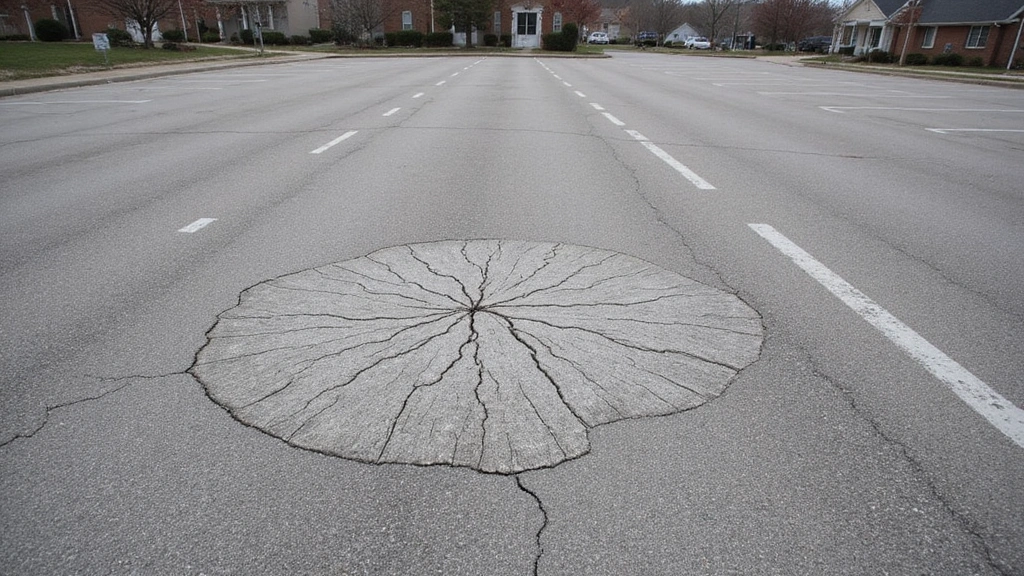
The hidden costs of delaying parking lot maintenance include compounding deterioration, liability exposure, and lost property value. Deferred pavement maintenance compounds at roughly 7% annually, and neglected parking lots ultimately cost up to 10 times the original repair. A $200 crack repair can escalate into $3,000 in repairs or a $30,000 full replacement once asphalt deterioration reaches the base layer. Beyond direct costs, you’re exposed to slip-and-fall liability that can exceed a decade of proactive maintenance, ADA compliance penalties from faded striping, and property value reductions of 20% or more. Repair rates jump from $2 to $5 per square foot to over $10 to $12 once structural damage develops. Acting early protects your budget predictability, extends pavement lifespan past 20 years, and preserves your asset’s appraised value.
How do small cracks grow into major repairs
Small cracks grow into major repairs through a predictable failure chain that starts the moment water finds a way in. Once water penetrates the surface, it reaches the base layer, causing damage to compound by an order of magnitude within two seasons. This pavement deterioration follows a consistent progression that quickly multiplies your costs:
Water is the enemy. The moment it breaches the surface, your repair costs start multiplying by the season.
- Cracks form and let water infiltrate the surface
- Water penetration reaches and weakens the base layer
- Base failure destabilizes the structure beneath
- Full replacement becomes the only remaining option
The cost of delaying pavement maintenance shows here: a $200 crack repair escalates into $3,000 in repairs or a $30,000 replacement. You’ll watch prices jump from $2–$5 per square foot to over $10–$12 once structural damage develops.
How does deferred pavement maintenance shorten lifespan
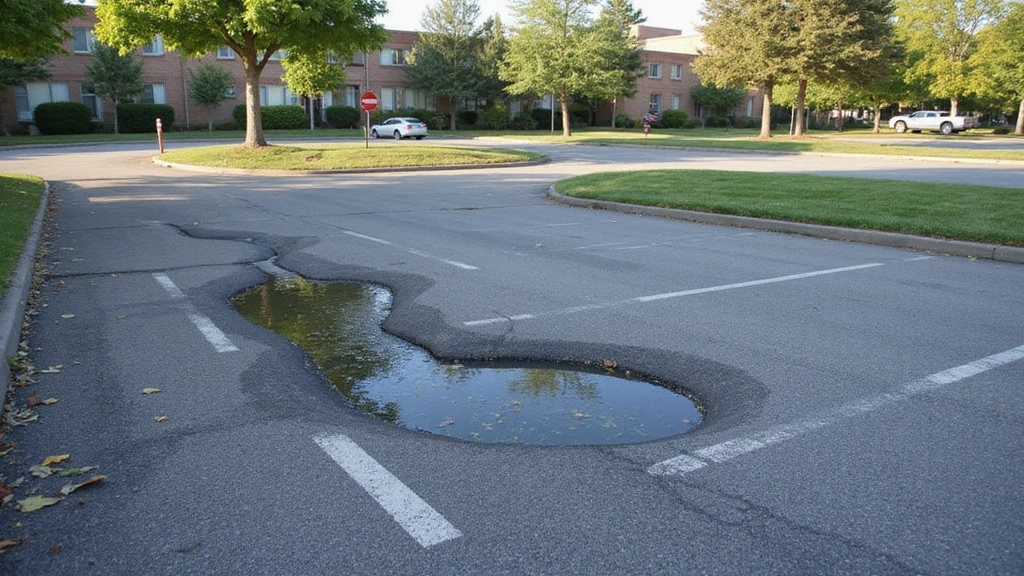
Deferred pavement maintenance slashes years off your pavement’s usable life, cutting it from over 20 years to under 10 and forcing premature capital expenditures you hadn’t budgeted for. That same failure chain doesn’t just multiply repair costs. Here’s the mechanism: water penetrates untreated cracks, reaches the base layer, and compounds damage by an order of magnitude within just two seasons. Once base failure sets in, you’re no longer maintaining, you’re reconstructing. That’s the difference between $2–$5 per square foot and $10–$12-plus once structural damage develops underneath.
The ROI math is straightforward. Preventive sealcoating and crack repair protect your original 20-year investment. Skip them, and you’ll replace the entire lot in half the time, doubling your lifecycle costs unnecessarily.
How do repair costs escalate over time
Repair costs escalate through a predictable failure chain, with each stage multiplying your cost by an order of magnitude. Because deferred maintenance compounds at roughly 7% annually, that $200 crack you ignore today doesn’t stay a $200 problem. Cracks let water reach the base layer, base failure sets in, and full replacement becomes your only option.
| Stage of Neglect | Your Cost |
|---|---|
| Initial crack repair | $200 |
| Deferred surface repairs | $3,000 |
| Structural damage sets in | 300–500% increase |
| Cost per square foot jumps | $10–$12 |
| Full replacement | $30,000 |
That’s a 500% to 1,000% difference, not the modest 20–50% you’d expect. Acting early keeps repairs at $2–$5 per square foot and protects your budget predictability. Delay converts planned expenses into emergency capital drains. Well planned practices for pavement maintenance can significantly extend the lifespan of your investment.
How do neglected parking lots raise your liability
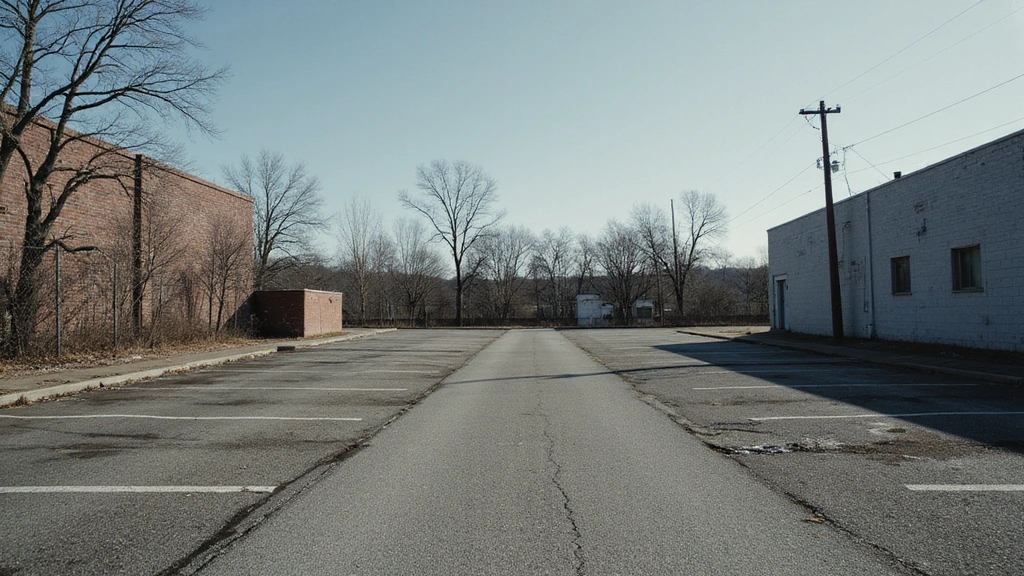
Neglected parking lots make you liable for every injury and vehicle damage claim that surface defects cause. A single slip-and-fall claim typically exceeds the cost of a decade of proactive maintenance, even when you successfully defend it. Worse, visibly neglected surfaces undermine your legal defense and expose you to serious injury judgments. Implementing effective commercial pavement protection strategies can significantly reduce long-term maintenance costs and liability risks. By proactively addressing surface issues, property owners can enhance safety and improve the overall aesthetic of their facilities.
Consider what deferred maintenance triggers:
- Denied insurance coverage when documented neglect proves you ignored known hazards
- Slip-and-fall claims that outweigh ten years of preventive spending
- Vehicle damage complaints from potholes and crumbling edges
- Weakened legal defense because deterioration signals negligence to courts
Proactive maintenance eliminates these exposures. You convert unpredictable liability into a controlled, documented expense, protecting your assets and preserving your defensibility when claims inevitably arise.
How does pavement deterioration hurt your business image
Pavement deterioration hurts your business image by signaling neglect before customers even reach your door. Your parking lot is the first thing customers see, and deteriorated pavement makes a poor first impression. Potholes and crumbling edges damage customer vehicles, triggering complaints that quickly become negative reviews. Inaccessible or dangerous conditions drive customers away entirely, and you lose repeat business you can’t easily recover.
The math is straightforward: preventive striping and sealcoating cost far less than the revenue lost to reputational damage. Faded markings and cracked surfaces telegraph that you cut corners everywhere. Protect your image with planned, phased maintenance instead of reactive emergency repairs. A clean, well-maintained lot reinforces customer confidence and adds 10–15% to your property’s perceived value.
How does V&F Paving stop small problems early
V&F Paving stops small problems early by catching a $200 crack before it escalates into $3,000 in repairs or a $30,000 full replacement. We interrupt the failure chain, cracks, water infiltration, base failure, replacement, before water reaches your base layer and multiplies damage tenfold within two seasons.
A $200 crack ignored today becomes $30,000 tomorrow—we break the failure chain before water reaches your base.
Our proactive approach protects your ROI through:
- Early crack sealing that blocks water penetration before it compromises the base
- Scheduled sealcoating that extends pavement lifespan beyond 20 years, avoiding premature capital expenditures
- Preventive restriping that keeps you ADA/TAS compliant and avoids rushed TDLR penalty fixes
- Phased maintenance plans that preserve budget predictability instead of triggering emergency repairs
You’ll pay $2–$5 per square foot now, not $10–$12 once structural damage develops. That’s disciplined asset protection.
Catch It Now, Not After the Cliff
Pavement gives you a long window where cheap maintenance protects it, and a short one where the bill multiplies. V&F Paving helps Connecticut property owners stay on the affordable side of that line, sealing cracks before water reaches the base, keeping sealcoat and striping on schedule, and catching small problems during routine visits instead of emergency ones. Serving Hamden, New Haven, Stamford, Danbury, and Fairfield County since 1994, our team builds maintenance plans that protect both your budget and your lot’s full lifespan. Before a $200 crack becomes a five-figure repair, call (203) 624-2449 for a free assessment.
Frequently Asked Questions
Why does the cost jump so sharply instead of rising gradually?
Because pavement doesn’t deteriorate in a straight line. It follows an S-curve: slow, gradual decline for the first several years, then a steep drop once the surface oxidizes and cracks let water into the base. During the slow phase, cheap preventive treatments reset the clock. Once you pass the tipping point, the structure below starts failing and you’re no longer maintaining, you’re reconstructing. That’s why the same lot can go from an inexpensive seal to a major repair in what feels like a short time. The decline was building quietly, then it accelerated all at once.
Is preventive maintenance really worth it, or is that just a sales pitch?
The numbers back it up independently. The Federal Highway Administration documents that every $1 spent on pavement preservation saves roughly $6 to $7 in future reconstruction. That’s not a contractor’s claim, it’s a widely cited ratio from decades of pavement data. The reason is simple: preservation treatments are pennies per square foot, while reconstruction runs several dollars per square foot. Spending a little to keep a sound lot sound consistently costs far less over the life of the pavement than waiting and paying to rebuild it. Prevention is the highest-ROI move in pavement care.
Why is sealing a crack early so much cheaper than fixing it later?
Because a sealed crack stops the failure chain before it starts. Crack sealing costs a small fraction of what patching costs, and patching costs a fraction of a full repave. When you seal a crack early, you block the water that would otherwise reach the base, which is where the expensive structural damage happens. Leave that same crack open and water gets in, the base weakens, and what would have been an inexpensive seal becomes alligator cracking, potholes, and full-depth repair. You’re paying a little to prevent the water intrusion that drives every costly repair down the line.
How do I know if my lot is still worth maintaining or already too far gone?
It comes down to whether the base is still sound. If the damage is limited to surface cracks and the occasional pothole, you’re likely still in the window where crack sealing, patching, and sealcoating protect the lot cost-effectively. Warning signs that you may be past that point include widespread alligator cracking, potholes that keep returning after patching, and standing water that lingers after rain, all of which point to base failure. A professional assessment gives you a clear read on which side of the line you’re on, so you’re not wasting money sealcoating a lot that needs reconstruction.
How much does Connecticut’s freeze-thaw weather speed up the damage?
It accelerates it significantly, which makes timing especially important here. Water gets into an unsealed crack, freezes, and expands, pushing the crack wider from below. When it melts, the crack is larger than before, and every winter cycle repeats the process. Over a Connecticut winter that happens again and again, so a crack left open in the fall is often noticeably worse by spring. That’s why sealing cracks and keeping water out before winter is one of the highest-value moves a property owner in this region can make, it interrupts the exact mechanism that drives the fastest deterioration.