
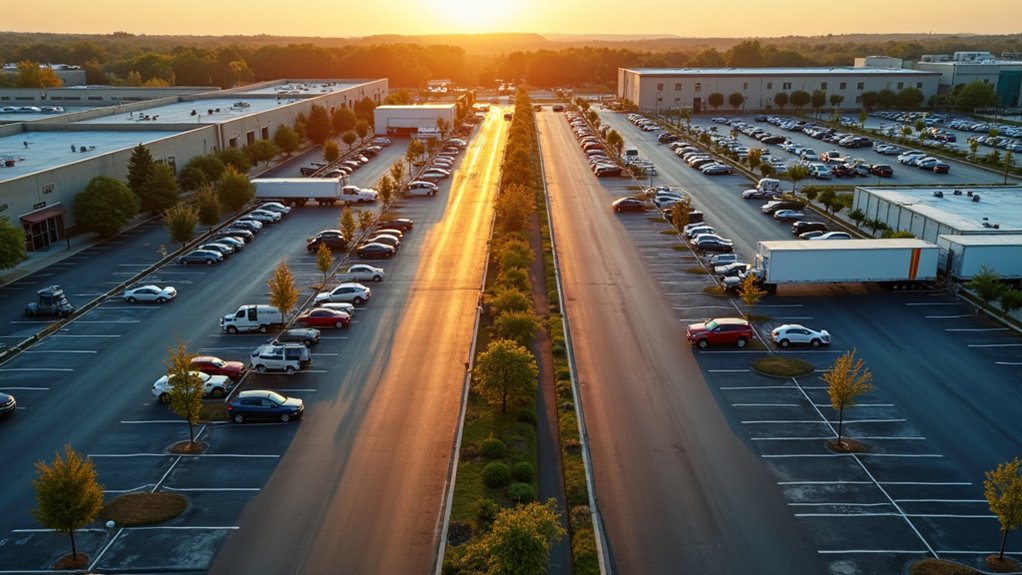
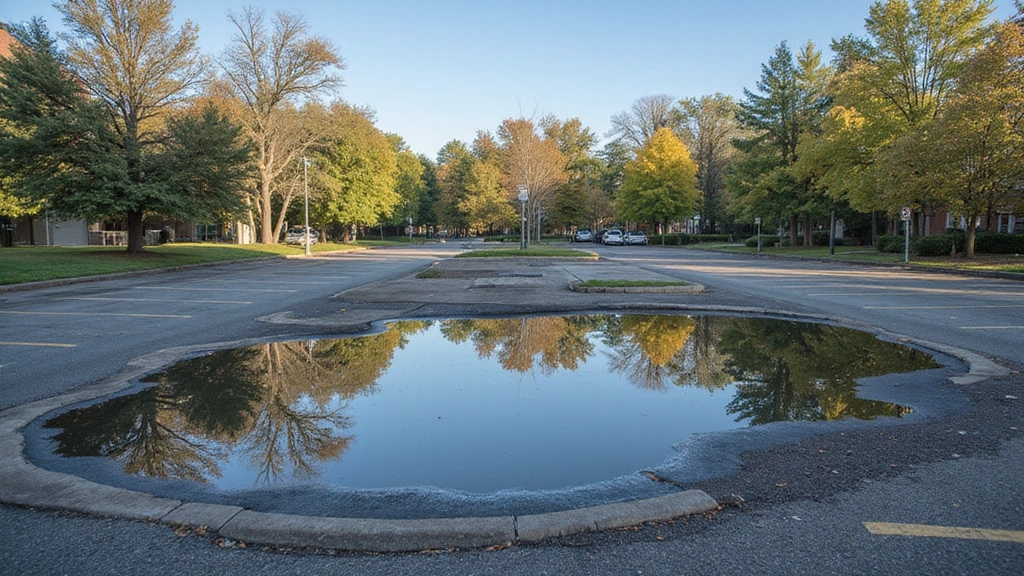

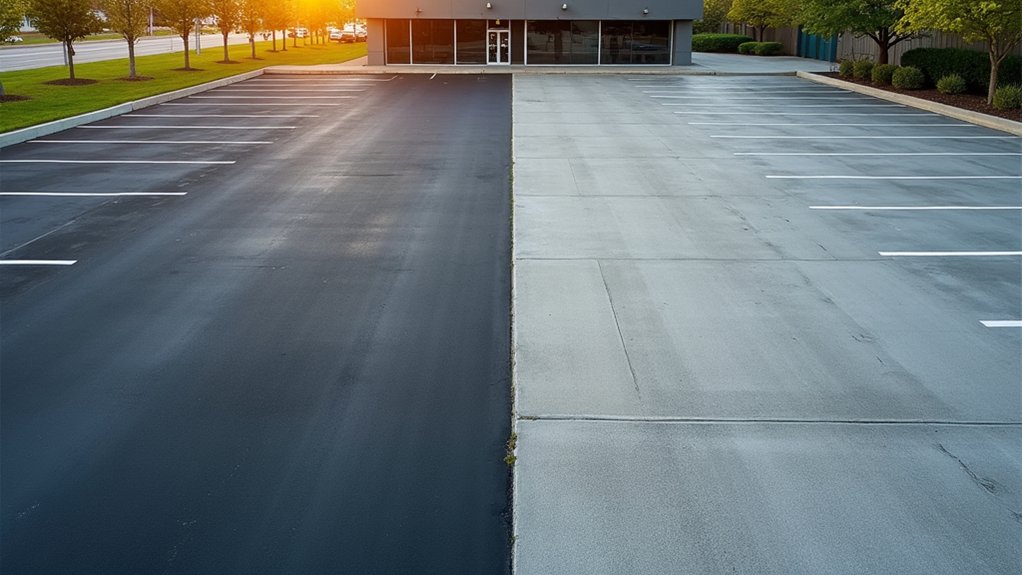
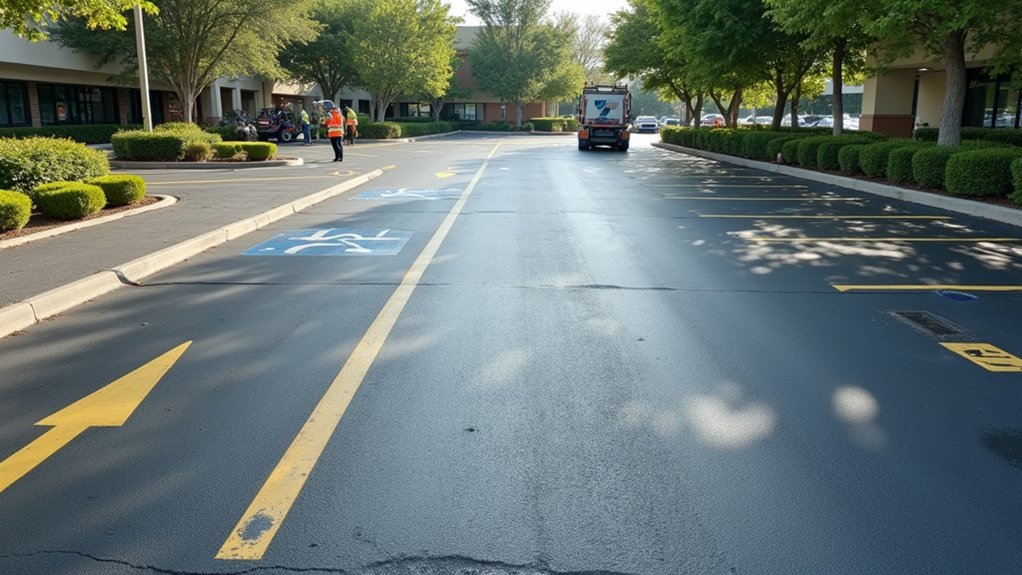
Parking lot line striping applies painted or thermoplastic markings that define your stalls, traffic lanes, directional arrows, crosswalks, fire lanes, and ADA-compliant accessible zones. You’ll get precise stall geometry that boosts usable capacity by up to 20% and reduces driver guesswork. Choose water-based paint for low traffic or thermoplastic for 5, 8 year durability and UV resistance. Regular maintenance keeps markings sharp. Below, you’ll discover how to make yours safer and longer-lasting.
Key Takeaways
- Thermoplastic markings last 5, 8 years and resist UV, abrasion, and temperature swings, far outperforming standard paint’s 1, 3 year lifespan.
- Clear pavement markings improve safety by reducing driver hesitation and separating pedestrian walkways from vehicular lanes.
- ADA-compliant handicap stalls and defined fire lanes ensure code compliance and help avoid fines and legal penalties.
- Proper surface preparation, sweeping, power-washing, and degreasing, ensures strong bonding for longer-lasting, sharper markings.
- Refresh markings every 18, 24 months and conduct annual inspections to catch early degradation and maintain visibility.
What is parking lot line striping
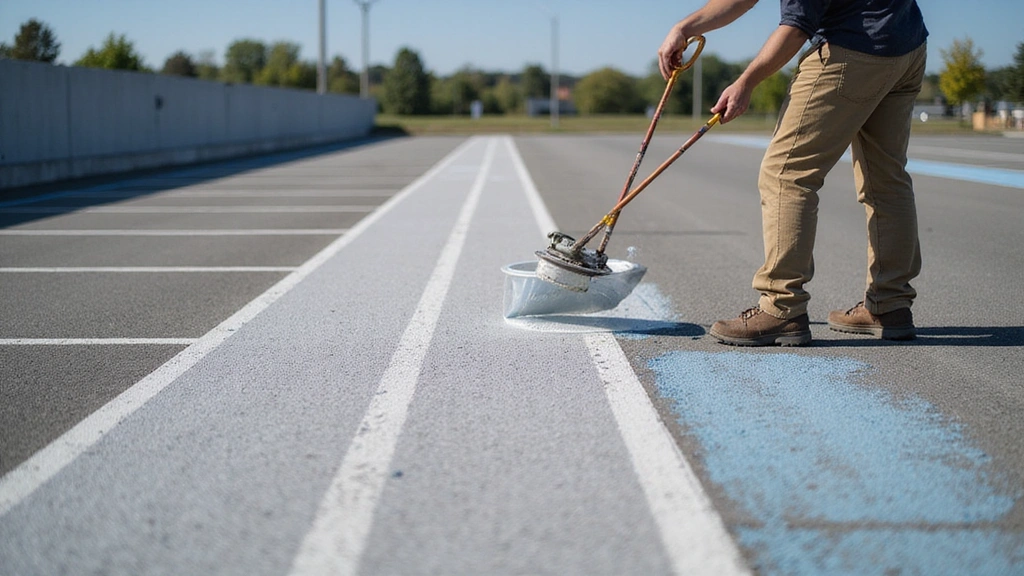
Parking lot line striping is the process of applying painted or thermoplastic markings to pavement surfaces to define parking stalls, traffic lanes, directional arrows, crosswalks, fire lanes, and accessible parking zones. When you invest in parking lot line striping, you’re establishing precise stall geometry and boundary lines that organize vehicle movement and maximize usable capacity. You’ll rely on either standard traffic paint or more durable thermoplastic and UV-resistant materials, depending on your durability requirements and traffic volume. The markings you apply create structured, intuitive path systems that guide drivers through aisles and separate pedestrian walkways from vehicular lanes. You’re also meeting regulatory standards by demarcating ADA-compliant accessible spaces and fire lanes. Properly executed, your striping delivers clear visual contrast that remains visible across varying weather conditions.
Why does parking lot striping matter for your property
Parking lot striping directly impacts your property’s safety, capacity, and legal standing. Clear pavement markings eliminate driver hesitation and split-second guesswork, reducing collision risks that expose you to liability. When you separate walkways from vehicular lanes and define crosswalks, you protect pedestrians and establish fire lanes that comply with fire codes. Precise stall geometry increases your usable parking capacity by up to 20%, while directional arrows in every aisle prevent opposing-traffic conflicts. Adhering to parking lot striping standards ensures ADA-compliant handicap stalls, avoiding fines and legal penalties tied to improperly marked accessible spaces. Well-defined boundaries also prevent drivers from creating makeshift spaces that cause dents and bumps. Ultimately, structured markings organize movement, minimize congestion, and safeguard both people and your bottom line.
What makes pavement markings durable and visible

Pavement markings become durable and visible through the right combination of UV-resistant materials, thermoplastic options, and high-contrast surfaces that withstand tire abrasion, UV exposure, and temperature swings. Standard parking lot striping paint fades quickly under sun exposure and repeated traffic, forcing frequent repainting cycles. Upgrading to UV-resistant and thermoplastic options gives you superior durability against temperature fluctuations and prolonged sun contact, so your lines stay intact through seasonal shifts.
Visibility depends on contrast. High-visibility materials maintain a clear differentiation against the pavement surface even in rain or fog, keeping stalls, arrows, and crosswalks legible in poor conditions. Regular maintenance prevents fading and keeps markings sharp year-round.
When you invest in high-quality materials, you reduce repainting frequency, lower long-term upkeep costs, and ensure your markings remain both durable and visible.
How do water-based, oil-based, and thermoplastic paints compare
Water-based, oil-based, and thermoplastic paints differ in cure time, durability, and environmental impact. Three options dominate the striping materials market, each with distinct performance profiles. For parking lot striping, you’ll weigh cure time, durability, and environmental factors against your budget and traffic volume.
| Property | Water-Based | Thermoplastic |
|---|---|---|
| Dry Time | 30-60 min | 5-10 min |
| Lifespan | 1-3 years | 5-8 years |
| VOC Content | Low | Minimal |
| Cost | Lowest | Highest |
| Best Use | Low traffic | High traffic |
Water-based paints cure fast, emit fewer VOCs, and cost less, but they wear quicker under heavy traffic. Oil-based options resist moisture and adhere well, though they take longer to dry and release higher emissions. Thermoplastic delivers superior durability and UV resistance, making it ideal when you need long-lasting, high-visibility markings.
How does the parking lot painting process work
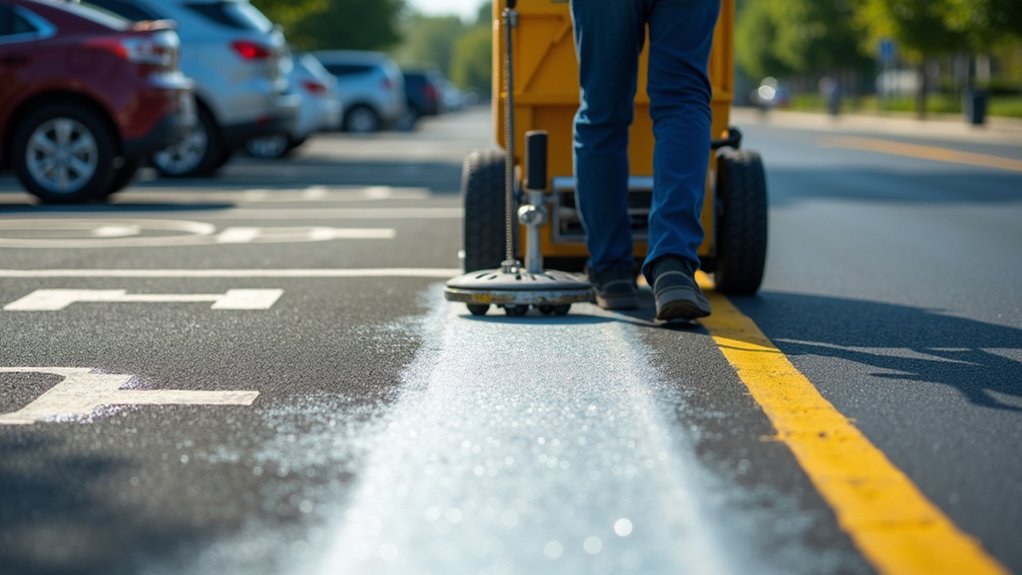
The parking lot painting process runs through five distinct phases: surface preparation, layout, application, curing, and inspection. You start by sweeping, power-washing, and degreasing the pavement, since parking lot line painting won’t bond to dust, oil, or debris. Next, you chalk-snap or measure precise layout points, marking stall widths, aisle geometry, and ADA zones. Then you apply paint using striping machines calibrated for consistent line width and mil thickness.
- Crews mask off crisp edges while spray tips lay uniform 4-inch lines.
- Freshly striped stalls gleam bright white against dark asphalt.
- Traffic cones guard drying lines from foot and tire traffic.
Finally, you allow proper curing time, then inspect every line for coverage, alignment, and defects before reopening.
How often should markings be refreshed
Refresh your parking lot markings every 18 to 24 months, though your actual repainting interval depends on traffic volume, climate exposure, and the coating you originally applied. High-traffic lots with constant turnover wear faster, so you’ll likely repaint sooner. If you chose thermoplastic or UV-resistant materials, you’ll extend that timeline somewhat beyond standard paint applications, which fade under sun exposure and temperature fluctuations.
Watch for warning signs: faded lines, illegible ADA symbols, or worn directional arrows all signal it’s time to act. Inspect your markings annually to catch degradation before visibility drops below safe contrast levels.
Scheduling routine parking lot striping services keeps your markings compliant and visible year-round, prevents liability exposure, and reduces long-term maintenance costs by addressing wear proactively rather than reactively.
How does V&F Paving stripe commercial lots
V&F Paving stripes commercial lots through a systematic process that starts long before the first line goes down. You’ll see the crew begin with site assessment, measuring stall geometry to maximize usable capacity by up to 20%. They’ll map traffic flow, directional arrows, ADA stalls, and fire lanes to meet code before applying any material.
The parking line striping execution follows three precise phases:
- Surface preparation, sweeping and cleaning pavement so high-quality thermoplastic or UV-resistant paint bonds tightly and resists fading.
- Layout and marking, snapping chalk lines and stenciling ADA symbols, arrows, and specialty zones with exact measurements.
- Application and curing, laying crisp, high-contrast lines, then allowing full cure before reopening lanes to traffic.
You get durable, compliant results.
Get Crisp, Durable Lines That Last
Sharp striping does more than look clean. It organizes traffic, protects pedestrians, keeps you compliant, and squeezes more usable capacity out of the same pavement. V&F Paving stripes commercial lots across Connecticut with proper surface prep, precise layout, and durable, high-contrast materials built to hold up through Connecticut winters. Serving Hamden, New Haven, Stamford, Danbury, and Fairfield County since 1994, our team handles everything from a straightforward restripe to a full layout with ADA stalls, fire lanes, and directional markings. Whether your lines are fading or you’re planning fresh pavement, call (203) 624-2449 for a free striping quote.
Frequently Asked Questions
How long do I need to wait after new asphalt is laid before striping?
Fresh asphalt needs time to cure before it takes paint, generally around 30 days. The pavement has to release the oils and binders in the mix, and painting too soon means the lines won’t bond properly and will peel or fade early. The exact wait can stretch longer for thicker installations or during cooler weather. Some contractors will lay temporary markings with fast-curing paint to keep a new lot usable in the meantime, then apply the permanent striping once the surface has fully cured.
Do I have to restripe after sealcoating my lot?
Yes. A fresh sealcoat lays down a uniform black layer that covers your existing lines entirely, so restriping isn’t optional if you want a marked lot afterward. This is actually the right order of operations, since striping over old lines and then sealcoating would just bury the new paint. Plan to wait until the sealcoat has cured, usually around 24 hours depending on temperature and humidity, before the lines go back down. Because sealcoat and striping pair naturally, many owners schedule them together.
How long will my parking lot be closed during striping?
Less time than most owners expect. In good weather, standard water-based paint is typically safe to drive on within about one to two hours of application, and thermoplastic sets even faster once it cools. The bigger variable is lot size, since a larger lot takes longer to work through. Weather matters too, as cool temperatures and humidity extend drying times. If you’ve sealcoated first, factor in the sealcoat’s cure time on top, which is the part that usually drives the longer closures.
Is one coat of striping enough, or should I get two?
For busy lots, two thin coats generally outlast a single thick one. Some of the first coat soaks into the asphalt, which can leave the line looking thinner and lighter than expected, so a second coat builds the visibility and durability back up. In high-traffic areas or spaces that see constant turnover, that extra coat meaningfully extends how long the markings stay sharp before they need redoing. For a lower-traffic lot, a single quality coat may be enough. The right call depends on your traffic and how often you want to restripe.
Can you stripe part of my lot at a time so I don’t have to close the whole thing?
Striping is often done in sections, which lets you keep part of the lot open while another part is worked on and dries. This is especially useful for retail centers, medical offices, and multi-tenant properties that can’t afford to shut down entirely. It takes some coordination around your traffic patterns and peak hours, but phasing the work keeps your business accessible throughout. It’s worth raising when you schedule, so the crew can plan the sequence around keeping you open.