


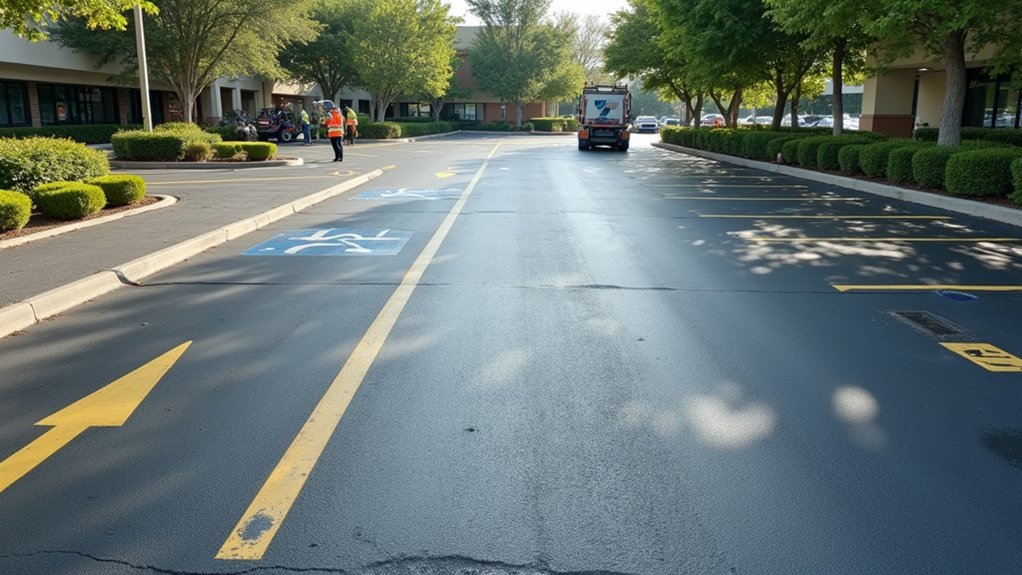
Your parking lot maintenance plan includes routine inspections, PCI scoring, crack sealing, sealcoating, line striping, and debris removal, all scheduled under one strategy. You’ll get biannual condition inspections every spring and fall, plus weekly cleaning and drainage checks. Crack sealing targets openings over 1/8 inch, while sealcoating shields asphalt every two to three years. You’ll also receive detailed records, dated photo logs, and priority repair lists. Here’s how each piece works together.
Key Takeaways
- Routine inspections including biannual pavement condition assessments, monthly surface checks, weekly debris removal, and annual professional reviews.
- Pavement Condition Index (PCI) calculations to quantify pavement health and guide prioritized repair decisions.
- Crack sealing for openings over 1/8 inch and sealcoating every two to three years to prevent deterioration.
- Line striping, safety audits for trip hazards and ADA compliance, and drainage system checks for water pooling.
- Detailed records with dated photo logs, budget prioritization, and bundled services to reduce costs and mobilization fees.
What is a parking lot maintenance plan
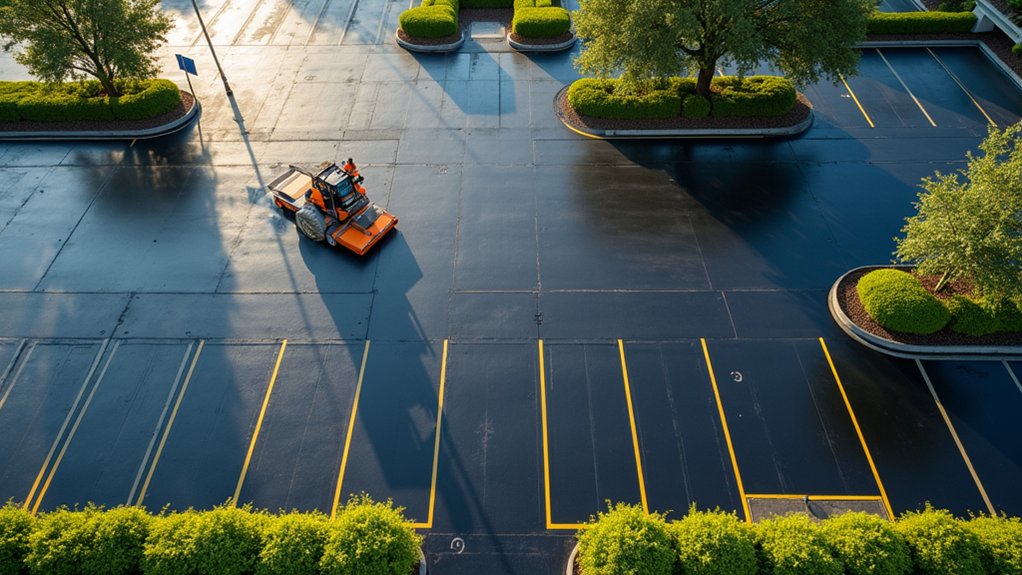
A parking lot maintenance plan is a documented strategy that schedules routine inspections, calculates your Pavement Condition Index (PCI), and coordinates repairs based on safety impact and cost. It gives you a structured framework for keeping your paved surfaces safe, functional, and cost-effective as pavement deteriorates from traffic, weather, and time. You’ll organize parking lot services into predictable cycles, covering biannual condition inspections, annual professional assessments, and safety audits for trip hazards, lighting deficiencies, and ADA compliance.
At its core, the plan prioritizes preventive parking lot maintenance, crack sealing, sealcoating every two to three years, line striping, and weekly debris removal, to extend pavement life before costly structural failures occur. You’ll also maintain detailed records, dated photo logs, and budgets that prioritize safety and cost-effectiveness.
How do routine inspections catch small issues
Routine inspections catch small issues by mapping surface distress and quantifying pavement health before minor defects escalate into structural failures. You conduct pavement condition inspections twice yearly during spring and fall, documenting cracks, potholes, and deterioration while calculating the Pavement Condition Index to quantify your lot’s health. This asphalt parking lot maintenance approach lets you spot hairline cracks exceeding 1/8 inch and seal them immediately.
Your routine parking lot service should target:
- Trip hazards, lighting deficiencies, and ADA compliance issues during safety audits
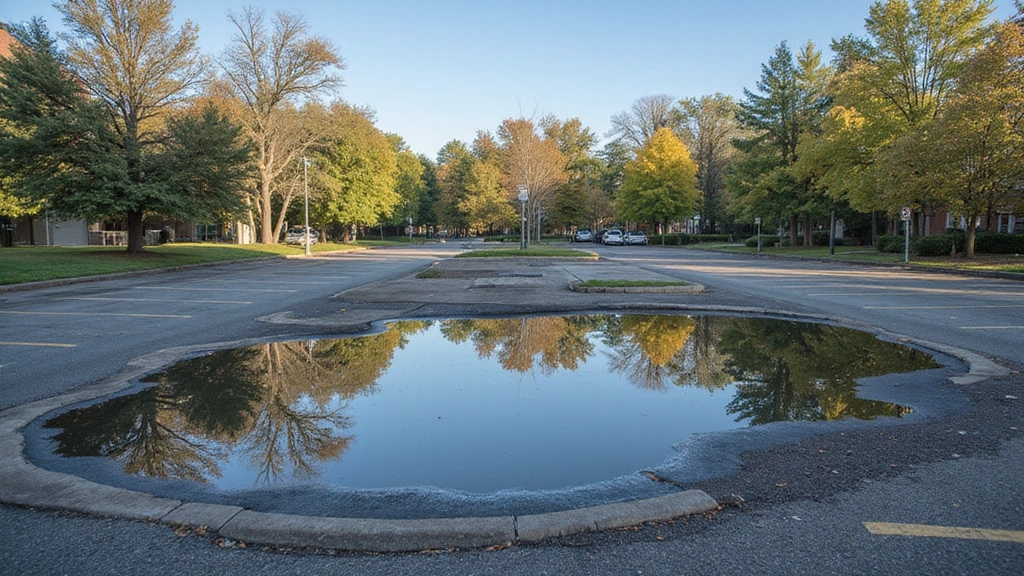
- Drainage outlets and catch basins where water pooling signals base problems
- Early surface degradation from debris accumulation and vegetation intrusion
Following these parking lot maintenance guidelines, you prioritize repairs by safety impact and cost, addressing minor defects before expensive overlays become necessary.
How do crack sealing and sealcoating extend pavement life

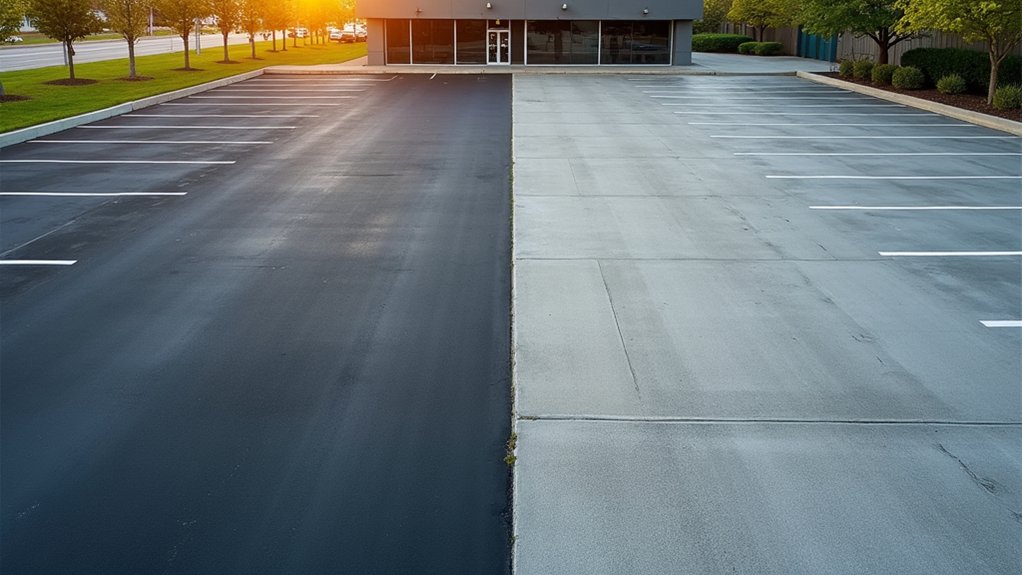
Crack sealing and sealcoating extend pavement life by forming a two-part defense against water infiltration and oxidation. You’ll want to seal any crack exceeding 1/8 inch immediately, since water penetrating these openings reaches the base layer, freezes, expands, and accelerates structural failure. Sealing them blocks moisture before it undermines your subgrade.
Sealcoating works differently. You’ll apply it every two to three years to shield the asphalt surface from UV oxidation, chemical spills, and traffic wear. This protective layer prevents the binder from drying and becoming brittle, which leads to raveling and further cracking.
Together, these measures interrupt the deterioration cycle. By addressing cracks early and maintaining a protective coat, you’re extending pavement life and deferring costly overlays.
What core services should the schedule cover and how often
Your maintenance schedule should cover four core service intervals: weekly, monthly, semiannual, and annual. Each interval targets specific tasks based on urgency and wear patterns.
| Interval | Core Services |
|---|---|
| Weekly | Debris removal, cleaning, drainage outlet inspections |
| Monthly | Detailed surface inspections to assess conditions |
| Semiannual | Pavement condition inspections during spring and fall |
| Annual | Professional inspections, drainage system checks, contractor reviews |
You’ll perform weekly cleaning and drainage checks to prevent surface degradation and water pooling. Monthly surface inspections let you catch emerging distress early. Twice yearly, you’ll assess all paved surfaces and calculate your PCI. Annually, you’ll schedule professional evaluations, inspect drainage before winter, and review contractor performance to verify quality and cost-effectiveness.
How does preventive care reduce unexpected disruptions

Preventive care reduces unexpected disruptions by catching problems before they escalate into failures that shut down your lot. Sealing cracks exceeding 1/8 inch immediately stops water from infiltrating the base layer, where freeze-thaw cycles trigger potholes and structural failure. Sealcoating every 2, 3 years shields your asphalt from oxidation and UV damage, extending its service life. Consistent preventive care keeps small issues from becoming costly emergency repairs that shut down sections of your lot.
Catch problems early: sealing cracks and sealcoating regularly stops water damage before it shuts down your lot.
- Crack sealing blocks moisture penetration, preventing base erosion and subsequent pothole formation.
- Regular sealcoating protects against oxidation, chemical spills, and weathering that degrade surface integrity.
- Weekly debris removal and drainage checks prevent water pooling that accelerates deterioration.
You’ll reduce downtime, control repair budgets, and maintain safer surfaces year-round.
How do bundled parking lot services lower your yearly cost
Bundled parking lot services lower your yearly cost by combining inspections, crack sealing, sealcoating, striping, and cleaning under a single contract, which cuts the redundant mobilization fees, scheduling overhead, and per-visit markups that separate service calls rack up. When one crew handles your twice-yearly inspections, 1/8-inch crack sealing, and 2, 3 year sealcoating cycles, you consolidate trips and coordinate tasks efficiently. Instead of paying setup costs for each pothole patch, striping touch-up, or drainage check, you fold them into scheduled visits that align with spring and fall cycles.
Bundling also stabilizes your budgeting. You lock in predictable rates, avoid emergency-call premiums, and let preventive measures like debris removal and vegetation control prevent costly structural repairs. By ranking priority repairs within one plan, you allocate funds toward safety and cost-effectiveness, extending pavement life while lowering annual expenditure.
How does V&F Paving build maintenance plans
V&F Paving builds maintenance plans on a baseline assessment that quantifies your lot’s actual condition before we schedule a single task. We start by calculating your Pavement Condition Index, mapping every crack, pothole, and area of deterioration through dated photo logs. From that data, we structure inspection cycles, preventive treatments, and repairs around your lot’s traffic volume and environmental exposure.
- Baseline PCI scoring that ranks distress by severity and pinpoints where structural failures are developing
- Priority repair lists ordered by safety impact and cost, so trip hazards and ADA gaps get addressed first
- Scheduled treatment intervals for crack sealing above 1/8 inch and sealcoating every 2, 3 years
We then adjust your plan after each maintenance cycle.
Put Your Lot on a Plan Instead of a Guess
Reacting to potholes as they appear always costs more than preventing them. V&F Paving builds maintenance plans around your lot’s actual condition, starting with a real assessment, then scheduling inspections, crack sealing, sealcoating, and striping on one coordinated cycle so small problems get handled before they turn into structural repairs. Serving Hamden, New Haven, Stamford, Danbury, and Fairfield County since 1994, our team gives you documented records, a prioritized repair list, and predictable budgeting instead of surprise emergency bills. To set up a maintenance plan for your property, call (203) 624-2449 for a free assessment.
Frequently Asked Questions
What is a PCI score, and why does it matter?
PCI stands for Pavement Condition Index, a standardized number from 0 to 100 that rates the condition of your pavement, with 100 being brand new. It’s based on a visual survey of the distress on the surface, and because the method is standardized, a given score means the same thing anywhere. Roughly speaking, the high 80s and up is excellent, the 70s to mid-80s calls for routine preservation, the 50s to 60s means it’s time to schedule preventive work, and scores below that signal rehabilitation or reconstruction. The value of a PCI number is that it replaces a guess with an objective measure you can track and budget around.
Does a small property really need a formal maintenance plan?
Even small lots benefit, though the plan scales to the property. The point of a plan isn’t paperwork for its own sake. It’s catching cracks and drainage issues while they’re cheap to fix rather than after they’ve reached the base. A small lot might need less frequent visits than a large retail center, but the same logic applies: a modest, scheduled spend on crack sealing and sealcoating almost always costs far less than the emergency repairs that come from letting things go. For any commercial property, a simple plan is usually money ahead.
Who should have a parking lot maintenance plan?
Any owner or manager responsible for a commercial lot, including retail centers, office buildings, medical facilities, apartment complexes, industrial sites, and houses of worship. It’s especially valuable for property managers who answer to ownership, because the documented inspections, dated photo logs, and PCI tracking give you defensible records for budgets, audits, and demonstrating due diligence. If you’re accountable for a paved surface and its safety, a maintenance plan is how you stay ahead of both the repair costs and the liability.
How is a maintenance plan different from just calling someone when there’s a problem?
A plan is proactive where a service call is reactive, and that difference drives the cost. Calling someone only when a pothole appears means you’re always paying to fix damage that’s already done, often at emergency-visit rates, and usually after the problem has spread. A plan schedules inspections and preventive treatments on a cycle, so issues get caught small and handled during routine visits. It also consolidates trips and stabilizes your budget, instead of a string of unpredictable one-off bills. Over the life of a lot, planned maintenance consistently costs less than reactive repairs.
What happens if I skip maintenance for a year to save money?
Deferring rarely saves money in the long run. Pavement deterioration compounds. A crack left unsealed lets water into the base, freeze-thaw widens it over the winter, and what would have been an inexpensive seal becomes a pothole or a patch by spring. Skip enough cycles and the surface can drop from a condition where preservation works to one that needs resurfacing or reconstruction, which costs many times more. Occasionally a year can be deferred if the pavement is in strong shape, but that call should come from an assessment, not from the budget alone.