
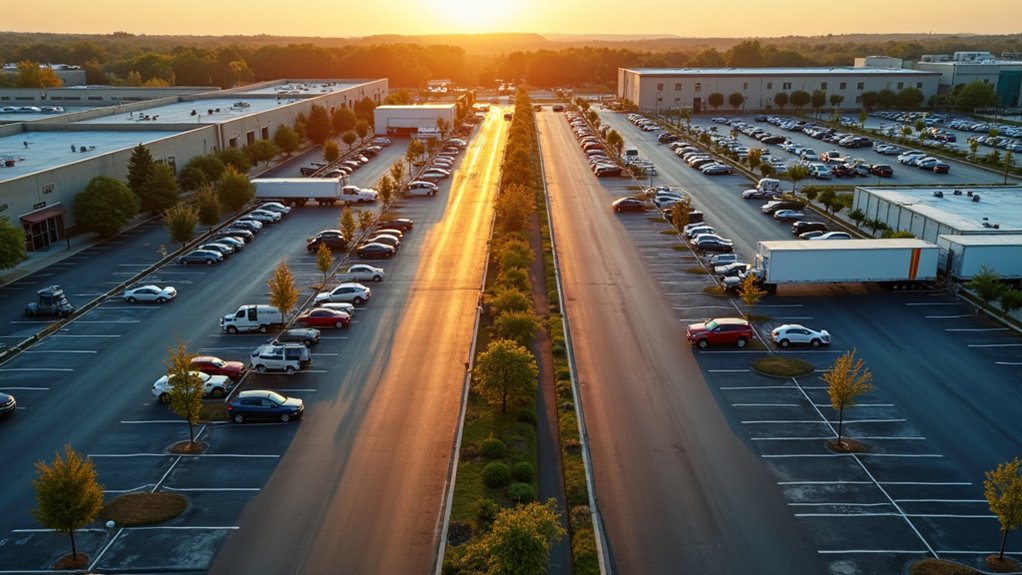

Your parking lot striping cost hinges on lot size, which drives paint volume and labor hours. Contractors bill you per linear foot ($0.20, $0.50), per stall ($5, $10), or per square foot ($0.03, $0.08), plus $250, $350 mobilization. Paint type matters too, water-based runs $0.20, $0.28, while traffic-grade hits $0.45. Surface condition, custom layouts (adding 20, 30%), and specialty markings like handicap stalls ($25, $30) push totals higher. Let’s break down each factor so you’ll price your project accurately.
Key Takeaways
- Lot size is the single largest cost variable, dictating paint volume, labor hours, and the most favorable pricing model.
- Pricing methods vary: per linear foot ($0.20, $0.50), per stall ($5, $10), or per square foot ($0.03, $0.08).
- Paint type affects cost, ranging from water-based ($0.20, $0.28) to traffic-grade materials (up to $0.45) per linear foot.
- Specialty markings add expense, including handicap stalls ($25, $30), arrows ($20, $40), and crosswalks ($50, $75).
- Surface prep, custom designs (20, 30% more), and fixed mobilization ($250, $350) further influence total project cost.
What affects the parking lot striping cost
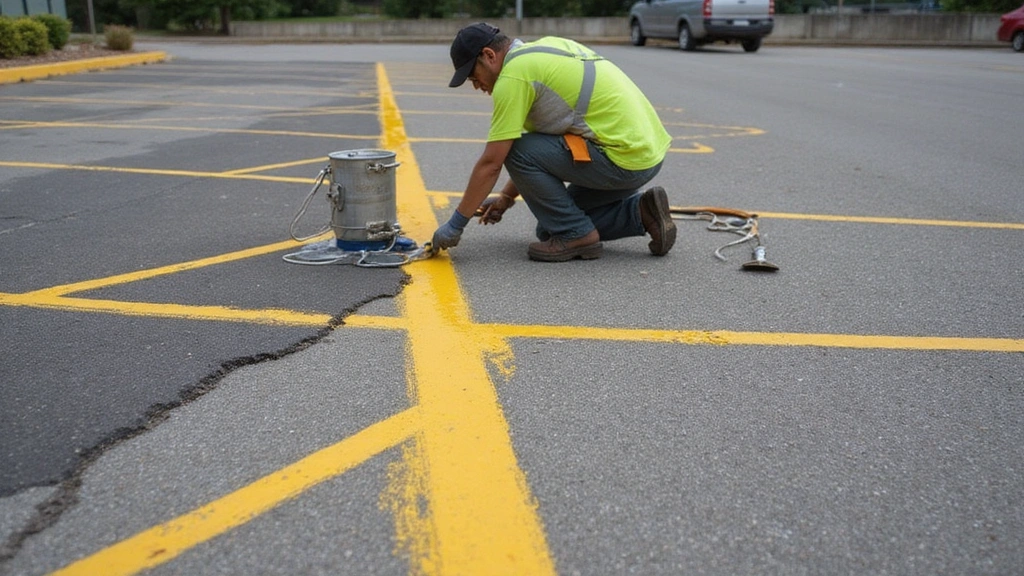
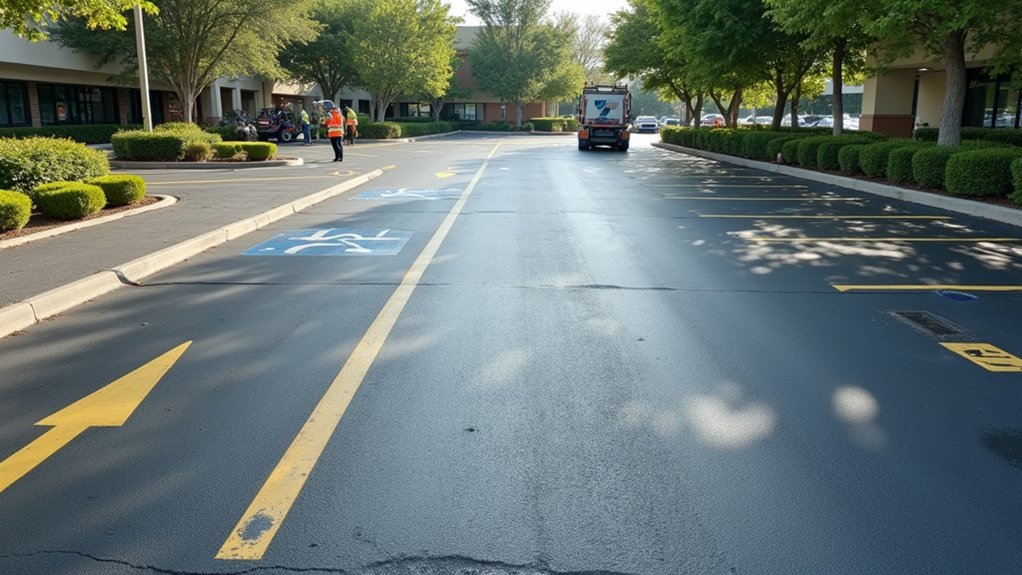
Several distinct factors drive the parking lot striping cost. The size of your lot directly impacts the parking lot striping cost, with pricing calculated per linear foot ($0.20, $0.50), per stall ($5, $10), or per square foot ($0.03, $0.08). Paint type matters too. Basic water-based coatings run $0.20, $0.28 per linear foot, while traffic-grade materials reach $0.45. Design complexity, including custom logos and new layouts, adds 20, 30% to the parking lot striping price. Specialty markings escalate expenses: handicap stalls cost $25, $30 each, arrows $20, $40, and crosswalks $50, $75. Surface condition affects the cost to stripe a parking lot, since crack repairs and oil-stain removal require additional prep. Mobilization ($250, $350), night work, and geographic location influence your total investment greatly.
How do lot size and condition change the price
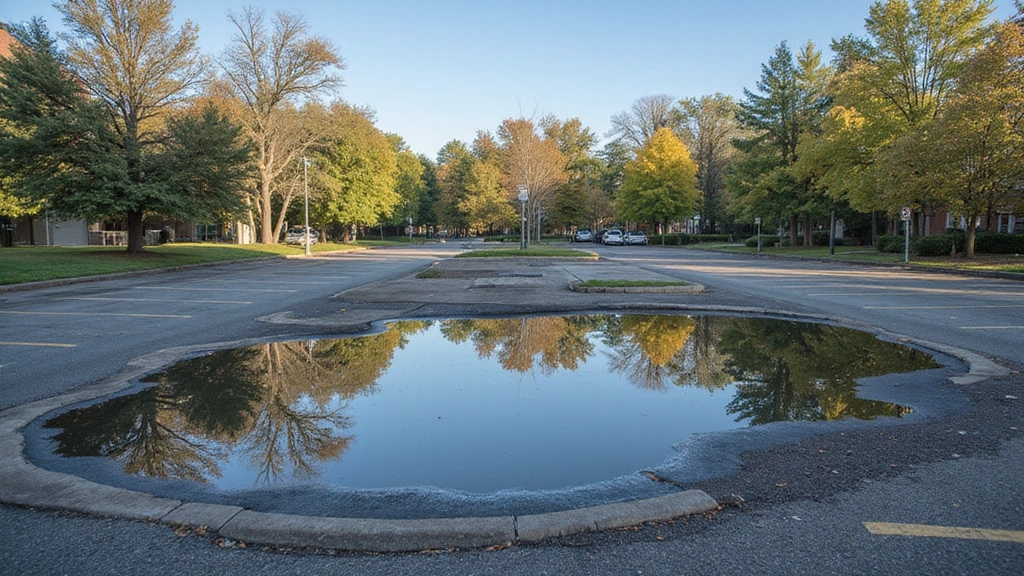
Lot size and condition change the price by dictating paint volume, labor hours, and prep work. Because lot size dictates paint volume and labor hours, it’s the single largest variable in your total cost. When you’re learning how to price parking lot striping, you’ll find per-linear-foot rates range from $0.20 to $0.50, per-stall pricing runs $5 to $10, and square-foot rates fall between $0.03 and $0.08. Larger, open lots favor lower per-unit rates, while smaller projects absorb fixed mobilization costs of $250 to $350, driving up your per-unit price. Any parking lot striping cost calculator should also factor surface condition. Dirty, oil-stained, or debris-filled asphalt demands prep work that adds time and expense. Cracks, potholes, and oxidation require filling or grinding before paint applies. Clean, smooth asphalt lets you run standard 4-inch lines at $0.20 to $0.30 per foot.
How do contractors price parking lot striping
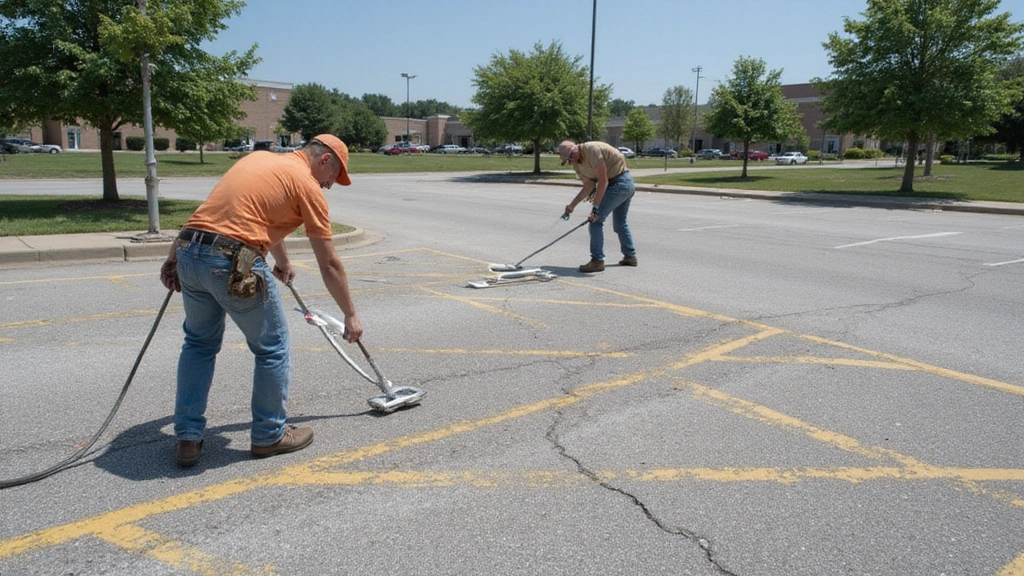
Contractors price parking lot striping using one of three methods: per linear foot, per stall, or per square foot. Each approach reflects your lot’s layout, size, and complexity, letting the contractor match the pricing model to the project’s specific requirements.
- Per linear foot ($0.20, $0.50): This method measures total line length, favoring lots with extensive striping. Basic single-coat paint runs $0.20, $0.28, while traffic-grade materials reach $0.45.
- Per stall ($5, $10): Ideal for straightforward layouts, this scales directly with your space count, though handicap stalls add $25, $30 each.
- Per square foot ($0.03, $0.08): Best for large, open lots, this rewards simple geometry over complex, multi-aisle designs.
You’ll also pay a fixed mobilization cost of $250, $350 regardless of method.
How do paint types and add-ons compare on cost
Paint types set the baseline for per-linear-foot costs, and add-ons stack on top of them. Basic single-coat water-based paint runs $0.20, $0.28 per linear foot, while enhanced durability options with a second coat or premium materials climb to $0.29, $0.38. Traffic-grade materials push up to $0.45. Reflective beads, specialty compounds, and multi-color zoning each raise material and labor costs further.
| Paint/Add-On | Cost | Notes |
|---|---|---|
| Basic single-coat | $0.20, $0.28/ft | Standard 4-inch lines |
| Enhanced durability | $0.29, $0.38/ft | Second coat or premium |
| Traffic-grade | Up to $0.45/ft | Highest durability |
| Word stencils | $3, $5/letter | Per-letter text markings |
Symbols, ADA stalls, and crosswalks often eclipse your paint’s baseline, so budget accordingly.
How much does a full re-layout add to the job
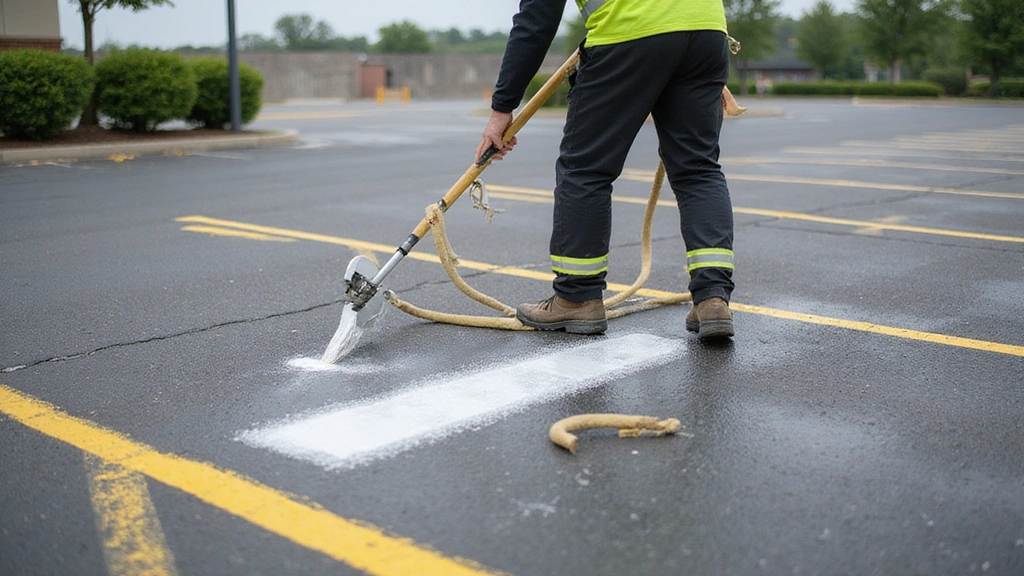
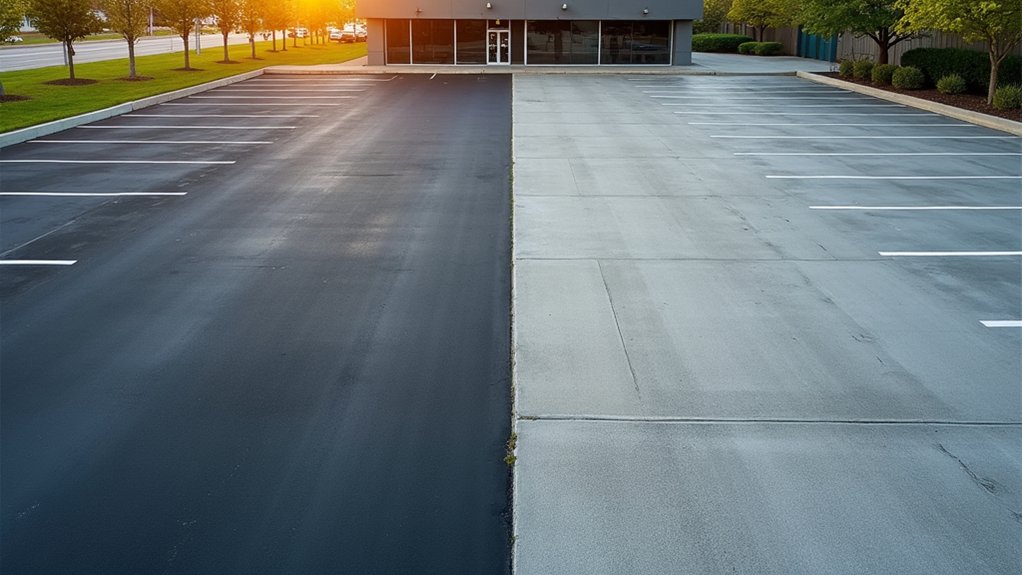
A full re-layout adds 20, 30% to your total job cost compared to re-striping existing lines. When you’re not simply repainting over faded markings, crews must measure, plan, and mark reference points before applying any paint. This precision work demands additional labor hours and increases material consumption, particularly if you’re changing stall angles or reconfiguring drive aisles.
Consider these cost drivers when planning a full re-layout:
- Layout planning and measurement, Establishing new stall positions, aisles, and dimensions requires surveying and chalk-line work absent in re-striping.
- Angle changes, Shifting from 90° to angled stalls alters line lengths and paint volume per stall.
- Added markings, New designs often introduce arrows, ADA stalls, and crosswalks, compounding total expenses materially.
What does it cost to stripe a parking lot on average
Striping a parking lot costs one of three ways: per linear foot, per stall, or per square foot. Linear-foot pricing averages $0.20 to $0.50, depending on layout complexity and paint grade. Per-stall pricing runs $5 to $10 for basic line striping, scaling directly with the number of spaces. Square-foot pricing ranges from $0.03 to $0.08, favoring large, open lots over intricate configurations.
Expect a fixed mobilization cost of $250 to $350 regardless of project size, which drives up per-unit rates on smaller jobs. Specialty markings add notably: handicap stalls cost $25 to $30 each, arrows or symbols $20 to $40, and crosswalks $50 to $75. To estimate accurately, measure your total linear footage, count your stalls, and factor in any ADA or symbol requirements before requesting a quote.
How does V&F Paving price striping projects
V&F Paving builds each striping quote from the same core variables that drive industry pricing: total linear footage, stall count, paint grade, and layout complexity. You’ll receive a breakdown that separates fixed mobilization costs from per-unit line and marking charges, so you know exactly where your money goes.
- Line work. Standard 4-inch lines run $0.20, $0.45 per linear foot, depending on paint grade and whether you need a second coat.
- Specialty markings. ADA stalls, arrows, crosswalks, and stencils get itemized individually, reflecting their higher labor and material demands.
- Site factors. Surface condition, new versus re-stripe layouts, and scheduling constraints adjust your final figure.
You’ll get transparent, region-accurate pricing that scales precisely with your lot’s size and specifications.
Get a Clear, Itemized Striping Quote
Striping costs shouldn’t be a mystery. The final number comes down to your lot’s size, condition, layout, and the markings you need, and a good quote spells all of that out. V&F Paving prices commercial striping transparently, separating mobilization from per-unit line and marking charges so you see exactly where your money goes. Serving Hamden, New Haven, Stamford, Danbury, and Fairfield County since 1994, our team handles everything from a simple restripe to a full layout with ADA stalls, fire lanes, and directional markings. For an accurate, itemized estimate on your lot, call (203) 624-2449 for a free quote.
Frequently Asked Questions
What does it typically cost to stripe an average parking lot?
For a medium lot in the range of 30 to 50 stalls, including basic features like arrows and crosswalks, total costs commonly land somewhere around $500 to $1,200. Smaller lots can feel pricier per stall, because the fixed mobilization charge gets spread across fewer spaces. A new layout runs higher than a simple restripe, and specialty markings push the total up further. The only way to get an accurate figure is a quote based on your actual linear footage, stall count, and marking needs, since every lot is different.
Is it worth striping the lot myself to save money?
For a small private lot, maybe. For a commercial property, usually not. Renting a striping machine runs a few hundred dollars a day on top of paint, and getting straight, consistent, correctly spaced lines takes practice, so first attempts often come out crooked. The bigger issue is compliance: if your ADA stalls, access aisles, or fire lanes aren’t done to code, you’re exposed to fines and liability that dwarf any DIY savings. For lots with accessibility requirements, professional striping is the safer investment.
Is restriping cheaper than a new layout?
Yes, noticeably. Restriping over an existing layout skips the surveying, measuring, and chalk-line work that a fresh design requires, which is why a new layout typically runs meaningfully more, often on the order of 20 to 25% higher or more depending on complexity. If your current layout still works and meets code, a straightforward restripe is the economical choice. You’d only take on the added cost of a re-layout if you’re changing stall angles, reconfiguring aisles, or adding new markings that change the design.
Does cheaper paint actually save money in the long run?
Not always, and often the opposite. Basic water-based paint has the lowest upfront cost but the shortest lifespan, so you end up restriping more often. More durable options like traffic-grade materials or thermoplastic cost more per foot but last considerably longer, which can make them cheaper per year in a busy lot. The right call depends on your traffic and how much disruption frequent restriping causes your business. For high-traffic lots, spending more upfront on durable materials frequently pays off over time.
How can I keep striping costs down without cutting corners?
A few practical moves help. Bundling striping with other work you’re already having done, like sealcoating, saves a second mobilization trip. Scheduling during off-peak seasons can get you better availability and rates. Sticking to a standard layout rather than custom logos or complex reconfiguration avoids the re-layout premium. Keeping the surface clean and clearing debris before the crew arrives reduces prep time. And maintaining your lines proactively, before they fully fade, can stretch the interval between full restripes. Getting a couple of itemized quotes also helps you compare fairly.