

Your driveway width comes down to two measurements: your frontage width and the number of vehicles you park daily. Choose a single-width driveway at 10 to 12 feet if you’ve got narrow frontage and park one car. Go double-wide at 20 to 24 feet for two cars side by side and wider lots. Avoid widths near 9 feet for larger trucks. Check local code caps too, since they shape what’s possible below.
Key Takeaways
- Measure your frontage width and count daily vehicles before choosing between single-width and double-width driveway layouts.
- Single-width driveways span 9 to 12 feet, ideally 10 to 12 feet, fitting one car on narrow lots.
- Double-width driveways span 18 to 24 feet, ideally 20 to 24 feet, fitting two cars side by side on wide lots.
- Avoid widths near 9 feet for larger trucks or service vehicles, and prefer 24 feet for comfortable door clearance.
- Choose double-width for long-term flexibility and changing needs, but check local codes, which often cap widths at 24 to 30 feet.
Which driveway layout fits your property single or double-wide
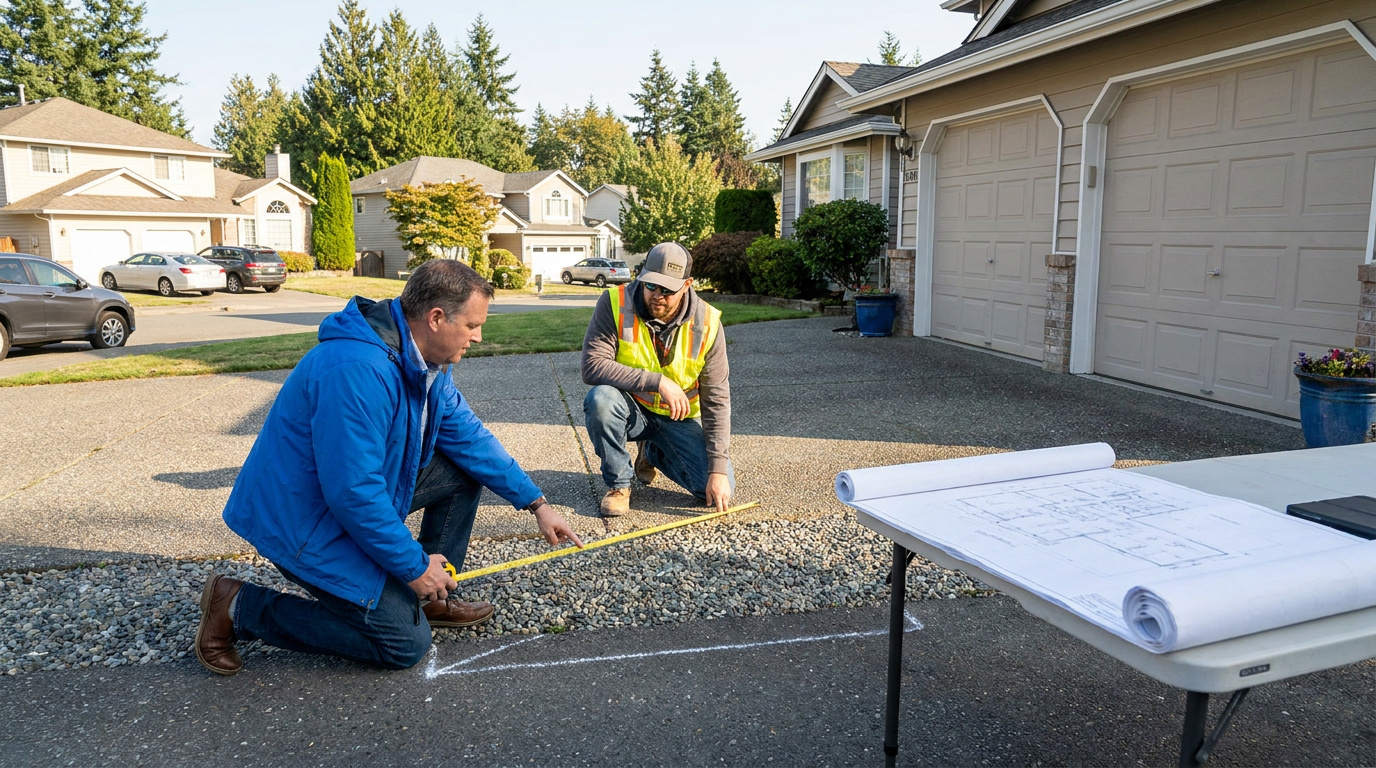
Your driveway layout depends on your lot’s frontage and parking demands. The single vs double wide driveway decision starts with measuring your available width and counting the vehicles you’ll park daily.
Measure your frontage, count your cars, then choose the driveway width that fits your lot and life.
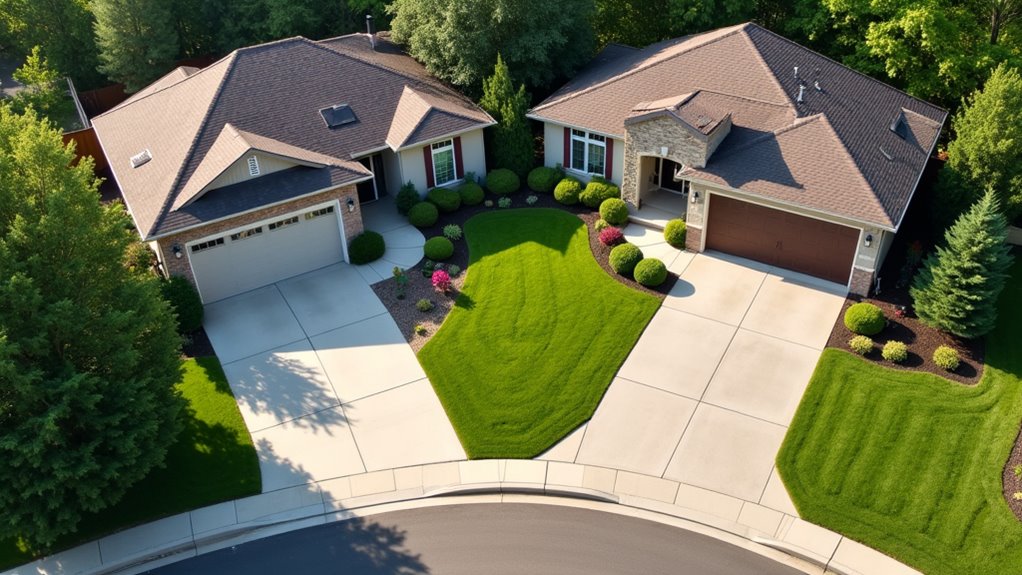
A single-width driveway runs 9 to 12 feet, fitting narrow lots and modest parking needs. A double-width driveway spans 18 to 24 feet, supporting two cars side by side on wider frontage.
Your driveway width layout should reflect street width, garage placement, and setback limits. If you’ve got tight frontage, stick with single. If you’ve got room and multiple drivers, go double.
Effective driveway layout planning balances parking capacity, lot width, code limits, and maneuvering space before you commit to material.
How much space does a single driveway need
A single driveway needs 9 to 12 feet of width, with 10 to 12 feet serving as the practical standard for most vehicles. This single driveway width suits one car, fits narrow lots, and preserves front setback space. Widths near 9 feet feel tight for larger vehicles and service trucks, so lean toward 12 feet when possible.
Consider these factors when sizing your layout:
- Vehicle type: Larger trucks need 11 to 12 feet for comfortable clearance.
- Lot frontage: Narrow properties benefit from a 10-foot minimum.
- Code limits: Some jurisdictions cap single driveways at 12 feet.
- Future needs: If two cars are likely, a double wide driveway may fit better.
Match width to your parking demand.
How much space does a double-wide driveway need
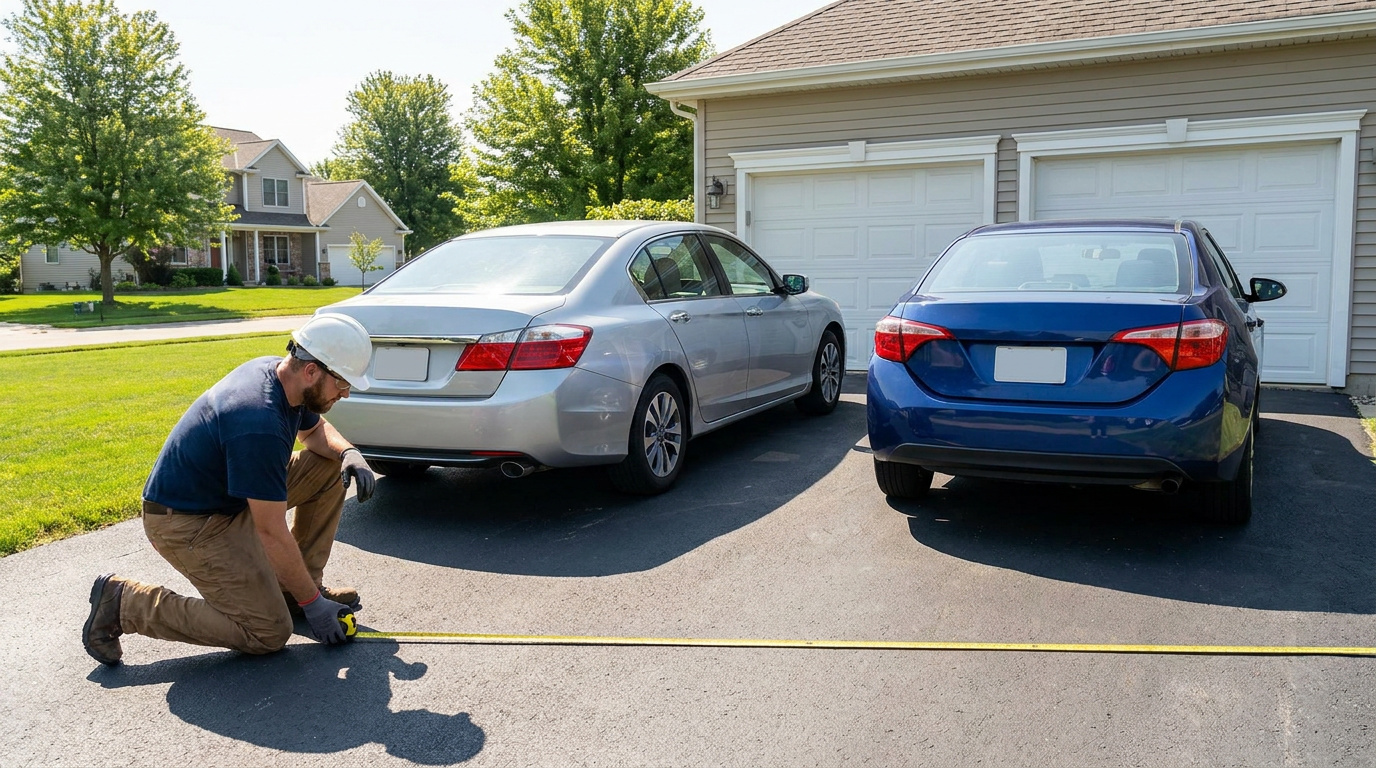
A double-wide driveway needs 18 to 24 feet of width, with 20 to 24 feet serving as the practical standard for parking two cars side by side. At 20 feet, you’ll fit two vehicles, but door clearance gets tight. Push to 24 feet and you’ll gain comfortable room for opening doors and parking both cars at once. Some codes set double residential driveways at a 20-foot minimum and cap them at 30 feet, depending on jurisdiction and use.
Check your lot width. A double layout demands wider frontage to support the broader access and turning area. Factor in your garage placement, street width, and expected traffic. If two drivers share the property, the added width eliminates the daily shuffle of moving cars.
How do single and double-wide layouts compare
Single and double-wide layouts differ in width, vehicle capacity, and lot fit. Each layout serves distinct parking needs, lot conditions, and budgets. A single-width fits narrow frontage and one vehicle, while a double-width supports two cars side by side on wider lots.
| Factor | Single-Width | Double-Width |
|---|---|---|
| Width Range | 10 to 12 ft | 20 to 24 ft |
| Vehicle Capacity | One car | Two cars side by side |
| Best Lot Fit | Narrow frontage | Wide frontage |
Consider circulation too. A single driveway handles one vehicle at a time, so you’ll shuffle cars when multiple drivers share the property. A double driveway reduces that conflict, letting vehicles enter and exit simultaneously. Weigh paved area, material cost, and code limits before you commit.
How do parking needs and lot width affect the choice
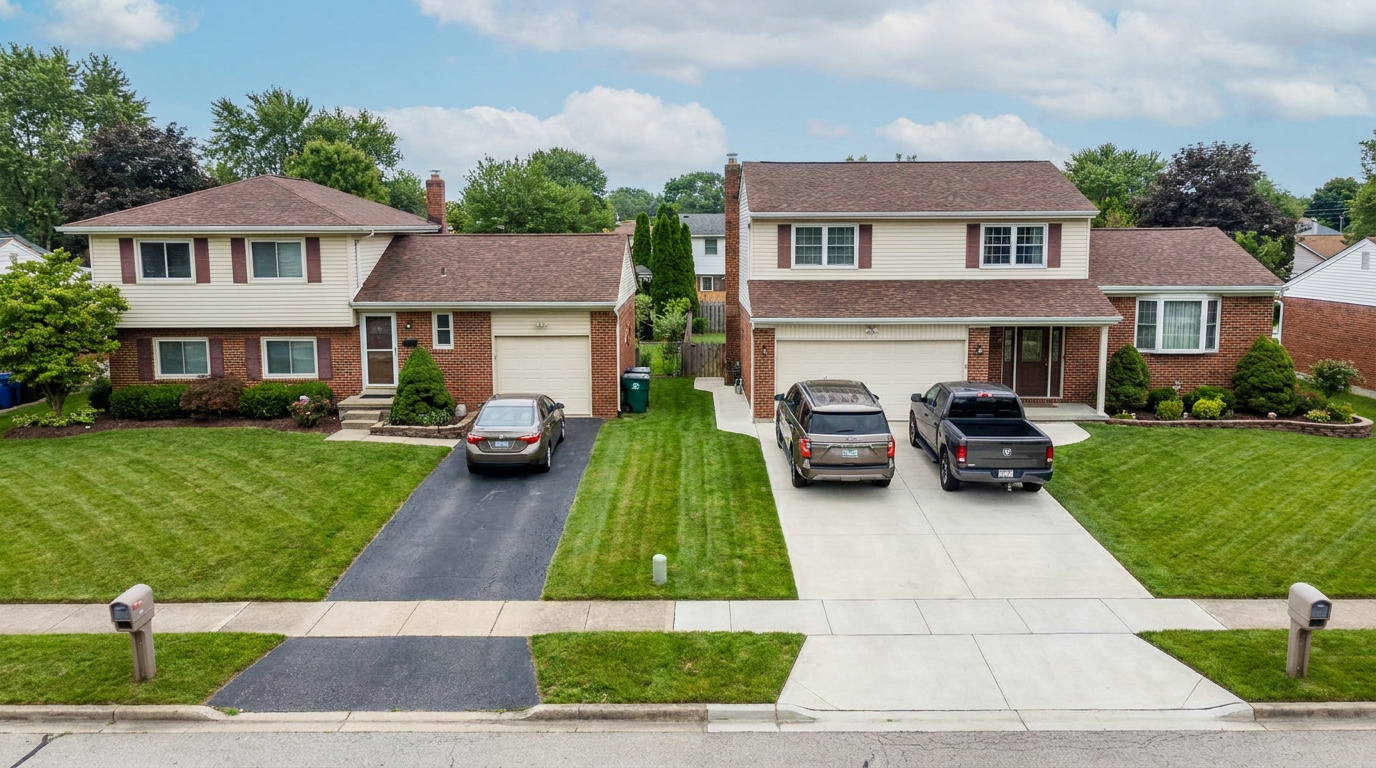
Parking needs and lot width directly determine your layout: how many vehicles you park and how much frontage your lot offers. If you own one car and have a narrow front setback, a single driveway at 10 to 12 feet fits without crowding the lot. If you park two vehicles side by side, you’ll need a double driveway, ideally 20 to 24 feet, on a wider lot that can support the frontage.
Match your choice to these conditions:
- One vehicle, narrow lot: single driveway, 10 to 12 feet.
- Two vehicles, wider lot: double driveway, 20 to 24 feet.
- Larger trucks or service vehicles: avoid widths near 9 feet.
- Comfortable side-by-side parking and door clearance: choose 24 feet.
Balance parking capacity against available width.
Which layout offers better long-term use for your property
A double-width driveway at 20 to 24 feet offers better long-term use for most properties because it adapts to changing parking needs. A 24-foot width handles door clearance, larger vehicles, and service trucks comfortably, and gives you room to park side by side without retrofitting later if your household adds a second vehicle. If your lot’s frontage stays narrow or your parking demand won’t grow, a single driveway at 10 to 12 feet keeps paved area and maintenance costs down. Consider resale value too: wider access often appeals to buyers with multiple cars. Match your choice to anticipated traffic, garage configuration, and local width caps, typically 24 to 30 feet, so your driveway stays functional as circumstances change.
Build a Driveway That Fits Your Property
Choosing the right driveway width affects parking, vehicle access, drainage, and your property’s long-term usability. V&F Paving can help plan and install a driveway that fits your lot through its residential driveway paving services. Call (203) 624-2449 or request a free estimate to discuss your driveway layout, paving needs, and available options.
Frequently Asked Questions
What Materials Work Best for Single or Double-Wide Driveways?
It focuses on width ranges, space and vehicle fit, property constraints, traffic flow, code considerations, and cost trade-offs for single versus double-wide layouts. Additional guidance can be provided on comparing single and double driveway widths, code minimums, or planning trade-offs based on the specific project needs.
Do I Need a Permit to Build a Driveway?
You’ll likely need a permit, since local ordinances and engineering standards commonly regulate residential driveway widths and access. Check your municipality’s requirements before building. Many jurisdictions enforce minimum widths, often 12 feet for single and 20 feet for double driveways, plus right-of-way rules and parking area length standards near 20 feet. You’ll also want to confirm caps around 24 to 30 feet. Align your design with local access standards to secure approval.
How Much Does a Single Versus Double Driveway Cost?
You’ll pay less for a single driveway since it uses less paved area and material. A single-width layout, typically 10 to 12 feet, covers roughly half the surface of a double-width one at 20 to 24 feet. That double driveway consumes more frontage and material but boosts parking capacity and convenience. Your actual cost depends on width, length, paving material, and site prep. Match your budget against parking needs and lot width.
Can I Widen an Existing Single Driveway Later?
Yes, you can widen a single driveway later, but check your local ordinances first. Many jurisdictions cap residential driveway width at 24 to 30 feet at the right-of-way line, and some limit single-car access to 12 feet. Confirm your lot width, front setback, and garage placement support the expansion. You’ll need enough frontage to reach 20 to 24 feet for comfortable two-car parking. Budget for extra paving material and prep work.
What Driveway Slope or Drainage Is Recommended for Water Runoff?
You’ll want a slope that moves water away from your home and off the paved surface. Aim for a minimum grade of about 1% to 2% (roughly 1/8 to 1/4 inch per foot) to prevent pooling. Slope the driveway toward the street or a drainage channel, and don’t direct runoff toward your foundation. For steeper lots, add trench drains or channel drains to capture and redirect water effectively.