





You’ll need to verify stall dimensions, access aisle geometry, electrical code, and accessibility ratios all at once before construction begins. Position charging stalls so they don’t block circulation aisles, fire lanes, or crosswalks. Accessible EV spaces require 96-inch minimum stall widths and 60-inch access aisles, plus an accessible route to the entrance. You’ll also plan trenching, drainage, and compliant striping. Get these details right, and the rest of the project falls into place.
Key Takeaways
- Verify zoning, building code, and accessibility ratios before construction, and confirm whether EV spaces count toward minimum parking requirements.
- Position charging stalls to avoid blocking circulation aisles, fire lanes, and pedestrian paths while keeping cables clear of walkways.
- Provide accessible EV spaces with 96-inch minimum stall widths, 60-inch access aisles, and an accessible route to the building entrance.
- Plan trenching and conduit routing for electrical code compliance, oversizing conduit or adding spare runs to support future expansion.
- Grade stalls to direct runoff away from equipment, then restripe with compliant markings and “EV CHARGING ONLY” stenciling.
What EV charging station parking lot requirements should property owners know
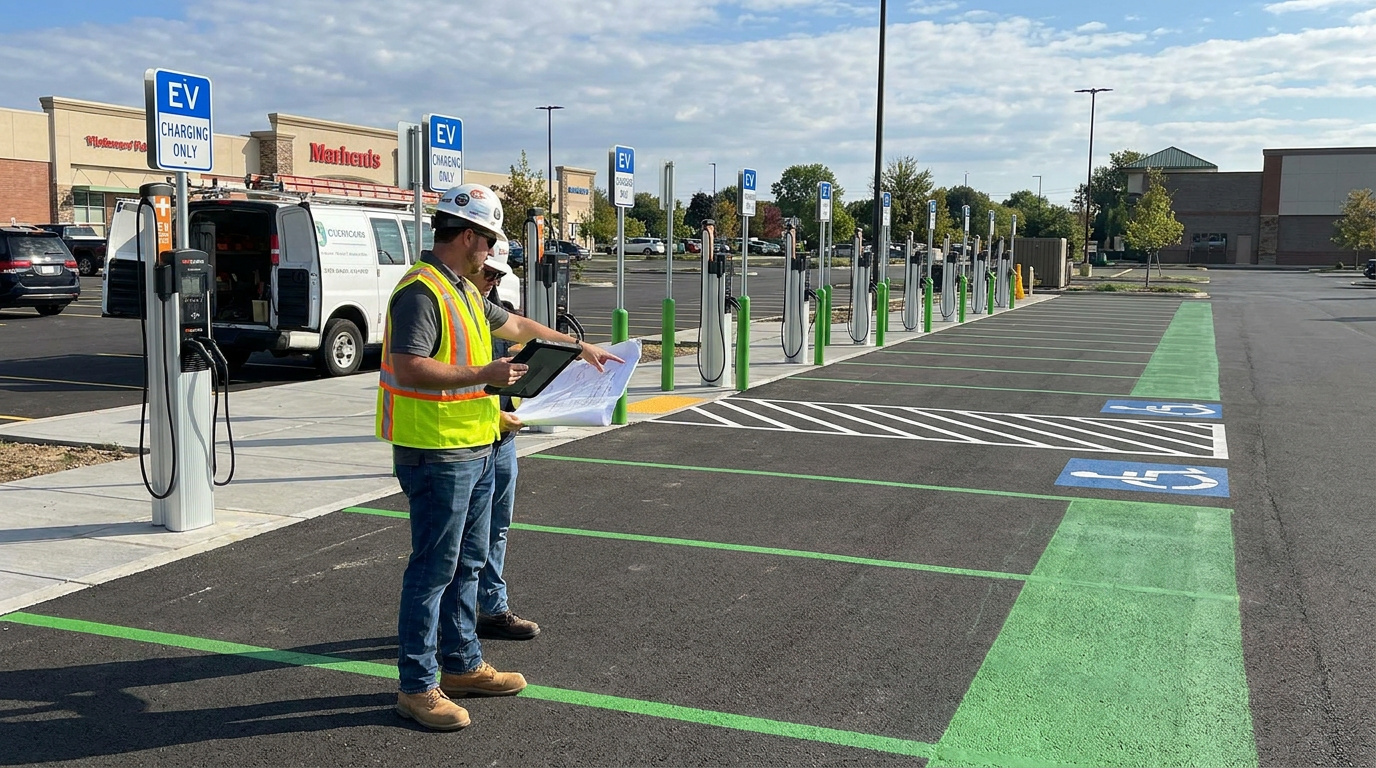
EV charging station parking lot requirements span layout, accessibility, signage, and electrical code simultaneously. You need to verify whether your EV charging spaces can count toward minimum parking requirements, since local code often permits this. Standard EV parking space requirements typically call for conventional stall dimensions unless accessibility rules mandate wider spaces with 60-inch access aisles. Position stalls to avoid blocking circulation aisles, pedestrian paths, and fire lanes. Site prep for expansion includes ensuring that the ground is properly leveled and examined for any underground utilities. This step is crucial for avoiding unexpected complications during construction.
Commercial parking lot EV chargers must connect accessible spaces to an accessible route, use compliant pavement markings like “EV CHARGING ONLY,” and mount signs at visible heights. Confirm electrical load capacity, conduit routing, and future expansion. Review zoning, building code, and accessibility ratios before construction begins. Cold-weather pavement care requires special attention to ensure safety and functionality. It is important to choose materials that can withstand freezing temperatures and resist cracking.
How does charger placement affect parking lot layout
Charger placement drives your entire parking lot layout because it dictates circulation, clearances, and access aisle geometry. Effective ev charger parking lot design positions equipment so cables reach without crossing pedestrian routes, and so ev charging parking spaces don’t block circulation aisles, fire lanes, or crosswalks.
Where you place chargers determines everything else, since circulation, clearances, and access aisles all follow from that first decision.
Consider these placement factors:
- Circulation clearance, keep stalls clear of drive aisles and fire lanes to preserve vehicle flow.
- Access aisle geometry, provide 60-inch access aisles for accessible stalls, reachable without stepping behind vehicles.
- Cable reach, mount equipment so connectors span the stall without creating trip hazards.
- Future expansion, space chargers and route conduit to accommodate additional units later.
Plan placement before finalizing dimensions.
What pavement and trenching work may be needed for charger installation
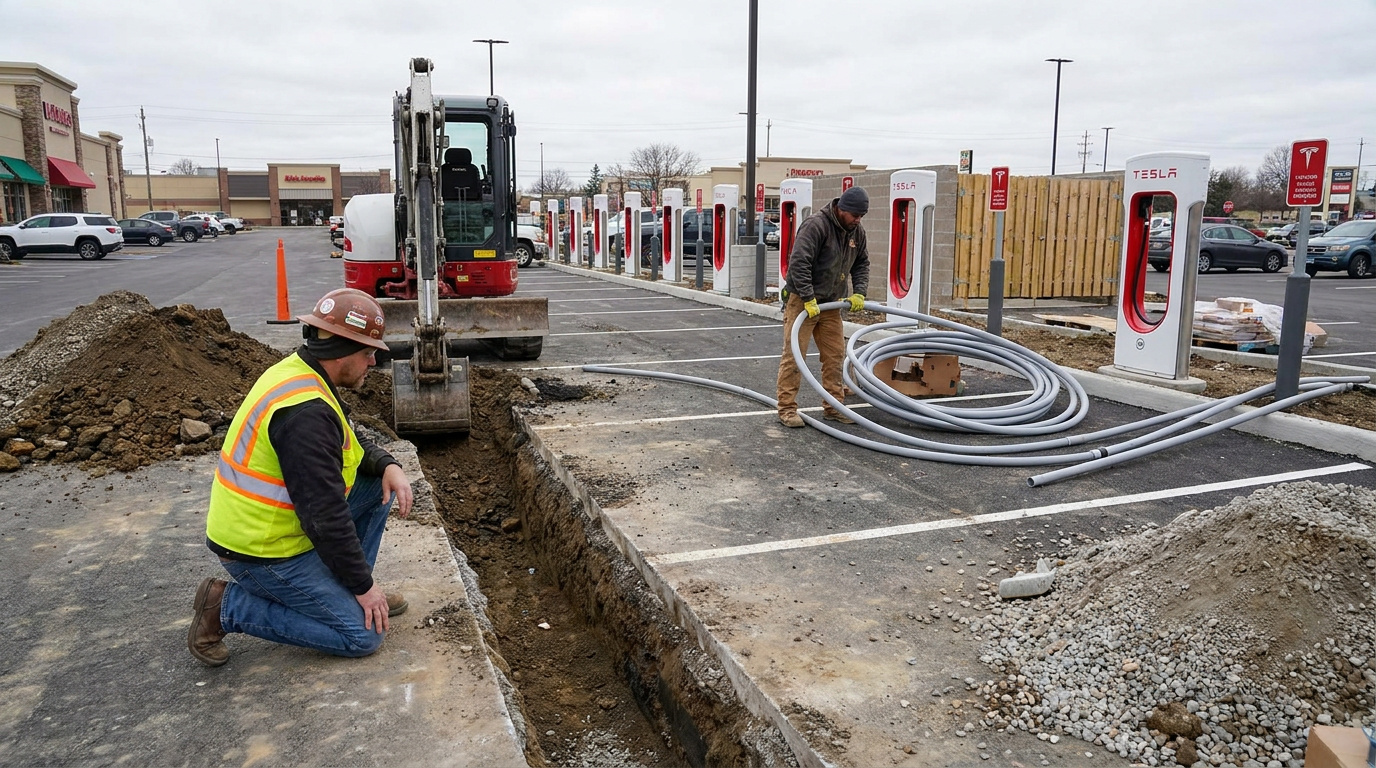
Charger installation typically requires cutting and trenching existing pavement to route conduit from the electrical panel to each charging stall. Plan trench depth and width to meet electrical code for conduit burial, then backfill, compact, and patch to restore surface integrity. Route conduit to avoid pedestrian paths and circulation aisles, keeping cable reach safe without creating trip hazards. Account for future demand by oversizing conduit or adding spare runs during initial trenching, reducing repeated pavement cuts later. Coordinate utility routing, panel service, and equipment spacing so you can expand without disrupting existing stalls. After trenching, restripe affected stalls to standard dimensions and add required pavement markings. Confirm all work matches your permitted site plan before final surface restoration.
How do accessible EV spaces affect parking design
Accessible EV spaces reshape parking design in several concrete ways. Accessible stalls demand wider dimensions, access aisles, and a connecting accessible route to the building entrance. You’ll position equipment so users reach controls from the access aisle without stepping behind vehicles, and mount displays and payment interfaces within accessible reach ranges.
| Design Element | Requirement |
|---|---|
| Stall width | 96-inch minimum |
| Access aisle | 60-inch minimum |
| Accessible route | 36–48 inches, per standard |
| Equipment reach | From aisle, not behind car |
| Controls height | Within accessible reach range |
You’ll also verify accessible-stall ratios based on charger count, since multi-space installations often trigger additional accessibility requirements depending on your jurisdiction.
What drainage striping and traffic flow issues should be considered
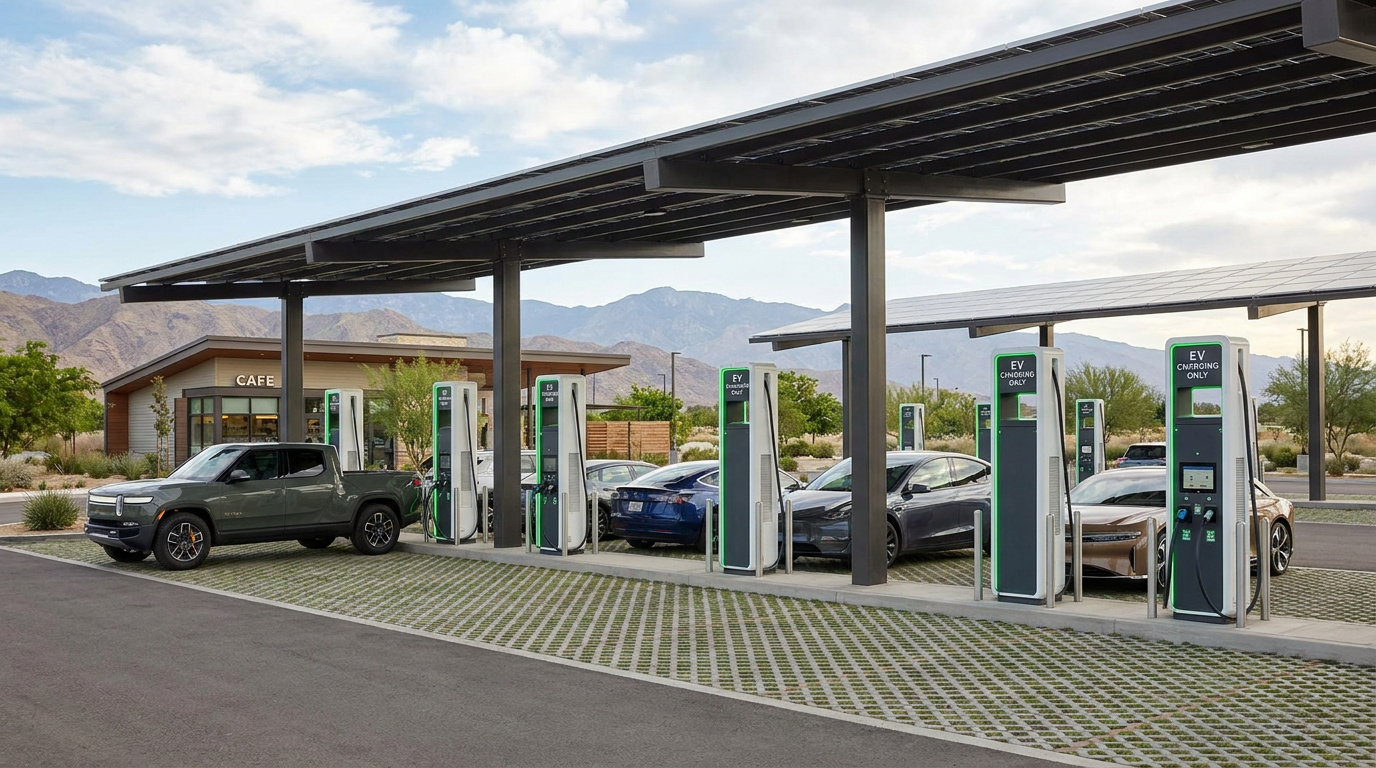
Drainage striping and traffic flow issues to consider include routing runoff away from equipment, applying compliant striping, and preserving circulation aisles so EV charging stalls stay usable and compliant. Position stalls so runoff moves away from equipment bases and charging connectors, preventing water pooling that creates trip hazards or corrosion. Coordinate striping with circulation aisles, fire lanes, and pedestrian paths so charging stalls never block required clearances.
Grade stalls to shed water, stripe for compliance, and protect circulation aisles so EV charging stays safe and usable.
- Grade stall surfaces to direct drainage toward inlets, keeping equipment pads dry and free of standing water.
- Stencil “EV CHARGING ONLY” pavement markings and stripe stall boundaries per local code dimensions.
- Maintain circulation aisle widths so vehicles can enter and exit without crossing pedestrian routes or crosswalks.
- Route cable management above-grade or overhead to eliminate trip hazards across walkways.
Verify each element against jurisdiction-specific requirements.
When should a paving contractor be involved in an EV charging project
A paving contractor should be involved during site planning, not after equipment layout locks in, so grading, drainage, and stall dimensions align with code before any surface work begins. You’ll need their input when positioning stalls to avoid blocking circulation aisles, fire lanes, and pedestrian routes. Involve them after you’ve confirmed accessible route widths, since a 48-inch or 36-inch path must connect stalls to the building entrance without steps behind vehicles. They’ll coordinate conduit routing and trenching with electrical planning, preventing rework when load capacity or future expansion demands additional chargers. Bring them in before pavement stencils and signage placement, too, so “EV CHARGING ONLY” markings and 60-inch-mounted signs land precisely. Early coordination keeps design, drainage, and compliance aligned throughout construction.
Plan EV Charging Lot Upgrades Before Construction Starts
Adding EV chargers can require pavement cutting, trenching, grading, drainage adjustments, and new compliant striping. V&F Paving can coordinate the pavement side of your project through its paving installation services, helping prepare and restore commercial parking areas around charger installation. Call (203) 624-2449 or request a free estimate to discuss site preparation, pavement restoration, and layout needs before construction begins.
Frequently Asked Questions
How Much Does Installing an EV Charging Station Typically Cost?
Your pricing depends on electrical load capacity, panel service, conduit routing, and certified contractor standards. You’ll also factor in signage, pavement markings, accessible route construction, and equipment mounting that meets reach ranges. Don’t overlook future demand growth and expansion spacing. For accurate figures, consult your electrician and check local code requirements before you budget.
What Permits Are Required Before Starting an EV Charging Project?
You’ll typically need electrical permits, building permits, and zoning approvals before starting. Check your state building code, municipal zoning, and local parking ordinances, since requirements vary by jurisdiction. You’ll often submit site plans showing stall dimensions, signage, accessible routes, and equipment placement for approval. If you’re building a public lot, you may face accessible EV stall ratios. It’s best to review design, electrical, permitting, and accessibility requirements together before construction begins.
How Long Does a Typical EV Charger Installation Take?
Your timeline depends on scope, permitting, and electrical complexity, so there’s no single answer. You’ll typically spend more time on approvals than physical work. Once you’ve secured permits and confirmed panel capacity, conduit routing, and load requirements, certified contractors can complete the actual installation, mounting, and stall marking relatively quickly. Multi-space projects with accessible stalls, expanded service, or future-demand provisions take longer. Reviewing electrical, accessibility, and code requirements together prevents costly delays.
Who Is Responsible for Maintaining EV Charging Equipment After Installation?
You’re responsible as the property owner for maintaining EV charging equipment after installation, unless you’ve contracted a network provider or service vendor to handle it. You’ll need to keep chargers, cabling, connectors, and controls in safe, code-compliant condition, ensuring they stay within accessible reach ranges and don’t create trip hazards. You should also maintain signage, pavement markings, and lighting. Confirm maintenance obligations in your service agreement and local code requirements.
Can Property Owners Charge Fees for Using EV Charging Stations?
Yes, you can charge fees for EV charging use. Your payment interfaces, though, must fall within accessible reach zones and comply with accessibility standards for controls and displays. You’ll need to ensure your equipment meets applicable electrical code requirements, including certified contractor standards where local rules apply. Check your jurisdiction’s parking ordinances, since some public lots reserve these stalls exclusively for EV charging and may impose enforcement provisions like fines or towing.