


Clear snow early to protect your parking lot from winter damage. When you remove accumulations promptly, you stop meltwater from seeping into cracks and joints, where it refreezes and drives destructive freeze-thaw cycles. Use mechanical clearing with sharp, properly set blades, and trigger plows at 5 to 8 cm to prevent hard ice bonding. Apply deicers only after mechanical removal, then sweep away residue. Keep going to learn the methods and schedules that safeguard your pavement.
Key Takeaways
- Clear snow promptly before it compacts and bonds to asphalt, preventing moisture infiltration, refreezing, and freeze-thaw fracturing.
- Use mechanical clearing as the safest method, with sharp blades set to correct height and angle to prevent gouging.
- Set plow triggers around 5 to 8 cm (2 to 3 inches) and avoid sudden turns, hard stops, and aggressive downward pressure.
- Apply deicers only after mechanical removal, matching selection and rate to surface temperature to limit residue and runoff.
- Seal cracks and holes soon after they appear, sweep away residue, and conduct post-winter inspections to document damage.
How can parking lot snow removal help prevent winter damage
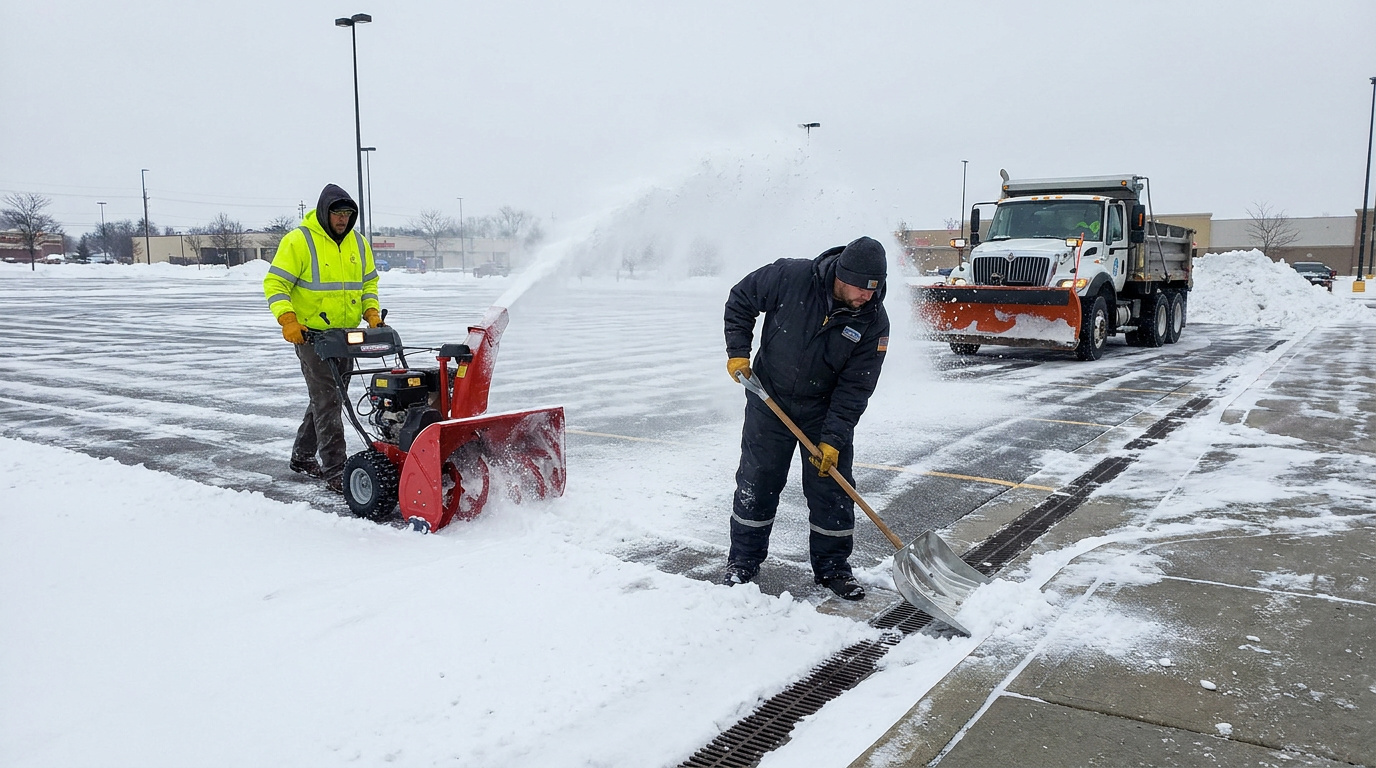
Timing matters because early snow removal prevents the moisture infiltration that drives asphalt winter damage. When you remove snow early and often, you limit moisture infiltration, the primary driver of asphalt winter damage. Snow left to compact bonds to the surface, refreezes, and seeps into joints and cracks, where freeze-thaw expansion accelerates fracturing. You’ll reduce parking lot ice damage by clearing accumulations promptly, before hard ice forms and demands aggressive removal.
Effective commercial parking lot winter care means prioritizing mechanical removal, keeping drainage areas clear, and preventing meltwater from pooling and refreezing. You should seal existing cracks before winter and sweep leftover sand and deicer residue after storms. Prompt, consistent clearing protects your surface, extends pavement life, and keeps entrances, drive aisles, and pedestrian routes safe.
How do snow ice and freeze-thaw cycles damage parking lots
Snow, ice, and freeze-thaw cycles damage parking lots when water seeps into cracks and joints, then refreezes as temperatures drop. This freeze-thaw cycle expands the water, forcing cracks wider and fracturing the surface from within. Each cycle deepens the damage, breaking down asphalt and concrete over time.
Ice that bonds to your pavement compounds the problem, especially when heavy removal scrapes or gouges the surface. Standing meltwater near drains refreezes and accelerates deterioration. Without effective parking lot snow removal, moisture infiltration keeps compounding through every thaw.
That’s why winter parking lot maintenance focuses on prompt clearing and drainage management. You limit water intrusion, reduce refreezing, and slow the freeze-thaw damage that shortens your pavement’s service life and threatens safety.
What snow removal methods are safer for asphalt
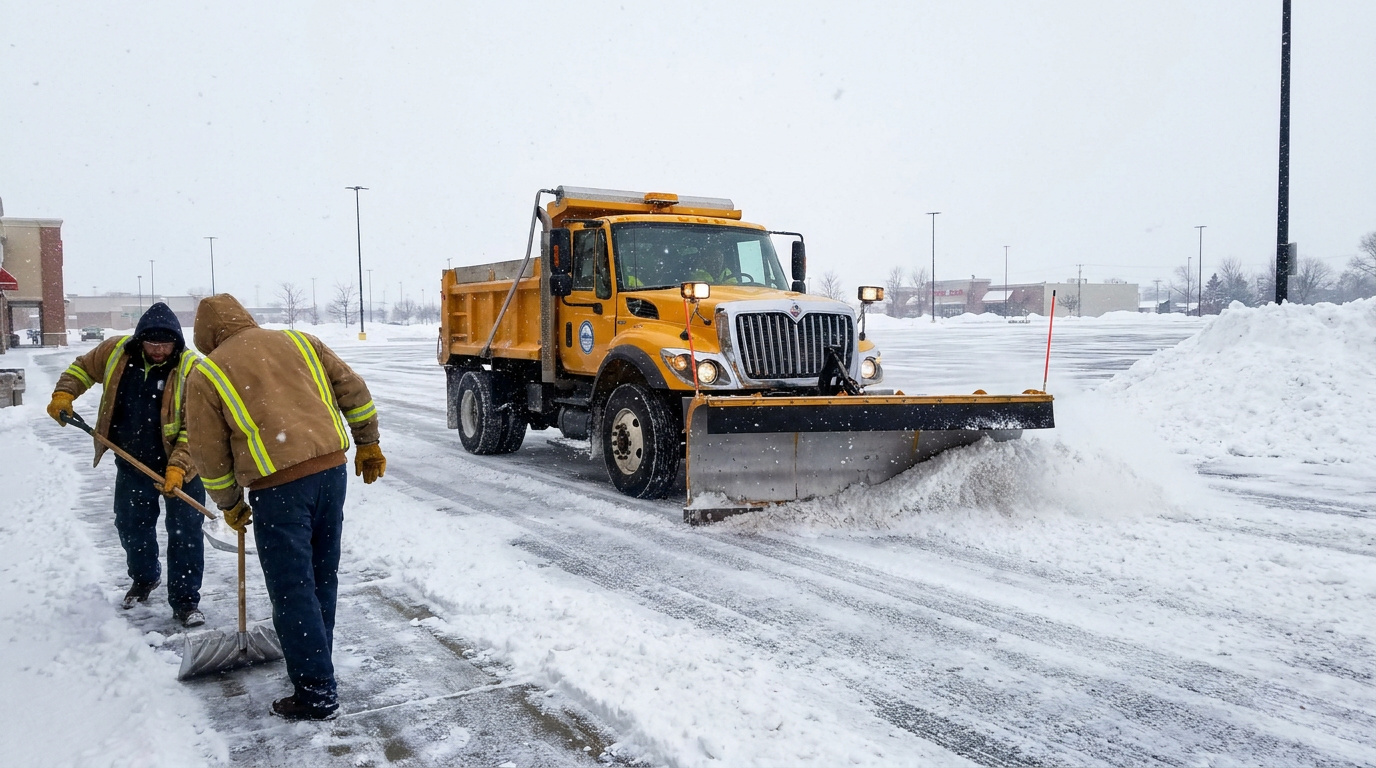
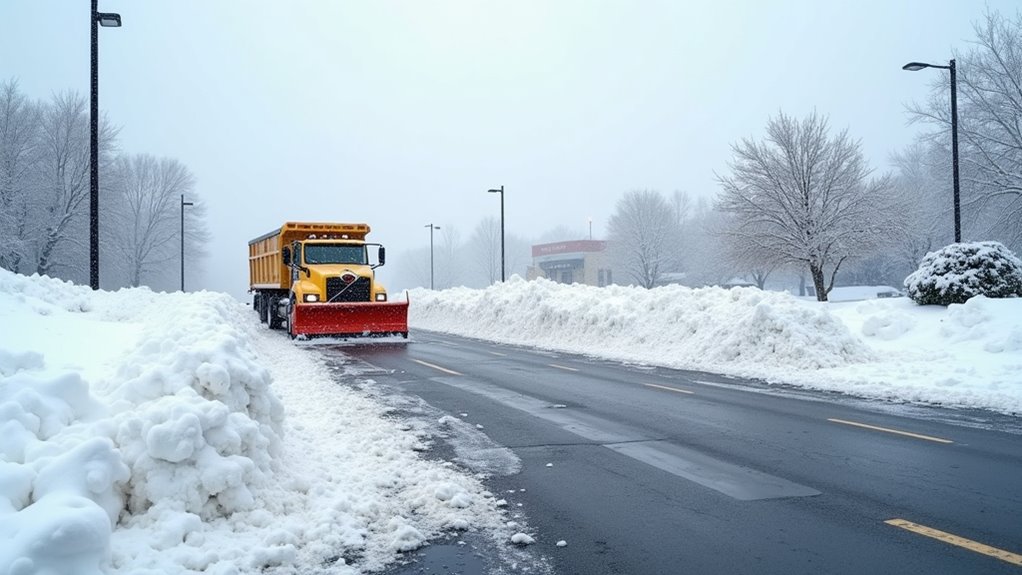
Mechanical clearing is the safest snow removal method for asphalt, so you should plow first and reach for deicers only after. Size your equipment to the lot so you don’t overload the pavement with excess force. Keep blades sharp, smooth, and set to the correct height and angle, and avoid metal edges that scrape, gouge, or catch pavement seams. Plow in straight lines, and skip sudden turns, hard stops, or aggressive downward pressure. Follow organized patterns that push snow away from traffic lanes, curbs, and sensitive edges. Trigger plowing around 5 to 8 cm, or 2 to 3 inches, to prevent hard ice from bonding. After you’ve cleared mechanically, apply deicers matched to surface temperature, and use salt and sand sparingly during storms to limit bonding rather than melt deep snow.
How do deicing materials affect pavement
Deicing materials drive the freeze-thaw cycles that fracture asphalt over time, because they work by breaking the bond between ice and pavement. When meltwater seeps into joints and cracks, then refreezes, it expands and widens those fractures. You’ll limit this damage by applying deicers only after mechanical removal, matching product and rate to surface temperature, and using salt sparingly during storms.
| Practice | Pavement Impact |
|---|---|
| Overapplication | Accelerates freeze-thaw fracturing |
| Rate matched to temperature | Reduces excess residue and runoff |
| Deicing after plowing | Targets bonded ice, not deep snow |
| Post-storm sweeping | Removes residue that stresses surfaces |
Store salt and sand on impervious surfaces to prevent contamination, and sweep residue promptly to reduce buildup and long-term surface stress.
What winter maintenance should property owners schedule
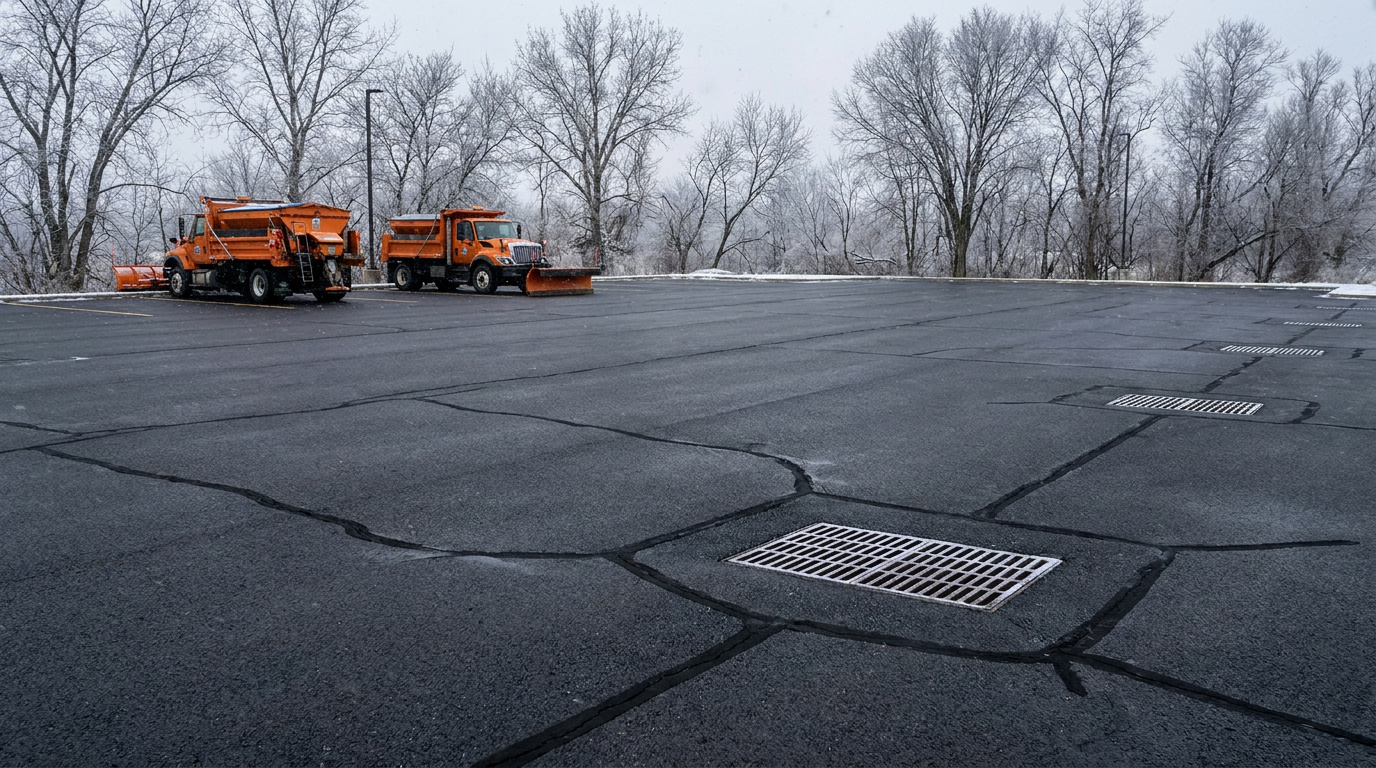
Property owners should schedule crack sealing, protective coatings, equipment inspections, snow removal, and drainage clearing around a clear seasonal timeline rather than reacting storm by storm. Build your calendar before the first storm so inspections, repairs, and equipment checks happen ahead of freezing conditions. Prompt snow removal limits moisture infiltration that worsens cracking, so pair routine clearing with periodic surface treatments to protect pavement integrity throughout the season.
- Seal cracks and holes with asphalt or concrete filler soon after they appear.
- Apply protective coatings or sealants periodically to reduce water intrusion and surface wear.
- Inspect and repair plows and spreaders regularly so they function as expected.
- Sweep leftover sand and deicer residue after storms to reduce buildup and surface stress.
- Clear drainage areas to prevent meltwater pooling and refreezing.
What damage should be inspected after winter
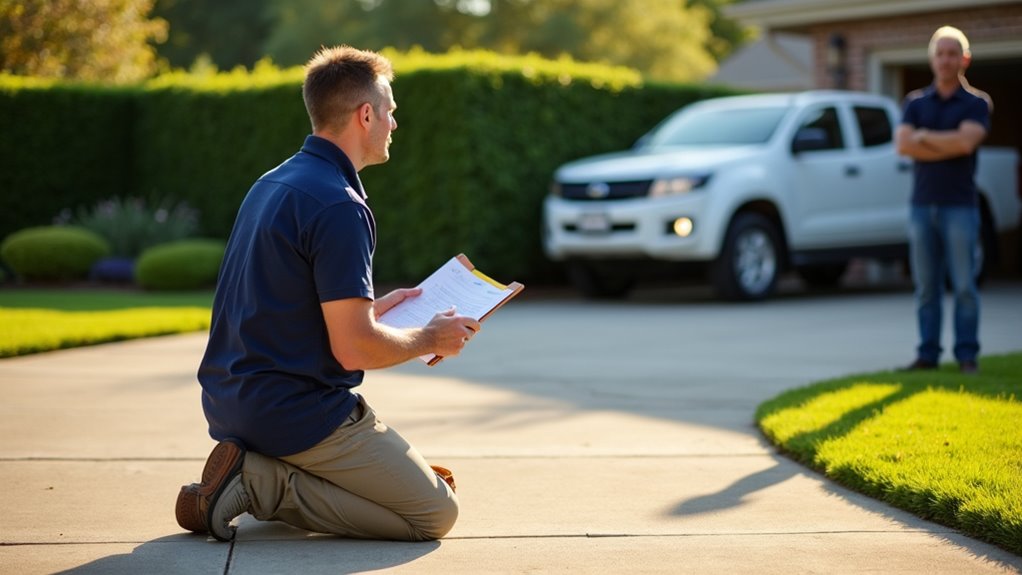
After winter, inspect for new cracks and holes where water infiltrated joints and expanded, then seal them with asphalt or concrete filler before they widen. Check curbs, islands, and pavement edges for gouging or scraping from plow blades. Inspect drainage areas for pooling, sediment, or refreezing damage that signals blocked flow. Note surface wear, spalling, and salt residue that stresses pavement. Sweep leftover sand and deicer to reduce buildup. Examine crosswalks, no-stack zones, and markings for fading or damage. Document everything on your inspection forms, prioritize repairs, and schedule protective coatings or sealants to limit water intrusion before next winter.
Protect Your Parking Lot From Winter Pavement Damage
Winter snow and ice can accelerate cracking, water intrusion, and surface wear across commercial lots. V&F Paving can help property owners protect pavement with professional pavement maintenance services designed to address cracks, weather exposure, and routine upkeep before damage spreads. Call (203) 624-2449 to discuss your lot or request a free estimate for maintenance and repair planning before winter conditions worsen existing pavement problems.
Frequently Asked Questions
How Much Does Professional Parking Lot Snow Removal Typically Cost?
Costs depend on your lot’s measured area, pavement condition, snowfall frequency, plowing triggers, deicer type, and material application rates, all factors you should document during pre-season inspection. To budget accurately, calculate your parking and sidewalk areas, then request quotes from contractors who’ll assess drainage, stacking zones, and priority routes. Always verify their equipment sizing and safety practices.
Who Is Liable for Slip-And-Fall Accidents on Icy Lots?
You’re typically liable if you control the property and fail to maintain safe surfaces. Your best defense is disciplined operations: clear snow early and often, apply deicers after mechanical removal, and manage drainage so meltwater doesn’t refreeze. Document everything, including inspection forms, plowing times, material rates, and weather conditions. Prioritize entrances, drive aisles, and pedestrian routes. When you show consistent, timely action and solid records, you’ll greatly reduce your exposure.
What Insurance Coverage Should Property Owners Have for Winter Operations?
You’ll want general liability coverage to protect against slip-and-fall claims, plus professional liability if you’re contracting snow services. What we can help with is reducing your risk exposure directly: document your pre-season inspections, log every plowing and deicing pass, and keep detailed records. Strong documentation supports both safety and any claims defense.
When Should I Hire a Contractor Versus Handling Snow Removal In-House?
Hire a contractor when your lot’s size exceeds your equipment’s capacity or when storms demand round-the-clock clearing you can’t staff safely. Handle it in-house if you’ve got properly sized equipment, trained crews, and manageable areas you’ve already calculated during pre-season inspection. Consider your plowing triggers. If 5 to 8 cm accumulations pile up faster than you can clear entrances and emergency lanes, you’ll need outside help to prevent dangerous ice bonding.
What Are Eco-Friendly Alternatives to Traditional Salt-Based Deicers?
You’ll cut environmental impact by relying on mechanical removal first, then applying deicers sparingly only where needed. Pre-treat with brine before storms to reduce bonding and lower overall material use. Match your product and application rate to surface temperature, avoiding overuse. Store salt and sand indoors or on impervious surfaces to prevent runoff. Sweep leftover residue after storms, and keep piles away from drains to protect drainage and reduce contamination.