
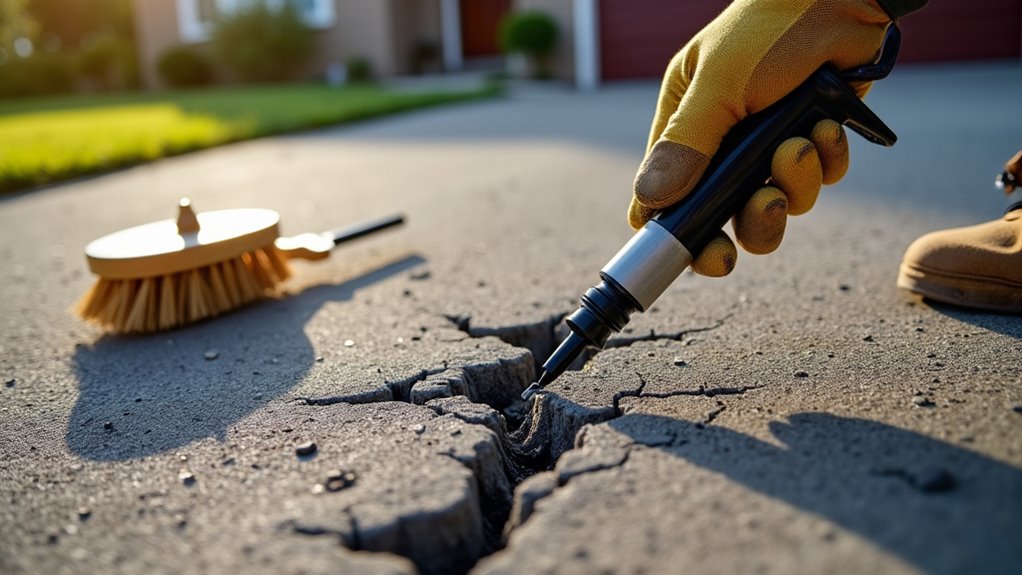
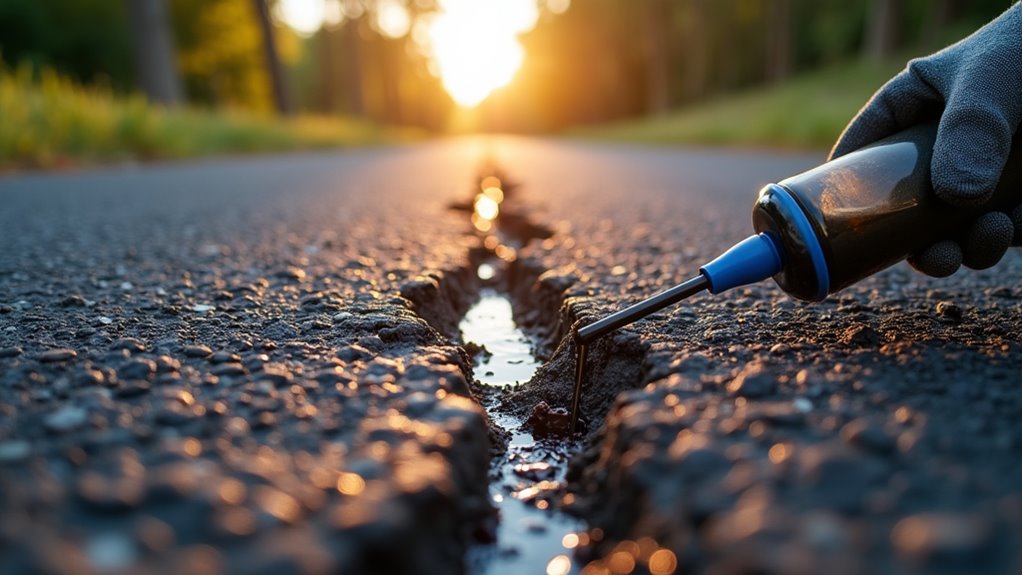
To fill and seal cracks in your asphalt driveway, pull vegetation, brush away loose debris, and blow the crack clean with compressed air. Make sure it’s completely dry. Check that air and pavement temperatures meet the label, often 40°F and rising. Pour a filler or sealant labeled for asphalt into the crack, keeping it contained. Let it cure fully before driving or sealcoating. Below, you’ll find tools, choices, and signs it’s time to call a pro.
Key Takeaways
- Match the product to the crack: seal active cracks, fill less-active ones, and call a pro for alligator cracking.
- Pull vegetation, brush away loose debris, and blow out fine particles with compressed air free of water or oil.
- Apply only to a completely dry crack when air and pavement temperatures meet the label, often 40°F and rising.
- Pour filler steadily, keeping it within the crack or specified band, following label instructions for heating, tooling, and thickness.
- Let filler cure fully per the label before driving on it or applying sealcoat.
How do you fill and seal cracks in an asphalt driveway
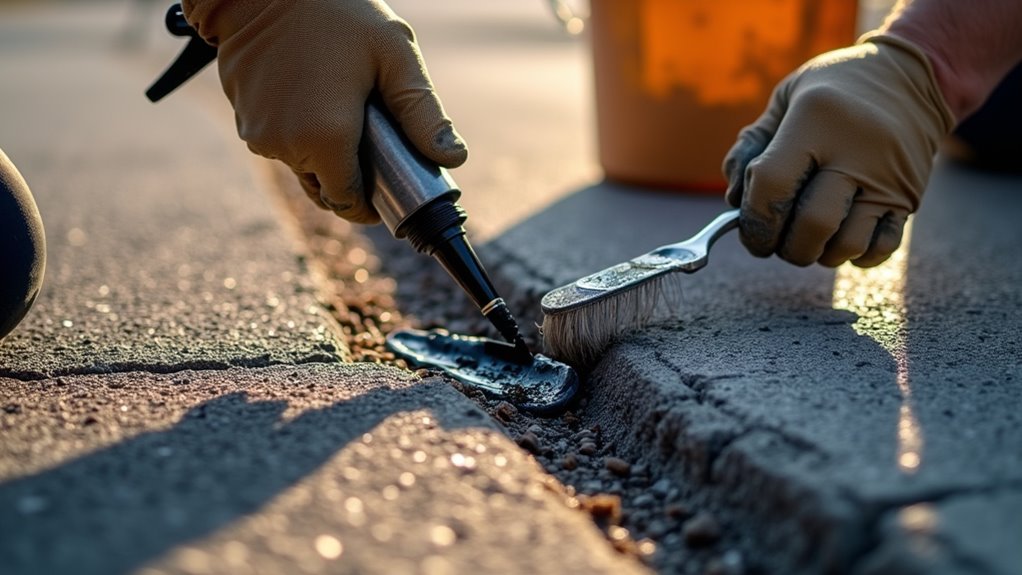
Fill and seal cracks in an asphalt driveway by assessing each crack, choosing the right material, cleaning and drying the crack, checking the weather, applying the product, and letting it cure before traffic or sealcoat. Asphalt crack sealing suits active cracks with limited edge damage, and asphalt crack filling suits less-active cracks with little to moderate deterioration. Hairline cracks under 1/4 inch may not need treatment. Remove vegetation, debris, and dust with a stiff brush and dry compressed air. Confirm air and pavement temperatures meet the product label, often 40°F and rising. Keep material confined to the crack and avoid overheating hot-applied sealant. Alligator cracking signals deeper base failure that filling won’t fix.
What tools and materials does crack filling need
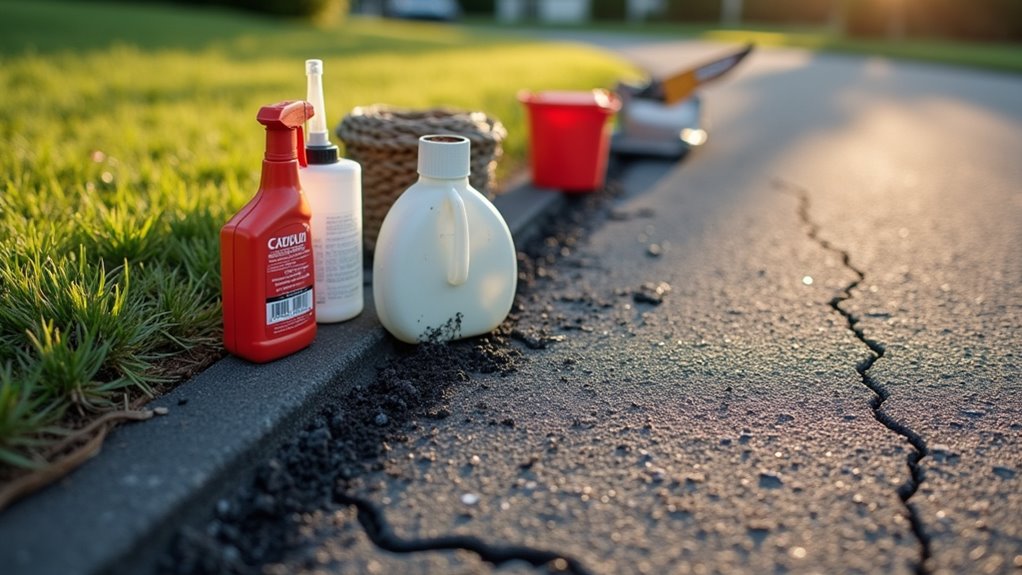
Crack filling needs a stiff brush, air equipment, a sealant or filler labeled for asphalt pavement, and application tools to clean, dry, and apply the material. Match the material to the crack: choose a flexible sealant for cracks that move and a filler for less-active cracks.
| Item | Purpose |
|---|---|
| Stiff brush | Removes vegetation, loose asphalt, and dust |
| Air equipment | Clears debris; must not introduce water or oil |
| Labeled sealant or filler | Fits the crack’s size, movement, and condition |
| Application tools | Pours and tools material within the crack or specified band |
The best way to seal driveway cracks starts with reading the product label. It sets the application method, temperature limits, heating instructions for hot-applied products, and required cure time. Don’t buy surface filler for alligator cracking, since that pattern points to deeper pavement or base failure.
How do you clean and prep it first
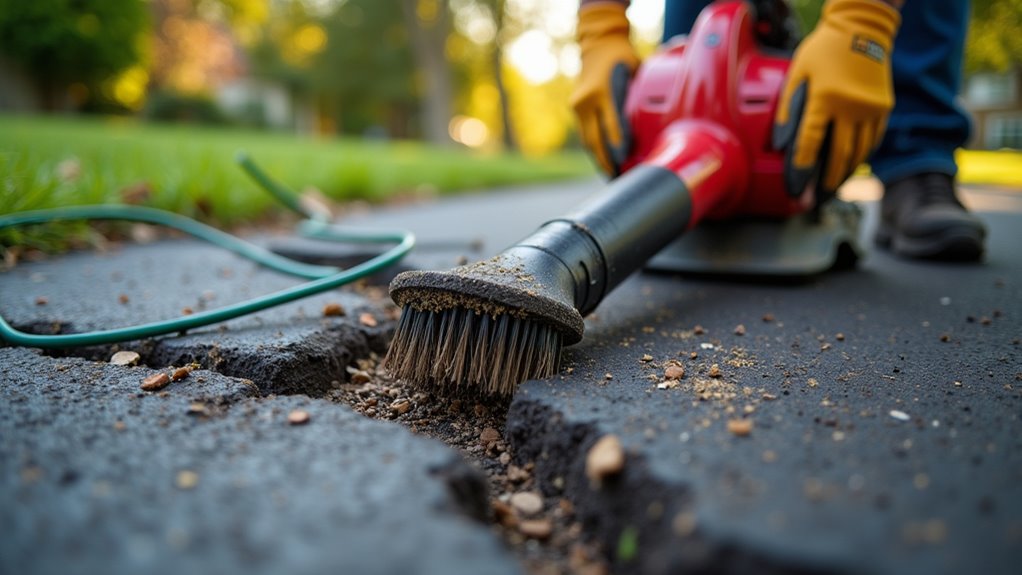
Clean the crack by pulling out vegetation, then brushing away loose asphalt, dust, and debris with a stiff brush. Follow up with compressed air to clear fine particles from deep inside the crack, and make sure your air equipment doesn’t introduce water or oil. Confirm these conditions prior to application:
- The crack is completely dry. Clean and dry it right before application, since leftover moisture interferes with bonding and can cause bubbles.
- The crack needs treatment. Some specifications exempt cracks narrower than 1/4 inch, so don’t widen cracks unless your product or repair method calls for it.
- The surrounding pavement is clean. Sweep removed debris and residue away from the work area.
Prep the cracks shortly before filling so new dirt and moisture don’t settle back in.
How do you apply the crack filler
Pour or squeeze the crack filler steadily into a clean, dry crack, keeping it confined to the crack or the product-specified band. A wide overband exposes more sealant to traffic and increases the risk of failure.
Check both the air and pavement temperatures against your product’s label before you start. Requirements vary, but one federal specification calls for at least 40°F (4°C) and rising. Don’t apply filler to a damp crack, since moisture can cause bubbles and poor bonding.
Follow the manufacturer’s instructions for heating, pouring, tooling, and maximum application thickness. If you’re using a hot-applied sealant, heat it to the supplier’s recommended temperature and avoid overheating or reheating it, because excess heat degrades the material.
Let the filler cure fully before driving on it.
How do you seal the repair so it lasts
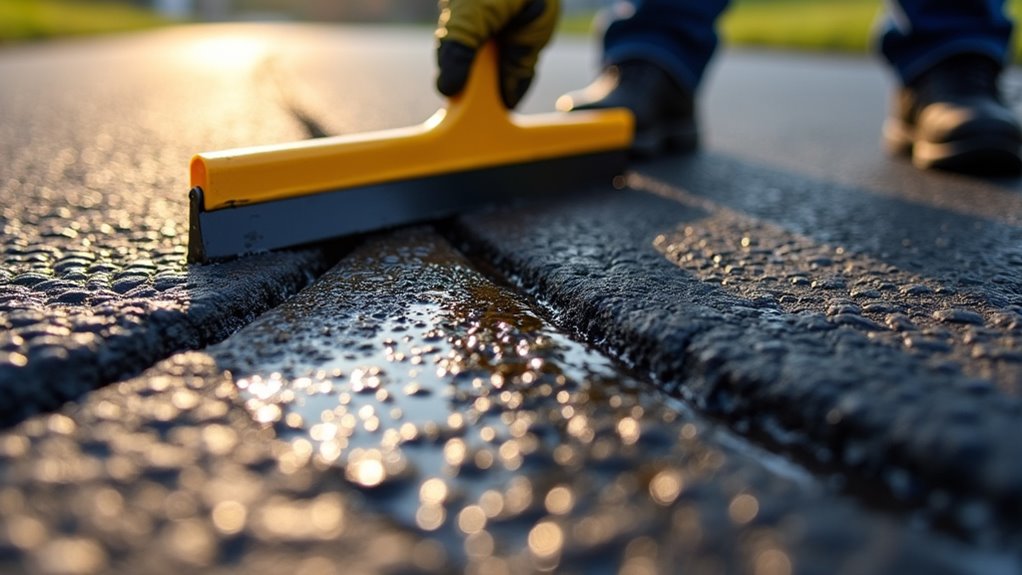
Apply a driveway sealcoat over the crack filler only after the filler has fully cured, as directed by the manufacturer. Sealcoating too early can trap uncured material and weaken the repair. Keep vehicles off the filled cracks for the full period the product label specifies, since cure time varies with the product, temperature, and conditions.
Monitoring the sealed repair extends its life:
- Reinspect seasonally: Check repaired cracks for reopening, edge breakdown, or new cracking nearby.
- Record changes: Note crack width and condition so you can spot active movement early.
- Know when to escalate: If cracks are widespread, keep reopening, or form an alligator pattern, get the pavement assessed for a larger repair instead of repeatedly filling it.
How long should the repair cure before use
Cure the repair for the full time the manufacturer specifies on the product label, and keep traffic off it until that period has passed. Cure time isn’t a fixed number. It depends on the product you’ve chosen and the conditions during and after application, so check the label before you plan anything else.
Temperature and moisture both affect curing. Cooler or damp conditions can slow it, so don’t assume a repair is ready just because the surface looks set. Block the driveway with cones or tape until the full label time has passed.
Hold off on sealcoating. Apply driveway sealcoat only after every crack repair is finished and the filler has cured as the manufacturer directs. After that, reinspect the repaired cracks periodically for reopening or edge breakdown.
When should you call a pro instead
Call a pro when cracks point to a pavement or base problem rather than isolated surface damage. Crack filler seals the surface, but it won’t fix failing layers underneath. Watch for these warning signs:
- Alligator-pattern cracking: Interconnected cracks that resemble reptile skin often signal deeper pavement or base failure that surface sealing can’t address.
- Widespread secondary cracking: When clearly defined cracks give way to branching networks and crumbling edges, you’re facing a more complex repair.
- Cracks that keep reopening: If repaired cracks reopen repeatedly or show edge breakdown, more filling only delays the real problem.
A contractor can assess the base and recommend patching, partial replacement, or resurfacing. You’ll avoid spending time and money on repeated surface repairs that can’t last.
Stop Driveway Cracks From Spreading
Small asphalt cracks can grow quickly once water reaches the pavement and freeze-thaw cycles begin working on the base. V&F Paving provides driveway crack sealing, pothole repair, and asphalt maintenance to address damage before resurfacing or replacement becomes necessary. Call (203) 624-2449 or request service.
Frequently Asked Questions
Do Hairline Cracks Under 1/4 Inch Need to Be Sealed at All?
Not always. You often don’t need to seal hairline cracks under 1/4 inch, and some specifications exempt them entirely, recommending sealing once cracks reach about 1/4 inch. Don’t widen them unless your product or repair method calls for it. Instead, inspect and record their width and condition seasonally. If they grow, move, or form an alligator pattern, you’re likely facing deeper pavement or base failure that needs a larger repair.
What Is the Difference Between Crack Sealing and Crack Filling?
You seal cracks that move, and you fill cracks that don’t move much. Crack sealing uses a flexible sealant that stretches and compresses with active cracks, and it works best when edges show limited deterioration. Crack filling targets less-active cracks with little to moderate edge damage. Before you choose, you’ll check crack movement and edge condition, then pick a product labeled for asphalt pavement and that crack’s size and condition.
Can I Fill Driveway Cracks in Cold or Rainy Weather?
No for rain, and cold works only if your product’s label allows it. You can’t apply sealant to wet cracks, since moisture interferes with application and can cause bubbles. Check air and pavement temperature against the label. One federal specification requires at least 40°F (4°C) and rising, while Montana DOT allows surface temperatures from 35°F and rising. Clean and dry cracks immediately beforehand, and work in dry, calm conditions when possible.
What Does Alligator Cracking Mean for My Driveway’s Foundation?
Alligator cracking can indicate that your driveway’s base or deeper pavement layers are failing, not just the surface. You shouldn’t treat it as a routine crack-filling job, because sealant won’t fix what’s happening underneath. Record the cracked area’s size and condition seasonally, and watch for spreading or reopening. If the pattern’s widespread, have a professional assess your pavement for a larger repair before you spend money on surface sealing.
How Often Should I Inspect My Driveway for New or Reopened Cracks?
Inspect your driveway seasonally, at least four times a year. Record each crack’s width and condition so you can track changes as temperatures shift and cracks open or close. Check repaired cracks for reopening and edge breakdown, and scan surrounding pavement for new cracking. If you’re finding widespread cracks, repeated reopening, or alligator-pattern damage, don’t just keep refilling them. Have a professional assess the pavement for a larger structural repair.