
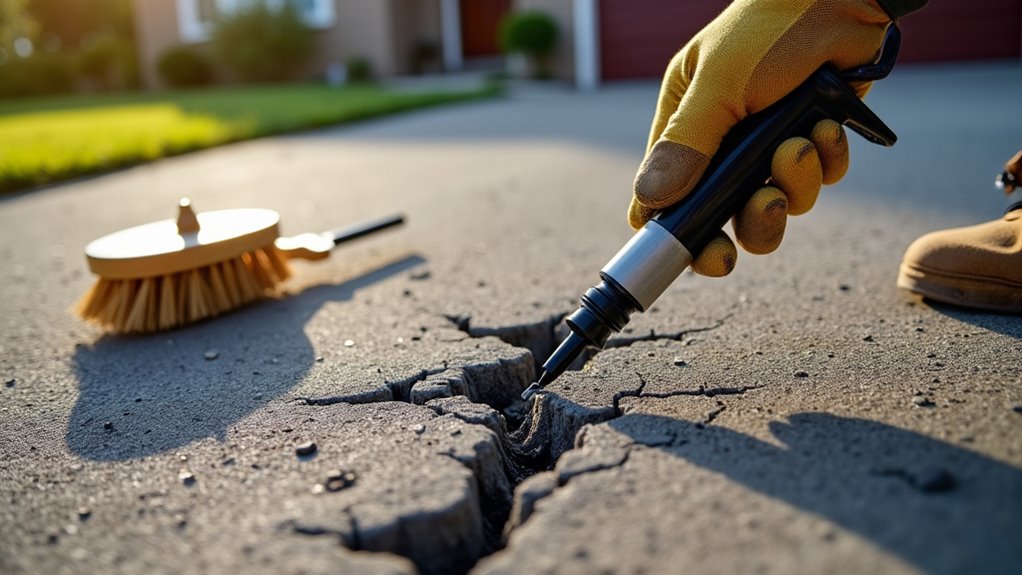
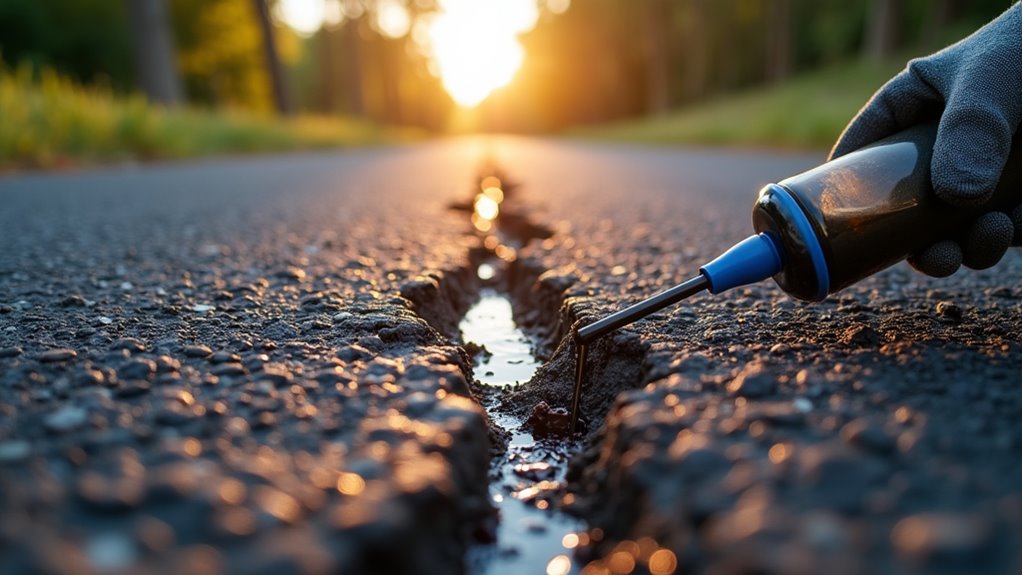
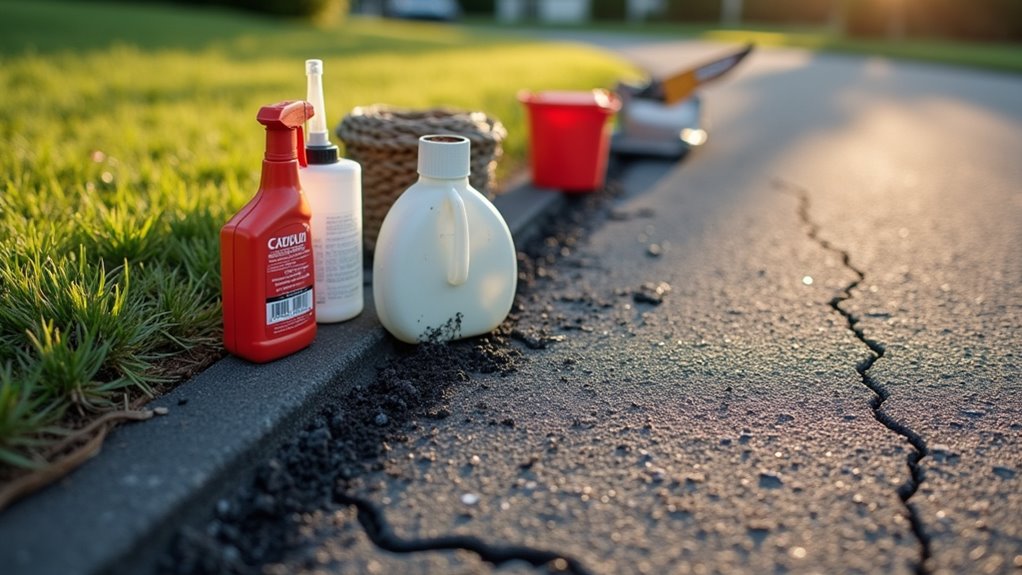


Pick rubberized filler for cracks that open and close with the seasons. Its rubber modifiers let the cured seal stretch and recover, so it can reach 6 to 8 years. Plain liquid filler suits flush, non-working cracks and typically lasts 2 to 4 years. Remember, “liquid” only describes how a product pours. Many cold-pour liquids are rubberized emulsions, so check the data sheet’s crack-width limit and extension specs. Here’s how each one cures, holds up, and handles in DIY work.
Key Takeaways
- “Liquid” describes the application form, not the chemistry; many cold-pour liquids are actually rubberized asphalt emulsions.
- Unmodified liquid asphalt filler stays stiff in cold weather and softens in heat, offering little flexibility for moving cracks.
- Rubberized fillers stretch and recover as pavement expands and contracts, making them better for working cracks.
- Cold-pour fillers suit DIY use without heating equipment, while hot-pour rubberized sealant requires a melter at roughly 375°F.
- Cold-pour liquid lasts about 2 to 4 years in non-working cracks; routed hot-pour rubberized sealant can last 5 to 9 years.
Should you use liquid or rubberized asphalt crack filler

Choose a crack filler based on how the product’s built and how you’ll apply it, not on the “liquid” or “rubberized” label. “Liquid” describes the application form, not the chemistry: many cold-pour liquids are actually rubberized asphalt emulsions, while some liquid asphalt materials offer little flexibility at all. Check the label and technical data sheet. A rubberized asphalt emulsion crack filler pours cold and handles small driveway repairs, cracks up to 3/4 inch, though the manufacturer’s limit controls. Hot-pour rubberized sealant needs heating but flexes with working cracks and lasts longer. An unmodified liquid asphalt crack filler stiffens in cold weather and softens in heat. If you’re choosing a rubberized asphalt-emulsion crack filler, compare extension and bond specs, not marketing terms.
How do liquid and rubberized fillers compare
Hot-pour rubberized sealant flexes with working cracks and lasts longer than cold-pour liquid, but it requires heating gear. Cold-pour liquid is ready to use, though unmodified versions stay stiff and temperature-sensitive.
| Factor | Cold-Pour Liquid | Hot-Pour Rubberized |
|---|---|---|
| Flexibility | Low unless rubber-modified | High; flexible below 35°F |
| Service life | About 2 to 3 years | About 5 to 7 years |
| Equipment | None; apply from container | Melter heating to roughly 375°F |
| Crack width | Up to 3/4 inch typically | Working cracks, routed or overbanded |
Check the technical data sheet, not the label, since some cold-pour products contain rubber. Never heat hot-pour past the manufacturer’s maximum, or you’ll degrade polymers and invite early failure. Your results depend on crack preparation, placement, and climate, so treat these ranges as estimates.
How does liquid asphalt crack filler work
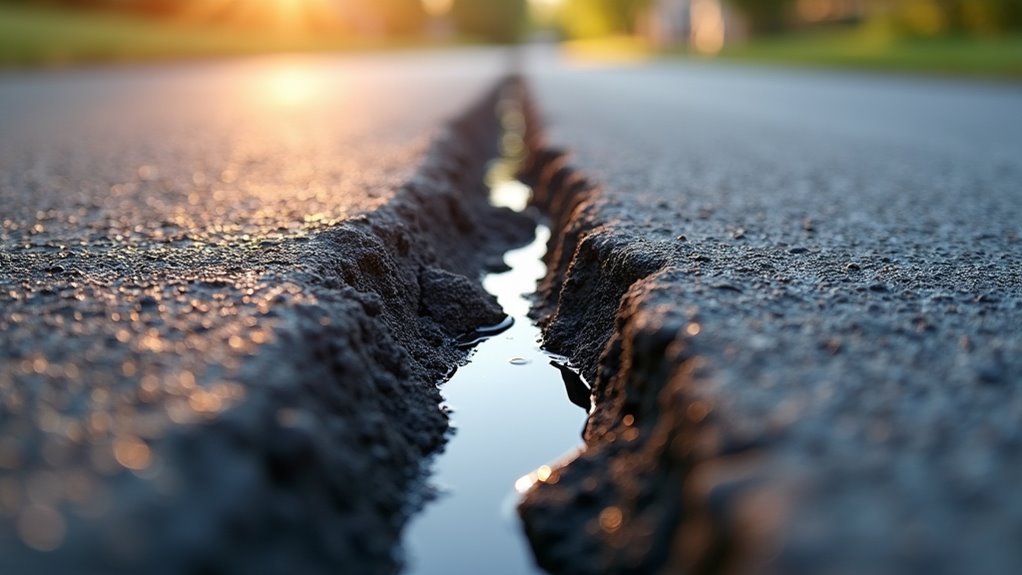
Liquid asphalt crack filler works by flowing into a crack as an emulsion and then curing into a seal that keeps water out. In a cold-pour liquid filler, asphalt or rubberized asphalt is suspended as an emulsion, so it pours straight from the container into the crack without heating. After placement, the product cures and leaves that water-blocking seal. You don’t need a kettle or melter, which is why cold-pour suits DIY driveway work and smaller repairs.
Check the label before you buy. “Liquid” describes the application form, not the chemistry. Some products contain rubber modifiers for flexibility, and unmodified liquid asphalt stays stiff and temperature-sensitive. Respect the manufacturer’s crack-width limit. One product guide cites up to 3/4 inch. Follow directions for surface preparation, placement, and curing, and expect roughly 2 to 3 years of service, depending on your site and installation quality.
How does rubberized emulsion filler work
A rubberized emulsion filler is an asphalt emulsion blended with rubber or polymer modifiers, so it pours cold like any liquid filler but cures into a more flexible seal. You don’t need heating equipment. You clean the crack, pour or squeeze the product in, and let it cure according to the label directions.
The modifiers are what make the difference. Unmodified asphalt has little flexibility and reacts strongly to temperature swings, but the rubber lets the cured filler stretch and recover as the pavement expands and contracts. That’s why rubber-modified fillers in non-working cracks can last about 6 to 8 years, compared with 2 to 4 years for plain emulsions. Check the technical data sheet before you buy, though. “Liquid” only describes how you apply it. The modifier content and the manufacturer’s crack-width limits tell you how it’ll perform.
Which lasts longer under weather and traffic

Hot-pour rubberized sealant usually outlasts cold-pour liquid, especially in working cracks that open and close with the seasons. Rubber modifiers keep it flexible in cold weather and resist softening in heat, so it tolerates movement and traffic better. FHWA reports rubberized sealant in routed working cracks can last about 5 to 9 years, while overbanding non-routed cracks drops that to roughly 2.5 to 5 years.
Cold-pour liquid suits flush, non-working cracks, where emulsion fillers typically perform for 2 to 4 years, and consumer guides estimate 2 to 3 years for driveway products. Rubber-modified fillers in similar cracks can reach 6 to 8 years.
Don’t count on labels alone. Prep, routing, application temperature, and moisture determine real service life, so always check the manufacturer’s technical data sheet before you buy.
Which is easier for a DIY repair
Cold-pour liquid is easier for a DIY repair, so grab it if you want the simplest option. It’s ready to use, so you skip heating equipment and apply it straight from the container. Clean the crack, make sure it’s dry, and follow the label’s directions for placement and curing. Check the manufacturer’s crack-width limit; one product guide lists up to 3/4 inch, but your label controls.
Hot-pour rubberized sealant demands more skill. You’ll need a melter, careful temperature control, and protective gear. Most products apply around 375°F, and overheating past the manufacturer’s maximum degrades polymers and shortens service life. That’s why contractors usually handle it.
If you’re sealing a few small driveway cracks, cold-pour gets the job done. If you’re facing wide, working cracks, hiring a pro for hot-pour pays off.
Which filler is the right pick for your cracks
The right filler depends on crack width and movement. Cold-pour liquid makes sense if you’re patching a driveway crack under the manufacturer’s stated limit, often up to 3/4 inch. It needs no heating equipment, and you’ll get 2 to 3 years of service.
Working cracks that open and close with temperature call for hot-pour rubberized sealant. It stays flexible in cold weather, resists running in heat, and typically lasts 5 to 7 years, though you’ll need equipment that holds about 375°F. In wet climates, look for ASTM D6690 Type III, which adds water-immersed bond testing.
Don’t trust labels alone. Check the technical data sheet, since both cold-pour and hot-pour products can contain rubber modifiers. Then weigh traffic, routing needs, and installation skill.
Use the Right Repair for the Crack
Different cracks need different materials and repair methods. V&F Paving provides professional crack filling and asphalt maintenance using repair methods suited to the condition of the pavement rather than relying on a one-size-fits-all product. Call (203) 624-2449 or contact the team for an assessment.
Frequently Asked Questions
Can I Apply Crack Filler Over an Older Sealant That Has Already Failed?
Generally, no—you shouldn’t. If you pour new filler over failed sealant, it’ll bond to loose, debonded material instead of sound crack walls, and it’ll fail early. Remove the old sealant, clean and dry the crack, and rout it if you’re treating a working crack. Then check the manufacturer’s data sheet for compatibility, crack-width limits, and application temperature. You’ll find sealant performance depends on preparation as much as product choice.
How Soon Can I Drive on a Driveway After Filling Cracks?
It depends on the product, so check the label before you pull the car back in. Cold-pour liquid fillers need curing time, and the manufacturer’s directions set that window. Surface temperature, moisture, and weather all change it. Hot-pour rubberized sealant sets as it cools, but you’ll still want to follow the maker’s guidance. Don’t rush it: tires can track uncured filler and pull it from the crack you just sealed.
Should I Fill Cracks Before Applying a Driveway Sealcoat?
Yes, you’ll want to fill cracks before you sealcoat. Sealcoat won’t bridge working cracks or keep water out of them, so seal those first. Clean, dry, and prep each crack thoroughly, then use cold-pour liquid for small, simple repairs within the product’s width limit. Use hot-pour rubberized sealant for working cracks that need flexibility. Let the filler cure fully per the manufacturer’s directions before you apply sealcoat over the repairs.
What Should I Use for Cracks Wider Than the Product’s Limit?
Don’t stretch a cold-pour filler past its rated width. Once you’re beyond the manufacturer’s limit, often about 3/4 inch, check a hot-pour rubberized sealant’s data sheet and confirm it’s rated for that crack size. You’ll need melter equipment and tight temperature control, usually near 375°F, without exceeding the stated maximum. If the crack’s too wide for any sealant, you’re most likely facing a pavement patching repair, not simple crack filling.
How Do I Store Leftover Crack Filler for Future Use?
Check the label and technical data sheet first; storage directions vary by product, and my guidance doesn’t spell out shelf life or temperature limits. Treat that sheet as your rule. For hot-pour rubberized sealant, don’t assume you can reheat leftovers freely: heating beyond the manufacturer’s maximum degrades polymers, cuts elasticity, and invites early failure. Before reuse, confirm the product still meets its stated application requirements. If you’re unsure, buy fresh.