
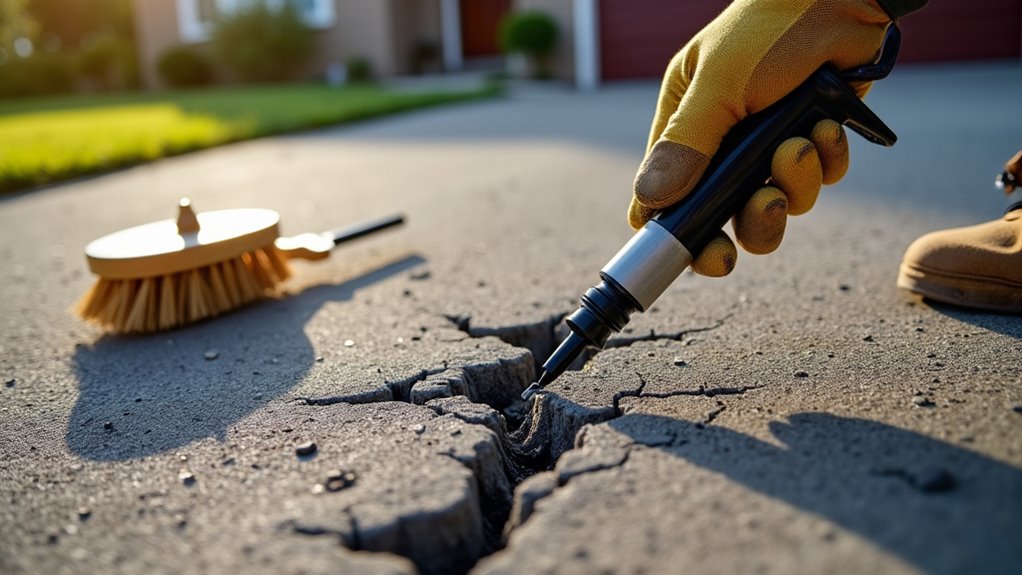

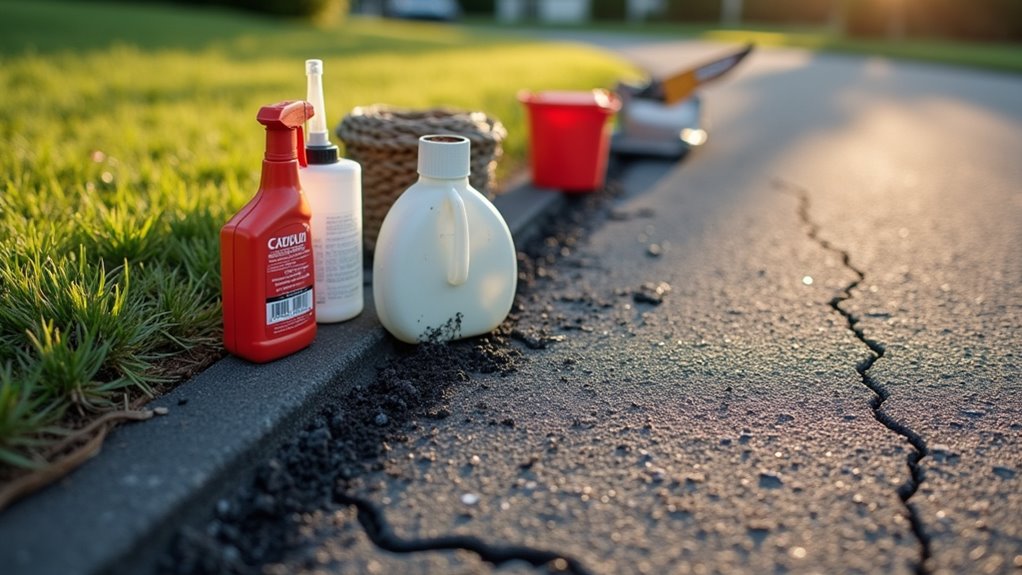


The best asphalt crack filler is the one you match to crack width. For hairline cracks, you’ll want Latex-ite Dura Sand Mix, which you squeegee into fine fractures. For cracks up to ½ inch, grab Latex-ite 2X or Rust-Oleum EZ Squeeze. Sikaflex-410 self-levels in ¼–1 inch gaps. For deep cracks up to 1 inch, press and torch Latex-ite Pli-Stix. Clean each crack first. Next, you’ll see how they compare and which steps make repairs last.
Key Takeaways
- Latex-ite Dura Sand Mix suits hairline cracks, working into fine fractures with a squeegee or broom and covering up to 500 square feet.
- Latex-ite 2X and Rust-Oleum EZ Squeeze are cold-pour fillers for cracks up to ½ inch, applied by shaking and squeezing.
- Sikaflex-410 is a flexible, self-leveling sealant for ¼–1 inch cracks; keep the bead ¼–½ inch deep.
- Latex-ite Pli-Stix handles deep cracks up to 1 inch by pressing the rope into the crack and torch-melting it.
- Clean debris from cracks before filling; cracks wider than 1 inch or breaking pavement need a different repair approach.
What are the best asphalt crack fillers for driveways and pavement
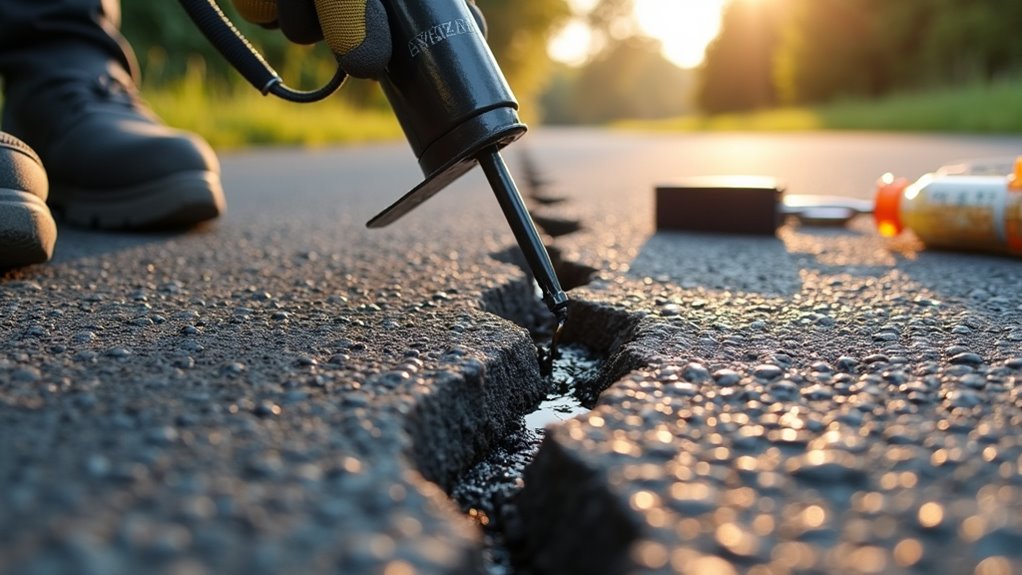
The best asphalt crack fillers for driveways and pavement are Latex-ite Dura Sand Mix, Latex-ite 2X, Rust-Oleum EZ Squeeze, Sikaflex-410, and Latex-ite Pli-Stix, with crack width and depth deciding which one will actually hold. For hairline cracks, you’ll get the most from Latex-ite Dura Sand Mix, a squeegee-applied sealer covering up to 500 square feet on smooth asphalt. If you’re filling cracks up to ½ inch, Latex-ite 2X or Rust-Oleum EZ Squeeze is the best blacktop crack filler for quick cold-pour work. For ¼–1-inch cracks, Sikaflex-410 is likely the best crack filler for asphalt that moves, since it self-levels and flexes. For deep cracks up to 1 inch, press Latex-ite Pli-Stix into place and melt it with a torch. No single best asphalt driveway crack filler fits every crack, so check the current manufacturer label before buying.
How do the top asphalt crack fillers compare
Crack width is the main factor separating the top asphalt crack fillers, so the best asphalt crack filler for your job is the one rated for the gap you’re filling.
| Product | Best Fit |
|---|---|
| Dura Sand Mix | Hairline cracks; up to 500 sq ft |
| Latex-ite 2X | Up to ½ inch; 50 to 100 ft/gal |
| Rust-Oleum EZ Squeeze | Up to ½ inch; cold-pour |
| Sikaflex-410 | ¼–1 inch; self-leveling |
| Pli-Stix | Deep cracks to 1 inch; torch-melted |
If you want the best driveway crack filler for movement-prone pavement, flexible sealants like Sikaflex-410 generally handle expansion better than cold-pour liquids, which cost less but typically don’t last as long. Check temperature limits too: Latex-ite 2X needs 55°F and rising. Always verify current labels and data sheets before buying.
What makes one worth buying

A filler is worth buying when its rated crack width covers the gaps you’re actually filling, because a product pushed past its limit won’t hold. Measure first. Hairline cracks call for a surface sealer like Dura Sand Mix, not a deep-crack filler. Cold-pour liquids such as Latex-ite 2X or Rust-Oleum EZ Squeeze handle cracks up to ½ inch. For ¼–1 inch gaps, Sikaflex-410’s self-leveling hybrid formula fits, and Pli-Stix rope suits deep cracks up to 1 inch.
Match the product to your conditions. Check temperature ranges, typically 50°F minimum, and plan a dry 24–48-hour window. Flexible sealants handle pavement movement better than rigid fillers, so they’re worth the premium where your pavement shifts seasonally. Verify the current label, since specs change.
Which one works best for narrow, hairline cracks
For hairline cracks, Latex-ite Dura Sand Mix Driveway Filler Sealer is the best fit. It’s a surface sealer, not a deep-crack filler, so you spread it with a squeegee or broom and work it into fine fractures across the whole driveway. You’ll get up to 500 square feet of coverage on smooth or previously sealed asphalt, and up to 400 on porous or unsealed surfaces. Apply it when temperatures stay between 50°F and 95°F, and keep rain off it for up to 48 hours. Two coats reportedly form a protective membrane lasting 3–5 years, though that’s an estimate. If a crack opens toward ½ inch, switch to a cold-pour filler like Latex-ite 2X or Rust-Oleum EZ Squeeze. Check the current label before you buy.
Which stands up to wide cracks and heavy traffic
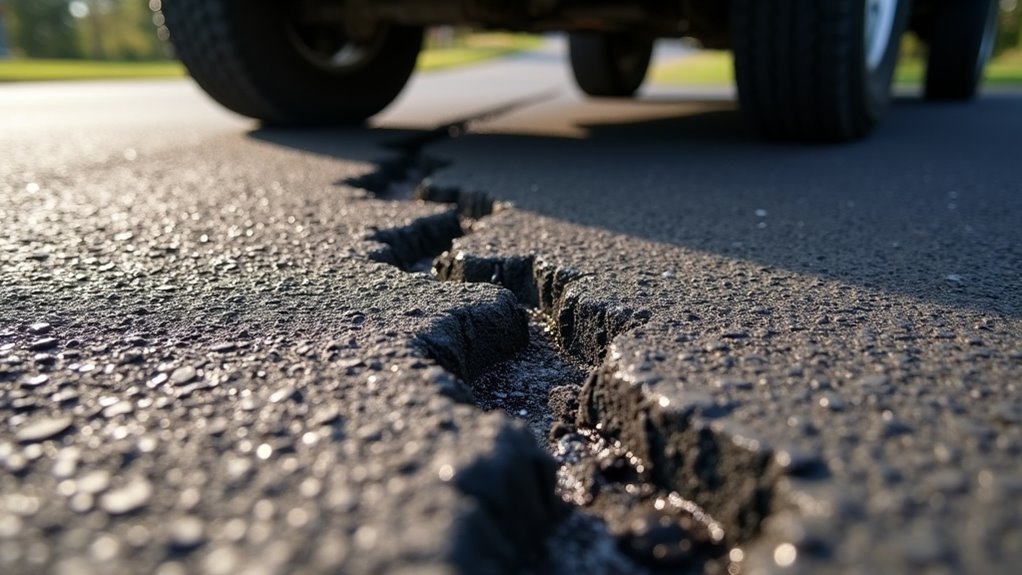
Sikaflex-410 Self-Leveling Asphalt Sealant is the strongest choice for cracks wider than ½ inch. Its cited range covers cracks ¼–1 inch wide at a bead depth of ¼–½ inch, and as a flexible sealant, it handles pavement movement better than rigid fillers. Apply it when air and substrate sit between 50°F and 100°F, and condition the cartridge to 65 to 75°F first. Budget carefully: a 9-ounce cartridge fills only 10.8 feet of a ½-by-¼-inch joint.
Pli-Stix is your alternative for deep cracks up to 1 inch. You press the rope into the crack and melt it with a torch.
Don’t stretch either product for cracks that exceed 1 inch or pavement that’s breaking up. You’ll need a different repair approach. Verify labels.
How do you apply it for a lasting fix
Apply filler to a clean crack in the right weather, because even the best filler fails if it can’t bond. Check the forecast: Latex-ite 2X needs asphalt at 55°F and rising, with no rain for 24 hours. Sikaflex-410 calls for 50 to 100°F air and substrate, with the cartridge conditioned to 65 to 75°F.
Clean out debris before filling. For cold-pour products, shake the container and squeeze filler into the crack, staying within the ½-inch limit. With Sikaflex-410, keep the bead ¼–½ inch deep and let it self-level. For Pli-Stix, press the rope into the crack, then torch it until it melts.
Allow 24 to 48 hours for 2X to cure. For hairline cracks, squeegee or broom Dura Sand Mix and keep rain off for 48 hours. Always verify current label directions first.
How do you choose the best crack filler for your job
Choose the best crack filler by matching it to the crack’s width and depth, because no product performs outside its stated range. For hairline cracks, you’ll want a surface sealer like Latex-ite Dura Sand Mix, which covers up to 500 square feet on smooth or previously sealed asphalt. It isn’t a deep-crack filler.
For cracks up to ½ inch, use a cold-pour product such as Latex-ite 2X or Rust-Oleum EZ Squeeze. They cost less but typically don’t last as long as flexible sealants. For ¼–1-inch cracks, Sikaflex-410 self-levels and handles pavement movement better. For deep cracks up to 1 inch, Pli-Stix rope melts in with a torch.
If your pavement is extensively cracked or deteriorated, you’ll need a different repair. Always verify the current label before buying.
Get Tougher Cracks Professionally Repaired
Store-bought filler can help with minor damage, but expanding cracks, potholes, and deteriorated asphalt often need a more durable repair. V&F Paving offers professional asphalt crack sealing and pothole repair to help stop water from reaching the pavement base. Call (203) 624-2449 or schedule an evaluation.
Frequently Asked Questions
How Long Should I Wait Before Driving on Filled Cracks?
Plan on waiting at least 24 to 48 hours before you drive on cracks filled with Latex-ite 2X, since that’s the retailer’s listed cure time. We suggest checking with each current label. Cooler temperatures or humidity can slow curing, so you’ll want to wait longer then. If the filler still feels soft or tacky, keep vehicles and foot traffic off it.
Can I Apply Driveway Sealer Over Freshly Filled Cracks?
Yes, but don’t rush it. Let the filler cure fully first. Latex-ite 2X, for example, lists a 24 to 48-hour cure time, and you’ll want a firm surface before sealing. Then check conditions: Latex-ite wants asphalt at 55°F and rising, and Dura Sand Mix needs consistent 50 to 95°F temperatures with no rain for up to 48 hours. Your filler’s label may specify a different wait, so confirm it first.
What Should I Do if Cracks Are Wider Than One Inch?
Don’t force any of these fillers into cracks wider than one inch. Sikaflex-410 and Pli-Stix top out at about 1 inch, and cold-pour options like Latex-ite 2X stop at ½ inch. Wider, extensive, or deteriorated cracking may need a different repair approach, so you’ll want to assess the pavement’s condition and consult a paving professional. Before buying anything, check the current label and manufacturer data sheet for exact limits.
How Often Should Asphalt Cracks Be Inspected and Refilled?
You’ll want to check your pavement regularly and refill any crack that’s reopened or widened. Service life varies: cold-pour fillers typically don’t last as long as flexible sealants, and a two-coat Dura Sand Mix membrane reportedly lasts 3 to 5 years. Crack condition, installation quality, and climate all affect results, so verify the current label and manufacturer guidance before you reapply.
Can Asphalt Crack Filler Be Used on Concrete Surfaces?
Generally, no. Every filler here targets asphalt. Latex-ite 2X, Rust-Oleum EZ Squeeze, Pli-Stix, Dura Sand Mix, and Sikaflex-410 all list blacktop cracks, and none of their data addresses concrete. Don’t assume a blacktop product will bond or flex properly on concrete. You’ll get better results when you match the filler to the surface, so choose one the manufacturer labels for concrete and check its current data sheet first.