





You need a driveway culvert wherever your driveway crosses a roadside ditch, swale, or drainage channel carrying stormwater. Without one, you’ll risk ponding, overtopping, erosion, or washout. Size the pipe using drainage area, rainfall intensity, land cover, and ditch slope, not just visible width. Check your local road department minimums, often 12, 15, or 18 inches, and match the next upstream pipe. There’s more you’ll want to know before you start digging.
Key Takeaways
- A driveway culvert is required wherever a driveway crosses a roadside ditch, swale, or drainage channel carrying stormwater.
- Without a culvert, blocked drainage can cause ponding, overtopping, erosion, or washout at the driveway entrance.
- Sizing depends on drainage area, rainfall intensity, land cover, and ditch slope, not just visible ditch width.
- Local road departments often require minimum diameters of 12, 15, or 18 inches, sometimes matching upstream pipes.
- Common materials include HDPE plastic, steel, and concrete, with wall thickness matched to expected vehicle traffic loads.
When do you need driveway culvert pipe installation and how is it sized
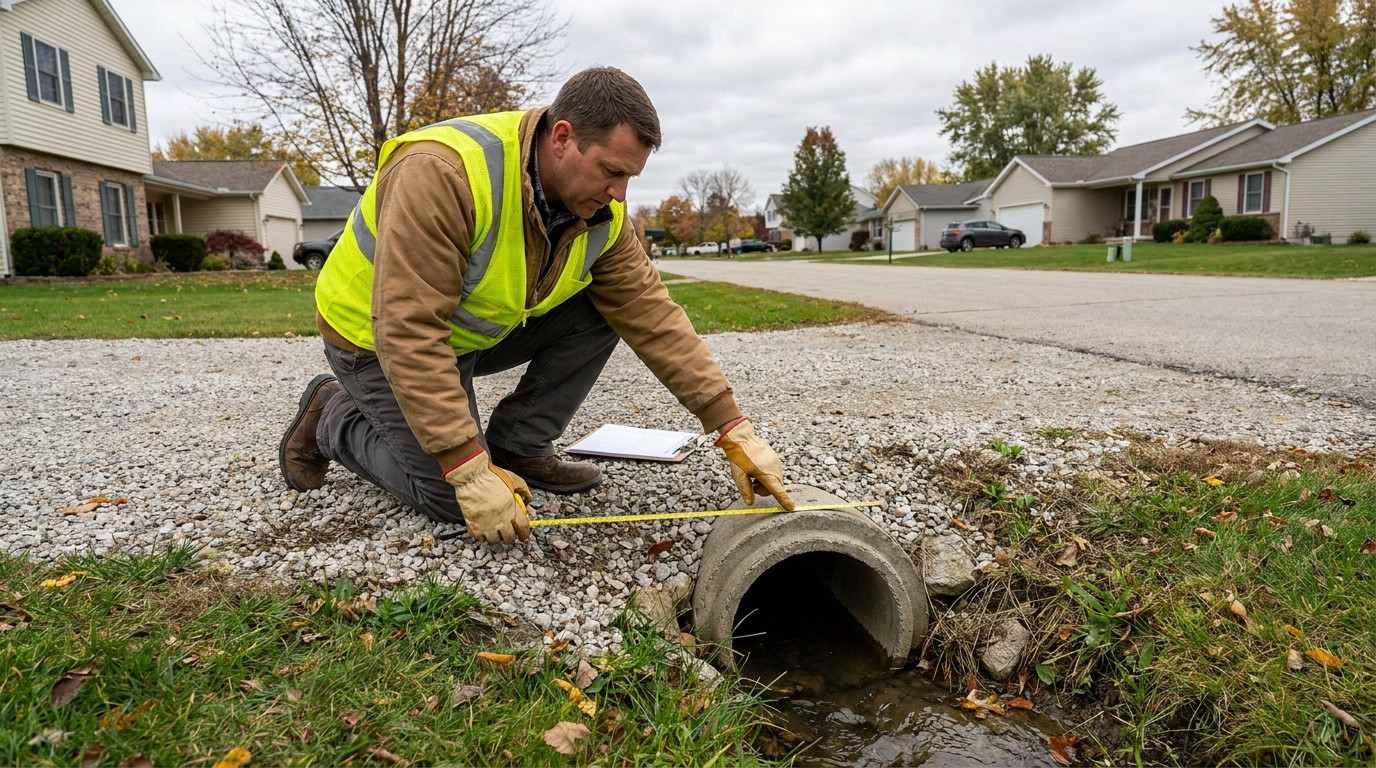
You need a driveway culvert wherever a driveway crosses a roadside ditch, swale, or drainage channel that carries stormwater, so flow can pass beneath the entrance. Most road departments require this driveway drainage culvert before issuing a permit, especially where upstream runoff reaches the crossing during heavy rain. Without one, you’ll get ponding, overtopping, erosion, or washout.
Culvert pipe sizing depends on drainage area, rainfall intensity, land cover, ditch slope, and expected runoff, not just visible ditch width. Residential sizes typically run 12 to 18 inches, with 24 inches or more for larger areas. Many standards set a 12-, 15-, or 18-inch minimum, or require you to match the next upstream pipe. When capacity’s uncertain, size up. Culvert installation driveway specs follow your local public works standard.
What does a driveway culvert do
A driveway culvert carries stormwater beneath your driveway, maintaining the ditch’s natural flow line across the crossing. It preserves the drainage channel’s conveyance capacity so runoff from the upstream area passes without ponding, overtopping, or erosion at your access point. Proper driveway culvert pipe installation aligns the pipe’s invert with the ditch grade, preventing bottlenecks that trigger washout during high-intensity rainfall events.
Your driveway culvert size directly governs hydraulic capacity. An undersized pipe restricts flow, forcing water over the driveway surface and eroding the embankment. Matching the diameter to calculated runoff, typically 12, 15, or 18 inches for residential conditions, keeps the crossing functional under design storms.
Correctly sized and placed, the culvert protects your driveway’s structural integrity and maintains code-compliant drainage continuity.
Which site conditions require a driveway culvert
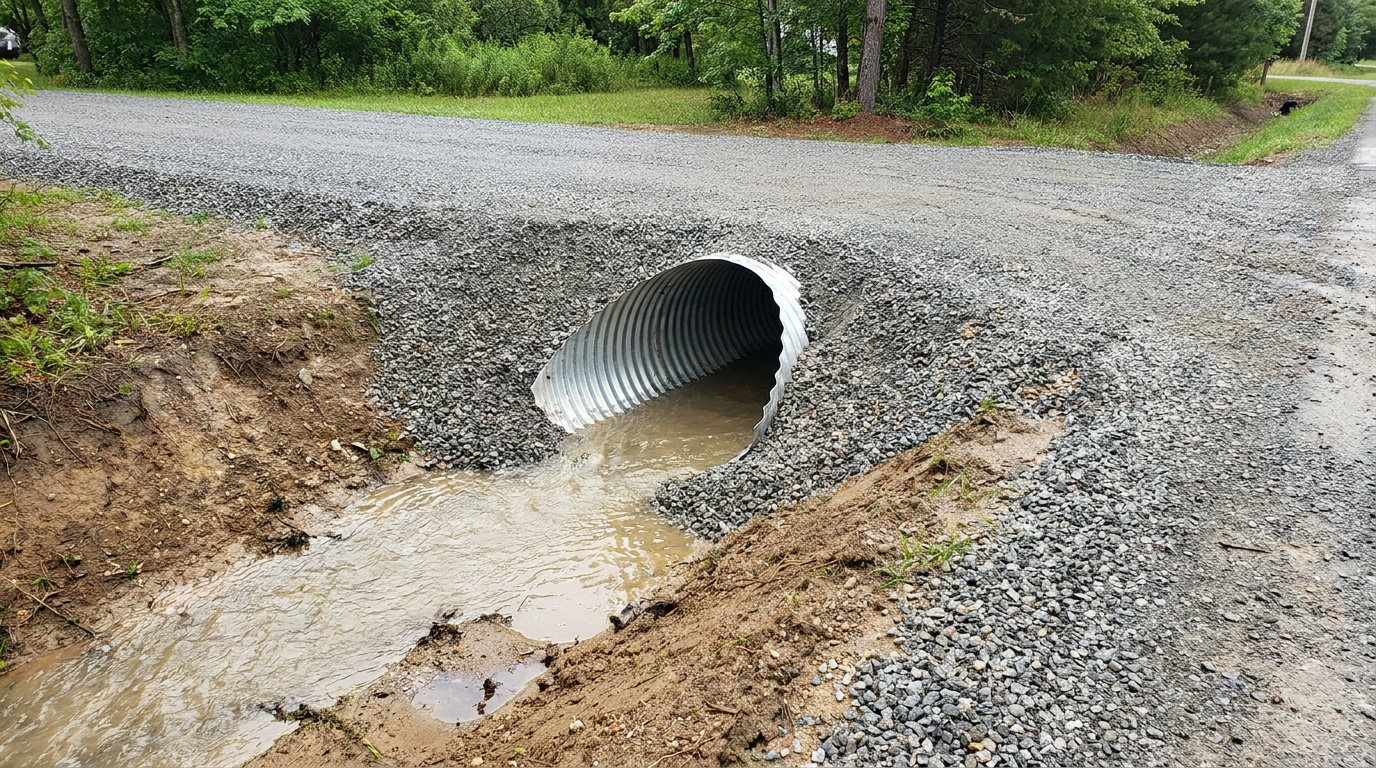
A driveway culvert is required wherever your driveway crosses a roadside ditch, swale, or drainage channel. If your driveway spans any channel carrying stormwater, you’ll need a pipe to pass flow beneath the crossing. Watch for sites where runoff from an upstream drainage area reaches the entrance during heavy rain, that concentrated flow demands conveyance.
You’ll also need one wherever your access would otherwise block natural drainage, causing ponding, overtopping, erosion, or washout. Check for a defined flow line, standing water after storms, or an existing upstream pipe on the same ditch line.
Most jurisdictions won’t issue a driveway permit until you install a culvert meeting their minimum diameter, commonly 12, 15, or 18 inches, so verify local requirements first.
How are culvert pipe sizes selected
You size a driveway culvert by calculating it from drainage area, rainfall intensity, land cover, and ditch slope, not just the visible ditch width. Start with your local road department’s minimum, commonly 12, 15, or 18 inches inside diameter. Several standards require you to match or exceed the next upstream pipe on the same ditch line. When runoff capacity’s uncertain, choose the larger size, since undersizing raises overtopping risk.
| Diameter | Typical Application | Condition |
|---|---|---|
| 12 in | Small residential | Minimum-code |
| 18 in | Higher runoff | Larger minimum |
| 24 in+ | Large drainage area | Wide ditch, upstream flow |
Always verify against your jurisdiction’s specification, because local standards override general sizing rules and dictate final diameter.
What materials are commonly used for driveway culverts
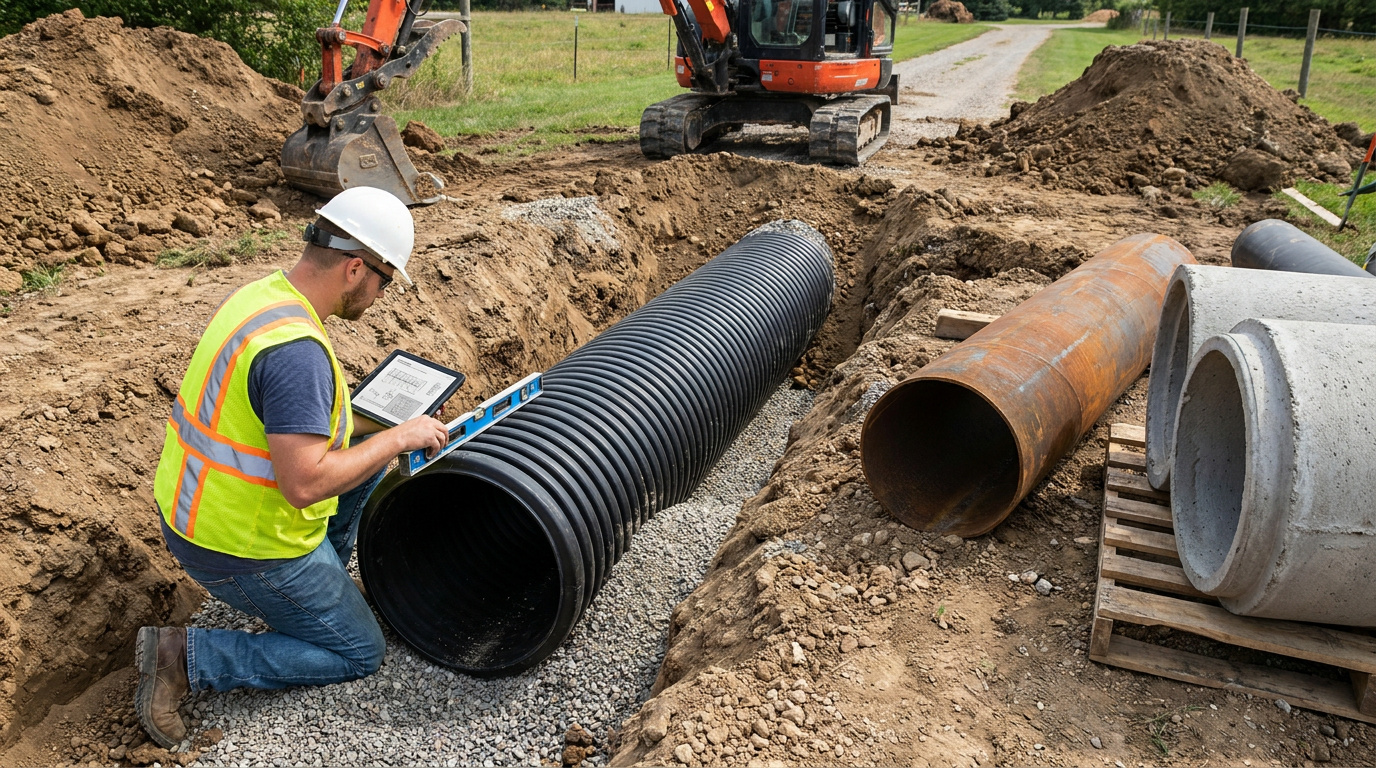
Driveway culverts are commonly made from HDPE plastic, steel, or concrete. Pick a pipe material rated for your driveway’s traffic loads. Match wall thickness or gauge to the vehicle loads crossing the culvert, and confirm the choice against your road department’s specification.
- HDPE plastic: Widely used for residential driveways because it’s easy to handle and stocked in standard 12-, 15-, and 18-inch diameters. Verify wall profile meets load requirements.
- Steel: Selected where higher structural strength or longer service life is required. Confirm gauge and coating for corrosion resistance.
- Concrete: Chosen for heavy loads, extended durability, or where local standards mandate it.
Whatever you pick, adequate cover depth and compaction are critical. Replace any crushed or deflected pipe rather than patching it in place.
Solve Driveway Drainage Before Water Causes Damage
A properly sized culvert helps move stormwater beneath your driveway and reduces the risk of erosion, pooling, and washout. V&F Paving can evaluate site conditions, grading, and drainage needs through its driveway paving services before construction begins. Call (203) 624-2449 or request a free estimate to discuss drainage improvements and driveway preparation for your property.
What should be checked before culvert installation begins
Check your local minimum diameter first, since many jurisdictions set 12, 15, or 18 inches, and verify whether your pipe must match or exceed the next upstream pipe on the same ditch line. Calculate required size from drainage area, rainfall intensity, land cover, and ditch slope, not just visible ditch width. Measure driveway width and add side slopes to determine pipe length; some standards require 20 to 24 feet minimum. Check permit requirements, since the road department may specify diameter, length, and material. Verify ditch flow line elevation and alignment, confirm adequate cover depth for traffic loads, and choose the larger size when capacity’s uncertain.
Frequently Asked Questions
How Much Does Driveway Culvert Pipe Installation Typically Cost?
Specific installation costs vary because they depend on project details not included in the referenced specifications. The total cost depends on several measurable factors, including pipe diameter, pipe length, material choice, excavation, cover depth, and compaction requirements. Consider pipe sizes such as 12, 15, or 18 inches based on local code requirements, typical lengths of 20 to 24 feet plus side-slope tie-ins, and materials like HDPE, steel, or concrete. Check road department permit requirements first because they determine the final specifications.
Can I Install a Driveway Culvert Myself or Hire a Professional?
You can install it yourself, but you’ll need to verify code compliance first. Confirm your jurisdiction’s minimum diameter (12, 15, or 18 inches), required length (often 20 to 24 feet), and material specs before starting. You must secure permit approval, then match culvert elevation and alignment to the ditch, achieve proper cover depth, and compact for traffic loads. If sizing calculations require engineering review or 24-inch-plus pipe, hire a professional.
How Long Does a Driveway Culvert Last Before Replacement?
Your culvert’s lifespan depends on the material you’ve installed. HDPE plastic typically delivers 50-plus years, while concrete can exceed that under proper cover depth and compaction. Steel varies widely based on gauge and corrosion exposure. You’ll extend service life by inspecting after major storms for sediment buildup, deflection, or crushing. Don’t patch damaged, deflected, or crushed pipe. Replace it, since it won’t pass design flow and risks driveway washout.
Do I Need a Permit to Replace an Existing Culvert?
You’ll likely need a permit, since many counties and cities require approval before installation, even for replacements. The permit process often specifies diameter, length, and material, so you can’t assume the old size still complies. Check your local road department or public works specifications first, because those standards override general rules. If they require a 15-inch minimum and you’ve got 12-inch, you’ll have to upsize. Verify requirements before you dig.
Who Is Responsible for Maintaining a Driveway Culvert?
You’re typically responsible for maintaining the driveway culvert serving your property, since it’s part of your access point. You’ll need to inspect it after major storms for blockage, sediment buildup, erosion, or deformation, and clear debris, silt, and vegetation that reduce flow capacity. If the pipe’s crushed, deflected, or failing to pass water, you’ll replace it rather than patch it. Check your local road department’s specifications, since jurisdictional maintenance requirements can override general assumptions.