
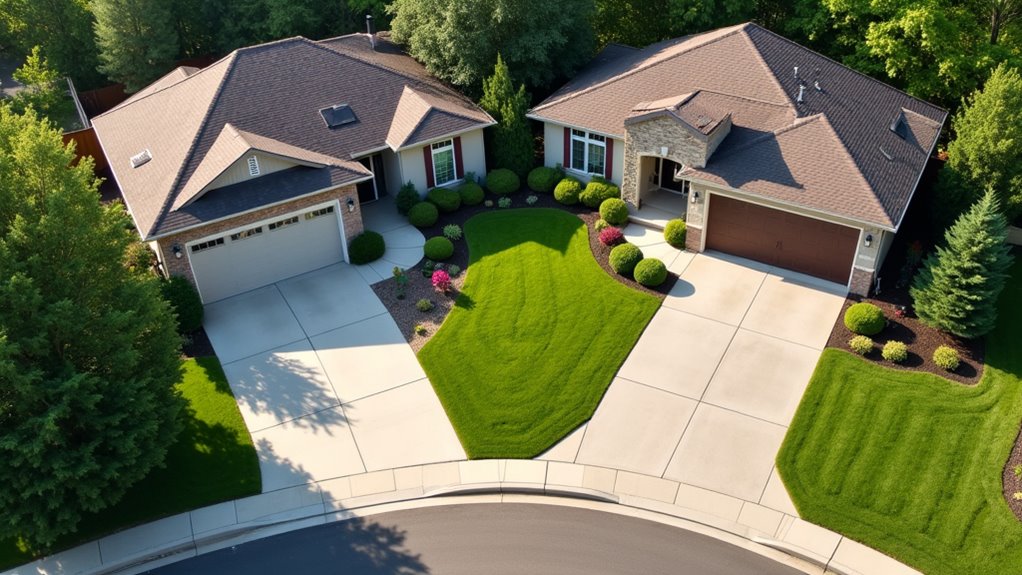
Three proven driveway paving ideas can transform both function and curb appeal. First, choose concrete interlocking pavers—they deliver 8,000 PSI strength at $10-$25/sq.ft and last 40+ years with minimal maintenance. Second, install a herringbone pattern for superior load distribution under vehicle traffic. Third, add low-voltage edge lighting with motion sensors for safety and a 156-313% ROI. Each upgrade works together to create lasting value you’ll want to explore further.
Choose the Right Paver Material for Lasting Durability
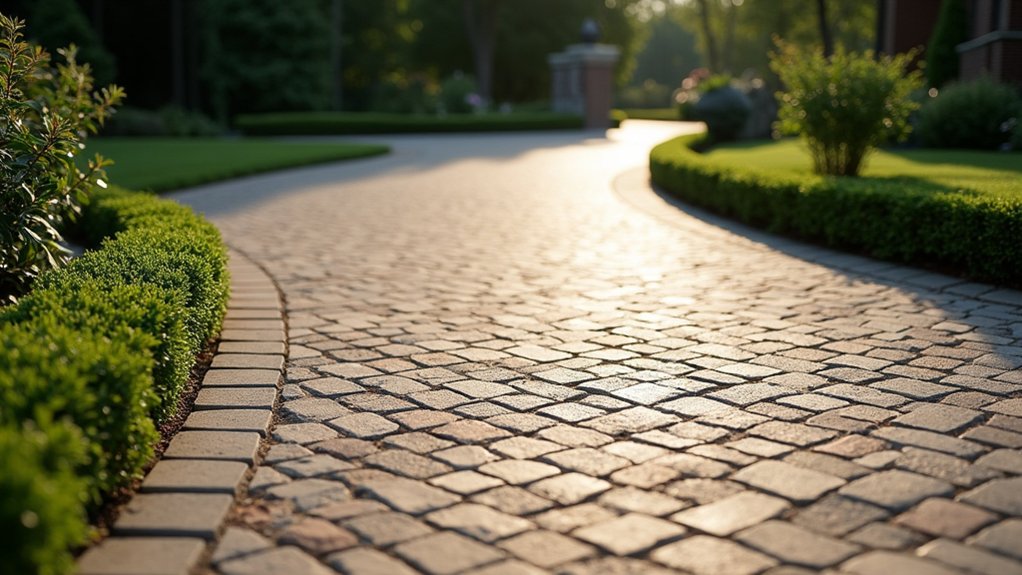
When you’re investing in a driveway that’ll stand up to decades of daily use, your paver material choice matters more than any other decision. Concrete pavers deliver 8,000 PSI strength at $10-$25 per square foot, while brick pavers achieve 12,000 PSI for $10-$30. Natural stone commands $40-$70 but exceeds 100 years of service life.
To understand paver installation requirements, consider that interlocking systems need only sand—no mortar—and distribute vehicle weight evenly. Porcelain pavers absorb almost no water, making them ideal for freeze-thaw climates. Concrete pavers also need special treatment to resist freeze-thaw damage in colder regions.
Your paver maintenance considerations should include resealing frequency; brick requires less attention than concrete slabs. Asphalt driveways require regular sealing to maintain integrity, especially in sunny regions where UV exposure accelerates deterioration. Concrete pavers specifically need sealing every 3-5 years to prevent staining and color fade. For budget-conscious durability, concrete interlocking pavers lasting 40+ years offer the strongest value proposition.
Select a Pattern That Complements Your Home Style
Your paver pattern directly impacts both structural performance and visual harmony with your home’s architecture.
- Herringbone pattern delivers superior durability through its interlocking 45° or 90° arrangement, making it ideal for high-traffic driveways. You’ll get maximum visual impact while minimizing long-term maintenance requirements. This pattern works beautifully with clay, brick, concrete, or marble materials to suit your design preferences.
- Running bond pattern offers cost-effective installation with staggered rows that elongate narrow driveways. This layout suits modern homes and handles standard residential traffic without complex setup costs.
- Basketweave pattern creates timeless appeal for traditional or colonial homes through its woven grid design. It’s best suited for moderate traffic areas. The design evokes old-world brickwork with its classic, woven appearance.
- Circular design uses concentric rings of pavers to create a stunning focal point that draws the eye and adds distinctive visual interest to your entryway.
For contemporary architecture, consider large-format pavers in monochromatic charcoal or gray tones. Traditional homes benefit from tumbled cobblestone finishes or combination layouts featuring herringbone centers with contrasting borders for added character.
Add Custom Design Elements to Maximize Curb Appeal
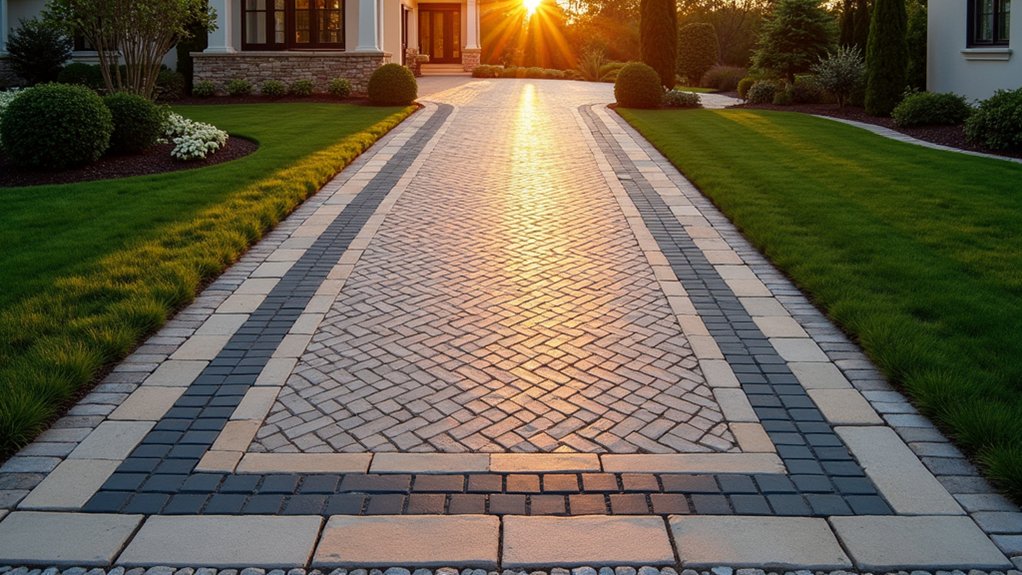
Once you’ve selected the right paver pattern for your home’s architecture, custom design elements transform a functional driveway into a standout feature that delivers measurable returns.
Custom design elements elevate your driveway from purely functional to a standout feature with measurable returns.
Incorporate Attractive Border Treatments
Brick or stone edging creates polished boundaries while preventing weed growth along edges. Coordinate border materials with your home’s exterior colors to establish visual cohesion. Plant borders enhance integration with surrounding landscaping and simplify maintenance.
Employ Sophisticated Lighting Features
Edge lighting improves nighttime safety while solar pathway lights add ambiance without wiring costs. Low-voltage systems with motion sensors boost security, and strategic placement yields 156-313% ROI. Optimal exterior lighting enhances both safety and aesthetic appeal throughout your property. With 68% of buyers considering poor curb appeal a dealbreaker, investing in quality lighting features can make a significant difference when selling.
Consider Premium Material Upgrades
Natural stone provides upscale texture and longevity. Permeable pavers manage drainage effectively. These upgrades demonstrate property care to appraisers—driveway improvements recover 105-140% of costs and sell homes 7% faster. Before installing new pavers, pressure-washing existing driveways and walkways removes years of grime and dramatically improves the appearance of high-traffic areas.
Frequently Asked Questions
How Often Should Driveway Pavers Be Sealed for Protection?
You should seal your driveway pavers every 2-3 years under normal conditions. However, extreme climates and high traffic can reduce sealant longevity, requiring resealing every 2 years. Watch for water absorption rather than beading—this indicates moisture penetration and seal breakdown. Investing in premium-grade sealers costs more upfront but extends protection periods, saving you money long-term. Budget products often need annual reapplication, ultimately increasing your total maintenance expenses.
Can I Install Driveway Pavers Myself or Hire Professionals?
You can tackle driveway pavers yourself, but DIY installation considerations include operating a 10,000 lb plate compactor, achieving proper drainage slopes, and multi-layer base compaction—demanding tasks for most homeowners. Professional installation benefits outweigh costs when you factor in heavy equipment access, ASTM-standard compliance, and precise DriveGrid integration that prevents rutting under vehicle loads. For driveways specifically, hiring experts typically delivers better long-term value than risking settling or shifting from improper compaction.
What Maintenance Is Required to Keep Pavers Looking New?
You’ll need to sweep weekly and hose down surfaces regularly for basic stain removal before marks set in. Apply a quality sealant every 2-3 years to protect against water damage and aid weeds prevention in joints. Pressure wash annually using low settings to avoid surface damage. Refill joint sand after cleaning and inspect each spring for cracks or settling. These cost-effective steps will extend your pavers’ lifespan considerably.
How Long Does Professional Driveway Paver Installation Typically Take?
Your driveway paver installation timeline depends primarily on square footage. For small driveways under 1,100 square feet, expect 2-5 working days. Medium projects between 1,100-2,000 square feet require 5-7 days. Large driveways exceeding 2,000 square feet demand 7-10 working days. The typical driveway paver installation duration includes prep work (1-4 days), paver laying (1-3 days), and cleanup (1-2 days). Crews average 100-400 square feet daily under ideal conditions.
Do Pavers Increase Property Taxes After Installation?
Yes, pavers can increase property taxes after installation. When you install pavers, your property value increase typically ranges from $5,000 to $7,000, which assessors document during valuations. At a standard 1.5% tax rate, you’ll pay approximately $75 more annually. However, this investment also boosts your home resale value by up to 7%, and the expense adds to your cost basis, potentially reducing capital gains taxes when you sell.