
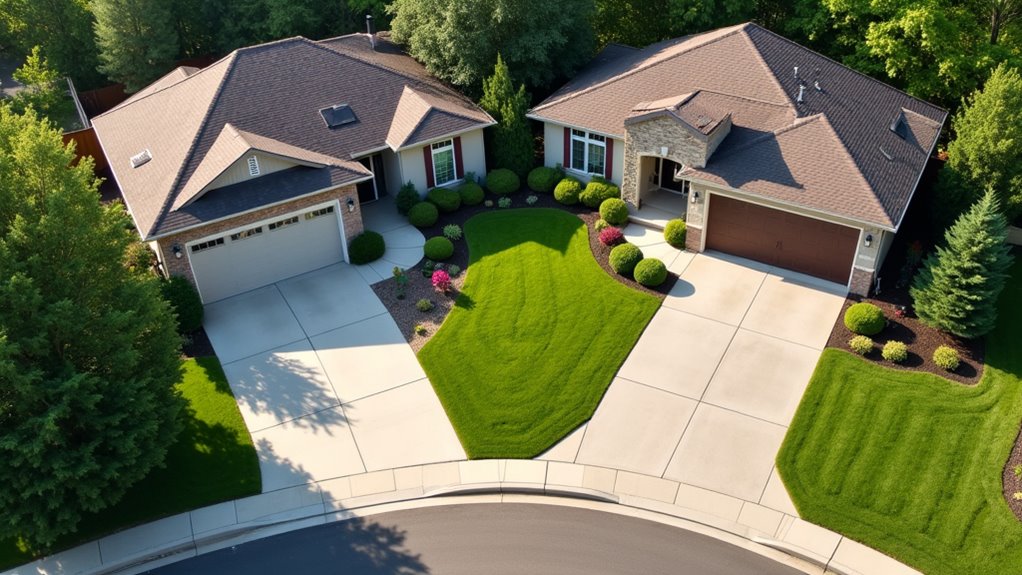
When you’re choosing durable driveway materials for maximum longevity, three options stand out. Concrete delivers 25-30 years of service with proper 4-6 inch thickness and air-entrained mixtures. Brick pavers outperform with 50-100 years of durability and 800 PSI pressure resistance. Black locust wood offers 50+ years without chemical treatments, featuring 1,700 lbf hardness and natural rot resistance. Each material’s performance depends on specific installation techniques and maintenance protocols you’ll discover below.
Concrete: The Century-Strong Foundation
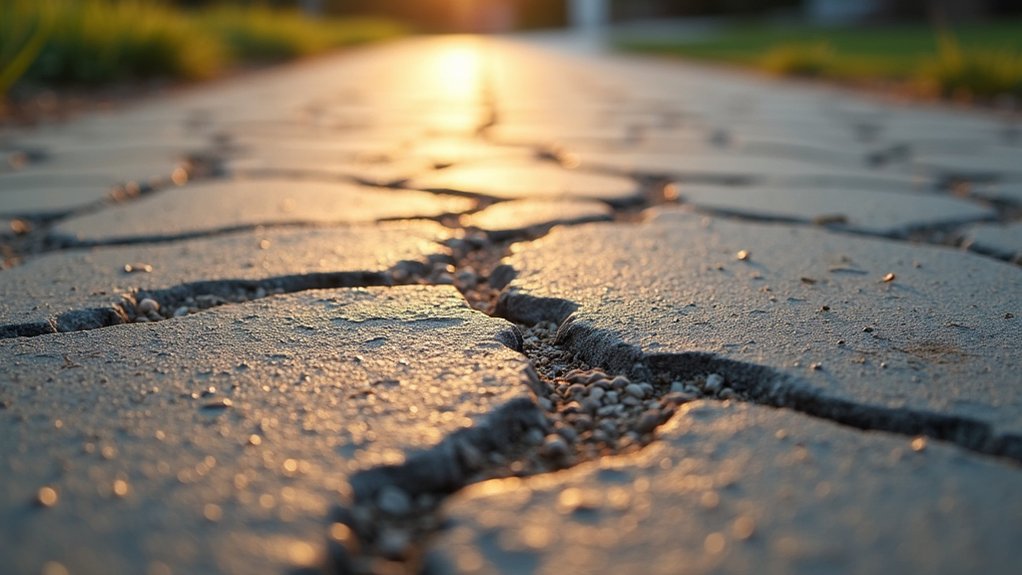
Concrete driveways deliver an average service life of 25 to 30 years when properly installed and maintained, with some installations exceeding 40 years under ideal conditions. Michigan Department of Transportation data confirms an average 27.5 years before major repairs become necessary.
Your driveway’s longevity depends heavily on proper installation specifications. You’ll need a minimum 4-inch thickness for residential applications, though 5-6 inches proves excellent in harsh climates. Concrete finishing techniques must include engineered control joints that guide crack formation along predetermined lines. Reinforcements like rebar or metal sheets further reduce cracking risks. Cutting corners during installation can significantly reduce lifespan and lead to premature failure. Proper subgrade preparation with uniform material and density is critical for maximizing your concrete’s potential lifespan.
Climate-appropriate formulations matter greatly. Air-entrained mixtures combat freeze-thaw damage, while regular sealing every few years prevents moisture penetration. These maintenance practices can add 10+ years to your driveway’s service life. Protecting your concrete from weather damage and UV exposure through routine cleanings and sealant coatings helps surfaces bounce back from seasonal wear.
Brick Pavers: Weather-Resistant Elegance That Endures
While concrete delivers impressive multi-decade performance, brick pavers outpace it considerably—averaging 50 to 100 years of service life when you invest in quality materials and proper installation.
Clay brick pavers resist pressure up to 800 PSI and withstand ground movements, temperature fluctuations, and freeze-thaw cycles without cracking. Their porous composition requires periodic sealing, but you’ll achieve low maintenance performance through simple releveling and resanding. When individual pavers chip or shift, you replace only affected units—not entire sections. This easy repair and replacement process gives brick pavers a significant advantage over concrete, which often requires costly full-section demolition.
The customizable aesthetics of natural clay retain their classic appearance indefinitely, resisting fading from UV exposure and harsh weather. You’re fundamentally installing the same durable material found in historic buildings that have survived centuries. Clay brick pavers also demand less maintenance compared to other paving options, reducing your long-term upkeep costs.
Brick pavers increase property value while offering eco-friendly reusability, making them a specification-superior choice for long-term driveway applications. Many manufacturers back their products with lifetime guarantees that cover maintenance and repair work, providing additional peace of mind for your investment.
Black Locust Wood: The Sustainable 50-Year Solution
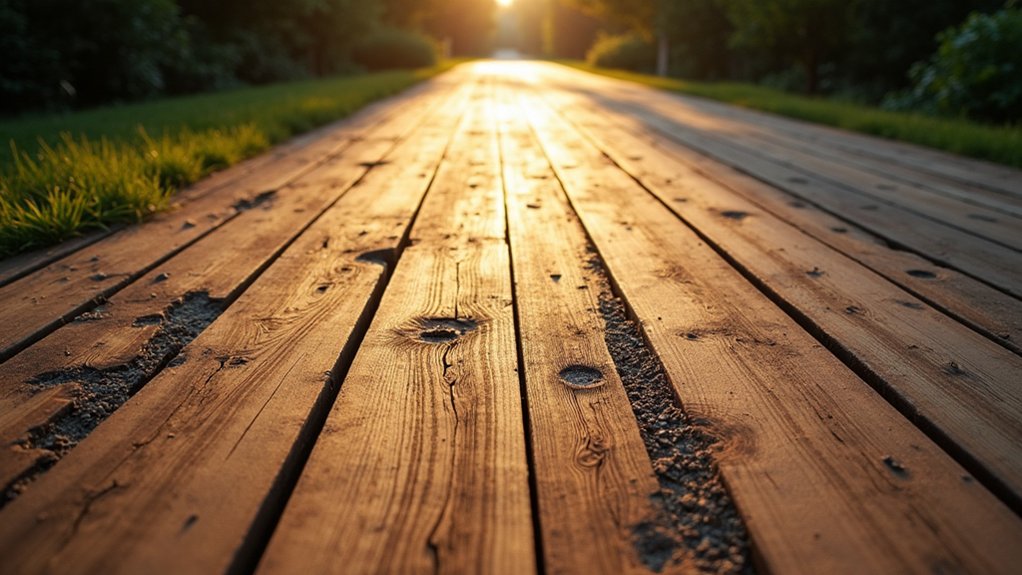
Black locust wood delivers a 50-year minimum service life without chemical treatments—matching brick pavers in longevity while offering superior sustainability credentials.
Black locust wood rivals brick pavers in durability—delivering 50+ years of service through natural resistance, not chemical treatments.
You’ll benefit from these performance specifications:
- Ideal hardness of 1,700 lbf resists dent and scratch damage from vehicle traffic
- Natural disease resistance eliminates fungal decay and mold infiltration in damp conditions
- Termite and boring insect repellency removes chemical pesticide requirements
- Superior fastener performance due to dense cellular structure preventing pullout under load
- Nitrogen-fixing root systems support sustainable forestry regeneration
Select heartwood from trees beyond 12 years of growth for maximum durability. Install with proper spacing to accommodate moisture-driven expansion and contraction cycles. You’ll achieve LEED credit eligibility through domestic sourcing while outperforming pressure-treated alternatives without toxic compounds. The untreated wood is safe for children, pets, and wildlife, posing no risk of groundwater contamination in your landscape. With a modulus of rupture over 15,000 psi, black locust provides the structural strength necessary to handle heavy vehicle loads and repeated freeze-thaw cycles throughout its extended service life. The wood’s straight grain pattern and medium texture ensure consistent performance across installed sections while responding well to finishing treatments that enhance weather resistance.
Frequently Asked Questions
How Does Asphalt Compare to Other Driveway Materials in Extreme Temperatures?
Asphalt performs poorly compared to concrete and pavers in extreme temperatures. You’ll find its thermal expansion properties cause rutting and cracking when surfaces hit 152°F, while concrete remains stable. In cold conditions, asphalt’s frost heave resistance declines markedly below 50°F, becoming brittle and prone to failure. Concrete handles temperature fluctuations better, and pavers offer superior durability with their interlocking design, though you’ll pay more upfront.
What Makes Permeable Pavers More Eco-Friendly Than Traditional Paving Options?
Permeable pavers offer superior rainwater absorption, reducing runoff by up to 98% compared to traditional asphalt’s 32%. You’ll minimize your environmental impact through natural filtration that removes up to 50% of pollutants before they reach waterways. These systems recharge groundwater, lower urban heat through evaporative cooling, and often incorporate recycled materials. You’re also cutting infrastructure costs by up to 40% while supporting healthier tree root systems and local ecosystems.
Are Stone Driveways Worth the Higher Installation Costs for Property Value?
Yes, stone driveways deliver strong investment return despite higher upfront costs of $15-$60 per square foot. You’ll gain up to $20,000 in property value appreciation, and your long term maintenance expenses stay minimal compared to gravel’s frequent replenishment needs. Stone pavers last 25-75+ years with easy individual unit repairs, while concrete cracks require full replacement. You’re paying premium prices for measurably superior durability and resale value.
How Often Does Asphalt Need Resealing Compared to Concrete Driveways?
You’ll need to reseal asphalt every 2-3 years, while concrete typically requires sealing every 3-5 years. The frequency of resurfacing depends on traffic volume, climate conditions, and sealant quality. Asphalt’s susceptibility to UV oxidation accelerates deterioration, demanding more frequent maintenance. The lifespan of asphalt driveways extends considerably with consistent resealing schedules. High-quality epoxy or polyurethane sealers on concrete can stretch intervals to 5-10 years, reducing long-term maintenance costs.
Can Permeable Pavers Handle Heavy Vehicle Traffic as Well as Concrete?
Yes, permeable pavers handle heavy vehicle traffic effectively. You’ll find their load bearing capacity reaches 6500-8000 psi—approximately four times stronger than concrete slabs and three times more pressure-resistant than traditional concrete. Their HDPE grid construction flexes under stress without structural failure, while water absorption properties prevent surface damage from freeze-thaw cycles. You can drive on them immediately after installation, and they’ll maintain durability for 25-75+ years with minimal maintenance.