
Understanding What Sealcoating Does for Your Asphalt Driveway
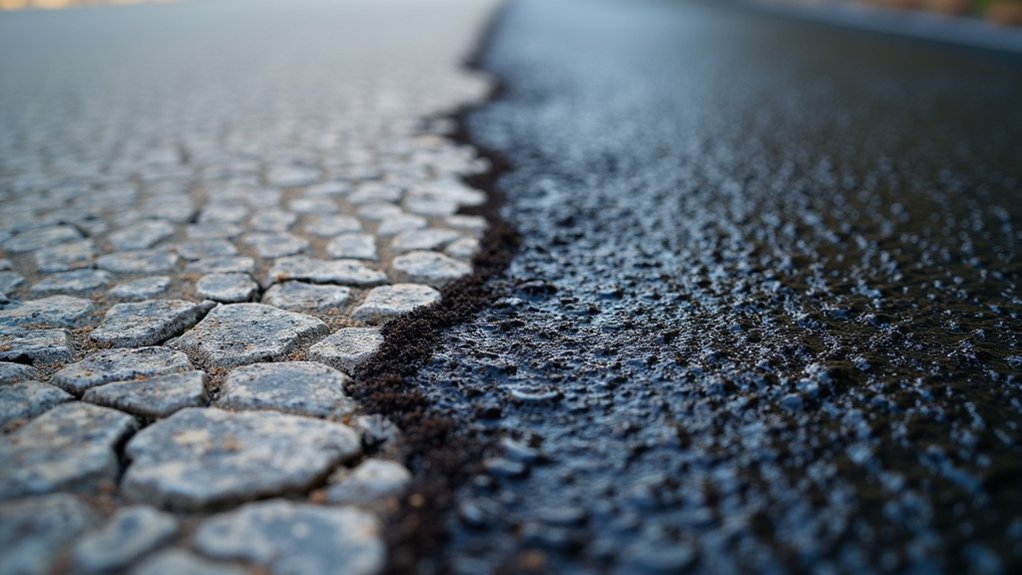
When you apply sealcoating to your asphalt driveway, you’re creating a protective shield that defends against multiple forms of deterioration. This barrier blocks UV rays that cause oxidation, preventing your asphalt binder from becoming brittle and cracking. It also repels water intrusion by filling hairline cracks with fine aggregates like silica sand.
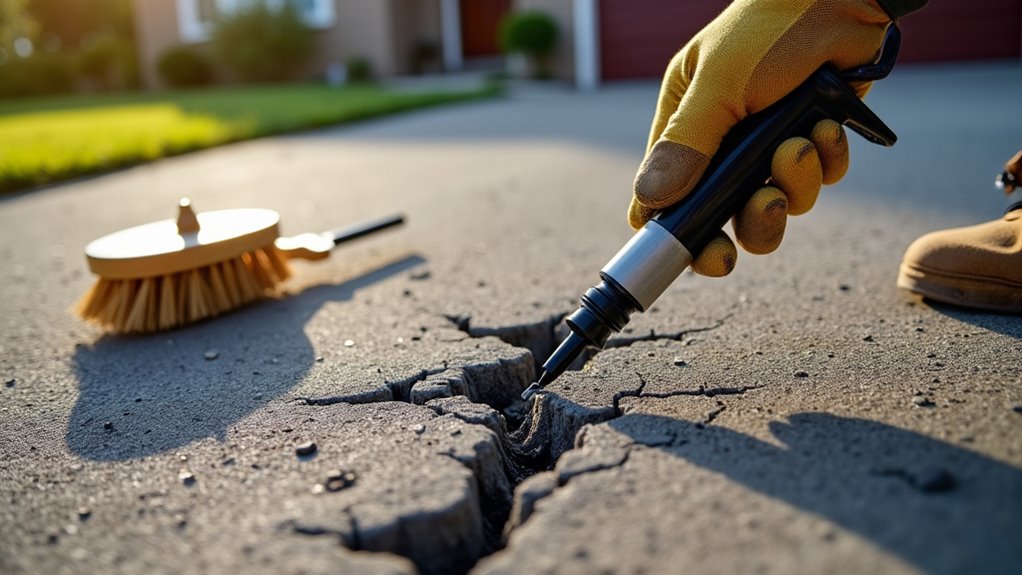
Sealcoating protects against petroleum-based chemicals, including motor oil and gasoline, which can soften and damage the binder. With proper surface preparation, including oil spot repair, you’ll maximize the coating’s effectiveness. Before application, clearing dirt and debris from the asphalt surface ensures the sealcoat adheres properly and lasts longer. Keep in mind that sealcoats will not repair significant damage, so any major cracks or potholes must be addressed before the coating is applied.
The treatment restores your driveway’s deep black appearance while enhancing flexibility under vehicle weight. This cost effective maintenance approach extends pavement life, improves skid-resistance, and reduces long-term repair expenses—making it a practical investment for asphalt preservation. To maintain optimal protection, plan to reapply every 2-3 years as part of your ongoing maintenance routine.
How Often Should You Sealcoat Your Driveway
Now that you understand sealcoating’s protective benefits, timing your applications correctly maximizes those advantages while avoiding unnecessary expense.
Optimal Timing for First Sealcoat
You’ll need to wait 90 days to one year before sealing a new driveway. Fresh asphalt contains oils that must evaporate during curing. Sealing too early traps these oils, causing softness and flexibility issues.
Standard Maintenance Schedule
Most driveways require sealcoating every 2-3 years under normal conditions. High-traffic driveways handling daily vehicle movement or heavy machinery need resealing every 1-2 years. Additionally, sealcoating is required after every driveway repair to restore protection to newly patched areas.
Impact of Environmental Conditions
Your local climate considerably affects scheduling. Harsh winters with freeze/thaw cycles, snow removal chemicals, and extreme temperature fluctuations demand sealcoating every 2 years. Watch for fading surfaces, staining, or hairline cracks—these signals indicate your driveway needs protection regardless of timeline. Scheduling regular professional inspections helps determine the exact timing for sealcoating based on your pavement’s specific condition. Apply sealant only when temperatures range between 50–90 °F with two consecutive dry days to ensure proper adhesion to the existing asphalt.
The True Cost of Sealcoating Versus Driveway Replacement
Understanding the financial implications of driveway maintenance helps you make informed decisions about protecting your investment. Professional sealcoating costs $0.15 to $0.25 per square foot, while asphalt replacement runs $8 to $15 per square foot—a difference of 80 to 90 percent.
Sealcoating costs up to 90 percent less than full driveway replacement—making routine maintenance your smartest financial move.
Consider these long term cost savings through timely maintenance scheduling:
- Initial investment: Sealcoating a 600-square-foot driveway costs $150 to $600 versus $750 to $4,000 for replacement
- Lifespan extension: Regular sealcoating extends pavement life from 10-15 years to 20-25 years
- Cumulative savings: Multiple sealcoating applications over two decades cost less than one replacement project
You’ll preserve your driveway’s structural integrity while avoiding premature replacement expenses through consistent maintenance cycles. Sealcoating provides essential protection by creating a barrier against UV rays, water, oil leaks, and wear and tear. Taking on the project yourself can save $200 to $400 compared to hiring a professional, further maximizing your cost benefits. Keep in mind that contractors often add a project fee of $100-$200 on top of per-square-foot pricing when calculating your total professional service costs.
Protection Benefits That Make Sealcoating Worth the Investment
Beyond the clear financial advantages, sealcoating delivers critical protection against the environmental forces that destroy unprotected asphalt. UV rays oxidize and crack exposed surfaces, while water infiltration causes structural failure through freeze-thaw cycles and base erosion. Your sealcoat creates a waterproof barrier that blocks both threats simultaneously.
Chemical resistance proves equally critical. Oil, gasoline, and de-icing agents penetrate unsealed asphalt, accelerating deterioration. A properly sealed surface prevents this penetration and simplifies cleanup. Sealed surfaces also make routine maintenance easier since broom sweeping and cleaning services work more effectively on treated pavement.
The environmental benefits extend beyond your property—sealed driveways reduce material waste by doubling service life. You’ll also maintain aesthetic appeal since sealcoating preserves the original dark color that fades on unprotected surfaces. Combined sealcoat and crack repair programs typically cut lifetime pavement expenses by 65–75%, making comprehensive maintenance the smartest long-term strategy. Smooth, sealed pavement can also save up to 10% in vehicle fuel compared to rough, deteriorated surfaces.
These combined protections explain why pavement experts recommend resealing every 2-3 years. You’re not just coating asphalt—you’re building systematic defense against degradation.
Debunking Common Myths About Driveway Sealcoating
Many homeowners hesitate to invest in sealcoating because they’ve heard misleading information that contradicts what pavement professionals know to be true.
- Sealcoating only improves appearance – The coating creates a protective barrier against UV rays, water infiltration, and chemical damage, extending pavement life considerably. It fills and coats microscopic pores to prevent water from penetrating and damaging the underlying structure.
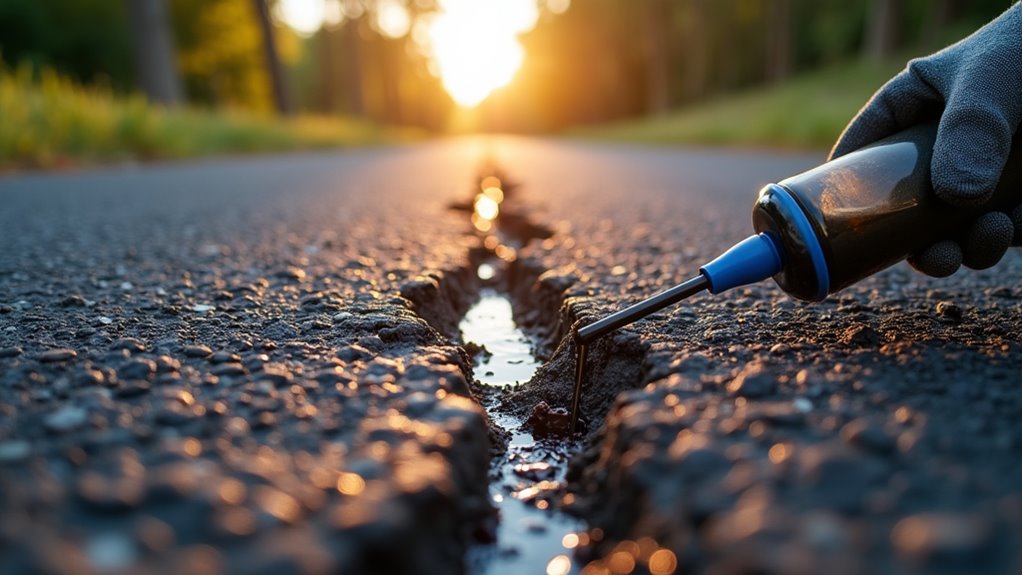
- Sealcoating repairs existing cracks – You must fill cracks with hot rubberized material before application. Sealcoating provides protection, not structural repair. Unaddressed cracks can quickly turn into bigger problems that require more extensive repairs.
- Sealcoating harms surrounding vegetation – Environmental impacts are minimal. Any sealer that contacts grass dissipates through normal mowing, causing no permanent damage.
- Sealcoating is a messy process – The application is actually clean and quick, allowing the work to be completed efficiently with minimal disruption to your daily routine.
Understanding these facts helps you establish timely maintenance schedules. When applied correctly every 2-3 years, sealcoating delivers documented long-term value rather than serving as a temporary fix.
Frequently Asked Questions
Can You Sealcoat a Driveway Yourself or Should You Hire Professionals?
You can sealcoat your driveway yourself, but hiring professionals typically delivers superior results. DIY projects save money upfront ($73–$130 versus $200–$350), yet store-bought sealants lack industrial-grade durability. Professional contractors bring proper sealcoating application techniques and specialized equipment that guarantee uniform coverage lasting three to five years. They’ll also perform a thorough driveway condition assessment to identify cracks needing repair before application. If you’re prioritizing long-term protection over immediate savings, professional services prove more cost-effective.
How Long Should You Stay off Your Driveway After Sealcoating?
You should stay off your driveway for at least 24 to 48 hours after sealcoating for foot traffic and 48 to 72 hours before driving on it. Allowing proper drying time guarantees the sealer adheres properly to the asphalt surface. Avoiding heavy traffic from RVs, trucks, or trailers requires waiting a full 7 days. Warmer, sunny conditions accelerate curing, while humidity or cooler temperatures extend the timeline substantially.
What Weather Conditions Are Best for Applying Driveway Sealcoat?
You’ll achieve the best sealcoating results when you apply during an ideal temperature range of 70°F to 85°F with dry weather conditions forecasted for 48 hours. Guarantee both air and surface temperatures stay above 50°F for proper curing. You need direct sunlight for 6-8 hours post-application and humidity below 60%. Avoid application during rain, mist, or overcast conditions, as moisture compromises adhesion and leaves your sealant tacky and unprotected.
Does Sealcoating Work on Concrete Driveways or Only Asphalt?
Traditional asphalt sealcoating doesn’t work on concrete driveways due to fundamental differences in concrete composition and sealcoat compatibility. Asphalt sealer replenishes petroleum-based binders that concrete simply doesn’t contain, resulting in poor adhesion, peeling, and patchy coverage. You’ll need concrete-specific sealers—acrylic, epoxy, polyurethane, or penetrating formulas—that block pores and protect against moisture, salts, and staining. These products address concrete’s unique chemical makeup while delivering lasting protection for your surface.
How Do You Prepare Your Driveway Before Sealcoating Application?
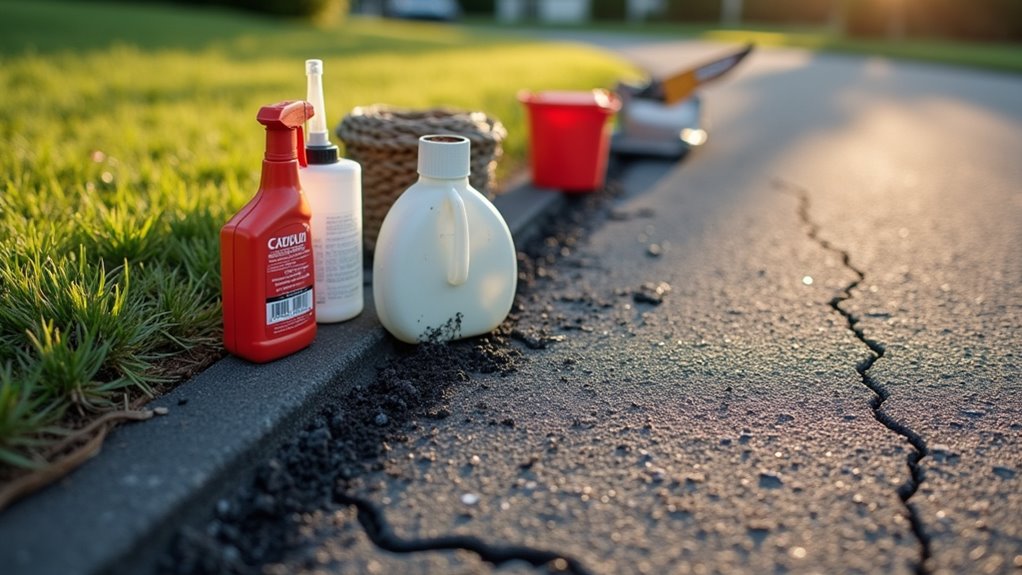
You’ll start by cleaning driveway thoroughly—remove all vehicles, debris, and loose materials using a leaf blower and power washer. Apply degreaser to oil stains and scrub with a stiff brush. Next, fill cracks with flexible sealant and patch larger damage. Ensuring proper surface preparation means allowing 24-48 hours for complete drying. Check that temperatures stay between 50-90°F with no rain forecasted for ideal sealcoat adhesion.