
Choose repair when damage stays localized under 25% of your lot, your subbase is stable, and drainage performs properly. Repairs cost 60–80% less and extend your lot’s life 8–15 years. Choose replacement when damage exceeds 25–30%, alligator cracking signals base failure, or your subbase has failed. Check the numbers too: if annual repair costs top 20–25% of replacement, you’re paying to rent a failing lot. Let’s break down each factor.
Key Takeaways
- Repair when damage stays under 25% of the surface with stable subbase and functioning drainage; beyond that, replacement is smarter.
- Asphalt nearing 20–25 years old signals full reconstruction rather than surface-level fixes.
- Widespread alligator cracking, deep recurring potholes, or chronic ponding indicate base failure requiring replacement.
- Repairs cost 60–80% less and add 8–15 years; replacement is a 20+ year capital investment.
- Choose repair only when its cost stays under half of replacement and annual spend below 20%.
Should you choose parking lot repair or replacement
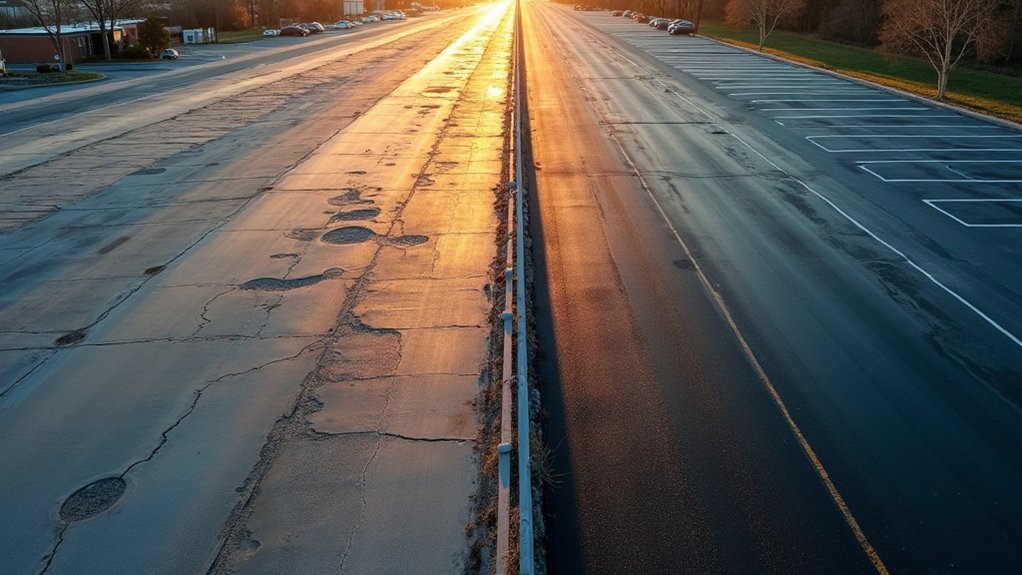
Choose parking lot repair or replacement based on five measurable factors: pavement age, extent of damage, subbase condition, cost ratios, and traffic load. Evaluate your pavement’s age first. Asphalt nearing 20 to 25 years signals reconstruction over surface fixes. Next, measure damage extent. If more than 25–30% shows alligator cracking, depressions, or base failure, parking lot repair won’t hold, and replacement becomes necessary. Localized surface cracks favor targeted commercial parking lot repair instead. Check your subbase. A stable foundation extends repairs, while chronic ponding or base compromise demands full replacement. Then run the numbers. When annual repair costs exceed 20–25% of replacement, you’re paying to rent a failing lot. Finally, factor heavy traffic loads. A qualified parking lot repair contractor near me can verify these variables precisely.
What problems can a fix actually solve
A fix can solve surface-level problems, not structural failures. A quality asphalt parking lot repair addresses localized damage confined to specific areas, surface cracking, minor potholes, and isolated raveling, as long as the subbase stays stable and drainage performs properly. When you search “parking lot repair near me,” a reputable parking lot repair company will confirm these conditions before recommending a fix.
Fixes work best when damage covers less than 25% of your surface. Beyond that threshold, or when you’re seeing alligator cracking, depressions, or base failure, patching becomes a temporary band-aid. Chronic ponding signals a compromised foundation that repairs won’t hold.
When does damage call for full replacement
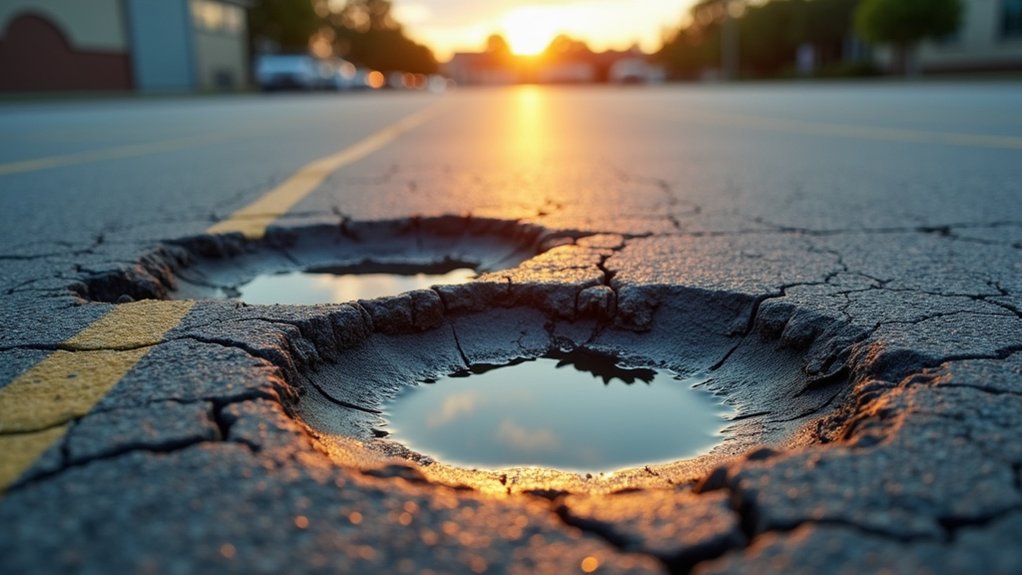
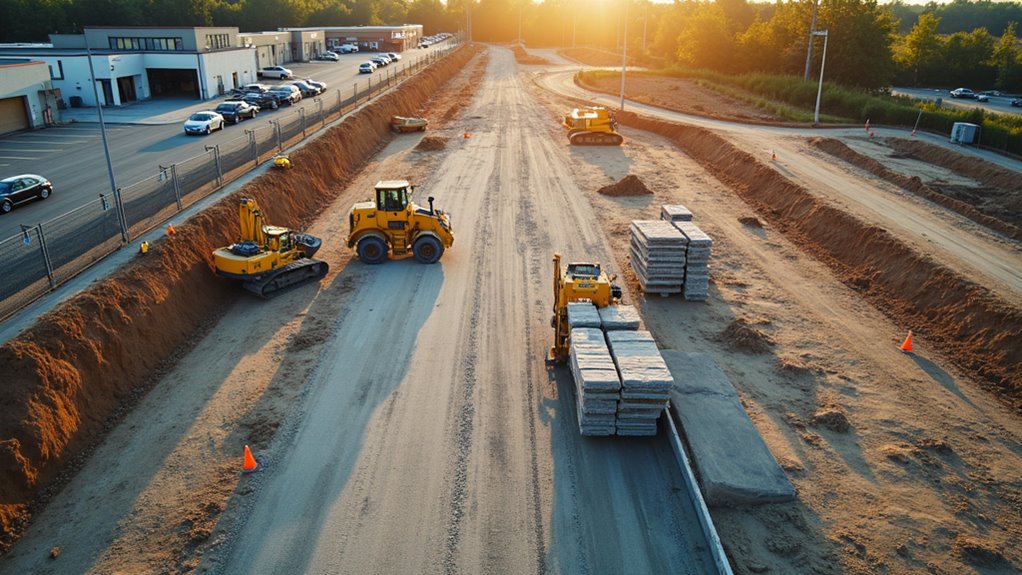
Damage calls for full replacement when deterioration crosses structural thresholds, making replacement the only solution that lasts. Once damage covers more than 25 to 30% of your surface, targeted repairs stop making sense. Watch for widespread alligator cracking, deep or recurring potholes, sunken sections, and severe raveling. These signal base failure, not surface wear. If your subbase has failed or chronic ponding keeps compromising the foundation, no amount of patching will hold. Age compounds the problem: pavement past its 20 to 25 year service life won’t respond to band-aid fixes. Financially, when annual repair costs exceed 20 to 25% of replacement cost, you’re paying to rent a failing lot. Add liability from uneven slabs and trip hazards, and full replacement delivers the stronger long-term return every time.
How do repair and replacement compare on cost and lifespan
Repairs cost 60–80% less than replacement and extend an aging lot’s life by 8 to 15 years, while replacement demands full capital investment for a 20+ year engineered life. Repairs offer lower upfront costs and buy you time, while replacement demands a larger investment with a longer return horizon, provided the base holds.
| Repair | Replacement |
|---|---|
| 60–80% lower cost | Full capital investment |
| 8–15 year extension | 20+ year engineered life |
| Expensed for taxes | Capitalized for taxes |
Run the numbers annually. When repair costs exceed 20–25% of replacement cost, you’re paying to rent a failing lot. At that point, replacement’s longer lifespan and reduced liability deliver the stronger ROI.
When is commercial parking lot repair the smarter choice
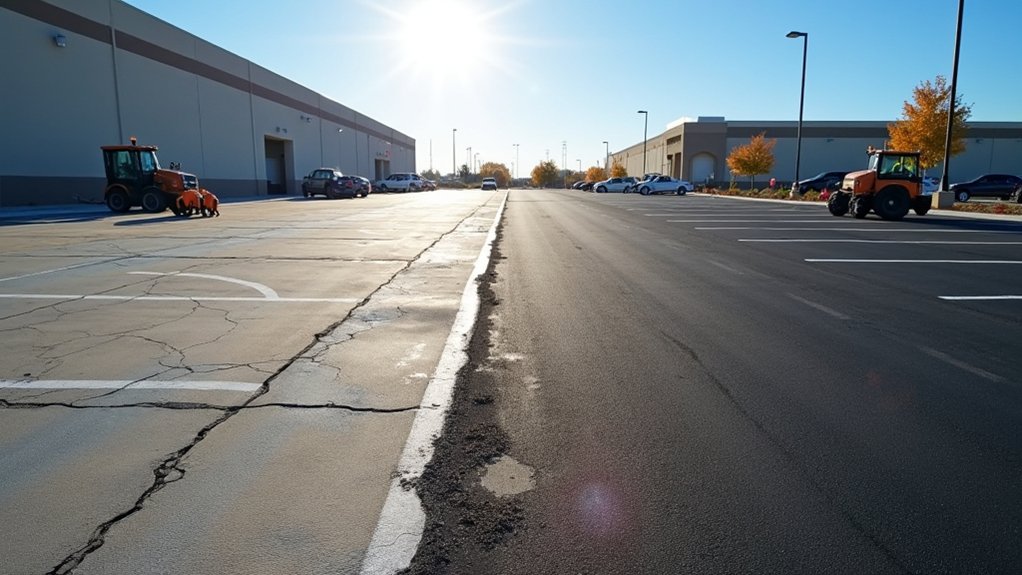
Commercial parking lot repair is the smarter choice when damage stays localized, confined to specific areas rather than spread across the surface. When damage stays contained this way, repair becomes your most economical option. If deterioration covers less than 25% of the lot and shows only surface-level cracking or minor potholes, targeted fixes will hold. The critical factor is your subbase. A stable, intact foundation with proper drainage means repairs won’t shift or fail prematurely. You’ll also want to weigh age and traffic: lightly used lots under 20 years old tolerate repairs well and deliver longer service. Financially, repairs make sense when they cost less than half of replacement and your annual repair spend stays below 20% of replacement cost. Under these conditions, repair wins.
How do you pick a parking lot repair company you trust
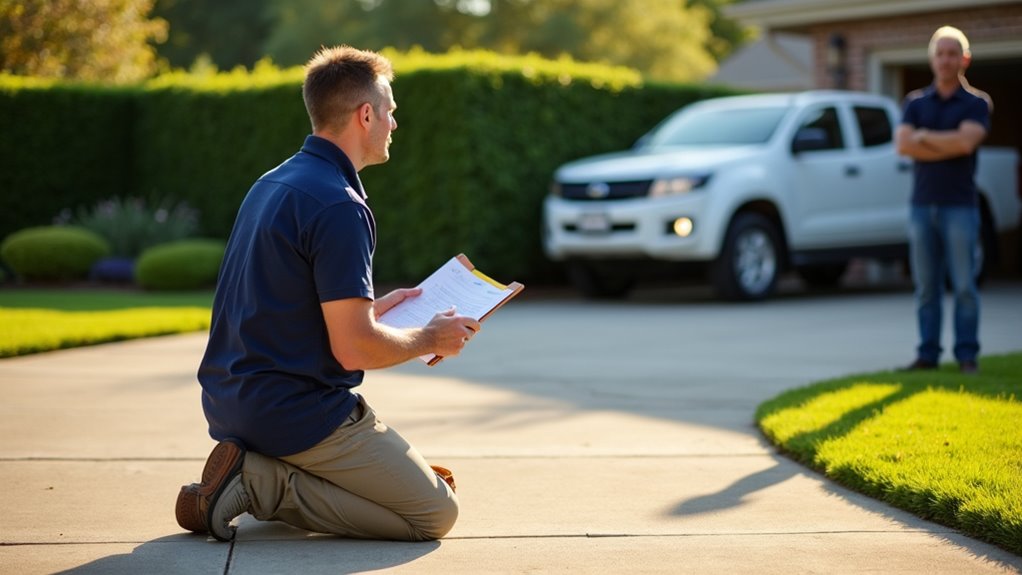
You pick a parking lot repair company you trust by requiring a professional condition assessment, not a quick eyeball estimate. A trustworthy company evaluates your subbase, drainage performance, and damage extent before recommending a scope. If they push resurfacing without checking whether your foundation can support it, walk away.
Ask how they distinguish repairable surface cracking from base failure, since that judgment protects your investment. Verify they’ll address drainage issues, not just patch symptoms that’ll resurface within five years.
Demand references from commercial lots with comparable traffic loads, and confirm they document work for tax purposes. Repairs get expensed differently than capitalized replacement. The right partner maximizes your long-term ROI, not just today’s lowest bid.
How does V&F Paving handle repairs and replacement
V&F Paving handles repairs and replacement by starting every project with a professional condition assessment that evaluates your subbase stability, drainage performance, and the extent and type of deterioration across the surface. From there, you get a clear recommendation grounded in numbers, not guesswork.
When damage stays localized and your base holds firm, we’ll pursue targeted repairs or resurfacing to extend your lifespan 8 to 15 years. When deterioration exceeds 25 to 30% of the surface, drainage keeps failing, or annual repair costs surpass 20% of replacement, we’ll recommend full replacement engineered for the next two decades of traffic.
You’ll also get a cost analysis comparing both paths, so you invest in long-term ROI rather than renting a failing lot.
Get a Straight Answer, Not a Sales Pitch
The repair-or-replace decision should come from what your pavement is actually doing, not from whatever a contractor would rather sell you. V&F Paving starts every project with a real condition assessment, checking your subbase, drainage, and the extent and type of damage, then gives you a recommendation grounded in numbers and a cost comparison of your options. Serving Hamden, New Haven, Stamford, Danbury, and Fairfield County since 1994, our team handles targeted repairs, resurfacing, and full replacement, and we’ll tell you honestly which one protects your investment. For a free evaluation of your lot, call (203) 624-2449.
Frequently Asked Questions
Isn’t there a middle option between patching and full replacement?
Yes, and it’s often the right call. Resurfacing, also known as an overlay or mill-and-overlay, applies a new layer of asphalt over the existing surface without tearing everything out. It works when your base is still structurally sound and surface damage covers less than about 30% of the lot, and it typically adds 8 to 15 years of life. Think of it as the tier between spot repairs and full reconstruction. If your lot looks rough but the foundation is solid, resurfacing usually delivers the best value
Does the whole lot really have the same problem, or can different areas need different things?
Different areas often need different things, and treating the whole lot the same wastes money. Most large lots don’t fail evenly. Drive aisles and loading zones take the heaviest traffic and break down first, while perimeter parking stalls can stay sound for years longer. A good assessment evaluates the lot zone by zone, which sometimes means reconstructing the failed sections while overlaying or repairing the rest. This mixed approach matches the work to the actual condition of each area rather than paying to replace pavement that’s still fine. Parking lot upkeep for retail spaces is particularly important, as high foot traffic can lead to rapid deterioration. Regular inspections and maintenance schedules can help identify issues before they escalate, ensuring a safe environment for customers.
What do repair, resurfacing, and replacement actually cost per square foot?
As rough planning numbers, targeted surface repairs generally run in the low single digits per square foot, resurfacing or overlay sits in the middle range, and full removal and replacement is the highest, often several times the cost of an overlay. Full replacement costs more because it includes demolition, hauling away the old surface, rebuilding the base, and laying new asphalt. Larger lots usually see a lower per-square-foot rate since mobilizing equipment costs about the same regardless of size. These are ranges, not quotes, since site conditions and current asphalt prices move them.
My lot was already resurfaced once. Can it be resurfaced again?
Usually not, and that’s an important limit. Each overlay raises the surface height, and stacking multiple layers creates elevation problems at building entrances, curbs, and drainage structures, along with potential ADA transition issues. A lot that’s already been overlaid and is failing again is typically at the end of what surface work can accomplish. At that point, full reconstruction down to the base is generally the more practical long-term solution, since another overlay would just add height without fixing what’s failing underneath.
Are repairs just a band-aid, or genuinely worth doing?
They’re genuinely worth it when the base is sound and the damage is localized. Targeted repairs like patching and crack sealing protect a stable foundation and can add several years of life at a fraction of replacement cost, which is smart money. Where repairs become a band-aid is when they’re used to paper over base failure, widespread alligator cracking, or drainage problems, because those keep progressing no matter how many times you patch. The key is an honest assessment of whether you’re protecting a sound lot or just delaying an inevitable rebuild.