

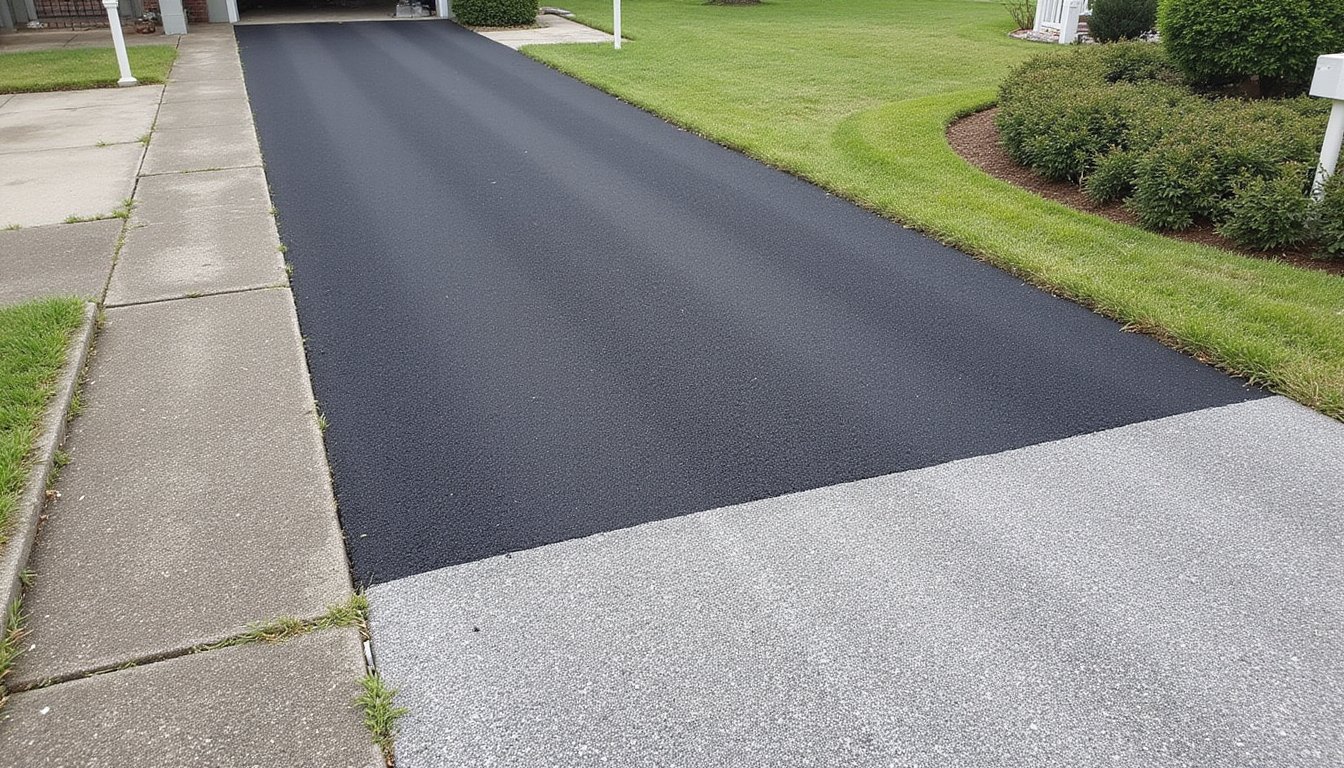
You’ll find seven proven asphalt types for residential driveways: Hot Mix Asphalt (HMA) delivers 15-20 year service life at 300°F-350°F production temperatures, while Warm Mix Asphalt (WMA) cuts costs by 30% with lower heating requirements. Dense-Graded Mix achieves 96% lab density for moisture resistance, and Porous Asphalt provides 100+ inches/hour drainage. Recycled Asphalt Pavement (RAP) reduces expenses by 20-40%, Full-Depth Asphalt extends 4-6 inches to subgrade, and 41A/41B mixes optimize surface characteristics for specific load conditions. Each specification addresses distinct performance requirements worth examining further.
Hot Mix Asphalt (HMA)
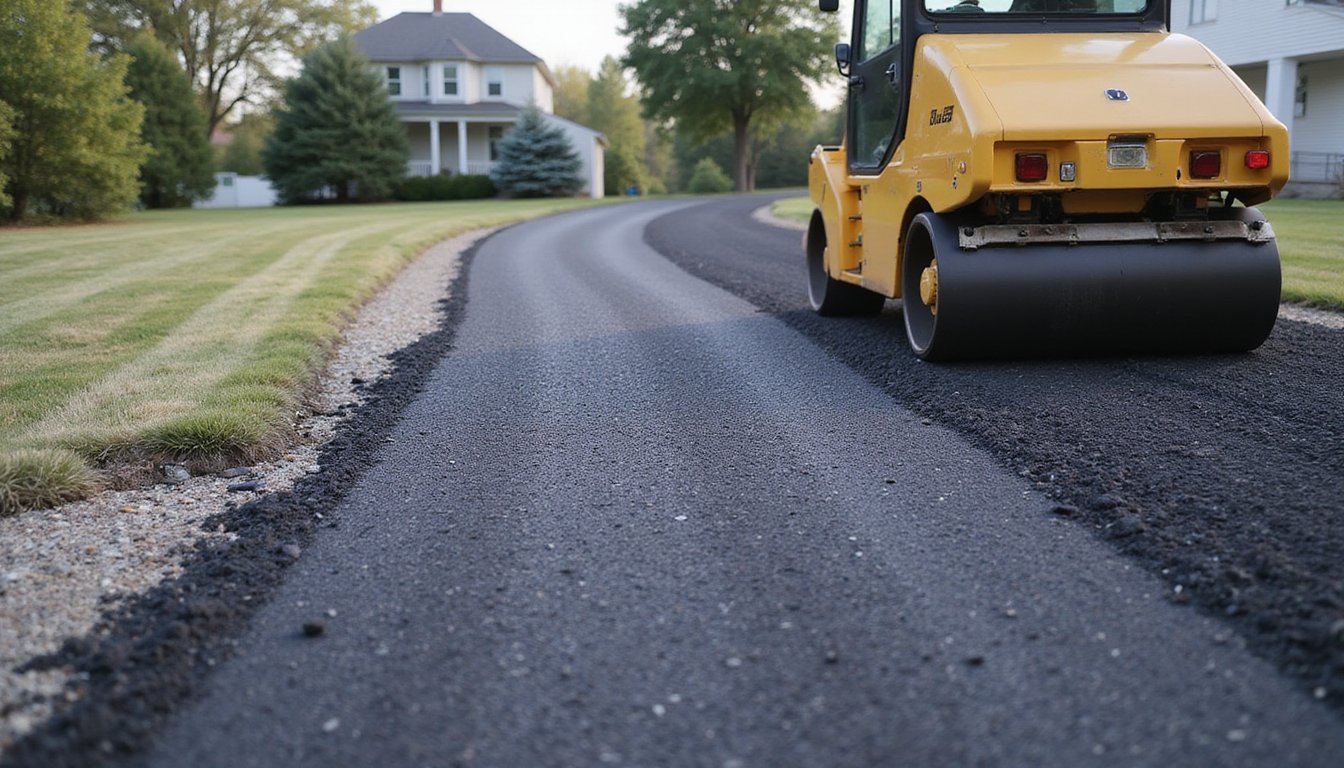
Hot Mix Asphalt (HMA) represents the gold standard for residential driveway construction, combining engineered aggregate blends with asphalt binder at temperatures between 300°F and 350°F to create a dense, weather-resistant pavement structure. You’ll benefit from its accelerated installation timeline, as the material cools and sets within 48 hours, enabling immediate vehicle access. The pavement’s flexural properties accommodate thermal expansion and ground movement while resisting rutting under heavy loads. With a service life of 15 to 20 years, HMA delivers superior cost-per-year value compared to alternative materials. Favorable maintenance requirements include periodic sealcoating every 3 to 5 years, drastically reducing lifecycle expenses. Its smooth surface minimizes rolling resistance, enhances fuel efficiency, and provides ideal water drainage when properly graded. The mixture consists of approximately 95% stone, sand, or gravel bound together by asphalt cement, ensuring optimal structural performance. HMA’s composition also includes asphalt cement and water, which are essential components that contribute to the material’s binding properties and workability during installation. Professional installation requires specialized equipment and expertise, as over 5 million residential driveways have been constructed using advanced paving technology and quality control measures.
Warm Mix Asphalt (WMA)
Why settle for conventional asphalt technology when Warm Mix Asphalt (WMA) delivers equivalent structural performance at production temperatures 50, 100°F lower than HMA? You’ll achieve fuel consumption reductions of 11, 30% during production while maintaining superior compaction characteristics. The reduced environmental impact extends beyond energy savings, greenhouse gas emissions drop considerably, and you can continue paving operations even during air quality restrictions that halt conventional projects.
| Performance Metric | WMA Advantage |
|---|---|
| Production Cost Savings | Up to 30% reduction |
| Temperature Reduction | 50, 100°F lower than HMA |
| Fuel Consumption | 11, 30% decrease |
| RAP Content Capability | Higher percentages feasible |
| Compaction Quality | Improved density achieved |
Worker safety improvements include substantially reduced fume exposure and lower burn risks, while extended working time enables proper placement in cooler weather conditions. The technology achieves reduced viscosity through warm mix additives like waxes, surfactants, and zeolites, or alternatively through a foaming process that adds water to the asphalt binder. These lower production temperatures create a more comfortable work environment while promoting enhanced job satisfaction and improved employee retention. Leading suppliers provide various additive options, including Sasol Wax’s Sasobit for wax-based applications, Hubbard Group’s zeolite technology, and MeadWestvaco’s chemical solutions.
Dense-Graded Mix
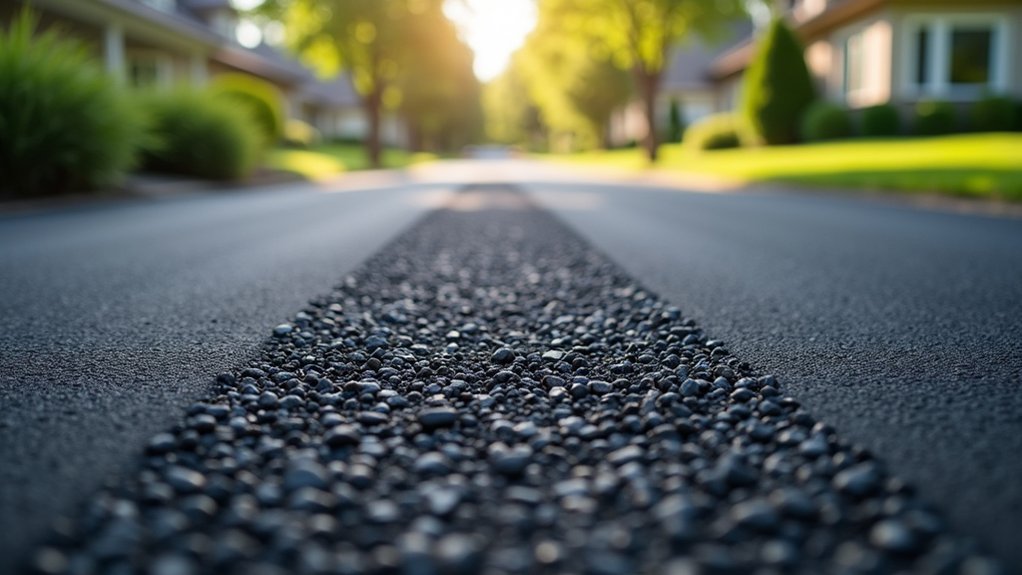
Dense-graded asphalt stands as the residential paving industry’s most reliable performer, combining a continuous aggregate gradation from coarse to fine particles that creates a compact matrix with 3, 5% air voids. You’ll achieve superior moisture resistance through proper compaction to 96% lab density, creating an impermeable barrier that protects your subgrade from water infiltration and subsequent damage. This workhorse mix excels across all traffic conditions while delivering measurable benefits: 15, 20 year service life, excellent skid resistance, and ideal surface texture for residential applications. Produced under Texas DOT Items 340 and 341, dense-graded asphalt balances rutting resistance with durability through carefully controlled binder content. The larger aggregates float in a matrix of mastic composed of asphalt cement and screenings, providing structural integrity throughout the pavement layer. Aggregates provide strength, stability, and resistance while accounting for the overwhelming majority of the mixture’s total mass. You’ll experience cost-effective installation, reduced maintenance frequency, and reliable long-term performance that justifies its widespread specification for driveway construction nationwide. As the most commonly used type of hot mix asphalt in the United States, dense-graded mixes benefit from decades of proven field performance and well-established installation practices.
Porous Asphalt
Porous asphalt revolutionizes residential driveway design by incorporating 15, 20% void content, dramatically higher than dense-graded mix’s 3, 5%, to create continuous drainage pathways that channel water directly through the pavement surface into an engineered stone bed below. This specialized structure delivers exceptional water infiltration rates exceeding 100 inches per hour, effectively eliminating standing water and reducing municipal stormwater fees. You’ll meet ADA smoothness standards while achieving low maintenance requirements, periodic vacuuming every 1, 3 years prevents pore clogging and sustains permeability. The system lasts 20 years under typical residential loads when properly maintained, though extreme climates accelerate deterioration. Initial costs surpass conventional asphalt by 20, 40%, yet you’ll eliminate expensive retention infrastructure while promoting groundwater recharge and mitigating urban heat island effects through reduced thermal absorption. The permeable surface prevents ice formation during freezing temperatures by allowing water to drain through rather than pooling on top, which reduces the need for salt or chemical treatments. General paving contractors can install porous asphalt using standard equipment and techniques, eliminating the need for specialized installers. The manufacturing process requires less energy compared to traditional asphalt production, resulting in fewer emissions and a reduced carbon footprint for your driveway installation.
Recycled Asphalt Pavement (RAP)
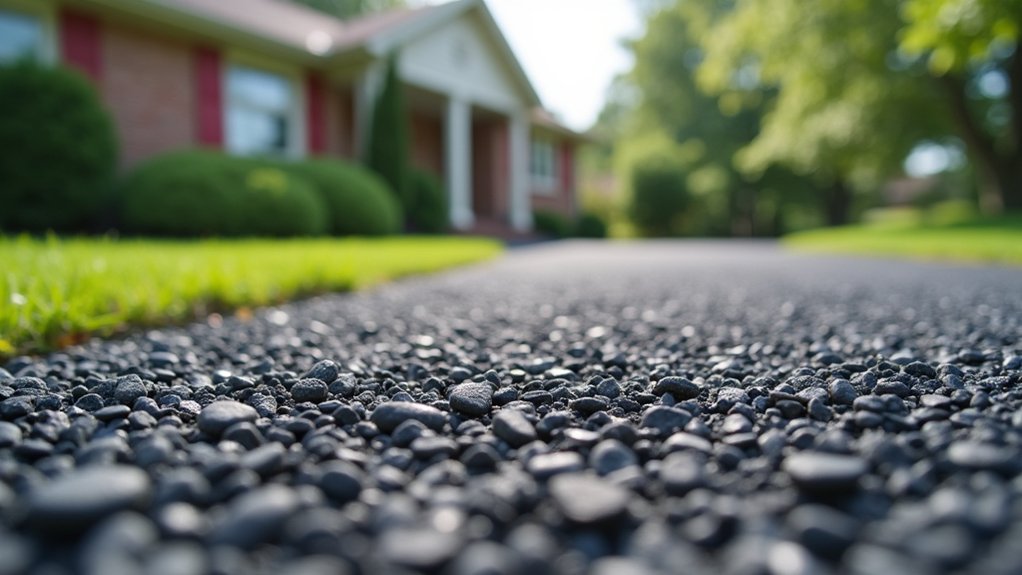
Recycled Asphalt Pavement (RAP) integrates 10, 30% reclaimed material from milled roadways and demolished pavements into new driveway installations, delivering 20, 40% cost reductions compared to virgin hot-mix asphalt while diverting approximately 100 million tons of material from landfills annually across North America. Cost considerations favor RAP through lower production expenses, reduced transportation requirements, and decreased long-term maintenance intervals. You’ll achieve lifecycle savings beyond initial installation through enhanced durability and minimal repair needs. Environmental stewardship benefits include conserved aggregate resources, reduced greenhouse gas emissions, and decreased energy consumption during manufacturing. Modern recycling technology enables RAP to match virgin asphalt performance standards, with aged bitumen binders providing superior thermal crack resistance and weather durability. The aged bitumen in RAP creates a stiffer binder that offers better resistance against deformation under heavy traffic loads. RAP contains both aggregate and asphalt binder, making it a complete paving material that can be reprocessed and reused effectively. Once compacted, recycled asphalt hardens over time, creating a strong, weather-resistant surface that performs well in extreme climates. You can apply RAP as base material, surface blends, overlays, or patches, making it ideal for high-traffic residential driveways, rural access roads, and sustainability-focused projects requiring competitive pricing without compromising structural integrity.
Full-Depth Asphalt
When residential driveways require maximum structural integrity without aggregate base layers, full-depth asphalt delivers a continuous pavement system that extends 4, 6 inches directly from the surface to the compacted subgrade. This construction method provides enhanced flexibility and durability, with commercial applications demanding 6, 8 inches for heavy-duty performance.
Successful installation hinges on rigorous subgrade preparation, proper grading, compaction, and potential soil improvement guarantee adequate support. Water drainage considerations are critical; maintain minimum 2% slope to prevent pooling and freeze-thaw damage. Install asphalt in multiple 1.5-inch lifts for ideal density.
While initial costs exceed conventional asphalt-over-aggregate systems, full-depth construction offers 10, 30+ year service life with minimal maintenance, primarily sealcoating and minor patching. You’ll benefit most when expecting frequent heavy vehicles or challenging site conditions. The uniform composition creates a stronger soil stability foundation that resists deformation under load.
41A and 41B Asphalt (Driveway Mixes)
When selecting between 41A and 41B asphalt mixes for your residential driveway, you’ll need to evaluate three critical factors: aggregate size composition, load-bearing requirements, and surface finish specifications. The 41A mix features finer aggregates with up to 6% oil content for standard vehicle traffic, while 41B incorporates larger aggregates (up to 5/8 inch) with reduced oil content (approximately 5%) to support loads up to one ton. Your choice depends on whether you’re prioritizing a smoother surface finish for typical passenger vehicles or enhanced structural capacity for heavier equipment like motor homes and one-ton trucks.
Key Differences Between Types
The fundamental distinction between 41A and 41B asphalt mixes lies in their aggregate composition and oil content ratios, which directly impact structural performance and surface characteristics. 41A incorporates a finer blend of rock and sand with oil content reaching up to 6%, producing a smooth, refined surface ideal for standard residential driveways supporting passenger vehicles.
Conversely, 41B utilizes larger aggregate particles, up to 5/8 inch, with reduced oil content of approximately 5%, creating a coarser, more durable surface engineered for heavy-load applications. The higher binder percentage in 41A enhances flexibility and compaction but increases vulnerability to indentation and tire marking. 41B’s lower oil content minimizes deformation risk under heavier vehicles like RVs and trailers, though its rougher surface finish sacrifices aesthetic uniformity. You’ll need to balance visual appeal against functional durability when selecting between these specifications.
Load Capacity and Durability
Load capacity requirements dictate which asphalt mix will perform ideally under your driveway’s specific vehicle demands. 41A asphalt handles standard passenger vehicles and light trucks efficiently, but its fine aggregate composition and heightened oil content, reaching 6%, restrict its tolerance for sustained heavy loads. You’ll notice marks, gouges, and deformation under motorhomes or one-ton trucks.
41B’s material composition incorporates larger aggregate (up to 5/8″) with reduced oil content (approximately 5%), delivering load-bearing capacity exceeding one ton. This coarser structure resists rutting and cracking from heavier wheel loads, though surface finishing sacrifices the smooth appearance of 41A. Dense-grade 41B provides superior long-term durability under variable loads, while 41A requires more frequent patching when overloaded. Your vehicle weight profile determines most suitable mix selection.
Choosing the Right Mix
Selecting between 41A and 41B asphalt requires analyzing your driveway’s anticipated load profile, aesthetic priorities, and long-term performance expectations. If you’re accommodating standard vehicles like cars and light trucks, 41A’s finer aggregate (under ⅝ inch) and higher oil content (up to 6%) deliver superior surface texture with a smooth, refined finish. However, driveways supporting heavier vehicles, RVs, work trucks, or delivery equipment demand 41B’s larger aggregates and reduced oil content (up to 5%) for enhanced weight tolerance and structural stability. Installation considerations include 41A’s susceptibility to imprinting during hot weather versus 41B’s rougher texture that retains debris more readily. Both mixes require properly graded, compacted bases and regular sealcoating. Your selection directly impacts durability, maintenance requirements, and aesthetic outcomes over the typical 15, 30 year lifespan.
Frequently Asked Questions
How Long Does an Asphalt Driveway Typically Last Before Needing Replacement?
Your asphalt driveway typically lasts 15, 25 years before requiring replacement, though proper maintenance can extend this to 30 years. The proper asphalt curing process, allowing 6, 12 months for full hardness, significantly affects longevity. Impact of weather conditions, particularly freeze-thaw cycles and UV exposure, accelerates degradation. You’ll maximize lifespan through biennial sealcoating, prompt crack repairs, and ensuring adequate base preparation with minimum 3-inch pavement thickness. Poor installation or neglected maintenance reduces service life to just 8, 15 years.
What Is the Average Cost per Square Foot for Asphalt Driveway Installation?
You’ll pay $7, $13 per square foot for new asphalt driveway installation, though prices range from $5, $13 nationally. Factors affecting cost per square foot include material quality, labor complexity, site preparation requirements, and specialty finishes like stamped or heated asphalt. Regional pricing variations drastically impact your final cost; labor rates and material transportation distances differ considerably by location. Basic overlays run $3, $7 per square foot, while full replacements with premium features can reach $15 per square foot.
How Often Should I Seal Coat My Residential Asphalt Driveway?
You’ll need to sealcoat your residential asphalt driveway every 2-3 years to maintain ideal protection. The perfect sealing frequency depends on your driveway’s traffic levels, high-use surfaces require annual applications, while low-traffic driveways can extend to 3-4 years. Optimal sealing conditions include temperatures above 50°F during summer months. Watch for fading, cracks, or discoloration as indicators you’re due for reapplication, regardless of your standard schedule.
Can I Install Asphalt Over My Existing Concrete or Gravel Driveway?
Yes, you can install asphalt over concrete or gravel, but proper substrate evaluation is essential first. For concrete, you’ll need a structurally sound base with minimal cracking, plus a tack coat for adhesion. Gravel requires compaction to 95% density and proper grading. Overlay preparation must address drainage issues and repair existing damage. Concrete substrates need 1.5-2 inch overlays, while gravel requires 2-3 inches. However, reflective cracking remains a concern with concrete bases.
What Maintenance Is Required to Prevent Cracks and Potholes in Asphalt?
You’ll need to apply sealcoating every 2, 3 years to block UV damage and water infiltration. Conduct bi-annual inspections to identify surface distress early, then perform immediate crack sealing to prevent moisture penetration. Address drainage issues promptly to avoid subgrade weakening. Schedule timely pothole repairs before they expand, and maintain clean surfaces by removing debris and chemical spills. Rotate parking positions to distribute load stress evenly, and avoid driving on vulnerable edges to preserve structural integrity.