

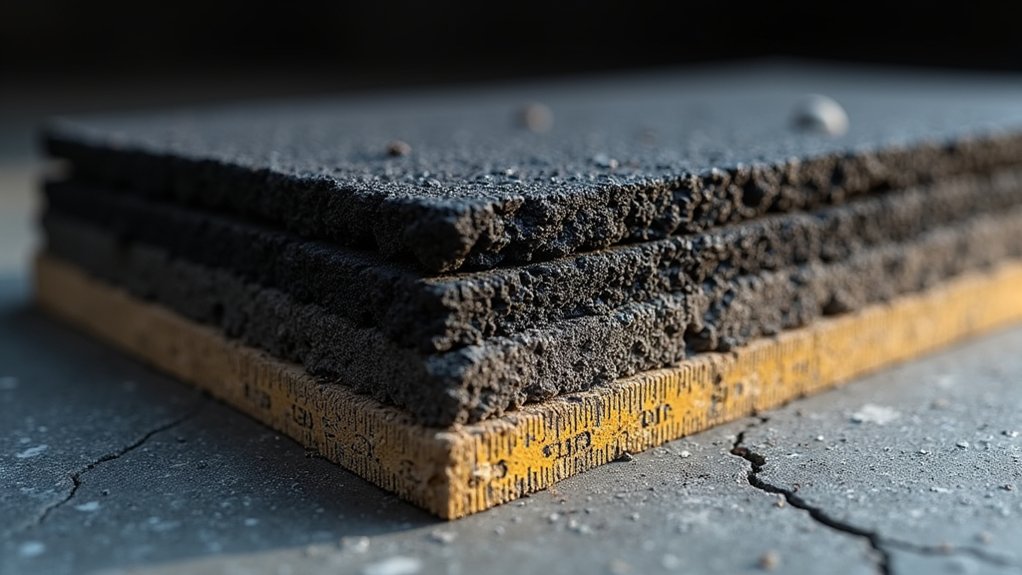

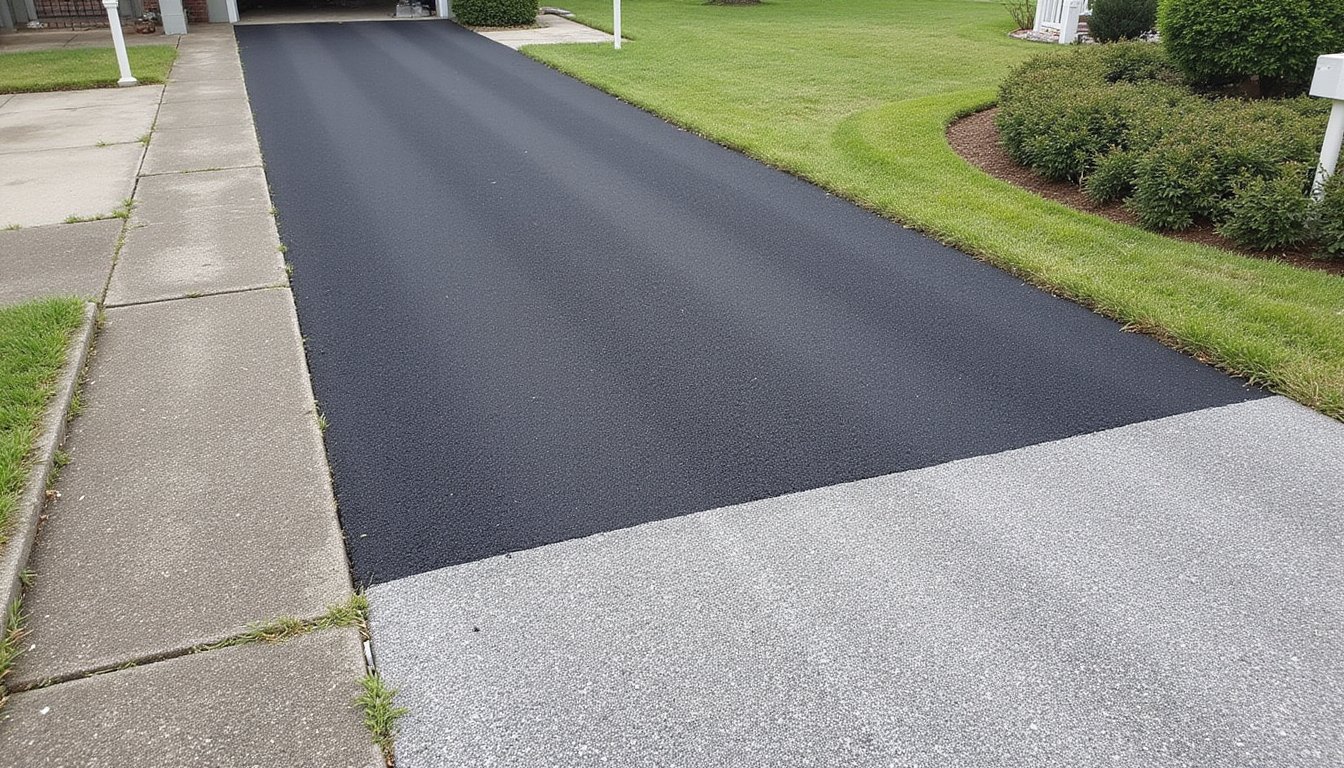
Your residential driveway needs 2.5, 3 inches of compacted asphalt over a 4, 6 inch aggregate base for standard vehicles, but you’ll require 4+ inches if you’re parking SUVs or heavier equipment exceeding 8,000 lbs per axle. The Asphalt Institute recommends 4 inches as the baseline for full-depth residential pavements, while installations under 2 inches fail two to three times more frequently than code-compliant specifications. Understanding how traffic loads, soil conditions, and proper base construction interact determines whether your pavement lasts decades or requires costly repairs within five years.
Understanding Standard Asphalt Thickness Requirements for Different Applications
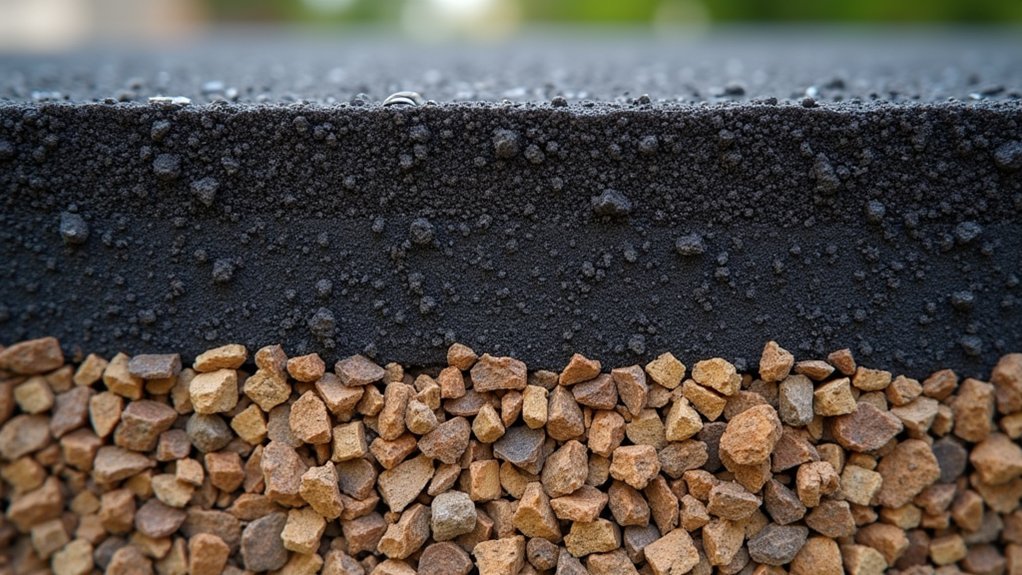
When specifying asphalt thickness for any project, you must match the pavement depth to the expected load conditions and usage patterns. Residential driveways handling passenger vehicles require 2.5, 3 inches of compacted asphalt, while commercial applications demand 4, 6 inches minimum. Heavy-duty zones supporting delivery trucks or RVs need 6, 8 inches to accommodate axle loads exceeding 8,000 lbs. The Asphalt Institute recommends 4 inches as baseline for full-depth residential pavements on properly prepared subgrades. Optimized base thickness, typically 6, 12 inches of aggregate, provides critical load distribution beneath the asphalt layers. Multi-layer installations benefit from strategic tack coat application between binder and wear courses, ensuring proper adhesion and structural integrity. Substandard installations under 2 inches fail 2, 3× more frequently than code-compliant specifications. Proper thickness also absorbs temperature changes to prevent cracking and shifting throughout seasonal cycles. The finished subgrade should maintain grade tolerance within 1/2 inch per 10 feet to ensure uniform pavement support. Thicker asphalt installations can extend driveway lifespan by up to 5 years beyond standard specifications.
The Critical Role of Base Foundation in Driveway Performance
Your driveway’s performance depends less on asphalt thickness alone and more on the foundation beneath it. A properly constructed base layer, typically 4-8 inches of compacted aggregate, serves as the primary load-bearing structure that prevents premature surface failure. Without adequate base thickness, proper compaction, and effective drainage systems in place, even thick asphalt will crack, rut, and deteriorate within years instead of decades. The base construction absorbs vehicle impact from heavy traffic loads, protecting the asphalt surface from damage that would otherwise compromise the driveway’s structural integrity. The subgrade requires thorough compaction using heavy machinery to increase soil density and create a stable foundation for all subsequent layers. In regions experiencing temperature fluctuations, the subbase becomes especially important to withstand freeze-thaw cycles that can destabilize the pavement structure.
Proper Base Layer Thickness
Why does one asphalt driveway last 25 years while another deteriorates within a decade? The answer lies in proper base layer construction and meeting industry-specified thickness standards.
Standard residential driveways require 4 to 6 inches of compacted aggregate base, while heavier applications demand 6 to 8 inches. Commercial installations necessitate 8 to 12 inches to handle increased loads. These aren’t arbitrary numbers, they’re engineering requirements that directly impact structural integrity and load distribution.
Ideal aggregate composition utilizes crushed stone or dense-graded materials for excellent compaction and drainage. Each layer must be compacted with heavy rollers, with thickness verified post-compaction, not before. Your subgrade must be firm, contoured, and free of organic material. Sites with clay or loamy soil may require excavation of inadequate soil to ensure proper drainage and prevent future settlement issues.
Insufficient base thickness causes premature failure through rutting and cracking, while adequate depth extends lifespan and reduces long-term maintenance costs. In regions experiencing frequent freeze-thaw cycles, the base layer becomes even more critical as it must prevent frost heave and the expansion-contraction damage that leads to surface cracking. The base course provides structural support by distributing loads from the surface to the underlying subgrade, preventing localized stress concentrations that would otherwise compromise pavement integrity.
Compaction and Drainage Essentials
Foundation performance breaks down without proper compaction and drainage, two interdependent factors that determine whether your driveway withstands decades of service or fails within years. You’ll need heavy-duty vibratory compactors to achieve ideal density across each base layer separately, preventing future settlement and surface cracking. Establish a 1, 2% slope to facilitate runoff and protect against freeze-thaw damage. Incorporate French drains or catch basins where groundwater poses risks. Pre-construction soil evaluation determines if clay or silty substrates require soil stabilization through chemical amendments or mechanical reinforcement. Geotextile integration separates native soil from aggregate layers, preventing migration and erosion. Water trapped beneath asphalt accelerates structural failure, particularly in freeze-thaw regions. Crushed stone bases provide natural drainage while resisting saturation, critical for load-bearing capacity and long-term durability. A weak or improperly prepared base creates drainage issues that compromise the entire pavement structure, leading to premature deterioration and costly repairs. The base material typically requires 4-6 inches of gravel or crushed stone that is evenly spread and compacted using a roller to provide proper weight distribution. Routine sealcoating protects the surface against weather damage and oxidation, extending the lifespan of your investment.
How Traffic Load and Vehicle Weight Determine Proper Thickness
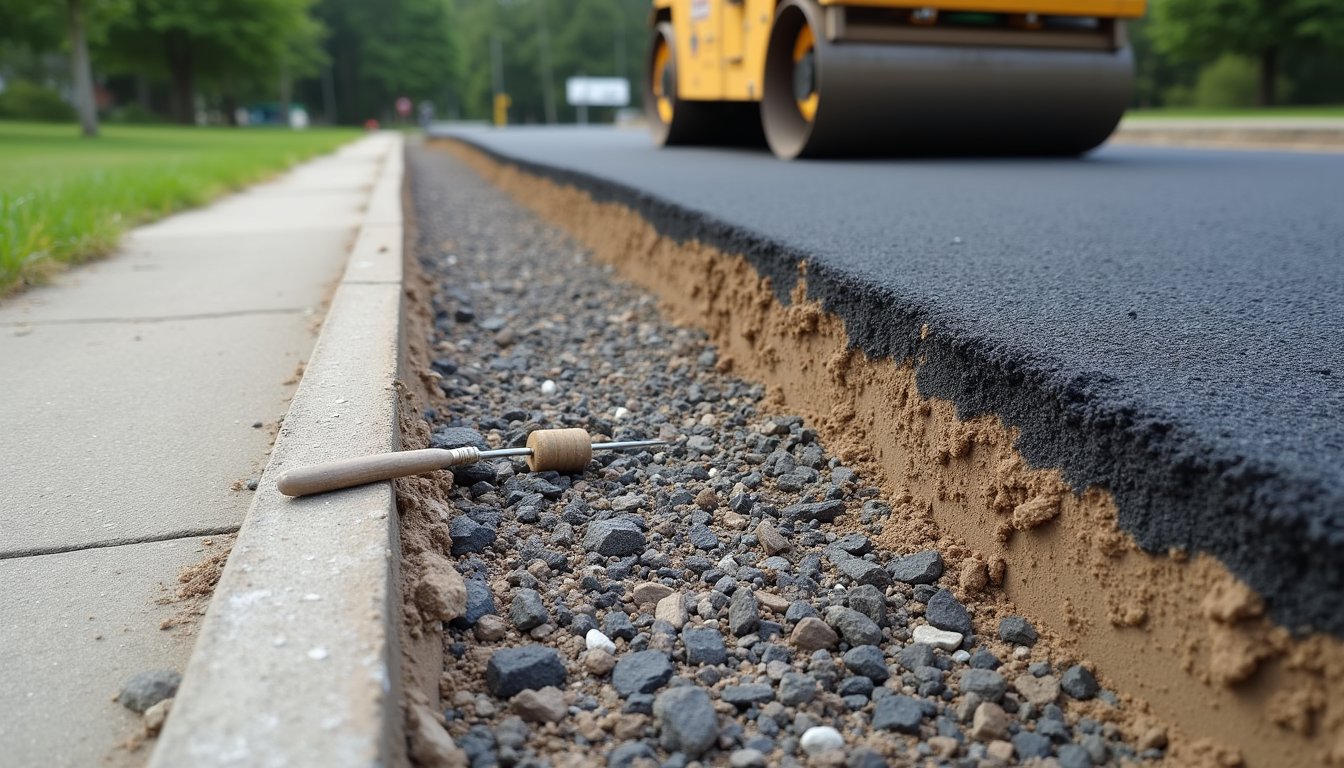
When designing an asphalt driveway, vehicle weight and traffic frequency represent the two primary load factors that dictate minimum thickness requirements. Standard passenger vehicles under 4,000 lbs per axle require 2, 3 inches of compacted asphalt, while SUVs and service vehicles (4,000, 8,000 lbs) necessitate 3, 4 inches minimum. Heavy vehicles exceeding 8,000 lbs demand 4, 8+ inches to prevent structural failure. High-traffic commercial zones need 4, 6 inches for sustained performance, whereas residential driveways typically function adequately at 2, 3 inches. Extreme weather impact compounds load stress, requiring additional thickness in freeze-thaw regions. Clay soils require a thicker asphalt layer compared to sandy soils to prevent cracking and ensure adequate load distribution. A properly compacted granular base of 6-8 inches beneath the asphalt surface is essential for residential driveway stability and structural integrity. Experienced paving professionals can evaluate traffic volume alongside soil and climate conditions to recommend optimal thickness specifications. Proper thickness specification directly influences driveway usage lifespan, light-duty installations last 15, 20 years, commercial-grade surfaces endure 20, 25 years, and heavy-duty industrial pavements achieve 25, 30 years when correctly engineered for anticipated loads.
Multi-Layer Construction Techniques for Maximum Strength
Selecting the right thickness addresses only half of structural performance, the internal architecture of your pavement determines how effectively it distributes loads and resists deformation over decades of service. Multi-layer construction places stiffer asphalt at the surface, with flexible, cost-effective materials below on a compacted granular subbase. Simultaneous paving methods bond binder and wearing courses together, creating superior interlayer adhesion while reducing material costs. Alternatively, staged construction techniques allow initial base layers to support traffic during phased installation, with protective overlays added subsequently. Stone Mastic Asphalt can serve as both binder and base course layers in modern pavement systems, offering gap-graded aggregate structure with high mastic binder content for enhanced performance.
| Construction Approach | Primary Advantage |
|---|---|
| Twin-layer simultaneous paving | Eliminates emulsion layers; stronger bond |
| Staged sequential layering | Manages unstable subgrades effectively |
| Multiple compaction passes | Achieves target density; minimizes weaknesses |
| Optimized base preparation | Prevents settlement and freeze/thaw damage |
Climate Considerations: Adapting Thickness to Your Local Environment
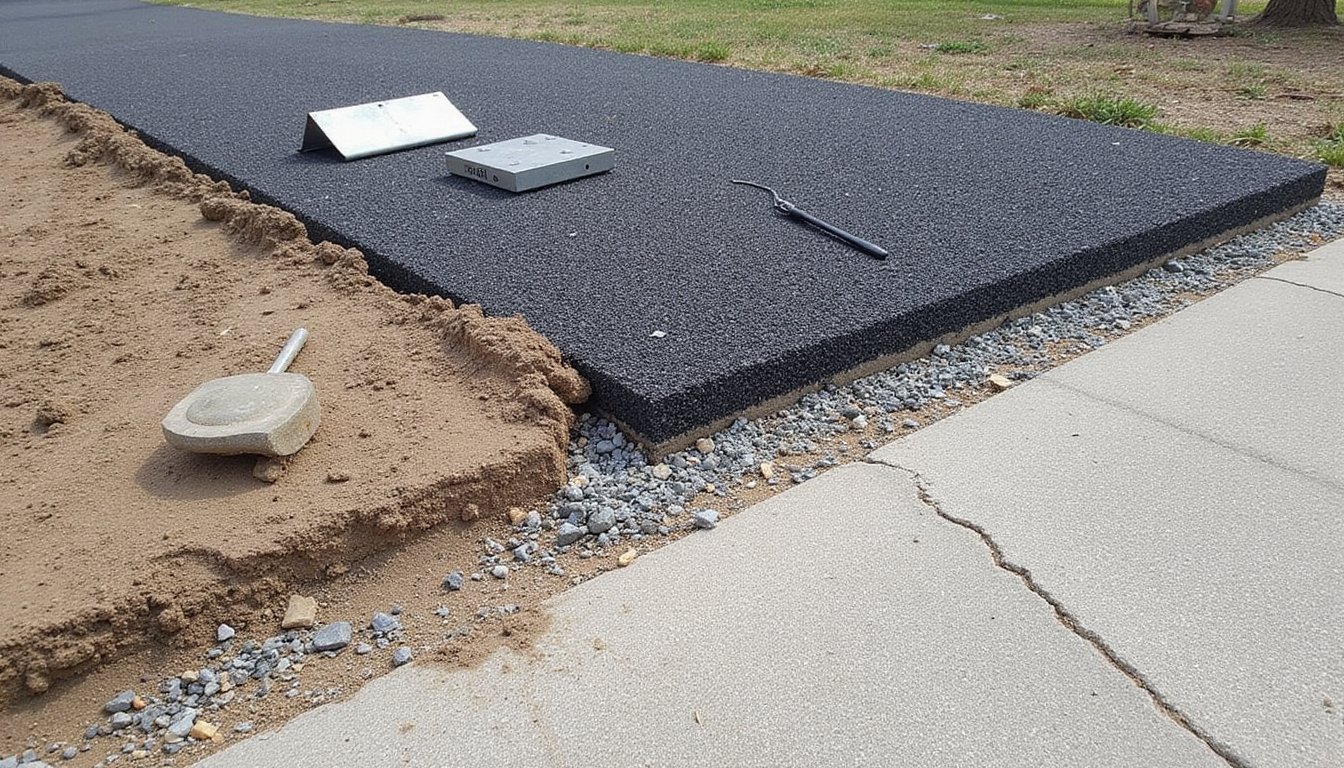
Your local climate exerts forces on asphalt pavement that rival, and often exceed, traffic loads in determining long-term structural integrity. Temperature fluctuations impact pavement performance through expansion-contraction cycles, while seasonal thickness variations address region-specific environmental demands.
Climate forces on asphalt often surpass traffic impacts, making temperature-driven expansion and contraction cycles critical factors in pavement longevity.
Climate-adapted specifications include:
- Cold regions (Alaska): 6-8 inches asphalt with enhanced base layers to distribute freeze-thaw stress effectively
- Hot zones (Texas): 4-6+ inches to prevent high-temperature deformation under sustained thermal loading
- Subtropical areas (Florida): 2-4 inches adequate for mild conditions with reduced thermal cycling
- Moisture-prone climates: Thicker specifications prevent water infiltration and freeze-thaw structural failure
- Extreme weather zones: 8-12 inch engineered base layers combined with climate-specific asphalt depth
Proper thickness selection based on local climate patterns protects pavement integrity, extending service life from 15 to 30+ years depending on application intensity.
Residential Driveways: Finding the Right Balance Between Cost and Durability
For most homeowners, the decision between a 2-inch and 4-inch asphalt driveway represents a critical trade-off: immediate cost savings versus long-term structural performance. Industry data demonstrates that substandard installations under 2.5 inches fail 2, 3 times more frequently, driving driveway maintenance costs greatly higher over the pavement’s lifecycle. While a 2-inch installation may suffice for light vehicles, increasing thickness to 3, 4 inches with a proper 6, 8 inch gravel base prevents premature cracking and load-induced deterioration. The Asphalt Institute recommends full-depth residential driveways at 4 inches minimum for ideal longevity. Though thicker construction increases upfront investment, it delivers 15, 20 year service life and maintains aesthetic considerations by resisting surface degradation. Professional-grade installations following AASHTO specifications provide superior structural integrity and eliminate costly emergency repairs.
Commercial and Heavy-Duty Applications: When to Go Thicker
Commercial parking lots, loading zones, and industrial access roads require substantially thicker asphalt sections than residential applications, typically 4 to 7 inches of hot mix asphalt over an 8, 12 inch compacted aggregate base. Critical thickness margins directly correlate with vehicle weights and traffic frequency. Real-world application scenarios demanding maximum specifications include:
- Loading dock aprons: Minimum 6 inches to withstand concentrated point loads from stationary trucks
- Waste collection zones: 6, 7 inches guarantees prevention of rutting from repeated heavy axle loads
- Industrial warehouse access: 7, 8 inch sections accommodate daily truck traffic
- Freeze-thaw climate zones: Additional thickness combats thermal stress cracking
- High-turnover parking lanes: Enhanced cross-sections reduce maintenance intervals
Proper compaction and engineer-approved designs ensure compliance with regional paving standards while maximizing pavement lifespan beyond 20 years.
The Importance of Proper Compaction and Density Standards
Every percentage point of asphalt density directly determines your pavement’s structural integrity and service life. Industry standards require 92% to 96.5% of maximum theoretical density, and achieving just 1% higher density extends pavement life by at least 10%. Your contractor’s paver screed only reaches about 85% density, multiple roller passes at correct temperatures are essential to meet specifications.
Consistent compaction methods prevent weak zones that accelerate deterioration. Proper roller overlap, appropriate equipment selection, and correct lift thickness (3 to 4 times nominal maximum aggregate size) guarantee uniform density across your entire mat. Thorough testing protocols using core samples verify compliance with state DOT standards.
Without adequate compaction, you’ll face increased air voids, water infiltration, and premature failure from rutting, raveling, and freeze-thaw damage.
Common Thickness Mistakes That Lead to Premature Failure
When contractors cut corners on driveway thickness specifications, they’re setting your pavement up for accelerated structural failure that’ll cost you thousands in premature replacement.
Critical thickness errors compromise structural integrity:
- Inadequate base layers under 4 inches triple failure rates through insufficient load-bearing capacity and poor compaction
- Surface asphalt below 2-inch minimum experiences double the failure rate, unable to distribute vehicle weight effectively
- Unmatched traffic load specifications cause premature rutting when standard thickness faces RV or commercial vehicle stress
- Poor installation timing and temperature control during paving reduces bonding strength and creates surface texture concerns
- Climate-inappropriate asphalt mixes with excessive air voids disintegrate rapidly under freeze-thaw cycles
These deficiencies accelerate water infiltration, crack formation, and structural degradation, requiring costly early replacement rather than decades of service life.
Overlay vs. Full Replacement: Thickness Considerations for Existing Driveways
When your existing asphalt driveway shows surface distress, you’ll need to determine whether an overlay or full replacement best addresses the underlying structural condition. This decision hinges on evaluating base integrity, examining substrate load-bearing capacity, and understanding that overlays require minimum 1.5-inch thickness for proper compaction while full replacements demand 2.5, 4 inches of new asphalt over a reconstructed base. Your choice directly impacts service life, overlays typically deliver 8, 15 years when applied over sound substrates, whereas properly engineered full-depth replacements achieve 15, 20+ years under equivalent loading conditions.
Assessing Current Driveway Condition
Before deciding whether to overlay or fully replace your asphalt driveway, you must conduct a thorough structural assessment of the existing pavement and its underlying layers. Visible cracks, rutting, and potholes indicate surface distress, but base instability represents a far more serious structural deficiency requiring full-depth reconstruction.
Key evaluation criteria include:
- Crack severity and pattern: Alligator cracking signals base failure; isolated cracks suggest surface-only distress
- Subgrade condition: Core sampling or test pits reveal hidden structural deficiencies beneath the mat
- Drainage performance: Standing water indicates subgrade or base problems necessitating elimination
- Base layer integrity: Movement under load confirms inadequate support requiring replacement
- Load history compliance: Heavy vehicle use demands structural capacity verification
Professional inspection determines whether overlay thickness suffices or complete replacement guarantees compliance with Asphalt Institute standards for long-term performance.
Overlay Thickness Requirements
If your existing driveway maintains a sound structural foundation but exhibits surface-level distress, an overlay offers a cost-effective alternative to complete reconstruction, provided you apply sufficient thickness to guarantee adequate performance. Standard minimum thickness requirements mandate 1.5 to 3 inches of compacted asphalt for residential overlays, measured post-compaction to confirm proper density and bonding. Applications below 1.5 inches demonstrate 2, 3x higher failure rates from premature cracking and water infiltration. High-traffic zones require 3+ inches for extended durability under heavier loads. Maximum thickness limitations become critical when maintaining drainage patterns and curb elevations, excessive overlay depth necessitates milling the existing surface. Your aggregate size directly influences minimum lift thickness: you’ll need 3x the nominal maximum aggregate size to achieve impermeability and structural integrity through proper compaction.
When Full Replacement Necessary
- Repeated pavement failures after previous overlay attempts
- Substantial subgrade deterioration issues compromising load-bearing capacity
- Drainage problems causing base movement and settlement
- Asphalt and aggregate base thickness far below industry standards
- Base aggregate instability unable to support expected traffic loads
Full-depth reconstruction typically requires 4 inches compacted asphalt over 6-8 inches granular base for residential applications, with commercial specifications demanding 3-4 inches asphalt over 8+ inches base material.
Frequently Asked Questions
Can I Pour Asphalt Directly Over an Existing Concrete Driveway?
You can pour asphalt over concrete, but overlay considerations demand careful evaluation first. Your concrete base must be stable without significant cracking, heaving, or settlement. Concrete preparation requirements include thorough cleaning, applying a tack coat for proper bonding, and repairing all damaged areas. You’ll need minimum 2, 3 inch asphalt thickness to resist reflective cracking from expansion joints. Without addressing these technical factors and drainage patterns, you’re risking premature failure and compromised structural performance.
How Long Should I Wait Before Driving on Newly Paved Asphalt?
You should wait 3 to 7 days before driving on newly paved asphalt, though adequate curing time depends on temperature and humidity conditions. Light vehicles can typically use the surface after this minimum period, while heavy vehicles require 14 days. You’ll need proper driving precautions during initial curing, avoid sharp turns, sudden braking, and parking in one spot. Full strength develops after 14 days under normal conditions, ensuring your driveway withstands standard traffic loads safely.
Does Asphalt Thickness Affect How Quickly Snow and Ice Melt?
Yes, thickness remarkably affects melt rates. Thicker asphalt, typically 3″ or more, provides greater heat absorption capacity and acts as thermal insulation against rapid nighttime cooling. You’ll see accelerated snowmelt because increased mass retains solar-generated warmth longer, maintaining above-freezing surface temperatures during critical daytime periods. Field data confirms 3″ pavements outperform 2″ installations by sustaining melt conditions through temperature fluctuations. The enhanced heat capacity directly reduces snow/ice duration, improving your driveway’s winter performance and safety.
Will Thicker Asphalt Reduce Noise From Vehicles Driving Over It?
Yes, thicker asphalt considerably reduces vehicle noise through enhanced absorption performance. You’ll achieve up to 3 dB reduction with 3+ inch layers versus standard 2-inch installations, as increased mass dampens tire-pavement interaction and vibration transmission. For ideal noise reduction properties, industry standards recommend minimum 3-inch residential thickness, while heavy-traffic applications benefit from 4, 6 inches. Porous mixes in thicker sections further enhance acoustic attenuation. However, you must balance costs against diminishing returns beyond recommended specifications.
How Much Does Each Additional Inch of Asphalt Increase Total Cost?
Each additional inch of asphalt typically increases your cost by $2, $6 per square foot, depending on regional rates and material grades. For a standard 640 sq ft driveway, you’ll see approximately $1,280, $3,840 added to your estimated project budget per inch. While thicker applications raise upfront costs, they offer potential cost savings through reduced maintenance frequency and extended pavement lifespan. Factor load requirements and ASTM thickness standards when calculating your total investment per inch.