

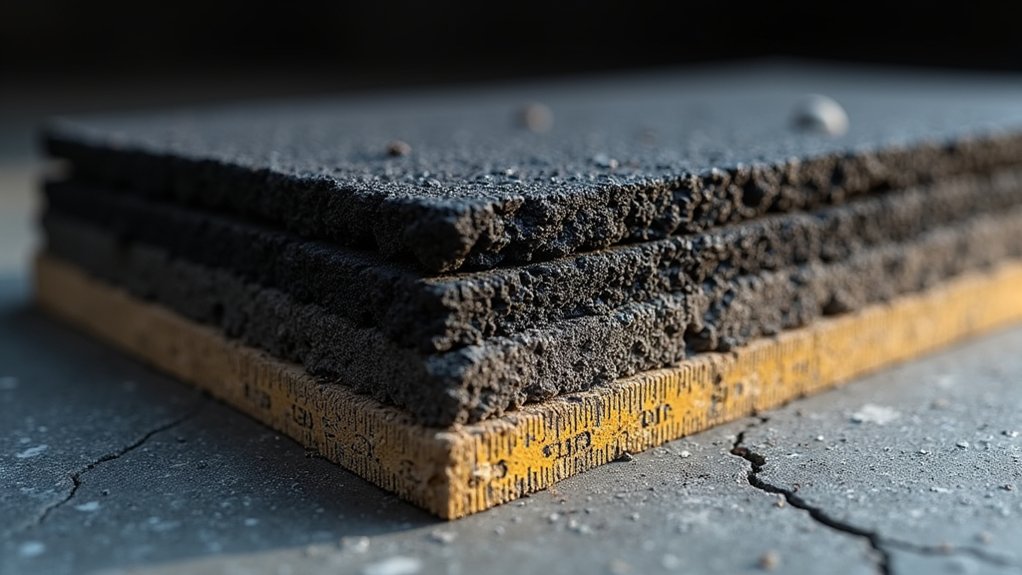
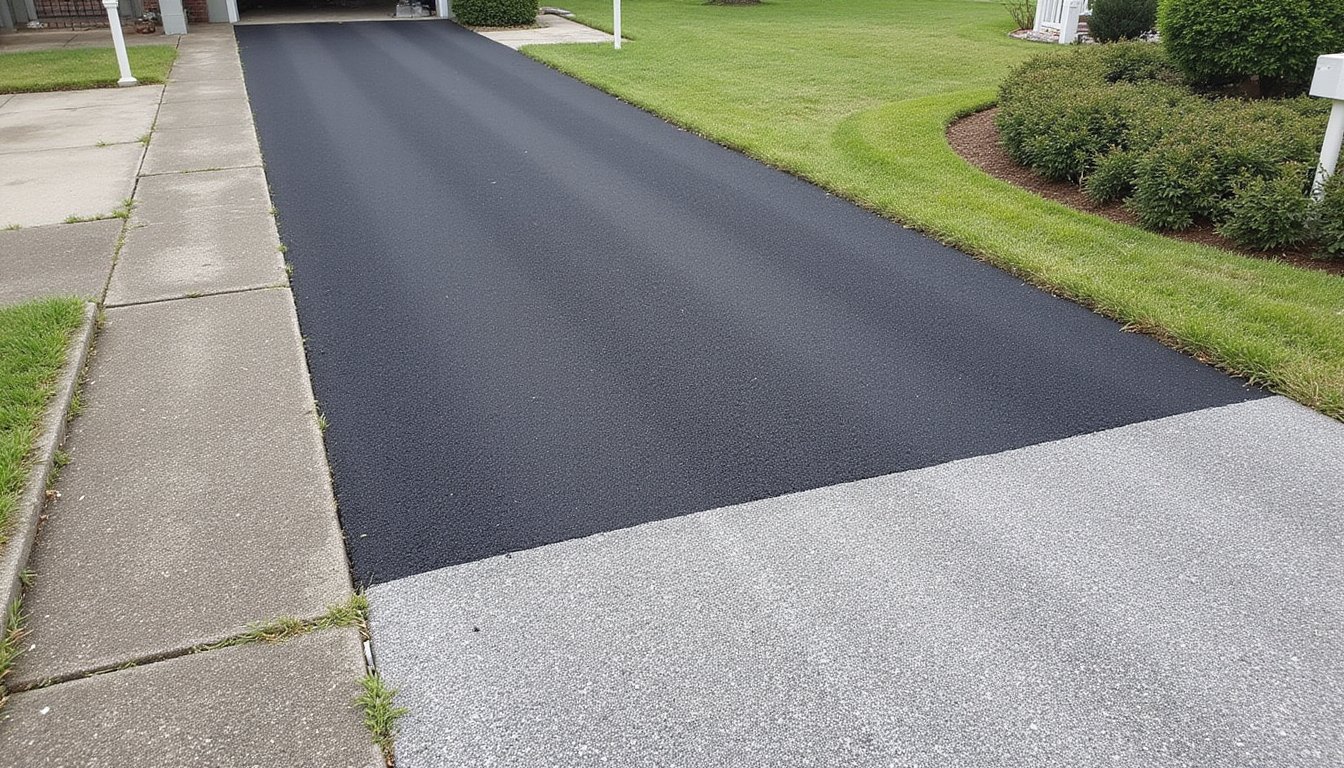
You’ll need two distinct asphalt layers for a strong, durable driveway: a binder course that provides structural integrity and load-bearing capacity, plus a surface course that protects against wear and environmental damage. This dual-layer system works with your properly prepared sub-base to resist cracking, prevent water infiltration, and maintain stability under traffic loads. While standard two-layer construction suits most residential applications, specific thickness requirements and compaction standards depend on your climate conditions and anticipated vehicle weights, factors that greatly influence your pavement’s longevity.
Standard Two-Layer Asphalt Construction for Residential Driveways
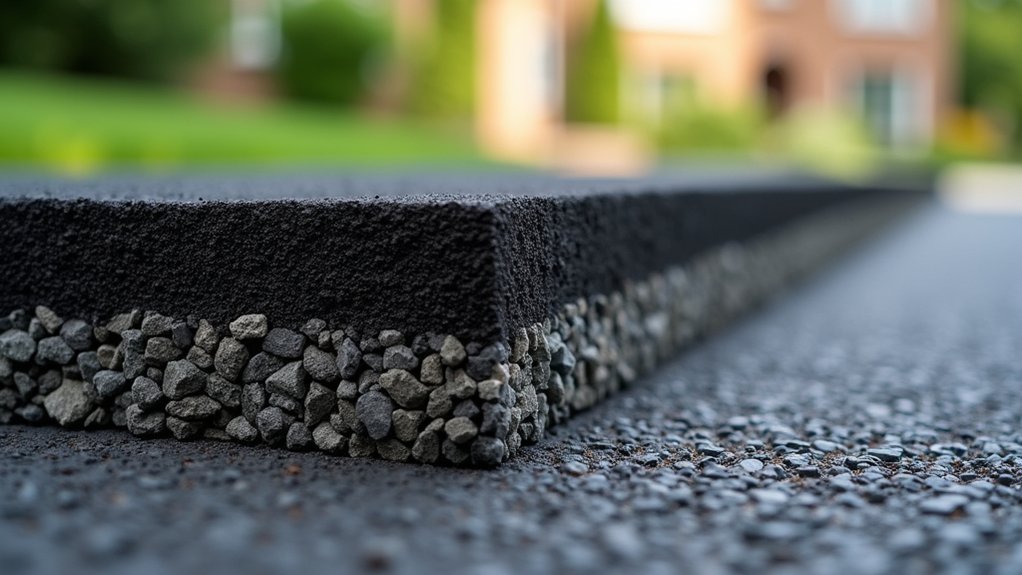
When constructing a residential driveway, standard two-layer asphalt systems deliver excellent performance through precise thickness specifications and layered installation methods. You’ll install a binder/base course followed by a surface/wearing course, with each lift compacted to approximately 1.5 inches. This configuration achieves 2, 3 inches of total compacted asphalt thickness, suitable for light vehicles and standard residential use.
Layer thickness variances depend on expected load requirements; heavier vehicles necessitate 3, 4 inches total depth. Between lifts, you’ll apply a tack coat to bond layers and prevent separation. Asphalt mixture specifications differ for each course: the binder layer uses larger aggregate for structural strength, while the wearing course employs finer material for smooth surface finish. Proper compaction through sequential rolling guarantees uniform density across both layers, eliminating voids that compromise pavement performance and longevity. The flexible material composition makes asphalt particularly suitable for climates with freeze-thaw cycles, allowing the surface to expand and contract without cracking. Rolling and compaction should begin as soon as the material can be compacted without causing displacement of the asphalt. Increased thickness helps disperse the pressure, preventing indentations or buckling under heavy loads.
Understanding the Binder Course and Its Role in Pavement Strength
Positioned between your driveway’s surface and base layers, the binder course functions as the structural backbone that absorbs and redistributes traffic loads throughout the pavement system. Typically placed 50, 70 mm below the surface, it’s engineered to counter the highest shear stresses, directly reducing rutting and permanent deformation. Binder course properties like stiffness and aggregate gradation determine rut resistance and longevity under repeated loading. Hot Mix Asphalt (HMA) with coarse aggregates provides stone-on-stone contact for maximum stability. Modified binders with polymers enhance performance in demanding binder course applications. The binder course can incorporate waste and by-products as sustainable aggregate alternatives that maintain structural integrity while reducing environmental impact. Proper compaction creates strong bonding with surface and base courses, preventing layer separation and moisture infiltration. A tack coat applied between layers ensures adequate adhesion and prevents delamination under traffic stresses. This intermediate layer’s optimized density and cohesion establish structural uniformity, ensuring your driveway withstands heavy vehicles and maintains durability over time. The dense-graded asphalt mixture used in the binder course contains higher binder content than the base layer, providing essential flexibility and adhesion for long-term performance.
The Surface Course: Your Driveway’s Protective Top Layer
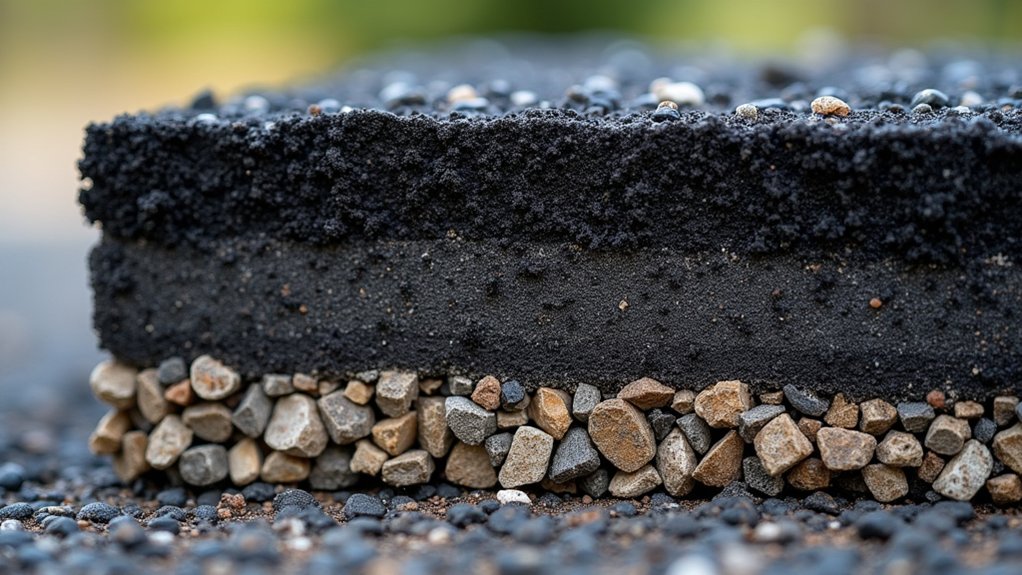
While the binder course forms your driveway’s structural core, the surface course, also called the wearing course, bears the direct assault of traffic loads, weather extremes, and chemical exposure. Typically 1, 2 inches thick, this Hot Mix Asphalt layer prioritizes abrasion resistance, skid safety, and impermeability. You’ll achieve ideal performance when compaction reaches 92% of theoretical maximum density and placement occurs at temperatures ≥60°F. Dense-graded mixes combat rutting while sealing underlying layers from water intrusion. Monitor surface distress indicators, raveling, cracking, oxidation, to schedule timely mill-and-fill rehabilitation. Periodic driveway sealant application extends service life by protecting against moisture penetration and UV degradation. Proper surface course specification, informed by traffic patterns and climate conditions, delivers 30-year pavement longevity when constructed over sound base and binder infrastructure.
Total Thickness Requirements Based on Vehicle Load and Usage
Because vehicle loads impose concentrated stresses that propagate through the pavement structure, you’ll determine total asphalt thickness by analyzing axle weights, traffic frequency, and usage intensity. Residential driveways supporting standard vehicles (4,000 lbs/axle) require 3, 4 inches multi layer thickness over compacted aggregate base. Commercial applications handling 8,000 lbs/axle demand 4, 6 inches, while industrial settings with 12,000+ lbs/axle necessitate 6, 8+ inches for adequate load distribution. Variable climate impacts further influence specifications, freeze-thaw regions mandate minimum 3-inch thickness to resist thermal cracking, whereas areas with heavy rainfall require increased depth for water infiltration protection. Engineers calculate these parameters against anticipated service life: residential (15, 20 years), commercial (20, 25 years), industrial (25, 30 years). Driveways with substandard thickness experience failure rates 2-3 times higher than properly constructed installations, making adequate depth essential for longevity. Soft or clay-heavy soils necessitate thicker asphalt layers to prevent shifting and rutting under load. Heavy-duty commercial installations should incorporate distinct finish and binder layers rather than uniform thickness to optimize structural performance and load transfer characteristics. Inadequate thickness below 2 inches guarantees premature failure under concentrated pressure points.
Building a Proper Foundation: Subgrade, Subbase, and Base Course Essentials
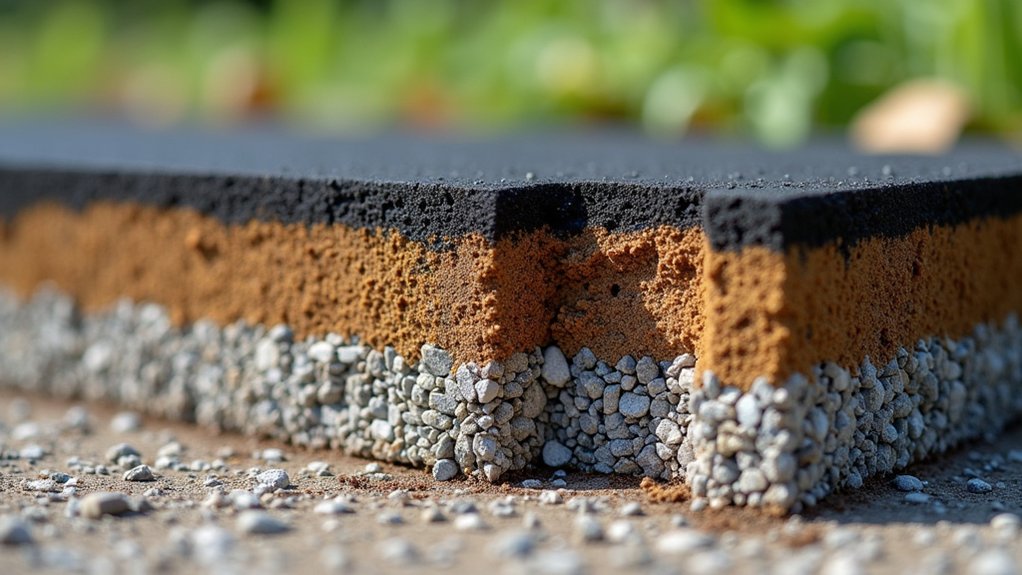
Your driveway’s longevity depends on a properly engineered foundation system comprising three critical layers: subgrade, subbase, and base course. The subgrade must achieve specified compaction density, typically 95% Standard Proctor, after removing all organic material and stabilizing expansive soils with lime or cement amendments. Above this, you’ll install 4-8 inches of compacted granular aggregate for both subbase and base course layers, using materials like crushed stone that provide ideal drainage and load distribution. Residential driveways require 6-8 inches of properly compacted granular base aggregate on top of the subgrade. An optional geotextile fabric can be installed between the subgrade and base layers to prevent soil migration and improve stability. Proper drainage prevents water from weakening the structure, which can lead to cracks and potholes.
Subgrade Preparation and Compaction
Before any aggregate or paving material reaches your driveway site, you must establish a competent subgrade, the native or prepared soil layer that bears the entire pavement system’s weight. Begin with soil stability testing to measure bearing capacity, moisture content, and compaction characteristics. Surface irregularity inspection identifies soft spots, organic matter, and debris requiring excavation and replacement with engineered fill. You’ll need to remove topsoil, vegetation, and roots to prevent future settlement issues.
Compaction demands mechanized rollers achieving specified density standards, typically verified through Proctor tests or nuclear gauges. Moisten the subgrade before compacting to maximize particle binding and density. Grade the surface to incorporate design slopes, usually ¼-inch per foot, directing water away from pavement edges. A properly prepared subgrade prevents asphalt cracking, settling, and premature deterioration by creating uniform support across the entire pavement structure. Address low-permeability soils with stabilization treatments or geotextile reinforcement when necessary. The subgrade thickness determination depends on both expected traffic loads and soil conditions, as heavier vehicles require more robust foundational support than typical residential traffic. Once the subgrade is properly shaped and sloped, apply 6-8 inches of compacted aggregate base to establish the structural foundation beneath the hot mix asphalt layers.
Aggregate Base Layer Requirements
The aggregate base layer functions as the critical load-distributing component between your prepared subgrade and the final pavement surface, transferring vehicle loads and environmental stresses downward while preventing differential settlement. Proper construction requires attention to aggregate material characteristics and compaction techniques for guaranteed performance.
Essential aggregate base specifications:
- Thickness requirements: Install 4, 6 inches for standard residential driveways; increase to 12 inches for heavy vehicle traffic or weak subgrade conditions. Local soil conditions may necessitate additional thickness adjustments to accommodate regional geological variations.
- Material selection: Choose crushed stone or quarry process aggregates, clean, uniformly-sized particles free from clay and organic matter ensure consistent compaction.
- Layering protocol: Place material in lifts not exceeding 6, 8 inches, compacting each layer to minimum 95% relative density using vibratory equipment.
- Drainage integration: Select porous aggregates with proper grading to facilitate water movement and prevent subsurface moisture accumulation.
Compaction Standards and Layer Thickness Guidelines
You’ll need to meet minimum lift thickness standards, typically 2, 3 inches compacted per layer for residential applications and 3, 4 inches for commercial projects, to achieve proper compaction and prevent delamination. Each lift must reach 92, 96% of theoretical maximum density using vibratory or steel drum rollers, with aggregate base layers requiring at least 95% compaction before asphalt placement. Thinner lifts compact more effectively than thicker ones, which is why multilayer construction with independent compaction of each course delivers superior density and long-term pavement performance.
Minimum Lift Thickness Requirements
Proper asphalt compaction hinges on establishing correct lift thickness relative to aggregate size, a fundamental relationship that determines pavement density and long-term structural integrity. Industry standards mandate minimum lift thickness of 4× the nominal maximum aggregate size (NMAS) for dense-graded mixes, establishing clear lift thickness expectations you’ll need to meet.
Minimum Lift Thickness by Mix Type:
- 9.5 mm NMAS surface mix: 1.5″ compacted minimum
- 12.5 mm NMAS intermediate mix: 2″ compacted minimum
- 19 mm NMAS base mix: 3″ compacted minimum
- 4.75 mm NMAS leveling course: 0.5″ compacted acceptable
These practical lift thickness limits aren’t arbitrary; lifts below these thresholds risk inadequate compaction and premature pavement failure. You must coordinate aggregate selection with your intended lift thickness during mix design to guarantee proper mat density and pavement longevity.
Compaction Methods and Density
After establishing correct lift thickness, achieving target density through systematic compaction becomes your primary quality control objective, one that directly determines pavement performance and service life. You’ll need to reach 92%, 98% of theoretical maximum density (TMD) to minimize air voids and guarantee water resistance.
| Compaction Phase | Equipment Type | Target Density Range |
|---|---|---|
| Breakdown Rolling | Steel Wheel (Vibratory) | 85%, 90% TMD |
| Intermediate Rolling | Pneumatic Tire | 90%, 95% TMD |
| Finish Rolling | Static Steel Wheel | 92%, 98% TMD |
| Quality Verification | Nuclear Gauge/Core | Per Specification |
| Temperature Window | 240°F, 175°F | Cessation at 110°F |
Implement proper roller patterns with 50% drum overlap, beginning at edges and progressing centerward. Temperature monitoring guarantees compaction occurs within the optimum window before reaching cessation temperature, typically 110°F, 175°F depending on mix design.
Drainage Design Considerations for Long-Lasting Asphalt Surfaces
Water management stands as the single most critical factor determining asphalt pavement longevity, with poor drainage causing up to 70% of premature pavement failures. You’ll need thorough drainage design integrating both surface and subsurface drainage options to protect your investment.
Poor drainage destroys 70% of asphalt prematurely, making water management your pavement’s most critical defense against early failure.
Critical drainage components include:
- Cross-slope gradient of 1, 2% directing water away from pavement edges and structures
- Subsurface perforated pipes beneath the 6, 8 inch compacted aggregate base layer
- Channel drains at entry points preventing water flow toward foundations
- Permeable surface treatments at pavement edges increasing infiltration rates
Your soil assessment determines drainage intensity; clay soils demand enhanced systems due to poor absorption characteristics. Install geotextile fabric around French drains to filter debris and extend operational lifespan while preventing water infiltration into base layers.
Quality Control Factors That Determine Driveway Longevity
Material quality considerations include proper mix design, premium aggregates, and binder content tailored to regional climate and anticipated loads. Expert compaction techniques eliminate voids that compromise structural integrity. Thicker layers and stable base construction handle heavy-vehicle stress effectively.
Ongoing maintenance practices prove equally critical; sealcoating every 2, 3 years prevents UV degradation and water infiltration, while prompt crack repair preserves sub-base stability. Industry data confirms neglected maintenance reduces lifespan by 50%. Traffic analysis informs specification requirements, and climate-adapted formulations resist freeze-thaw cycles and oxidation damage.
Frequently Asked Questions
Can I Add a Third Asphalt Layer to an Existing Driveway?
You can add a third asphalt layer if your existing driveway’s structural integrity remains sound and the base is stable. However, additional considerations include proper surface preparation with tack coat application, verifying you won’t exceed the 3, 4 inch residential thickness standard, and ensuring adequate drainage after height increase. You’ll need to mill existing cracks, confirm proper compaction density, and check that edge shifts won’t create vertical mismatches with garage entries or adjoining surfaces.
How Long Should I Wait Between Installing the Binder and Surface Layers?
You shouldn’t wait between installing the binder and surface layers; they’re typically placed the same day for ideal bonding. The surface layer should go down while the binder’s still warm, requiring minimal curing time. If delays occur, apply the surface within 24 hours and clean the binder thoroughly. Layer thickness and proper compaction matter more than waiting periods. Extended delays compromise adhesion and may require a fresh tack coat application to restore bonding integrity between layers.
Is Permeable Asphalt a Viable Alternative for Residential Driveways?
Yes, permeable asphalt‘s a highly viable option for your residential driveway. Its permeable surface performance effectively manages stormwater runoff while reducing heat island effects and ice formation. However, you’ll need to address specific maintenance requirements, including regular vacuuming or pressure washing to prevent pore clogging. While initial costs run 10-15% higher than conventional asphalt, you’ll benefit from reduced drainage infrastructure needs and potential stormwater fee reductions in regulated municipalities.
What Are the Cost Differences Between Two-Layer and Single-Layer Asphalt Driveways?
Two-layer asphalt driveways cost 40, 80% more upfront than single-layer installations. You’ll pay $5,000, $12,000 for a single-layer 1,000 sq ft driveway versus $6,000, $10,000+ for two-layer construction. Material costs roughly double due to increased thickness (3.5, 4 inches vs. 2 inches), while installation labor rises from $3, $6+ per sq ft as multi-layer applications demand additional equipment time and compaction cycles, substantially elevating your total project expenditure.
Do Recycled Asphalt Layers Perform as Well as Virgin Asphalt?
Recycled asphalt performance matches virgin asphalt when you properly engineer the mix with rejuvenators and additives. You’ll achieve comparable stiffness, rutting resistance, and 15, 20 year service life with high-percentage RAP mixes (up to 40%). Recycled asphalt durability requires more attention; you’ll need resealing every 2, 3 years to combat moisture susceptibility and binder aging. Quality control during processing and compaction is critical, as variability can compromise structural integrity and surface uniformity compared to virgin materials.