
Yes, driveway sealcoating is absolutely worth it for long-term protection. You’ll extend your asphalt’s lifespan from 10-15 years to 25-30 years while spending just $0.30–$0.80 per square foot compared to $8–$15 for full replacement. Sealcoating creates a protective barrier against UV rays, chemical spills, and water infiltration that causes freeze-thaw damage. When you apply your first coat 6-12 months after installation and maintain a 2-3 year reapplication cycle, you’ll maximize these protective benefits.
How Sealcoating Extends Your Driveway’s Lifespan
When you apply a quality sealcoat to your asphalt driveway, you’re creating a chemical-resistant barrier that shields the surface from petroleum-based substances like motor oil, gasoline, and antifreeze. This chemical spill resistance prevents corrosive fluids from penetrating the substrate and degrading the binder that holds your pavement together.
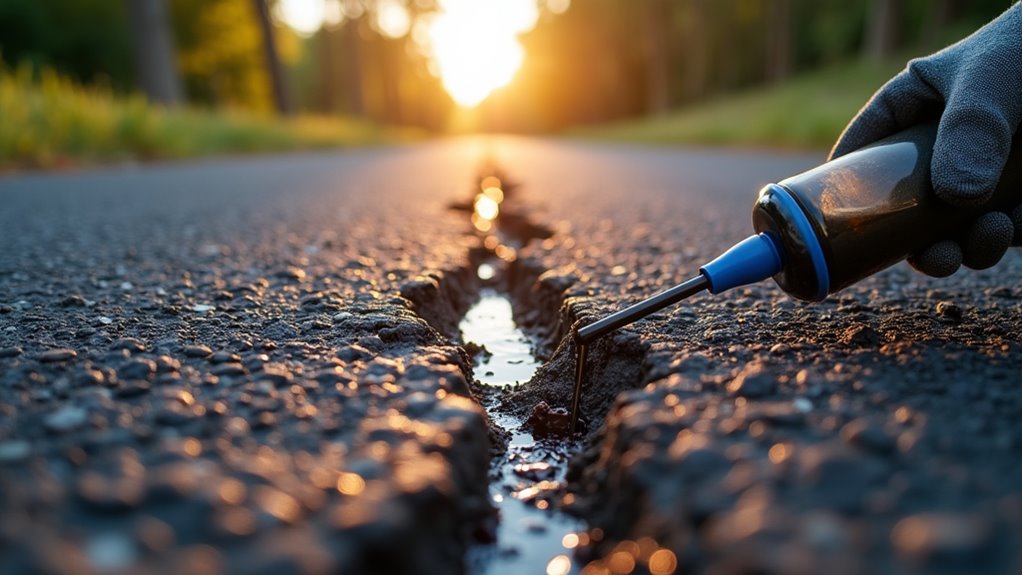
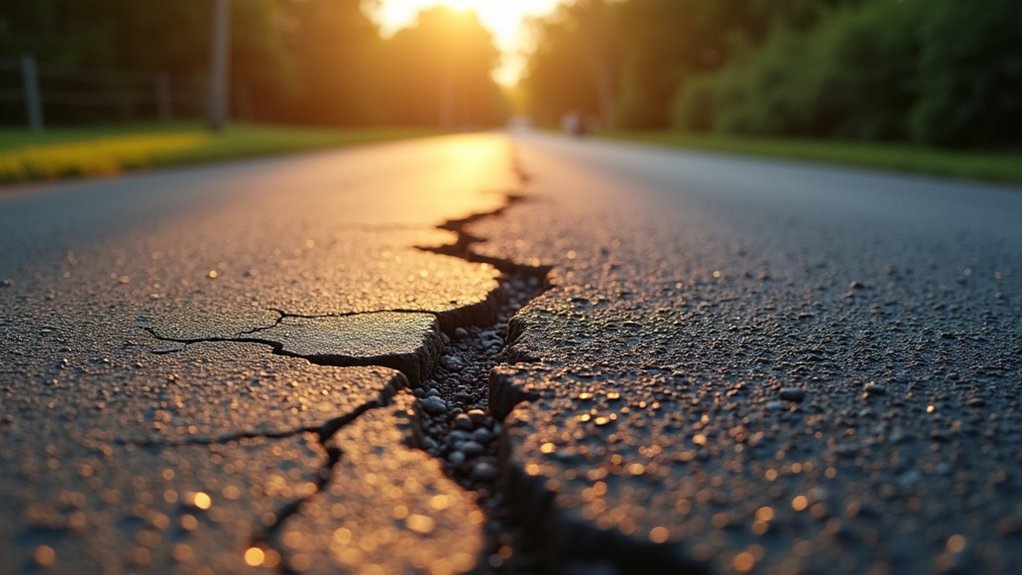
The protective layer also delivers improved slip resistance while blocking water infiltration that erodes the foundation beneath your driveway. By sealing micro-cracks before they expand, you’re preventing the freeze-thaw cycles that cause extensive structural damage. Additionally, sealcoating acts as a sunblock for asphalt, preventing UV rays from oxidizing and breaking down the binders that maintain your driveway’s structural integrity.
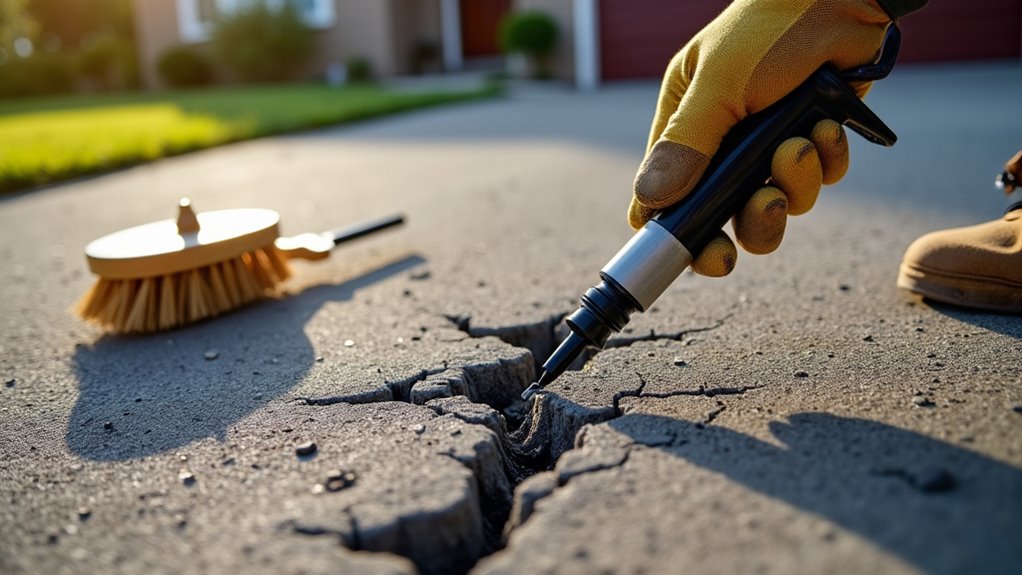
With proper maintenance scheduling—first application 6-12 months after installation, then every 2-3 years—you’ll extend your driveway’s functional lifespan from a standard 15 years to 25-30 years. That’s a significant return on a relatively modest preventative investment. However, it’s important to note that sealcoating is a surface treatment, so you should address existing cracks and damage before application to ensure optimal results. If you notice water pooling on the surface, this indicates poor drainage issues that should be corrected before sealcoating to prevent potential problems.
Protection Against UV Rays and Sun Damage
Beyond chemical and water protection, your sealcoat serves as a critical defense against ultraviolet radiation—one of asphalt’s most persistent enemies. UV rays break down the chemical bonds in asphalt binder, causing oxidation that leaves your surface brittle and prone to cracking. Unlike concrete temperature fluctuations that stress rigid materials, asphalt’s flexibility becomes compromised when UV exposure dries out essential oils.
Your sealcoating creates a UV-resistant barrier that absorbs and deflects harmful rays before they penetrate the asphalt matrix. This protection prevents surface erosion and maintains the binder’s structural integrity. Without this shield, small UV-induced cracks expand rapidly, leading to extensive deterioration. With proper sealcoating maintenance, your driveway can last 20-30 years compared to just 10-15 years for unsealed surfaces. Regular sealcoating also reduces maintenance costs by preventing the need for expensive repairs caused by UV-related damage.
The protective layer also preserves your driveway’s deep black appearance, enhancing curb appeal while retaining heat properties that aid winter ice removal. For optimal results, apply sealant when temperatures exceed 55°F, typically between spring and fall, to ensure proper curing and maximum protection.
Preventing Water Damage and Freeze-Thaw Cycles
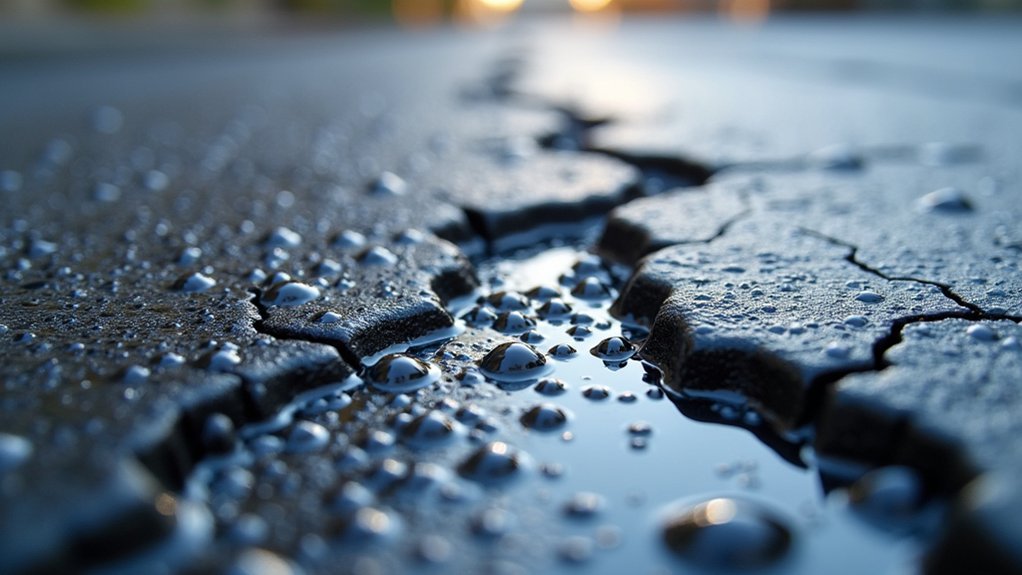
Water infiltration poses the greatest structural threat to your asphalt driveway, attacking from the surface down to compromise the entire foundation. When moisture penetrates tiny pores and cracks, it erodes base layers, creating structural instability that manifests as potholes and progressive deterioration.
Water is asphalt’s worst enemy—seeping through tiny cracks to destroy your driveway from the foundation up.
In cold climates, trapped water freezes and expands, causing extensive cracking through repeated freeze-thaw cycles. Sealcoating creates a weather resistant surface that blocks moisture penetration at the source.
The adhesive bonding properties of quality sealcoat fill surface imperfections, preventing water pooling and promoting proper drainage. You’ll notice water beading on sealed surfaces rather than absorbing into the asphalt. Sealcoating products typically consist of emulsified asphalt, mineral fillers, and various additives that create this protective barrier.
This moisture management extends your driveway’s lifespan from 10-15 years to 20-30 years, making preventative sealcoating far more economical than addressing foundation damage. Once deep water penetration compromises the foundation, extensive repairs become both costly and time-consuming to complete.
Defending Your Driveway Against Chemical Spills
Your driveway faces constant exposure to automotive fluids, gasoline drips, and oil leaks that actively break down asphalt binder and create soft spots in the surface. Sealcoating creates a chemical-resistant barrier that prevents these petroleum-based substances from penetrating and weakening the aggregate bond beneath. This protective layer not only blocks damage but also makes cleaning up spills considerably easier since contaminants sit on the sealed surface rather than absorbing into the asphalt. When combined with regular maintenance, sealcoating can extend asphalt life by 20 years on average as part of a comprehensive preventative care strategy. For optimal results, you should use commercial grade sealants that provide the strongest defense against harsh chemicals and petroleum products. By maintaining this barrier through regular sealcoating, you can potentially double your driveway’s lifespan compared to leaving the surface untreated and vulnerable to chemical degradation.
Oil and Gas Protection
When gasoline, motor oil, or transmission fluid leaks onto unprotected asphalt, these petroleum-based substances don’t just sit on the surface—they actively recombine with the asphalt binder, softening the pavement and accelerating structural breakdown. Your driveway becomes increasingly porous, creating voids that amplify UV damage and moisture infiltration.
Sealcoating creates a non-porous barrier that prevents chemical penetration. Oil-based sealers and coal tar emulsions deliver exceptional resistance against petroleum products, forming a flexible protective layer that keeps contaminants on the surface for easy cleanup. These oil-based formulations are made from petroleum-derived substances enriched with asphaltic chemicals that create resilient bonds with your existing pavement. This protection is particularly valuable since spills are much easier to clean up and cause less permanent damage on sealed surfaces. However, it’s important to understand that sealcoats function as protective treatments and cannot repair damage that has already occurred from prolonged chemical exposure.
For long term performance, you’ll want to examine oil-based formulations that penetrate deeply and last 4-6 years. This cost effective application approach means fewer resealing cycles while maintaining consistent chemical resistance. Apply sealant after fresh paving to establish protection before vehicle leaks cause irreversible damage.
Simplified Spill Cleanup
Because sealcoating creates a non-porous barrier across your driveway’s surface, chemical spills from vehicles—oil, gasoline, antifreeze, and transmission fluid—can’t penetrate into the asphalt matrix. This surface porosity reduction keeps contaminants sitting on top where you can address them immediately.
Chemical exposure mitigation through sealcoating delivers these practical advantages:
- Rapid cleanup response—spills wipe away without specialized solvents or pressure washing
- Stain prevention—petroleum products won’t leave permanent discoloration marks
- Structural protection—asphalt binders remain intact without chemical degradation
- Reduced maintenance costs—simple cleaning replaces expensive spot repairs
Coal tar-based sealers outperform asphalt-based alternatives for fuel spill resistance. You’ll maintain a cleaner appearance in high-traffic areas where drips occur frequently. The sealed surface stays smooth post-cleanup, preserving both function and curb appeal. Without this protective layer, acidic substances from vehicle leaks can dissolve the binders in your asphalt, leading to soft spots and long-term structural damage.
Cost Savings: Sealcoating vs. Driveway Replacement
How much can you actually save by sealcoating instead of replacing your driveway? The numbers speak clearly. Sealcoating runs $0.30–$0.80 per square foot, while asphalt replacement costs $8–$15 per square foot. For a 1,000-square-foot driveway, you’re looking at $300–$800 versus $8,000–$15,000.
Professional recommendations suggest sealing every two to three years to maximize pavement lifespan. This routine maintenance extends your driveway’s life from 10–15 years to 20–25 years. Your upkeep costs remain predictable and manageable rather than facing sudden, substantial replacement expenses.
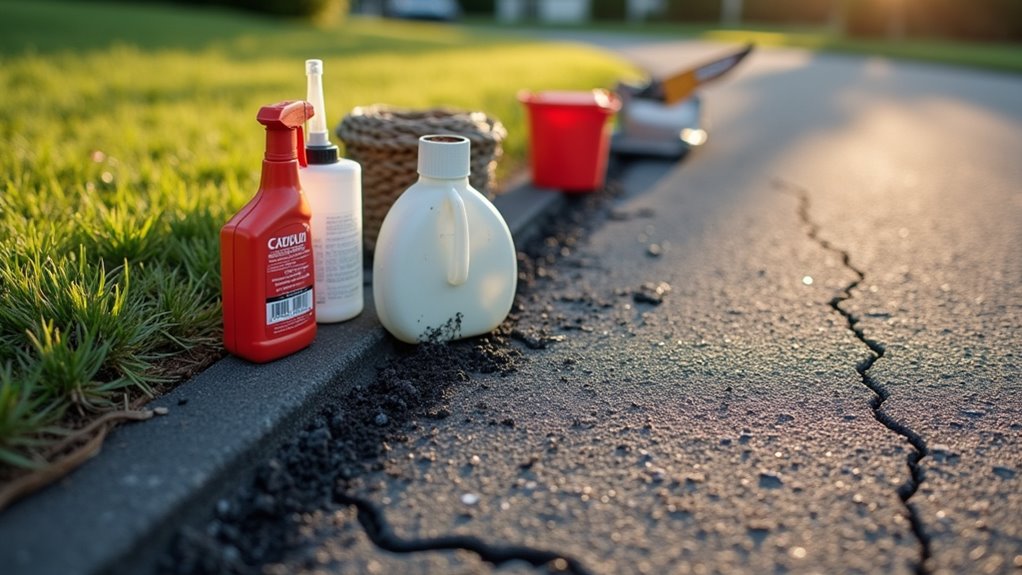
DIY sealcoating further reduces costs to $100–$300 per application, though professional-grade work lasts two to three times longer. However, achieving quality results requires experience and the right equipment, including sealant, a sprayer or squeegee, and proper cleaning supplies. Factor in crack filling at $0.50–$1.00 per linear foot for all-encompassing protection against deterioration.
Simplified Maintenance and Enhanced Curb Appeal
Sealcoating restores your driveway’s rich, dark finish while creating a non-porous surface that simplifies routine cleaning and maintenance. You’ll find that spills, vehicle fluids, and de-icing chemicals wipe away easily instead of penetrating the asphalt substrate. Following a straightforward reapplication schedule of every 2-3 years keeps your driveway protected and visually appealing without requiring intensive upkeep between treatments.
Restored Color and Appearance
Over time, UV radiation oxidizes the asphalt binder in your driveway, transforming its original deep black color into a dull, faded gray—a clear visual indicator that your pavement needs attention. Sealcoating delivers immediate visual enhancement by replenishing the binder material and restoring that rich, deep black finish.
The renewed appearance you’ll achieve provides these measurable benefits:
- Blocks UV rays to slow ongoing color degradation
- Creates a uniform, show-ready surface condition
- Maintains aesthetic value for 2-3 years per application
- Extends overall pavement life by approximately five years
Beyond standard black restoration, colored sealcoatings offer alternatives in green, red, and other shades—providing functional customization while reducing solar heat absorption. Regular sealing keeps your driveway looking pristine and professionally maintained.
Easy Cleaning Benefits
Beyond its protective and aesthetic benefits, a sealed driveway dramatically reduces your maintenance workload. The smooth, non-porous surface creates a streamlined cleaning process where dirt, oil, and debris can’t penetrate the asphalt. You’ll find that rain naturally washes away accumulated grime, while routine sweeping or hosing handles the rest without risking water damage.
Sealcoating’s barrier properties mean oil leaks, gasoline spills, and chemicals won’t soften or stain your pavement. This resistance translates to reduced maintenance frequency—you won’t need professional cleaning treatments as often. The sealed surface repels contaminants that would otherwise require intensive removal methods.
Your driveway maintains its uniform, fresh appearance with minimal effort. Simple cleaning prevents permanent staining and discoloration, keeping that consistent black finish that enhances your property’s curb appeal.
Simple Reapplication Schedule
Unlike complex home maintenance tasks that demand constant attention, sealcoating follows a straightforward 2-3 year reapplication cycle for most residential driveways. You’ll find consistent scheduling easier when you mark your calendar based on your last application date, avoiding missed reapplication that leads to accelerated deterioration.
Your specific timeline depends on these key factors:
- Traffic volume – High-use driveways require reapplication every 1-2 years
- Climate conditions – Freeze/thaw cycles and harsh winters shorten intervals
- UV exposure – Sun-damaged surfaces need protection within the standard cycle
- Vehicle weight – Heavy trucks and equipment accelerate sealer wear
Conduct biannual inspections each spring and fall to assess your sealer’s condition. This proactive approach guarantees you’re reapplying before protective barriers fail completely.
Frequently Asked Questions
How Long Should I Wait Before Driving on a Freshly Sealcoated Driveway?
You should wait 24-48 hours before driving on your freshly sealcoated driveway under ideal conditions. The ideal curing time extends to 48-72 hours if you’re dealing with humidity or overcast weather. Drying process considerations include temperature, humidity levels, and sealant type—coal tar requires longer cure times than acrylic formulations. Before driving, check the surface; if it’s still tacky, wait an additional 12-24 hours to prevent tire marks.
Can I Apply Sealcoating Myself or Should I Hire a Professional?
You can apply sealcoating yourself, but you’ll face significant DIY application challenges including achieving uniform thickness, proper surface preparation, and correct timing between coats. Without professional equipment, you risk premature failure and reduced protection. Professional application benefits include specialized tools that create durable barriers, proper techniques preventing future damage, and expertise that extends your driveway’s lifespan to 20-30 years. For ideal long-term protection, hiring a contractor typically delivers superior results.
What Weather Conditions Are Best for Applying Driveway Sealcoating?
You’ll achieve favorable sealcoating results when you apply during an ideal temperature range of 70°F to 85°F, with surface and air temperatures staying above 50°F for 24-48 hours post-application. You need precipitation-free conditions throughout the curing process—any moisture prevents proper adhesion and causes material failure. Select days with direct sunlight, low humidity below 60%, and clear skies to guarantee even drying and maximum bond strength to your asphalt surface.
Does Sealcoating Work on Concrete Driveways or Only Asphalt Surfaces?
Sealcoating works on both concrete and asphalt driveways, but you’ll need material-specific products for each surface. Concrete sealers penetrate the porous surface to prevent water damage, protect against deicing salts, and shield steel reinforcement from corrosion. You can’t interchange blacktop sealers with concrete products—they’re formulated differently. With proper application techniques, you should reseal concrete every 2-5 years to maintain ideal protection against stains, chemical corrosion, and surface wear.
How Can I Tell When My Driveway Needs to Be Resealed?
You’ll know your driveway needs resealing when you notice visible cracks or potholes forming across the surface, along with fading from black to gray. An uneven driveway surface, increased brittleness, and water pooling instead of beading are clear indicators. If you can’t remember your last sealcoat application or it’s been over 3-4 years, you’re overdue. Regular inspections help you catch deterioration before costly repairs become necessary.