

You’ll pay between $2 and $7 per square foot for an asphalt overlay, with larger projects (10,000+ sq ft) dropping to $2–$3 per square foot. That’s 30–50% less than a full replacement, which runs $5–$12 per square foot. Material costs account for $1–$5, while labor adds $5–$7. Hidden prep expenses—milling, tack coats, and crack sealing—can tack on $0.30–$0.60 per square foot. Understanding mix types, thickness specs, and strategic budgeting can cut your total cost even further below.
What Does an Asphalt Overlay Cost Per Square Foot?
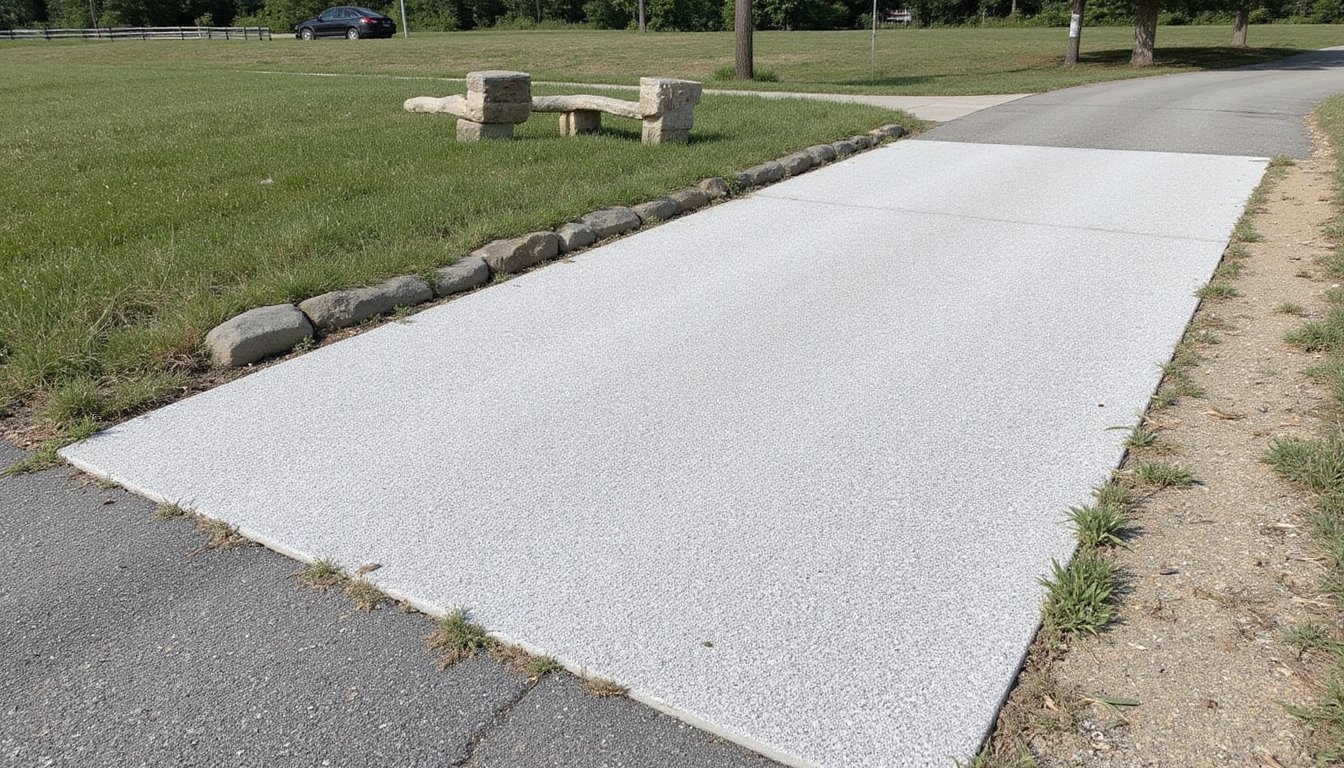
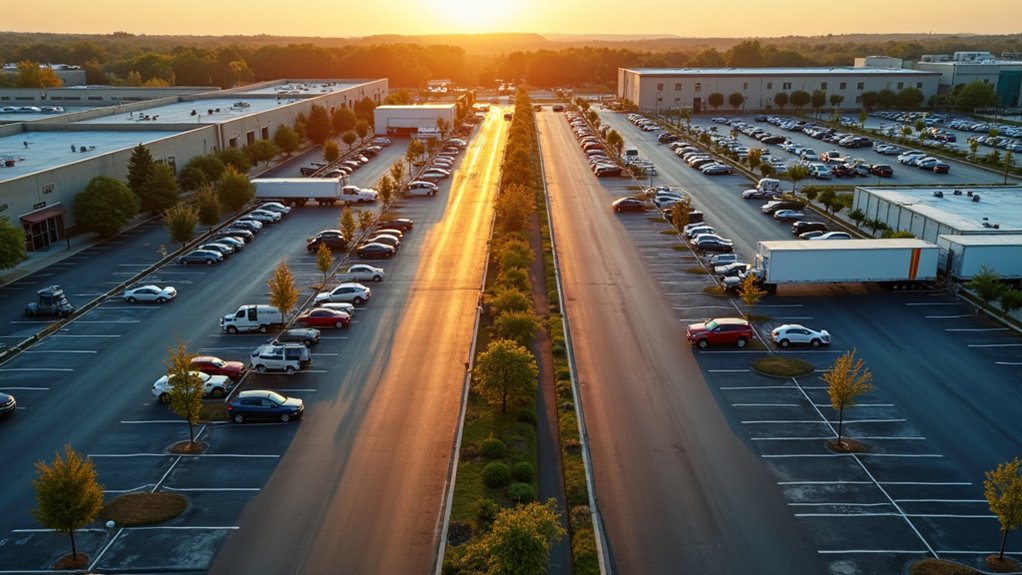
Asphalt overlay costs typically fall between $2 and $7 per square foot, though your actual price depends on project scale, material specifications, and regional labor rates. Small projects under 1,000 square feet approach $7 per square foot, while commercial lots exceeding 10,000 square feet drop to $2–$3.
Your asphalt overlay cost per square foot breaks down into material ($1–$5), labor ($5–$7), and preparation expenses. A 1.5-inch overlay with milling runs approximately $8 per square yard, while 2–2.5-inch applications reach $11–$12. Basic milling at 1-2 inches depth typically adds $2.50–$5.00 per square yard to your overall preparation budget. Since asphalt prices fluctuate based on crude oil prices and environmental regulations, it’s wise to consult contractors about current rates before finalizing your project budget.
For residential applications, driveway asphalt overlay cost averages $3–$7 per square foot. A standard 300-square-foot driveway totals $900–$2,100. Bulk material rates and simplified access reduce per-unit pricing on larger installations. Keep in mind that these estimates are based on large-scale projects, so smaller jobs may incur higher costs due to factors like existing asphalt condition, section length, and geotechnical and hydraulic conditions.
Asphalt Overlay vs. Full Replacement: Cost Comparison
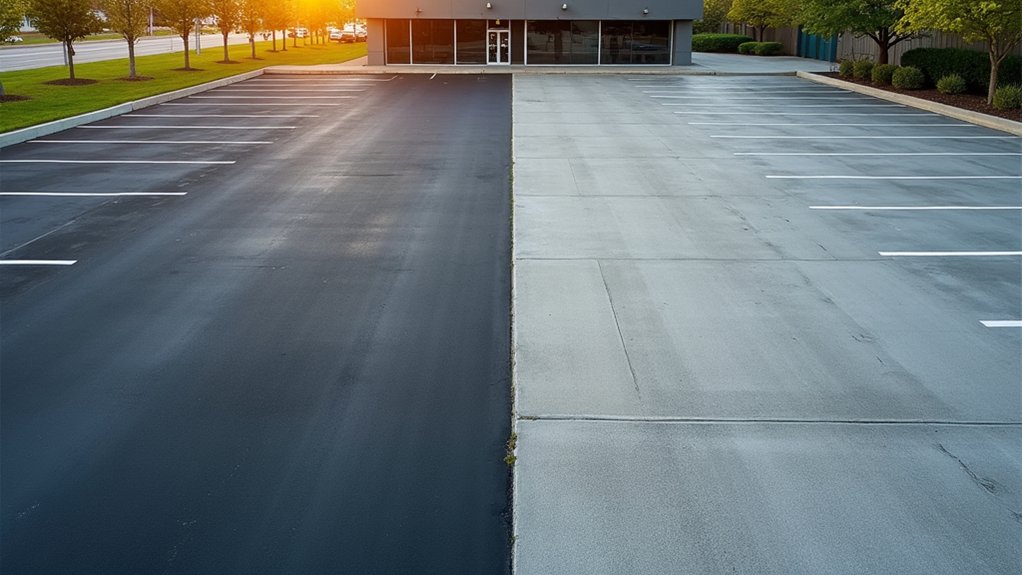
When your existing pavement still has structural integrity, an overlay saves 30–50% compared to full replacement—but that gap narrows quickly if the base has deteriorated. Residential overlays run $2–5 per square foot versus $5–12 for full replacement. Commercial rates follow similar patterns: $2.50–5.00 versus $6.00–12.00 per square foot.
Your asphalt overlay cost calculation must factor in longevity. Overlays on sound bases last 8–15 years, while those on compromised subgrades fail within 2–5 years. The full replacement lifespan reaches 20–30 years and resolves structural deficiencies overlays can’t address—foundation failures, drainage issues, and deep cracking.
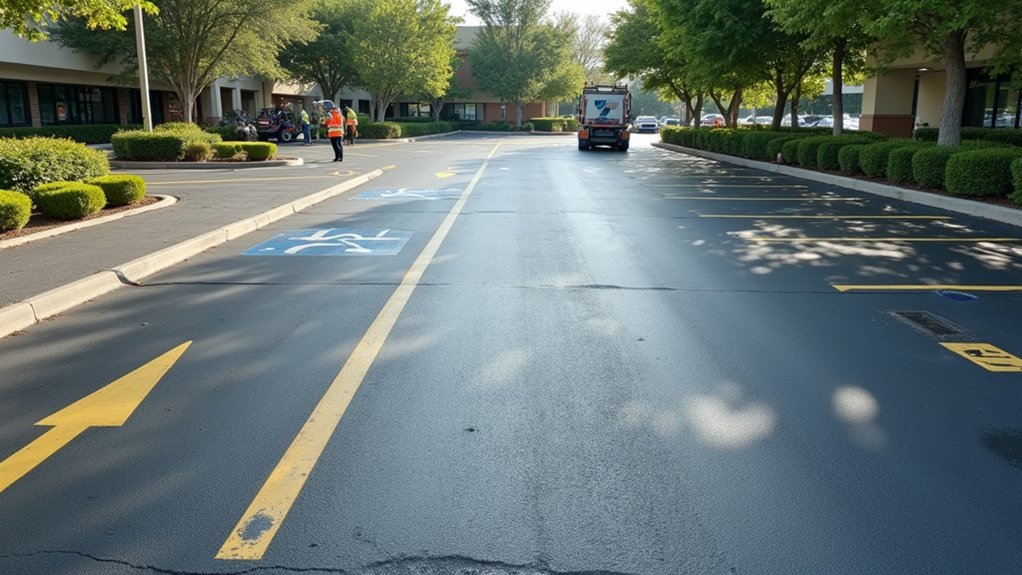
Overlays complete in 1–2 days; replacements require 3–5 days. If you’re facing minor surface damage on stable pavement, overlay wins. For heavy traffic areas or structural compromise, replacement delivers superior long-term value.
How Project Size Changes Your Overlay Cost
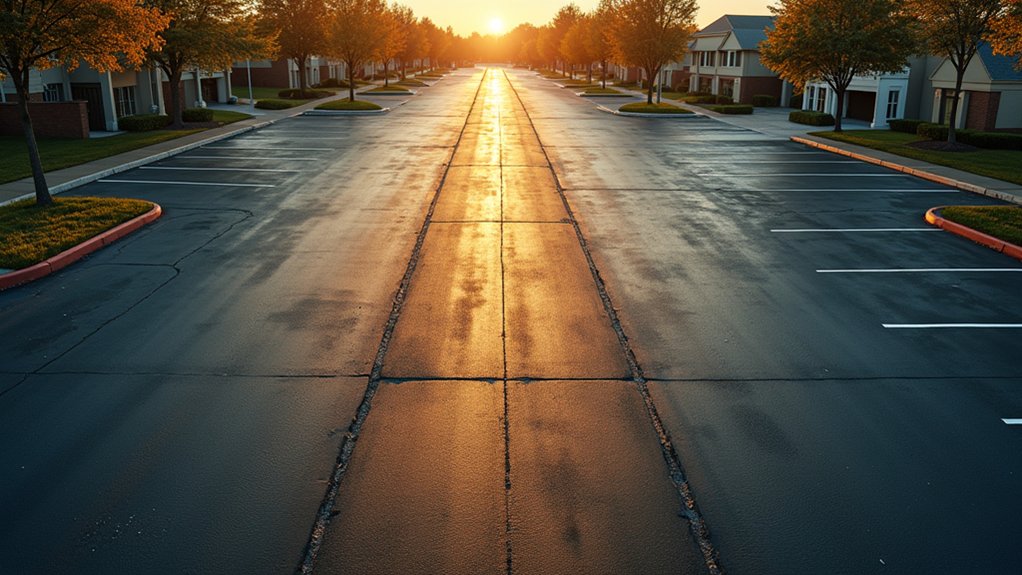
Project size is the single biggest variable in your per-square-foot overlay cost—and it’s where most homeowners miscalculate their budgets. A 300 sq ft single-car driveway runs $900–$2,100, while projects under 400 sq ft often trigger minimum charges around $2,000—making your effective rate considerably higher.
Medium driveways between 600–1,000 sq ft cost $3,000–$12,000, averaging $3–$5 per sq ft nationally. At this scale, asphalt milling and overlay costs begin reflecting actual material consumption rather than fixed mobilization fees.
Commercial lots exceeding 10,000 sq ft drop to $2–$3 per sq ft through economies of scale. Among asphalting installation pricing factors, shared equipment expenses and volume material orders drive this reduction. Complex shapes, tight access, and multiple entrances increase labor regardless of size, so factor geometry into your estimate alongside square footage.
Asphalt Overlay Cost by Type
Because overlay type directly determines both upfront cost and long-term performance, selecting the right specification matters as much as sizing the project correctly. Your asphalt resurfacing price estimate shifts considerably across these four categories:
- Standard Overlay — $2–$5 per square foot, delivering 8–15 years of service when the base remains structurally sound.
- Thick Overlay (1.5″–2.5″) — $8–$12 per square yard, including milling, tack coat, and traffic control, extending pavement life 10–15 years.
- Hot Mix Asphalt Overlay — $7–$13 per square foot with labor, averaging $5,080 for a 500-square-foot project.
- Specialty Overlays — Stamped or colored options increase costs, with acrylic sealers adding $0.25–$0.35 per square foot.
Understanding these asphalt installation pricing factors helps you match specifications to budget constraints without sacrificing durability.
Milling and Prep Costs That Inflate Your Quote
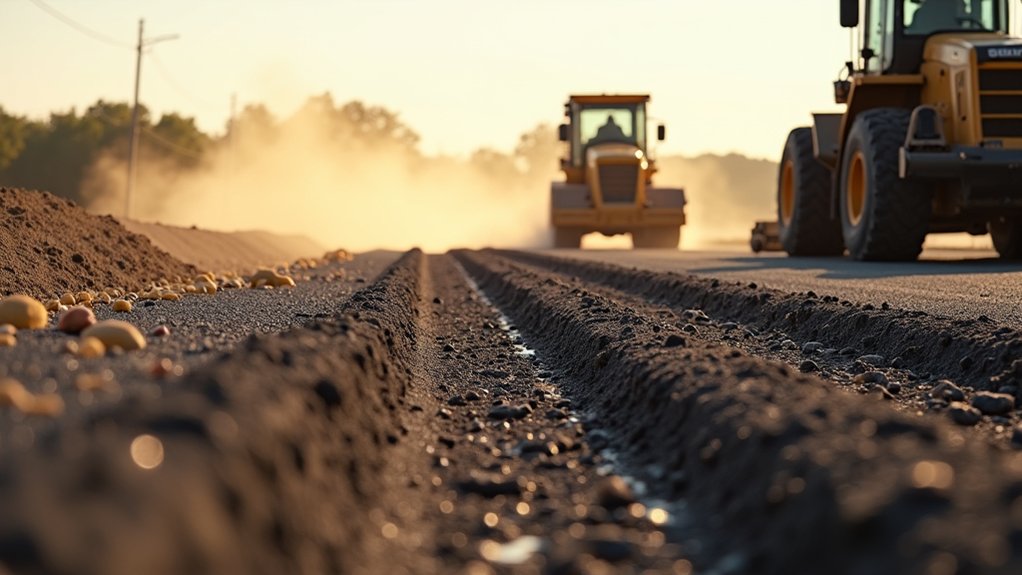
Your milling costs scale directly with depth—basic milling at 1–2 inches runs $2.50 to $5.00 per square yard, while deep milling at 4+ inches jumps to $8.00–$12.00 per square yard. Unstable soil conditions beneath the existing pavement can require subgrade stabilization or additional excavation, adding unplanned expenses that greatly inflate your prep budget. Restricted access points, tight lot configurations, or obstructions force crews into manual operations and smaller equipment, driving labor charges higher than standard open-site rates.
Basic Milling Depth Costs
When your contractor’s quote includes milling as a line item, the depth specified directly dictates how much you’ll pay—and it’s often the single largest prep cost that inflates an overlay estimate.
Basic shallow milling at 1–2 inches depth is the most cost-effective option among asphalt paving cost factors. Here’s what you’ll typically encounter:
- Cost range: $2.50–$5.00 per square yard for 1–2 inch removal depth.
- Coverage rate: One ton of milled material covers 80–100 square feet at 2-inch depth.
- Best applications: Surface corrections, parking areas, and standard driveway resurfacing budget estimate projects.
- Equipment impact: Minimal increases in labor and machinery costs at shallow depths.
You’ll find this depth sufficient when removing surface deterioration without addressing structural deficiencies in the underlying pavement layers.
Soil Condition Price Impact
When bearing capacity falls short, contractors must add 6–12 inches of compacted aggregate base, pushing costs from the standard $2–$7/sq ft overlay range toward $6–$10/sq ft reconstruction territory. Michigan’s freeze-thaw cycles intensify this exposure. Your asphalt maintenance cost analysis should prioritize soil evaluation before committing to resurfacing. Overlays on structurally stable subgrades cost 40% less than full reconstruction and deliver 10–15-year lifespans.
Complex Access Labor Charges
Even after confirming your subgrade can support an overlay, the next cost variable most property owners underestimate is milling and surface prep—line items that can inflate a quote by 30–50% before a single ton of hot mix hits the paver.
Your asphalt contractor pricing estimate should itemize these line items separately:
- Basic milling (1–2 inches): $2.50–$5.00 per square yard, covering standard surface removal
- Medium-depth milling (2–4 inches): $5.00–$8.00 per square yard, increasing equipment demands and processing time
- Hidden prep costs: Tack coat application, crack sealing, and cleaning add $0.30–$0.60 per square foot
- Complex access labor charges: Tight layouts, elevation tie-ins, and traffic control measures compound crew time and mobilization expenses
These factors directly determine whether you’re paying $8 or $12 per square yard total.
How to Cut Your Asphalt Overlay Cost by 20–50%
Three proven strategies can reduce your asphalt overlay cost by 20–50%: optimizing layer thickness, sourcing local aggregates, and scheduling rehabilitation based on life-cycle cost analysis (LCCA). When you understand the cost of asphalt per ton installed, you can calibrate thickness to traffic demands rather than defaulting to conservative specifications. Dense mixes require three times NMAS minimum thickness, while SMA requires four times—selecting the right mix directly controls material volume.
Local aggregate sourcing eliminates transportation premiums that inflate per-ton pricing. For effective pavement resurfacing budget planning, apply LCCA with a 1.9% discount rate at 12-year rehabilitation intervals. Traffic scenario modeling demonstrates 2.4–2.6% life-cycle reductions through optimized scheduling, compounding savings across multiple rehabilitation cycles.
Frequently Asked Questions
How Long Does an Asphalt Overlay Typically Last Before Needing Replacement?
You can expect an asphalt overlay to last 10–15 years before needing replacement, with an average lifespan of approximately 14.8 years under standard conditions. Overlay thickness greatly impacts durability—doubling thickness adds 5–7 years of service life. If you invest in regular preventative maintenance, including sealcoating and timely crack repairs, you’ll extend performance to 15–20 years. Freeze-thaw cycles, traffic volume, and underlying pavement condition directly influence your overlay’s actual longevity.
Can You Apply an Asphalt Overlay in Cold or Rainy Weather?
You shouldn’t apply an asphalt overlay in cold or rainy weather. You’ll need ambient temperatures at 50°F minimum and rising, with ground temps reaching 55–60°F for proper compaction. Below these thresholds, asphalt cools too rapidly, creating weak spots. Rain prevents bonding with the sub-base and traps moisture, causing premature failure. You’ll want dry conditions for 48 hours post-application, humidity below 50%, and ideally 70°F air temperature for best results.
Does an Asphalt Overlay Require Permits From Local Authorities?
Whether you’ll need a permit depends on your project’s scope and local codes. If you’re doing a like-for-like thin overlay, many jurisdictions won’t require one. However, you’ll typically need permits when you’re modifying sub-base layers, converting permeable surfaces to asphalt, or altering drainage patterns. Driveway apron work within public right-of-way almost always requires a Public Works permit. You should consult your local building department before starting work.
How Soon Can You Drive on a New Asphalt Overlay?
You can drive on a new asphalt overlay after 48–72 hours for passenger vehicles, provided air temperatures exceed 70°F. Below 70°F, you’ll need a full 72-hour wait. Heavy vehicles require a 14-day minimum to prevent surface damage. Hot-mix asphalt needs 48–72 hours; cold-mix allows immediate use. You should avoid parking in the same spot during the first week, as full curing extends 6–12 months.
Will an Asphalt Overlay Fix Drainage Problems on My Driveway?
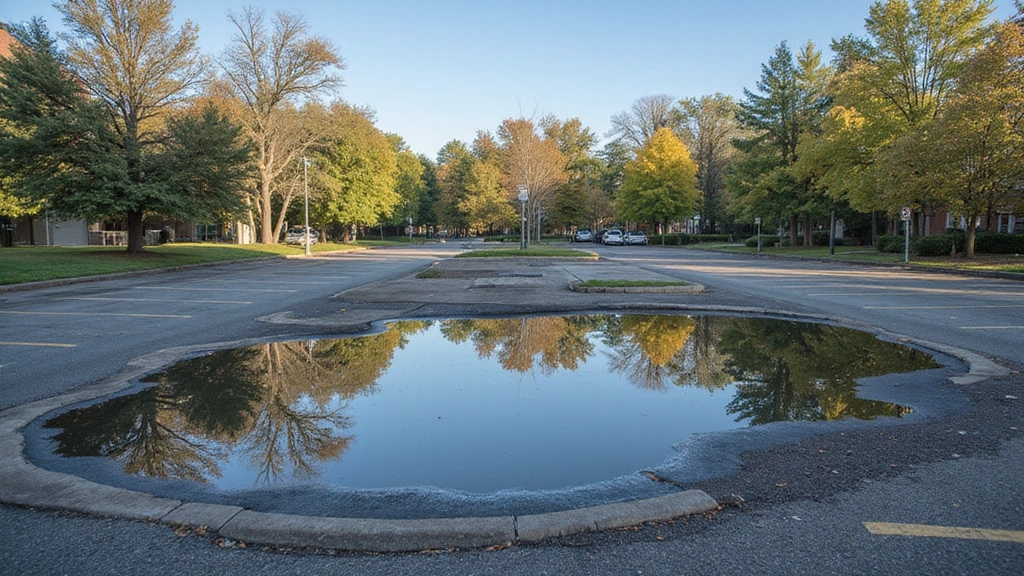
No, an asphalt overlay won’t fix drainage problems on your driveway. Overlays can’t correct underlying grading, slope deficiencies, or subbase failures causing water pooling. You’ll need at least a 2% slope away from structures for proper water management. If you’re experiencing standing water, deep cracks, or sinking, you should consider full replacement, which addresses foundation issues and integrates proper drainage—lasting 20+ years compared to an overlay’s limited performance over compromised substrates.