

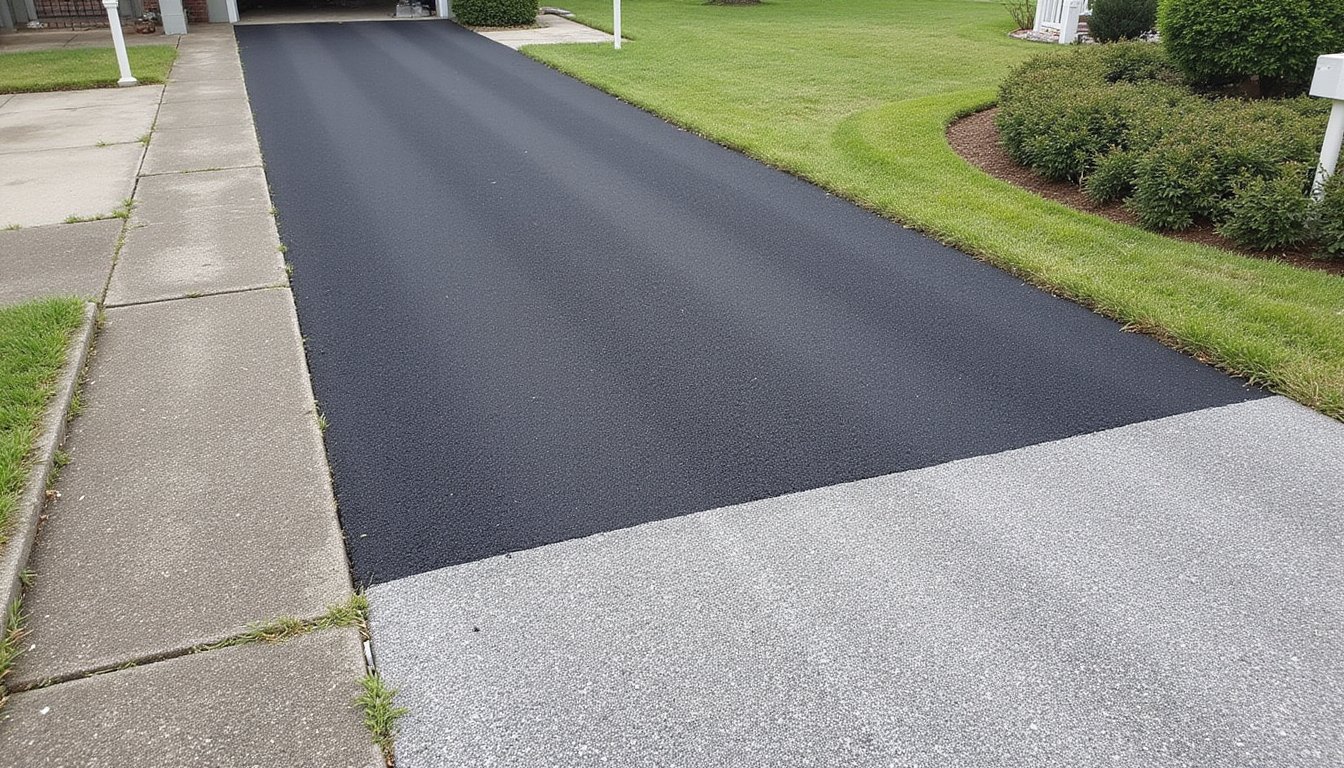
To clean car oil off a concrete driveway fast, cover the fresh stain with non-clumping cat litter and let it absorb for at least 30 minutes. Sweep it up, then scrub the area with a paste of baking soda or a few drops of Dawn dish soap and hot water using a stiff bristle brush. Rinse thoroughly and repeat if needed. For stubborn or set-in stains, you’ll find even more effective methods below.
Soak Up Fresh Oil Stains Before They Set
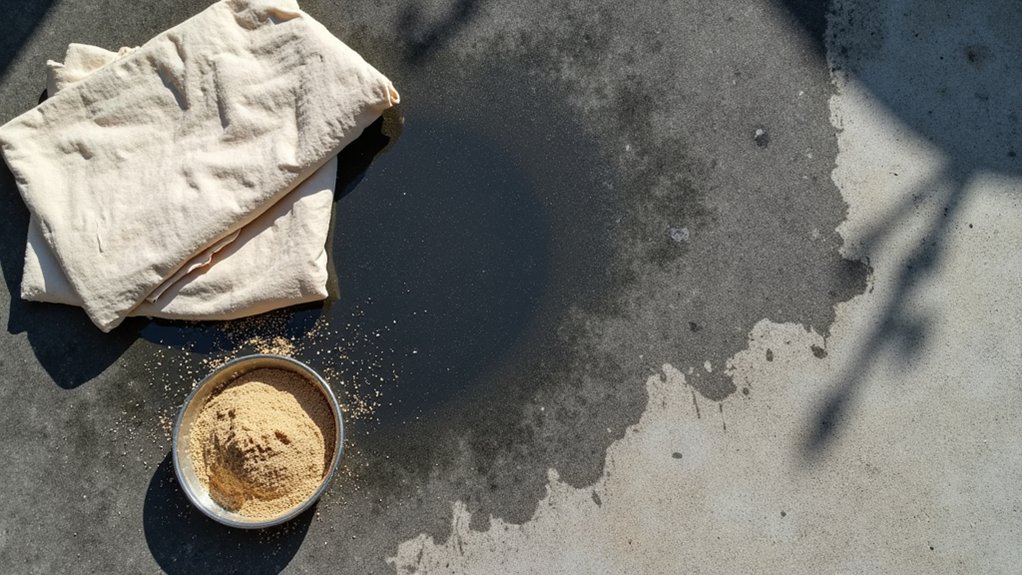
When fresh car oil hits your concrete driveway, you’ve got a narrow window to act before it seeps into the pores and becomes a permanent eyesore. For effective car oil removal concrete driveway spills demand immediate action with the right absorbent materials oil cleanup concrete requires.
Grab non-clumping cat litter or plain dirt and cover the entire stain completely. Small spills need at least thirty minutes of soaking time, while larger puddles benefit from sitting overnight. This extended contact draws oil out of the concrete’s surface pores before it settles deeper. Acting quickly is essential because a well-maintained driveway directly impacts the overall curb appeal of your home.
Once the absorbent has done its job, sweep it away and scrub the area with a bristle brush, laundry detergent, and hot water. Repeat if residue remains. For stubborn stains, spray the area liberally with brake cleaner before applying cat litter, as this combination has proven effective at minimal cost.
Remove Oil Stains With Baking Soda or Cat Litter
- Apply cat litter immediately to contain actively leaking oil
- Let baking soda paste sit 10+ minutes before scrubbing. Baking soda works effectively because it acts as a natural degreaser that lifts oil from the concrete’s porous surface.
- Use non-metal bristle brushes to avoid surface damage
- Rinse thoroughly with hot water after each treatment
- Repeat the process until stains stop resurfacing
Scrub Out Driveway Oil Stains With Detergent
Tackle stubborn driveway oil stains by applying a strong detergent directly to the affected concrete, Dawn dish soap and Tide laundry detergent are two of the most effective household options. For dish soap application, pour Dawn over the stain, combine it with Coca-Cola on fresh spots, then scrub with a wire brush and water. For Tide, shake the powder over the stain, compact it by walking on it overnight, then scrub with a stiff brush or drill attachment.
| Method | Best For |
|---|---|
| Dawn + Coca-Cola | Fresh oil stains |
| Powdered Tide (compacted overnight) | Deep-set stains |
| Detergent + warm water | Lighter stains |
| Commercial degreaser (5, 12 hr dwell) | Heavy buildup |
These garage driveway oil cleanup methods rival commercial concrete cleaners when applied with repeated scrubbing cycles.
Use WD-40 to Break Down Stubborn Driveway Stains
WD-40 Specialist Cleaner & Degreaser can soften and lift oil stains that household detergents don’t fully eliminate, though it’s best suited for fresh spills rather than deep-set contamination. Among driveway oil spill cleaning methods, WD-40 ranks below Dawn dish soap and laundry detergent in comparative testing, and standard WD-40 may spread stains rather than remove them.
For a targeted application, follow this process:
- Spray WD-40 Specialist Cleaner & Degreaser across the entire stained surface
- Let it sit for two minutes to penetrate and dissolve oil residue
- Scrub firmly with a stiff-bristled brush using consistent pressure
- Rinse thoroughly with clean water to flush loosened contaminants
- Apply cat litter or baking soda to absorb remaining moisture
For aged, deeply embedded stains, you’ll need microbial cleaners that digest oil particles beneath the surface.
When to Use Commercial Concrete Cleaners
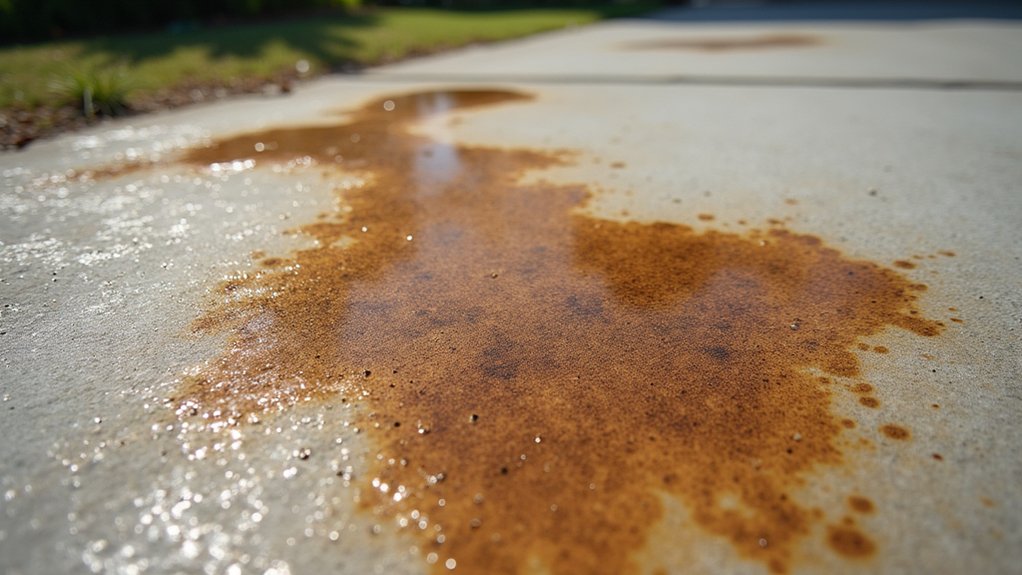
Although WD-40 and household detergents handle many driveway oil stains, commercial concrete cleaners become essential when you’re dealing with deep-set contamination, large surface areas, or multiple stain types that standard products can’t resolve. Commercial concrete degreaser products use surfactant-based formulas that prevent oil from penetrating further during treatment.
For oil stain pretreatment and removal on fresh spills, spray-on degreasers like Oil Eater require minimal soak time. Stains older than one month demand poultice-based cleaners that bond with hydrocarbons and evolve from liquid to powder, lifting embedded oil through micro-extraction technology. When you’re treating large zones, concentrated professional-grade formulas can be diluted for maintenance or applied at full strength for severe buildup. Biodegradable options activate through natural moisture and microbes, eliminating harmful chemical residue.
Pressure Wash After Cleaning for the Best Results
Once you’ve treated the oil stain with a degreaser, you’ll get the best results by pressure washing at 2500, 3000 PSI using a 25-degree green nozzle held about 12 inches from the surface at a 45-degree angle, which lifts embedded residue without etching the concrete. After washing, rinse the entire area with a low-pressure nozzle to flush away loosened oil and detergent, then allow the driveway to air-dry for 24, 48 hours before applying a concrete sealer. Proper drying is critical, if you seal too early, you’ll trap moisture beneath the surface, which compromises adhesion and leaves the concrete vulnerable to future staining.
Optimal Pressure Washer Settings
A pressure washer rated between 3,000 and 3,100 PSI paired with a flow rate of 2.3 gallons per minute delivers the ideal cleaning power for lifting oil stains from concrete without risking surface damage. Understanding PSI requirements for oil stain removal guarantees you don’t etch or crack your driveway during the process.
When pressure washer cleaning oil stains on driveway surfaces, follow these nozzle and technique guidelines:
- Select green 25-degree or yellow 15-degree nozzles for safe, effective concrete cleaning
- Avoid red 0-degree nozzles, which concentrate force and damage surfaces
- Hold the wand at least one foot above the concrete while maintaining a steady motion
- Use overlapping sweeping strokes rather than concentrating on single spots
- Consider a surface cleaner attachment with rotating, angled nozzles for uniform stain removal
Post-Wash Drying Tips
After you’ve finished pressure washing your concrete driveway, proper drying techniques determine whether you’ll get a clean, streak-free finish or end up with water spots and mineral deposits that dull the surface.
These post-wash drying tips make a significant difference. First, clear standing water puddles using a squeegee or leaf blower to accelerate evaporation. Work from high points to low, letting gravity assist natural drainage. A blower dramatically cuts drying time compared to passive air drying alone.
Before drying begins, verify you’ve completely rinsed all driveway cleaning chemicals and automotive oil residue leaves behind. Lingering detergent creates chalky film and attracts fresh dirt. Schedule your wash during warm, sunny conditions with low humidity, direct sunlight and wind exposure optimize evaporation. Don’t allow foot traffic or vehicles on the surface until it’s fully dry.
Prevent Oil Stains on Your Driveway for Good
Once you’ve cleaned the oil off your concrete, you’ll want to make sure it doesn’t come back, and that starts with applying a deep-penetrating sealer like Siloxa-Tek 8510, which uses fluorocarbons and silanes to block oil from soaking into the pores. For even stronger protection, apply a concrete densifier seven days before sealing to harden the surface and reduce fluid absorption. At the same time, don’t overlook the source of the problem: inspect your vehicle for engine and transmission leaks regularly, and fix them promptly so oil never hits your driveway in the first place.
Use Protective Sealants
Three types of concrete sealants, penetrating sealers, film-forming coatings, and fluorochemical hybrids, offer varying levels of oil stain prevention, but they’re not all created equal. Oil-repellent sealers containing fluorocarbons and silanes create an oleophobic barrier that prevents oil stain lifting from porous concrete by lining internal pores against penetration.
- Penetrating sealers (silane/siloxane) slow oil movement but won’t prevent surface staining without fluorochemical additives.
- Acrylic coatings degrade within 2, 10 hours of oil exposure, offering minimal protection.
- Epoxy coatings resist oil effectively but are limited to interior applications.
- Polyurethane coatings like TS210 deliver 24-hour resistance to oil, grease, and chemicals with covalent bonding.
- Fluorochemical hybrids (Siloxa-Tek 8510) endure 2,500 abrasion cycles, providing decades-long oil repellency.
Fix Vehicle Leaks Promptly
While awaiting repairs, place absorbent drip trays beneath your vehicle to catch fluid before it hits concrete. Even the best automotive oil spill cleanup solutions become ineffective against recurring leaks that progressively degrade concrete porosity. Regular undercarriage inspections catch developing leaks early, saving you from repeated cleaning cycles and permanent driveway staining.
Frequently Asked Questions
Is It Safe to Wash Oil Cleaning Chemicals Into Storm Drains?
No, you can’t wash oil cleaning chemicals into storm drains, it’s illegal under local stormwater ordinances and the Clean Water Act. Even phosphate-free biodegradable detergents are prohibited from entering storm systems. You should contain all runoff using berms or absorbent materials and dispose of wastewater properly. If you’re using degreasers, collect the residue and route it through an oil/water separator before any sewer discharge to stay compliant.
Does Temperature Affect How Quickly Oil Stains Can Be Removed?
Yes, temperature directly impacts your oil removal speed. Warmer conditions lower oil viscosity and boost chemical reactions in degreasers, improving effectiveness by up to 50 percent compared to cold-water methods. You’ll want to clean when it’s above 35°F, freezing temps halt moisture evaporation and stall cleaning agents. In extreme heat, work during cooler morning hours to prevent rapid drying and uneven results. Alkaline cleaners perform best in moderate, non-extreme temperatures.
Can Old, Deeply Set Oil Stains Ever Be Fully Removed?
Fully removing old, deeply set oil stains is extremely difficult and rarely achievable. You’ll get the best results using specialized products like Goof Off concrete cleaner or brake cleaner paired with kitty litter across multiple applications. However, concrete’s porosity allows oil to penetrate beyond any cleaner’s reach. For decades-old patches, you’re better off acid-cleaning the surface, then sealing or painting over remnants, adding flakes to coatings helps disguise any persistent discoloration effectively.
Are Oil Stain Cleaning Products Harmful to Pets or Children?
Many commercial degreasers contain ammonia, glycol ethers, and VOCs that can irritate your children’s skin, trigger respiratory issues, and poison pets who lick residue off their paws. You’ll want to avoid bleach-based or phthalate-heavy formulas entirely. Instead, switch to plant-based degreasers, enzyme-powered cleaners, or baking soda poultices, they’re effective on oil stains without leaving toxic residues. Always store products out of reach and rinse treated surfaces thoroughly before allowing access.
How Do You Know When an Oil Stain Is Completely Gone?
You’ll know an oil stain’s completely gone when the treated area matches the surrounding concrete’s color uniformly under direct sunlight. Run a clean white cloth across the spot, if it picks up no residue, you’re clear. Pour water over the area; it should absorb evenly without darkening or producing an oily sheen. If two to four repeat treatments show no further improvement, you’ve achieved full removal.