
Alligator cracking comes from repeated traffic loads exceeding your pavement’s capacity, weak or thin base layers, and poor drainage that softens the subgrade. It’s not cosmetic because those interconnected polygons signal your base and subgrade have already failed beneath the surface. Yes, you can fix it. Localized damage responds to cut-and-patch repairs, while widespread cracking demands full-depth reconstruction. Surface sealing alone won’t last. Knowing which method fits your driveway makes all the difference.
Key Takeaways
- Alligator cracking is caused by repeated traffic loads exceeding pavement capacity, fatiguing the asphalt until it fractures into interconnected polygons.
- Weak, thin, or poorly compacted base layers and poor drainage soften the subgrade, accelerating fatigue failure from below.
- The cracking signals structural base and subgrade failure, not a surface cosmetic defect that sealing alone can fix.
- Localized damage over a firm, dry base can be repaired with cut-and-patch and proper drainage correction.
- Widespread cracking or failed base support requires full-depth reconstruction, always eliminating the moisture source first when water is the cause.
What causes alligator cracking and can it be fixed
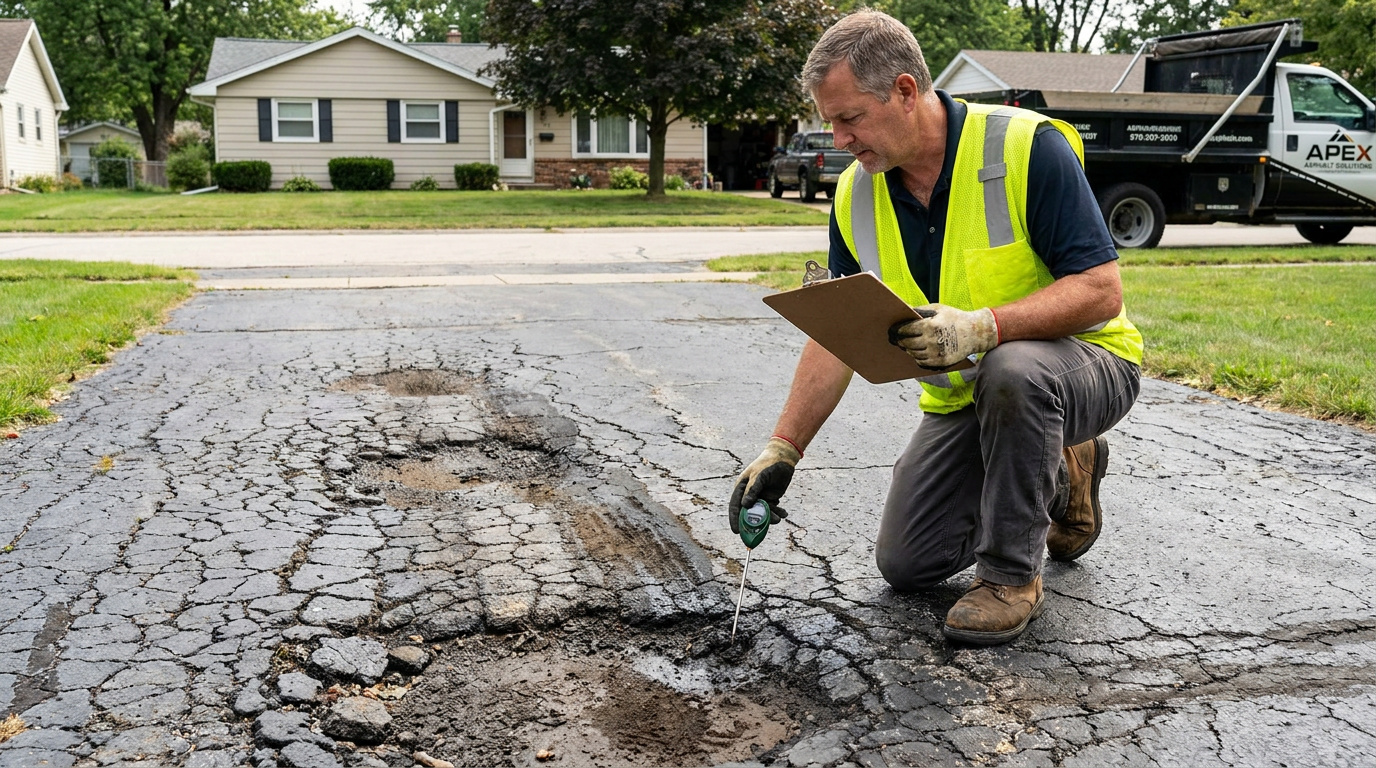
Alligator cracking is caused by fatigue failure, not a surface blemish. When repeated traffic loads exceed your pavement’s design capacity, fatigue cracking asphalt develops in wheel paths where stress concentrates. Weak, thin, or poorly compacted base layers reduce support, while poor drainage softens the subgrade and accelerates the interconnected polygon pattern you’ll see. Aging, oxidation, and freeze-thaw cycles worsen the damage. If you’re facing asphalt driveway cracking, the visible cracks usually signal deeper structural loss beneath.
Can you fix it? Yes, but effective alligator cracking repair means removing the cracked pavement and rebuilding the failed base, not just sealing surface cracks. If water’s the cause, eliminate the moisture source first. Otherwise, your repair will fail again.
How does alligator cracking develop in an asphalt driveway
Alligator cracking develops when repeated loading exceeds your pavement’s design capacity, starting beneath the surface and working upward. Water infiltration and weak subgrade support accelerate the fatigue process, so you’ll notice damage first in wheel paths.
Fatigue failure starts underground, and by the time cracks surface in wheel paths, your pavement’s structural support is already compromised.
- Loading stress: Repeated traffic flexes the asphalt, straining thin or poorly compacted base layers.
- Initial fracture: Longitudinal cracks form as the base loses load-carrying support.
- Interconnection: Those cracks spread and link into the classic polygon pattern.
- Structural failure: Saturated subgrade softens, and alligator cracks driveway sections break apart completely.
Interconnected polygons reflect lost structural support, not a cosmetic surface defect you can simply seal.
What does alligator cracking reveal about the pavement base
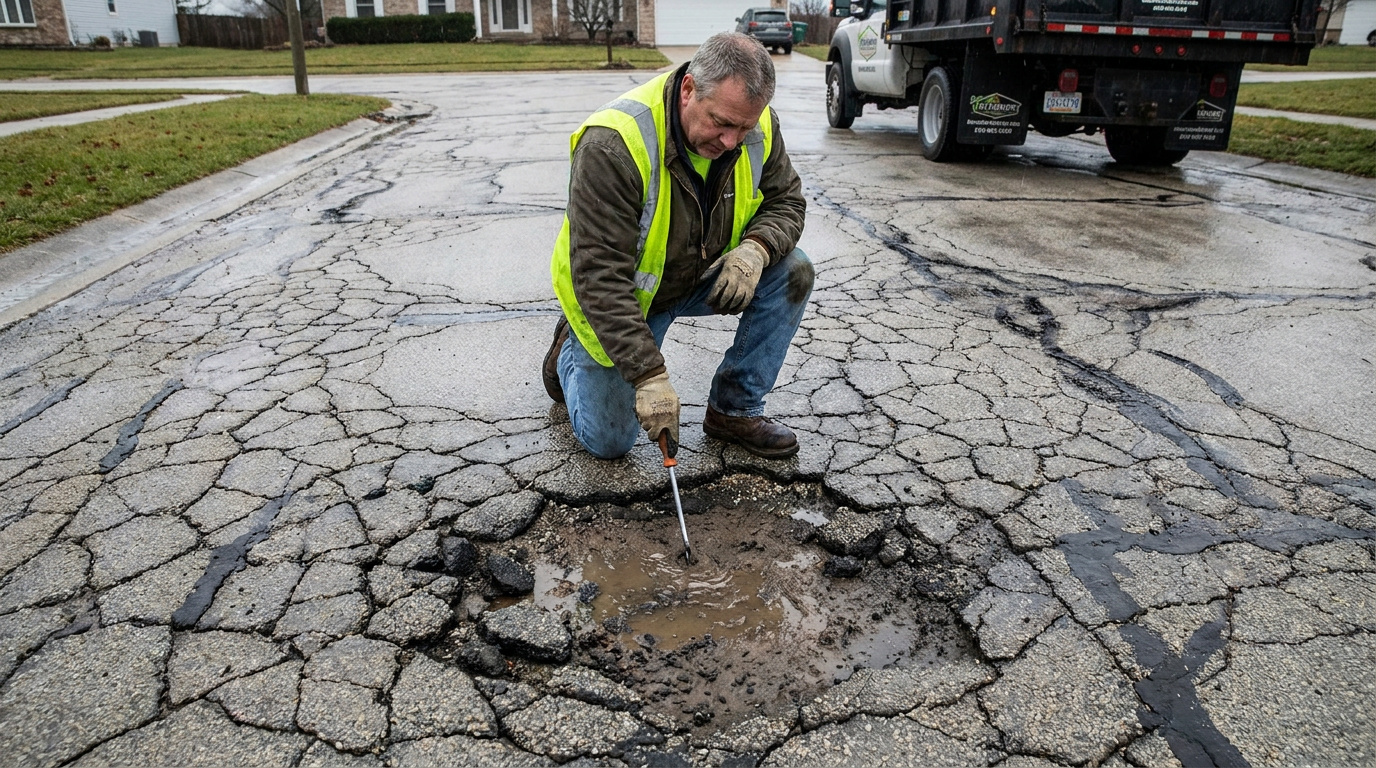
Alligator cracking reveals that the pavement base and subgrade have failed below. This pattern isn’t a surface defect. It signals that the structural layers beneath have lost load-carrying capacity. Repeated traffic loading has exceeded your pavement’s design strength, fatiguing the asphalt until it fractures into that alligator pattern. Often, a weak, thin, or poorly compacted base sits directly under the visible cracking. Water infiltration compounds the problem by softening the subgrade, reducing support further. If you find soft, saturated, or failing subgrade conditions accompanying the cracks, you’re dealing with a more severe case. When your surface breaks into these polygons, the damage reflects genuine loss of structural support, not something surface sealing alone will resolve permanently.
Which alligator cracking repair methods are available
Alligator cracking repair methods include cut-and-patch, full-depth reconstruction, and drainage correction. For small, isolated sections, you cut out the cracked area, rebuild the failed base, and place new asphalt. For widespread cracking, you’ll need full-depth reconstruction rather than patching. If water drives the failure, you must eliminate the moisture source first, or the repair fails again. Immediate pothole repair is crucial for maintaining the integrity of road surfaces. Timely intervention can prevent larger issues that might arise from water infiltration and traffic stress.
| Severity | Method | Scope |
|---|---|---|
| Localized | Cut-and-patch | Base + asphalt |
| Extensive | Full-depth rebuild | Surface replacement |
| Water-driven | Drainage correction | Source elimination |
Surface treatments alone won’t solve underlying support failure, so target the base and subgrade. Matching method to condition prevents recurrence and protects your structural investment long-term.
When is patching enough for alligator cracking
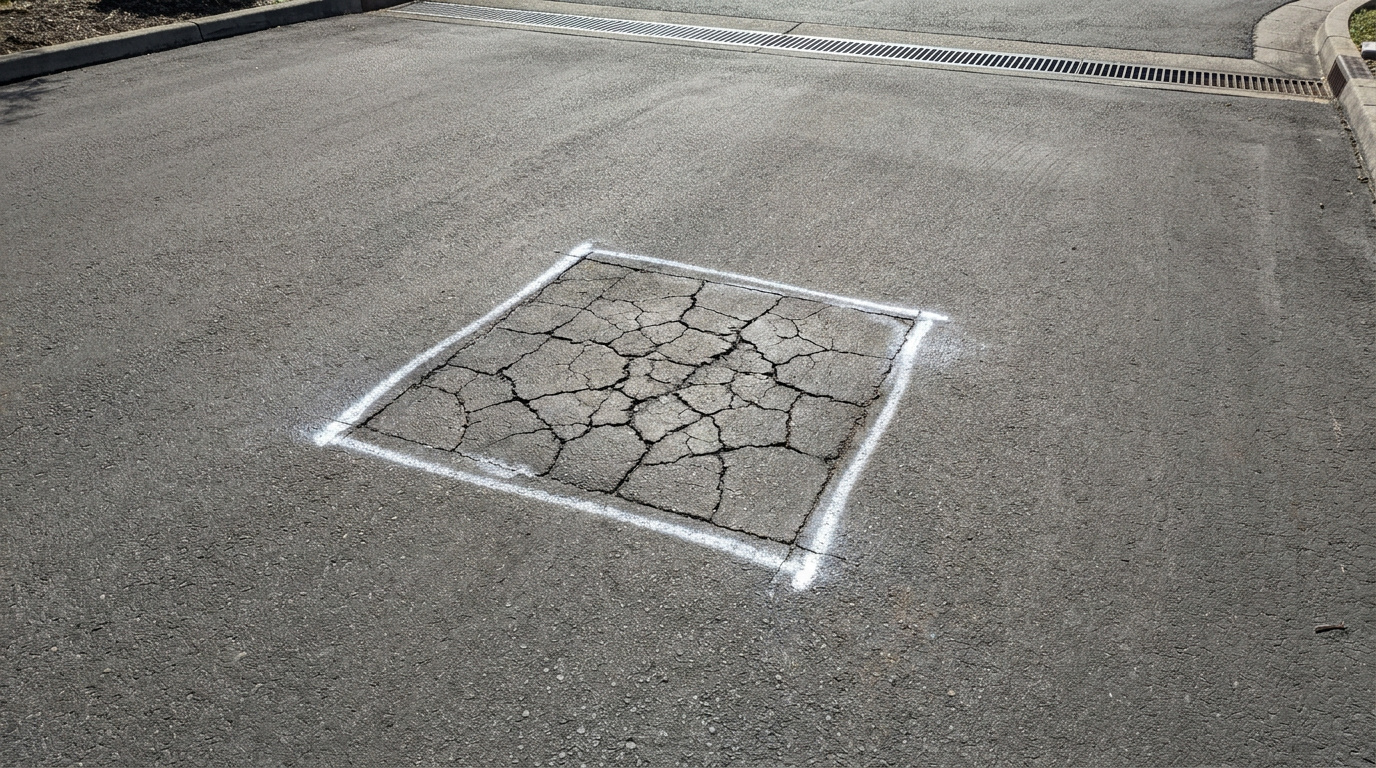
Patching is enough for alligator cracking when the damage stays localized and the base beneath remains structurally sound. If cracking covers small, isolated areas and the subgrade shows no saturation or failure, you can cut out the section and replace it. But if water’s undermining the base or cracking spans wide zones, patching won’t last.
Patching is enough when:
- The affected area is small and confined to isolated wheel paths, not spread across the lane.
- The base and subgrade test firm, dry, and adequately compacted beneath the cracks.
- Drainage functions properly, so no moisture keeps softening the layers below.
- Traffic loads match the pavement’s design capacity, preventing repeated fatigue failure after repair.
When does alligator cracking require resurfacing or replacement
Alligator cracking requires resurfacing or replacement when it spreads across wide zones or the base beneath fails, moving past patching. When interconnected polygon cracks cover large sections of a lane, isolated cut-and-replace repairs can’t restore structural capacity. If the subgrade stays soft, saturated, or fails to support design loads, you’ll need to rebuild the base rather than reseal the surface. Severe cases, where the pavement has broken into fatigued patterns across heavily trafficked or turning zones, signal lost load-carrying support that demands full-depth reconstruction. Resurfacing alone won’t work if the underlying moisture source or weak base remains unaddressed; the cracking returns. You should replace the failed base and asphalt together, then verify drainage, so the repair holds under repeated traffic loading.
Fix Structural Asphalt Damage Before It Spreads
Alligator cracking points to structural failure below the surface, so lasting repair may require more than crack filling or sealcoating. V&F Paving can evaluate the damaged area and recommend patching, resurfacing, or full-depth replacement through its asphalt paving services. Call (203) 624-2449 to speak with the team or request a free estimate before the weakened base causes wider pavement failure.
Frequently Asked Questions
How Much Does Alligator Cracking Repair Typically Cost?
Specific cost figures are not available here, but repair costs depend on the severity and scope of the damage. Small, isolated sections may only require localized base and asphalt replacement, which keeps costs lower. Widespread cracking often signals base failure and may require full removal and rebuilding, which raises costs significantly. Unaddressed drainage problems can increase long-term repair expenses as well.
Can I Repair Alligator Cracking Myself as a DIY Project?
You can DIY only small, isolated patches where the base is still sound. You’ll cut out the cracked section, rebuild and compact the base, then apply new asphalt. But if cracking’s widespread or the subgrade’s saturated, you’re facing a structural failure that surface sealing won’t fix. You’ll need proper compaction equipment and drainage correction; otherwise, the cracks return fast. For anything beyond minor spots, hire professionals to avoid repeated failures.
How Long Does Alligator Cracking Repair Usually Last?
Your repair’s lifespan depends entirely on whether you fix the underlying cause. If you remove the cracked pavement and rebuild the failed base properly, you’ll get long-term durability comparable to new construction. But if you just seal the surface while the subgrade stays weak or saturated, expect cracking to return quickly. Eliminate any water source first; otherwise, your repair fails again. Address the base, and you’ll maximize longevity substantially.
Does Alligator Cracking Affect My Property Value?
Yes, it can lower your property value. Alligator cracking signals structural base failure, not just surface wear, so buyers and appraisers often read it as deferred maintenance requiring costly full-depth repair. Visible polygon cracking in your driveway or lot reduces curb appeal and raises red flags during inspections. If you don’t address the underlying base and drainage issues, you’ll likely face repair estimates that directly discount your negotiated sale price.
How Quickly Does Alligator Cracking Spread if Left Untreated?
You’ll see it accelerate once the pattern forms, because the damage signals structural failure below the surface, not just a cosmetic defect. Cracks spread from longitudinal cracks into larger interconnected polygons over time, and water infiltration speeds things up by softening your base and subgrade. Freeze-thaw cycles and repeated traffic loading worsen it further. If you don’t address the underlying support loss, small affected areas quickly widen into severe, widespread failure.