


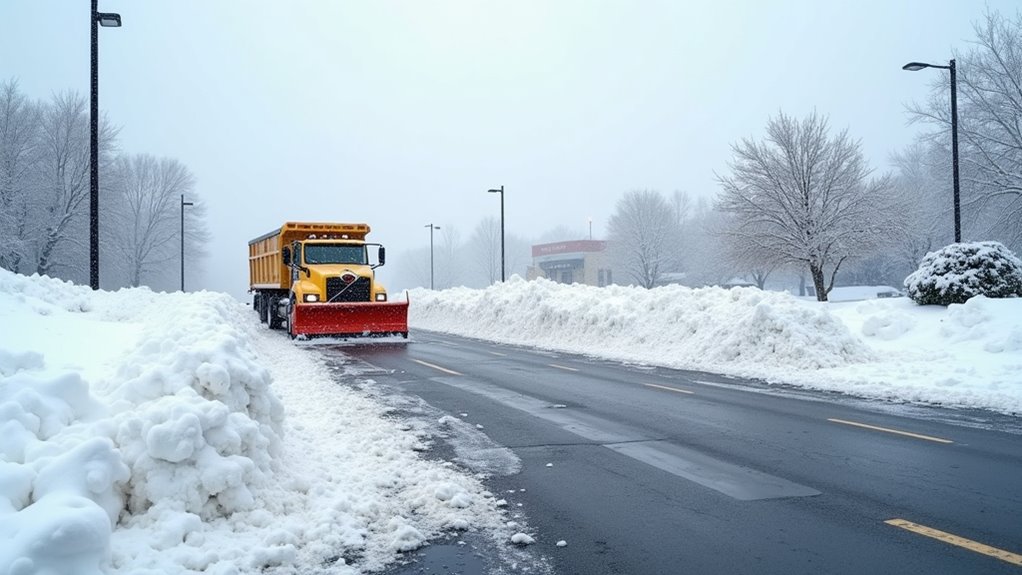


If you’re dealing with a dangerous pothole, a contractor can respond in as little as 2 hours. True emergencies often get a make-safe or temporary fix within 24 hours, while busy main roads and high-risk defects can see attendance within 2 to 4 hours. Depth’s the primary trigger. Defects deeper than 40mm, 50mm, or 100mm usually qualify. Permanent asphalt work follows within 48 to 72 hours. Here’s what drives your response time.
Key Takeaways
- True emergency repairs can be addressed in as little as 2 to 24 hours, with same-day service available through many private contractors.
- Busy main roads and high-risk defects often receive attendance within 2 to 4 hours.
- Defect depth is the primary trigger, with potholes deeper than 40 to 100mm qualifying for emergency dispatch.
- Contractors first apply a temporary make-safe fix, then schedule permanent asphalt repairs within 48 to 72 hours.
- Crew capacity, permits, weather, and backlogs can extend response times to 5 to 7 business days.
How fast can a contractor respond to emergency pothole repair
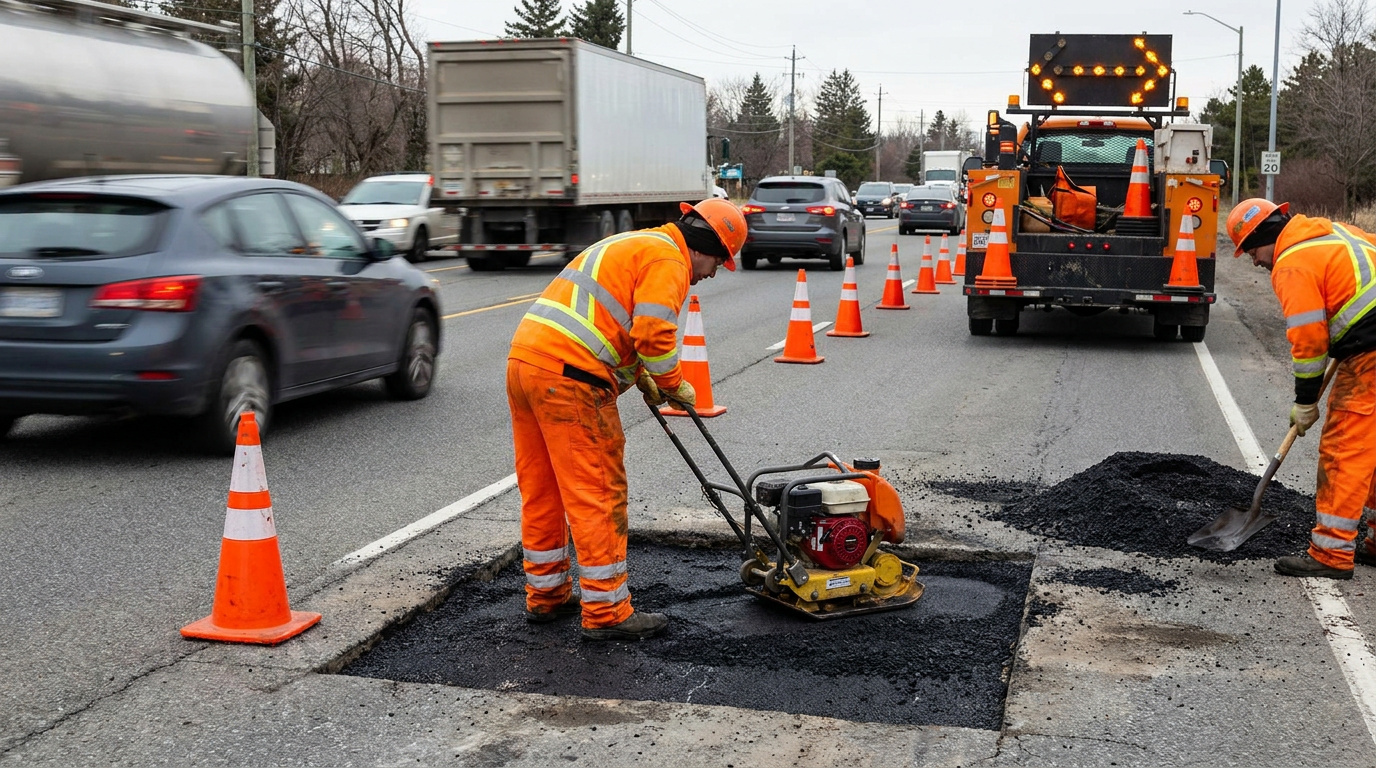
A contractor can respond to emergency pothole repair in as little as 2 to 24 hours for true emergency repairs. For defects on busy main roads, a pothole repair contractor can attend within 2 hours, and some response categories set a 4-hour target for very high-risk defects. Same-day emergency pothole repair is available through many private contractors, especially for commercial sites and high-traffic access points.
Expect urgent pothole repair on lower-priority streets to fall within 24 to 72 hours, while routine defects wait longer. Keep in mind that initial attendance usually means a make-safe or temporary fix first, not a permanent surface. Road type, defect depth, staffing, permits, and weather all directly affect how quickly your contractor arrives and completes the work.
What qualifies as an emergency pothole repair
A true emergency pothole repair meets specific safety thresholds set by highway authorities and contractors. Depth is the primary trigger: defects deeper than 40mm, 50mm, 80mm, or 100mm often qualify, depending on road classification. If a pothole sits on a busy main road, strategic route, or high-traffic access point, you’ll see it prioritized for fast pothole repair over minor residential streets. Location, liability risk, and public safety exposure all push a defect into the emergency category. When a pothole poses an immediate hazard, emergency asphalt repair focuses on a make-safe or temporary fix first, not a permanent surface. Smaller, lower-risk defects don’t qualify. They’re monitored or scheduled into routine maintenance windows instead.
What happens during an urgent pothole service call
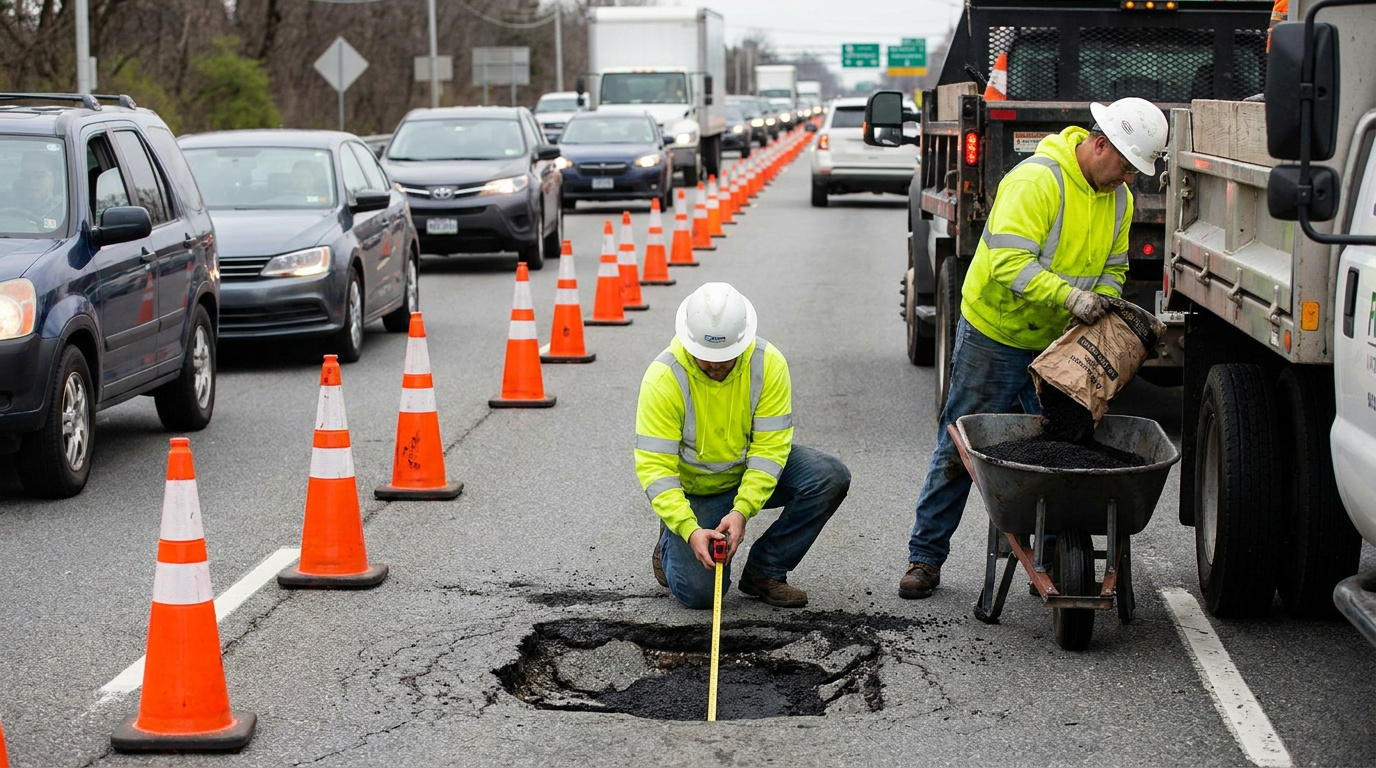
An urgent pothole service call begins with attendance, not a permanent fix. You’ll see the crew reach the site fast, often within 2 to 24 hours depending on the standard applied. Their initial job is to make the defect safe. They’ll assess depth and width, checking whether it crosses thresholds like 40mm, 50mm, or 100mm that trigger higher-priority action. Then they’ll apply a temporary make-safe repair, filling or cold-patching the hazard to reduce liability and traffic risk.
Don’t expect final surface quality yet. That comes later. Once the immediate danger’s cleared, the crew logs the defect and schedules permanent asphalt work, typically within 48 to 72 hours, though permits, weather, or backlog can push it further out. The crew then evaluates various asphalt repair methods suitable for the specific situation. They aim to ensure longevity and safety, so the most effective techniques are chosen for the job.
Which temporary and permanent pothole repairs are available
Pothole repairs come in two distinct tracks: temporary make-safe measures and permanent fixes. Temporary make-safe measures address immediate safety risks, buying time until crews return for a permanent fix. Emergency crews apply these fast, often the same day, prioritizing hazard removal over surface quality. Permanent repairs follow later, restoring structural integrity once conditions and permits allow. Alligator crack repair is essential for maintaining the longevity of road surfaces. It addresses the deterioration caused by environmental factors and heavy traffic, ensuring a safer driving experience.
| Repair Type | Purpose | Typical Timing |
|---|---|---|
| Cold-mix make-safe | Immediate hazard control | Same day |
| Temporary infill | Short-term stabilization | 2 to 24 hours |
| Hot-asphalt patch | Durable resurfacing | 48 to 72 hours |
| Full-depth reinstatement | Structural rebuild | 1 to 2 weeks |
| Scheduled maintenance fix | Lower-priority defects | Up to 28 days |
Choose your track based on severity, depth, and road classification. Deeper defects demand permanent reinstatement, not just quick patching.
What affects emergency pothole repair response time
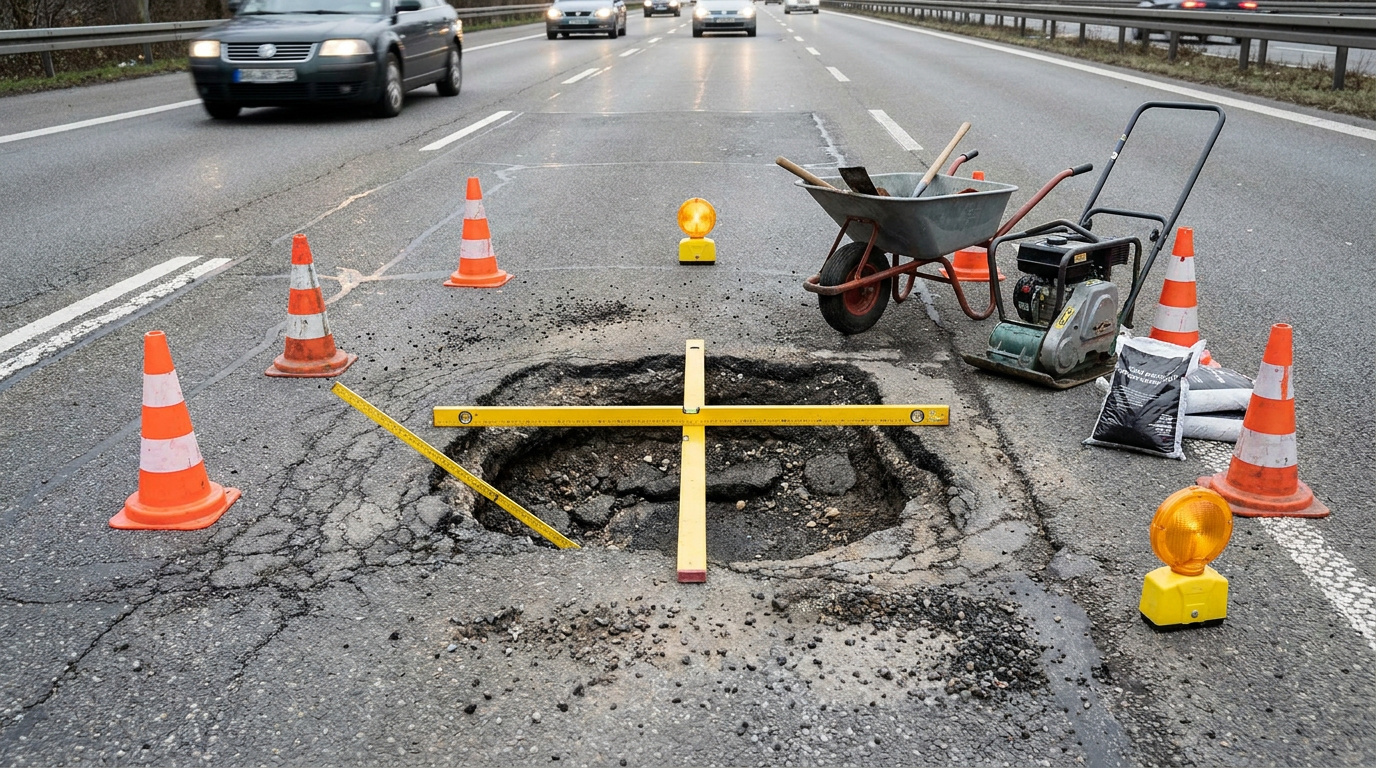
Emergency pothole repair response time depends on defect severity, road location, and available crew capacity.
Three factors drive emergency pothole response: how deep the defect is, which road it sits on, and available crews.
Severity comes first. Depth thresholds of 40mm, 50mm, 80mm, or deeper than 100mm trigger emergency dispatch, since deeper potholes register as public safety risks.
Location matters just as much. You’ll see busy main roads, strategic routes, and distributor roads prioritized ahead of estate streets and minor residential roads. Town-centre and pedestrianised areas often move faster too.
Then there’s capacity. Staffing shortages, tight budgets, and heavy backlogs can stretch response to 5 to 7 business days. Permit approvals delay permanent repairs even after a same-day make-safe. Weather pushes asphalt work into later windows. Moss buildup on driveways can create hazardous conditions, further complicating the situation. Regular driveway moss removal is essential to maintain safety and prevent damage to the surface.
Bottom line: your defect’s depth, road classification, and the contractor’s available crews decide response speed.
What information should you provide when requesting emergency repair
When requesting emergency repair, provide the exact location, the defect’s depth and width, and the road type. Depth matters most. If it exceeds 40mm, 80mm, or 100mm, say so, since those thresholds push a defect into emergency categories. Pinpoint the location with a street name, nearest junction, or GPS coordinates so crews don’t waste time searching. Flag the road classification: busy main roads and distributor routes get prioritized ahead of estate streets.
Add context that raises the risk profile: heavy traffic, cyclist or pedestrian exposure, standing water hiding the hole, or vehicle damage already reported. Photos with a scale reference help. Include your contact details and access notes. The more precise you are, the faster they’ll respond.
Repair Dangerous Potholes Before They Get Worse
Potholes in parking lots, access roads, and other high-traffic surfaces can create safety risks and lead to more pavement damage if left open. V&F Paving provides commercial paving and pothole repair services for businesses, municipalities, and property managers across Connecticut. Call (203) 624-2449 or request a free estimate to discuss the right repair for your pavement.
Frequently Asked Questions
How Much Does Emergency Pothole Repair Typically Cost?
I can’t give you specific emergency pothole repair costs because that pricing data isn’t in the information I’ve got. What I can tell you is that costs typically hinge on the same factors driving response speed: defect depth, road type, and whether you need a temporary make-safe or full permanent fix. Emergency and same-day dispatch usually cost more than routine work. For accurate pricing, you’ll want to request quotes directly from local contractors.
Who Is Liable for Pothole Damage to My Vehicle?
The highway authority responsible for that road typically holds liability for pothole damage to your vehicle. You’ll need to prove they knew about the defect and failed to repair it within their intervention target. Document everything fast: photos, depth measurements, exact location, and the date. Authorities often defend claims using their inspection records, so you must show negligence. If it’s a private road or site, the owner or contractor’s liable instead.
Can I Claim Compensation for Pothole-Related Car Damage?
Yes, you can claim compensation, but you’ll need solid evidence. Document the pothole’s depth and location immediately, and photograph it with measurements, especially if it exceeds 40mm. File a claim against the responsible highway authority or contractor. They’ll often defend using a “reasonable maintenance” argument, so you must prove they knew about the defect and failed to act. Gather repair invoices, inspection records, and witness details fast to strengthen your case.
Do I Need a Permit to Repair a Pothole Myself?
You typically can’t repair a public road pothole yourself without authorization because highway works require permits and approved contractors. If it’s on a public highway, don’t touch it; report it to your local authority instead. Unauthorized repairs can trigger liability, void protections, and breach road regulations. On your own private property, you won’t need a permit, but you’ll own any safety risk. When in doubt, get official permit approval first.
How Long Do Temporary Pothole Repairs Usually Last?
You’ll typically get a few weeks to several months out of a temporary pothole repair, depending on traffic load, weather, and material quality. These make-safe fixes handle immediate safety risks, but they’re not built to last. Heavy vehicles, rain, and freeze-thaw cycles break them down fast. You should schedule your permanent repair within 48 to 72 hours, or up to two weeks, before the temporary patch fails and the hazard returns.