
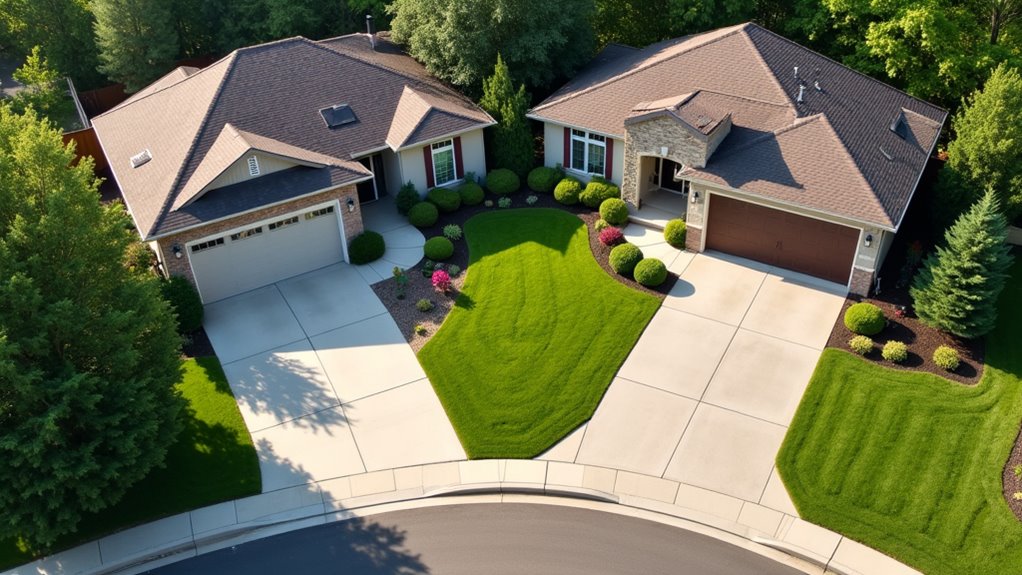
You’ll pay between $7 and $13 per square foot for professional asphalt driveway installation in 2025, which translates to $1,200-$3,500 for a standard 400-square-foot residential driveway or $7,000-$15,000 for larger 1,000+ square-foot projects. Your final cost depends on factors like asphalt thickness (2-4 inches), site preparation requirements, and whether you’re installing new, replacing existing pavement, or adding an overlay. Understanding these cost components and sizing variables will help you budget accurately for your specific project needs.
Average Asphalt Driveway Installation Costs in 2025
Standard 400-square-foot residential driveways cost $1,200–$3,500, while larger installations exceeding 1,000 square feet can reach $7,000–$15,000. Acreage considerations greatly impact excavation and grading expenses, particularly on sloped or uneven terrain. These figures align with the national average of $7 to $13 per square foot for professional asphalt installation. Seasonal weather impacts also affect pricing, spring and summer installations often command premium rates due to high contractor demand, while fall projects may offer cost savings despite shorter ideal paving windows before winter temperature drops compromise asphalt curing. Asphalt provides better value than concrete for most residential applications, typically costing $3-7 per square foot compared to concrete’s $4-10 per square foot range.
What Factors Affect the Price of Your Asphalt Driveway?
Your asphalt driveway’s final cost hinges primarily on two controllable variables: the total square footage you’re paving and the thickness of asphalt required for your specific load-bearing needs. A standard residential driveway averages 2–3 inches thick, but heavier vehicle traffic demands 3–4 inches, directly increasing material volumes and labor hours. Before any asphalt gets laid, you’ll face site preparation expenses that vary drastically based on whether you’re working with level, stable ground or dealing with demolition, grading, and drainage corrections. Replacing an existing driveway requires removing the old surface, which adds $5 to $15 per square foot to your total project cost compared to a fresh installation. Labor typically accounts for $40-$55 per hour of your total project cost, with most installations requiring either a single-person crew working 8–16 hours or a three-person team for larger or more complex driveways.
Driveway Size and Thickness
The square footage of your driveway directly determines your total project cost, as asphalt averages $7–$13 per square foot installed for new installations. A 400-square-foot residential driveway costs $1,200–$3,500, while a 1,500-square-foot project reaches $10,500–$22,500.
Thickness considerably impacts driveway materials requirements. Standard 2-inch depth uses less tonnage than heavy-duty 4–6-inch installations designed for commercial vehicles or unstable soils. One ton covers 25–80 square feet depending on depth, a 600-square-foot driveway needs $1,500–$3,000 in materials at 2 inches versus $2,250–$4,500 at 6 inches.
Thicker layers require additional asphalt compaction passes, increasing labor costs. You’ll pay more per square foot for deeper installations, but durability improves substantially in freeze-thaw climates and high-traffic areas. With proper maintenance and appropriate thickness for your usage needs, asphalt driveways typically last 15 to 20 years before requiring replacement.
Site Preparation Requirements
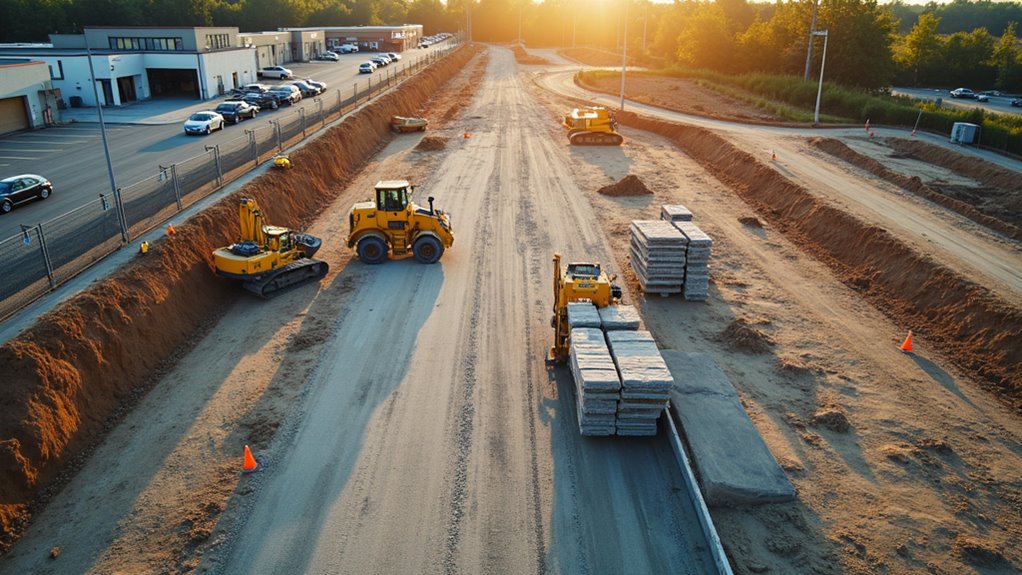
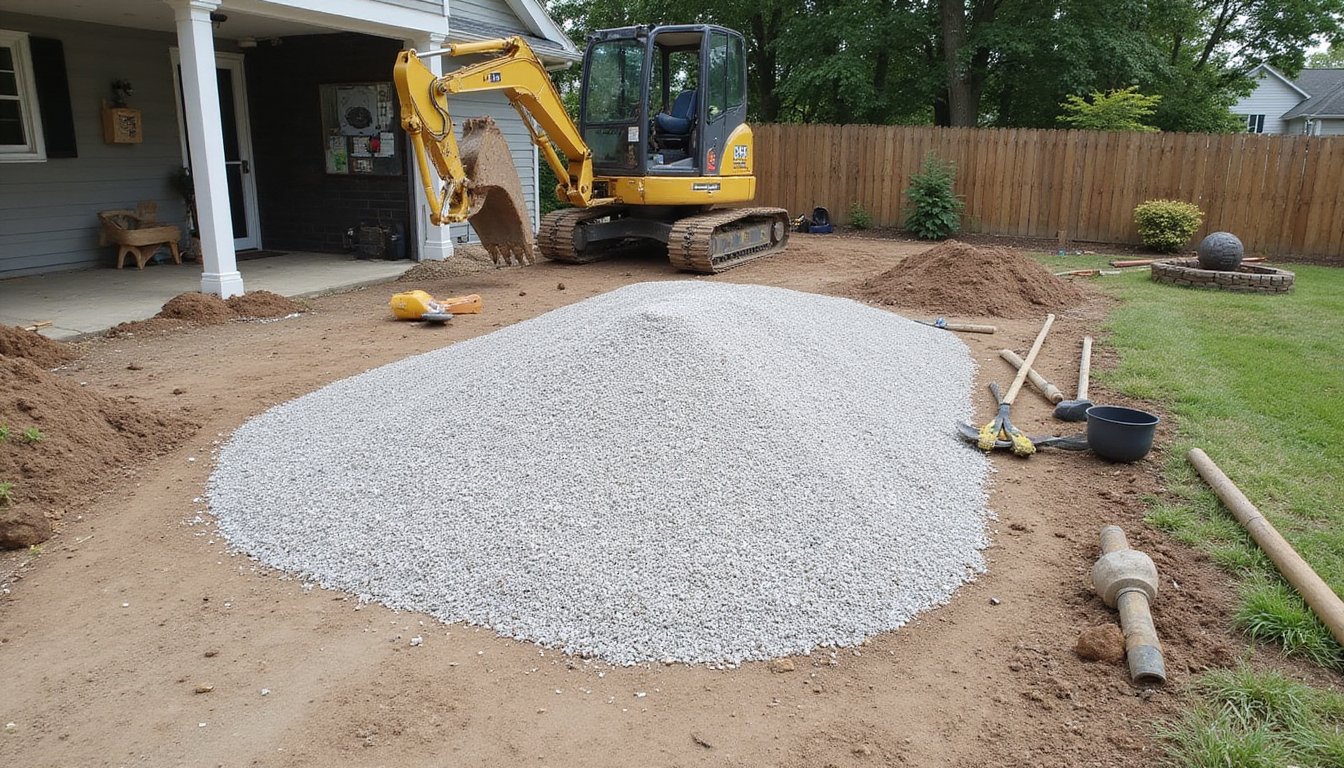
Before contractors pour the first load of asphalt, they’ll assess and prepare your site, work that accounts for 20–40% of total project costs. Weak soil requires stabilization through compaction testing and possible geotextile fabric installation to prevent future structural failures. Site grading considerations include establishing proper 1–2% slope for water drainage, preventing pooling that causes potholes and cracks. You’ll need obstacle removal, stumps, roots, vegetation, and existing pavement, which demands specialized demolition equipment. Trench excavation requirements vary by traffic load expectations, typically removing 6–10 inches of material before installing a 4–6 inch compacted aggregate base. Poor drainage sites necessitate swales, catch basins, or pipe systems. Professional contractors will conduct soil condition assessments to determine if your ground provides the stable, well-draining foundation necessary for long-term pavement performance. The compacted aggregate base serves as the critical foundation layer that supports the asphalt surface and distributes traffic loads evenly. Contractors use heavy machinery like skid steers or backhoes to remove existing concrete, gravel, or old asphalt surfaces down to the subgrade level. This preparation phase spans several days to a week, depending on your property’s complexity and soil conditions.
Materials and Labor: Breaking Down the Cost Components
When budgeting for an asphalt driveway, you’ll find that material and labor expenses form two distinct cost layers that together determine your final investment.
Material costs range from $5–$7 per square foot for standard asphalt, while premium types reach $10–$25. You’ll also need a base layer at $0.50–$1 per square foot. Material quality directly affects longevity, higher-grade aggregates and binders cost more upfront but extend service life.
Labor expenses typically run $2–$6 per square foot, though urban markets may reach $5–$7. Contractors charge $40–$55 hourly for excavation, grading, and installation. Site preparation, old pavement removal, and disposal costs add significant expense beyond basic installation.
Combined, you’re looking at $7–$13 per square foot installed for standard projects, with regional variations and site conditions adjusting final pricing.
New Installation vs. Replacement vs. Overlay: Which Option Is Right for You?
Choosing between new installation, replacement, or overlay hinges on your existing driveway’s structural condition and your budget constraints. Understanding structural integrity vs. surface condition determines which approach delivers ideal value.
Three critical decision points:
- Base stability assessment – Sound substrates allow $3–$7/sq ft overlays; failing bases require $8–$15/sq ft replacement with demolition adding $1–$2/sq ft
- Driveway age evaluation – Pavements over 20 years old typically need full replacement despite higher upfront costs
- Quality vs. budget considerations – New installations ($7–$13/sq ft) offer 20+ year lifespans with proper grading, while overlays provide 8–15 years at lower initial expense
If deep cracks, sinking, or sub-base erosion exist, replacement becomes necessary. Properties without existing hard surfaces require complete new installation with thorough site preparation and base construction. Experienced contractors understand local soil conditions and regulations, ensuring proper drainage and structural integrity throughout the installation process. Complex projects involving steep grades or intricate curves will see labor costs increase due to additional man-hours required for specialized work.
Cost Estimates by Driveway Size
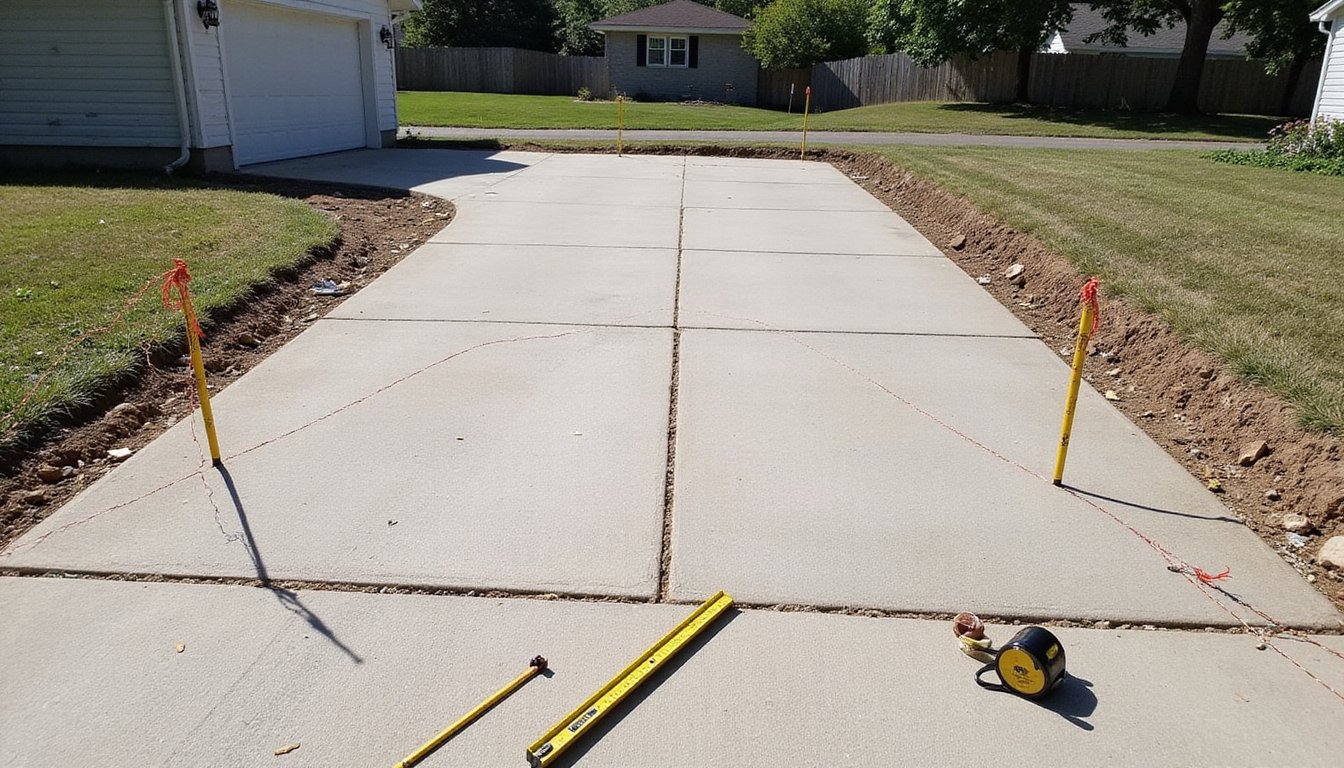
Your driveway’s square footage directly determines material volume, labor hours, and total project cost. A 400 sq ft installation typically runs $2,800–$6,000, while 600–800 sq ft driveways range from $4,200–$10,400, and projects exceeding 1,200 sq ft can exceed $15,000 depending on specifications. Understanding these size-based benchmarks helps you budget accurately and identify when bulk discounts or premium features shift your per-square-foot rate. The quality and thickness of asphalt you select will also influence both durability and overall expenditure. Requesting itemized assessments from reputable contractors ensures you understand how material delivery, site preparation, and labor setup costs factor into your total investment.
Small Driveway (400 Sq Ft)
For a small 400-square-foot asphalt driveway, typically a single-car width measuring roughly 10 feet by 40 feet, you’ll pay between $2,000 and $6,000 for a complete installation, with most homeowners spending $2,800 to $5,200. The price per square foot ranges from $7 to $13, depending on site preparation requirements and material quality.
Key cost variables include:
- Driveway slope considerations: Steep gradients require additional grading and stabilization work, increasing labor costs by $500–$1,200
- Base preparation: Proper subgrade and gravel compaction add $200–$400 but prevent premature cracking
- Driveway expansion joints: Professional installation includes joints every 10–15 feet to accommodate thermal movement, preventing structural damage
Replacement projects, including demolition and disposal, cost $3,200–$6,000. Overlay resurfacing on structurally sound driveways runs $1,200–$2,800, extending lifespan cost-effectively. For budget-conscious homeowners, recycled asphalt provides a cost-effective alternative at $1,600–$3,600 for the same 400-square-foot area while maintaining durability. Scheduling your installation during spring through early fall ensures optimal weather conditions and better contractor availability, improving overall project outcomes.
Medium Driveway (600-800 Sq Ft)
A medium-sized asphalt driveway spanning 600–800 square feet, typically accommodating two cars side-by-side or a single-car width with extended length, costs $4,200–$10,400 for complete installation. You’ll find suitable paving solutions at different price points depending on asphalt type and thickness. Standard 2-inch asphalt runs $7–$13 per square foot, while custom design options like stamped or colored finishes increase costs to $10–$17 per square foot.
| Driveway Size | Standard Installation | Replacement Cost |
|---|---|---|
| 600 sq ft | $4,200–$7,800 | $4,800–$9,000 |
| 700 sq ft | $4,900–$9,100 | $5,600–$10,500 |
| 800 sq ft | $5,600–$10,400 | $6,400–$12,000 |
Labor comprises approximately half your total expense at $5–$7 per square foot, covering excavation, grading, and compaction.
Large Driveway (1,200+ Sq Ft)
When upgrading to a large asphalt driveway spanning 1,200+ square feet, ideal for multi-car households, RVs, or extended parking areas, you’ll invest $8,400–$18,000 for complete installation. Per-square-foot rates of $7–$13 apply, though replacement projects requiring demolition reach $8–$15 due to removal expenses. Driveways exceeding 1,500 square feet can total $10,500–$22,500 depending on thickness and regional labor rates.
Key considerations for large installations include:
- Base preparation and drainage considerations: Proper grading and crushed stone bases ($0.50–$1/sq ft) prevent water pooling and structural failure.
- Asphalt depth requirements: 3–4 inch thickness suits standard vehicles; heavy-duty applications demand 5–6 inches, raising material costs considerably.
- Proper installation techniques: Compaction, edge sealing, and curing time directly impact longevity and performance under heavy traffic loads.
Bulk material discounts partially offset higher total costs on expansive projects.
Premium Options and Add-Ons for Your Asphalt Driveway
While standard asphalt driveways deliver reliable performance at $6–$9 per square foot, premium materials and custom features let you transform a basic installation into a distinctive, high-performance surface. Decorative finishes like stamped patterns add $3–$6 per square foot, while colored asphalt increases material costs by 20–40%. Polymer-modified asphalts boost durability at $12+ per square foot installed.
| Premium Feature | Typical Cost |
|---|---|
| Stamped patterns (brick, cobblestone) | $3–$6/sq ft added |
| Colored asphalt upgrade | 20–40% material increase |
| Permeable asphalt surface | $10–$14/sq ft |
Technological enhancements include heated systems at $18+ per square foot, inlaid LED lighting ($30–$100 per fixture), and automated gates ($3,000–$7,000+). Permeable asphalt costs $10–$14 per square foot while reducing stormwater runoff effectively.
How Long Will Your Asphalt Driveway Last?
Your asphalt driveway’s operational lifespan ranges from 15–30 years, with actual performance dictated by three cost-determining variables: installation quality, maintenance frequency, and environmental exposure.
Critical Longevity Factors:
- Base preparation and thickness specifications, Proper subgrade compaction and 2–3 inch asphalt depth prevent premature failure, while shortcuts reduce lifespan to 8–15 years
- Driveway maintenance schedules, Sealcoating every 2–3 years protects against UV degradation and moisture penetration, extending performance to 25–30+ years versus 12–20 years with minimal upkeep
- Regional climate impact, Freeze-thaw cycles in northern zones demand proactive crack filling but still achieve 20–30 years; southern heat exposure typically yields 12–20 years despite less weather severity
Without maintenance, you’ll lose 10% structural integrity within 10 years and 45% by year 20.
Frequently Asked Questions
Can I Install an Asphalt Driveway Myself to Save Money?
While you can install an asphalt driveway yourself to save on labor costs ($2–$6 per sq ft), DIY installation challenges make it risky. You’ll need expensive equipment rentals, precise grading expertise, and rapid hot-mix application skills. Mistakes in compaction or drainage lead to premature failure, potentially costing more in repairs than you’d save. Professional installation advantages include warranty coverage, proper permitting, optimized durability (15–20 years), and techniques ensuring your investment won’t require costly remediation.
What Time of Year Is Best for Asphalt Driveway Installation?
Late spring through early fall (May–October) is best for asphalt driveway installation. You’ll need ambient temperatures between 50°F and 85°F for ideal weather conditions that guarantee proper curing and compaction. Warm, dry days allow contractors to complete proper surface preparation and achieve excellent material adhesion. Off-peak periods in late spring or early fall often bring lower contractor rates compared to high-demand summer months, potentially saving you 10–15% while maintaining installation quality and long-term performance.
Do I Need a Permit to Install an Asphalt Driveway?
You’ll likely need a permit depending on your location’s driveway regulations. Urban areas almost always require one for new installations or replacements, while suburban municipal requirements may only mandate permits for curb cuts or drainage modifications. Rural zones sometimes exempt residential driveways. Expect permit fees between $50–$400 and processing times from same-day to several weeks. Your contractor can handle applications, but you’re responsible for compliance. Skipping permits risks $100–$2,000 fines and costly removal orders.
How Soon Can I Drive on a Newly Paved Asphalt Driveway?
You can drive on your newly paved asphalt driveway after 72 hours under normal conditions. This recommended wait period guarantees proper initial curing and prevents surface damage like rutting or tire marks. Light foot traffic’s permissible after 24–48 hours, but vehicle weight requires the full three-day curing time. In hot weather, you’ll need to extend this period since higher temperatures slow the curing process. Heavy vehicles should wait 5–7 days minimum to avoid permanent impressions.
Does Homeowners Insurance Cover Asphalt Driveway Damage or Replacement?
Homeowners insurance typically won’t cover asphalt driveway damage or replacement unless it’s from a sudden, covered peril like fire, vandalism, or falling objects. Routine wear, cracking, and deterioration from neglected asphalt driveway maintenance are excluded. Homeowners insurance claims require proof of abrupt, accidental loss, not gradual damage. Coverage falls under “other structures” at about 10% of your dwelling’s value, and you’ll pay your deductible first, making minor repairs impractical to claim.