
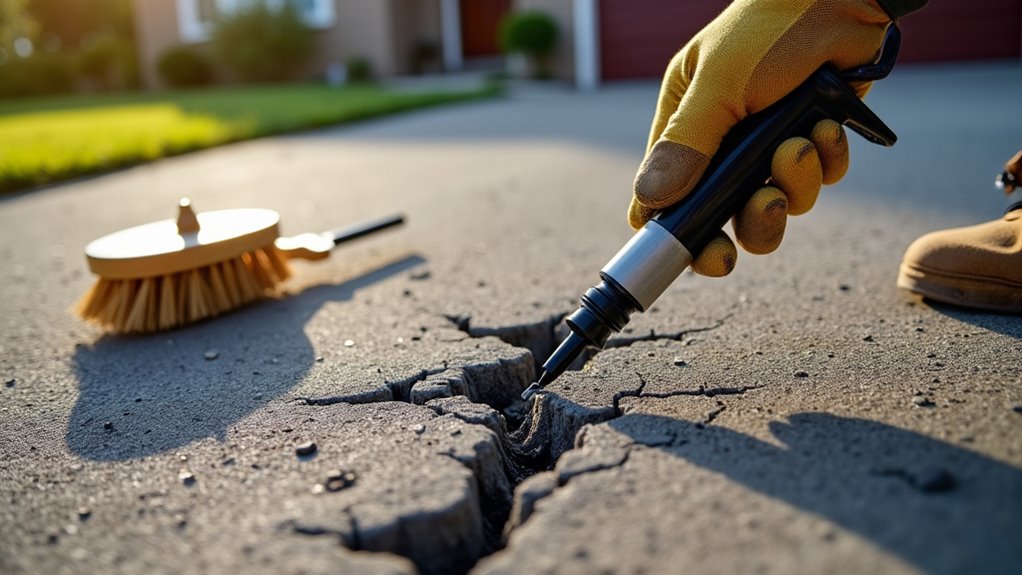
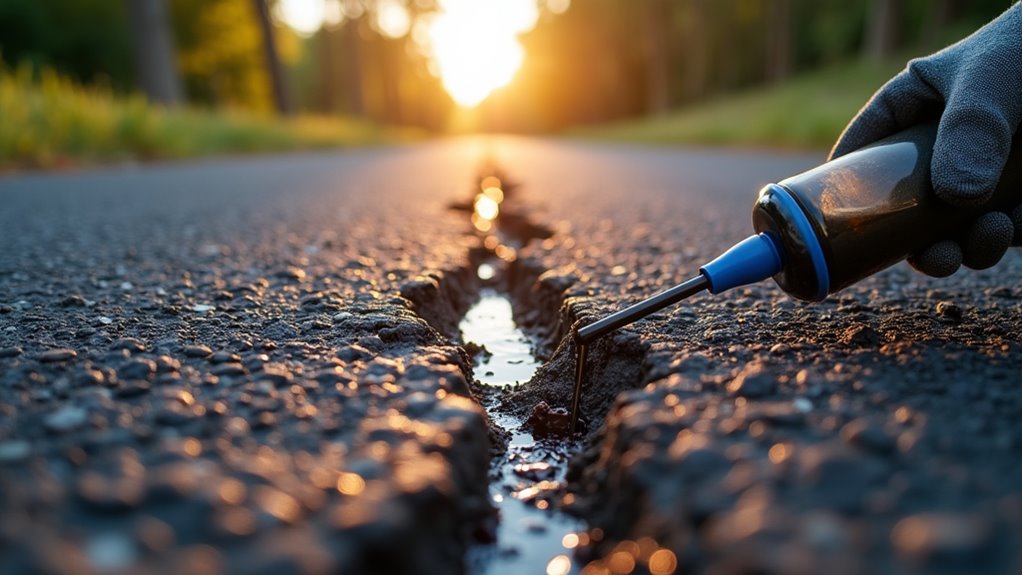
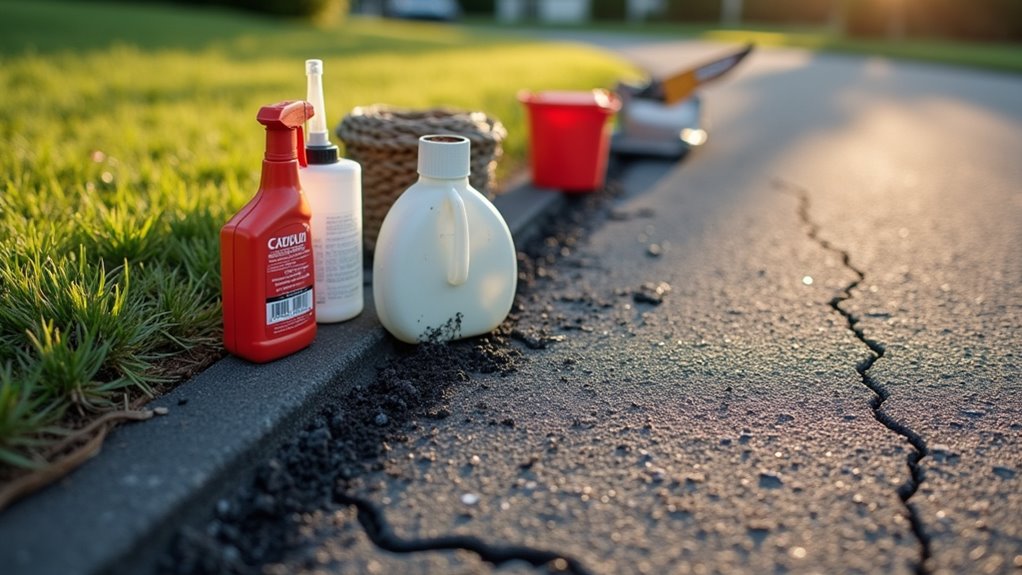


You’ll need a complete asphalt driveway replacement when you observe alligator cracking indicating structural fatigue, surface distortions like rutting from compromised base layers, multiple potholes with deteriorating edges signaling systemic failure, severe surface raveling with exposed aggregate from binder oxidation, or persistent water pooling from drainage inadequacies. These five conditions represent foundational compromises that temporary patching can’t resolve; they demand full-depth reconstruction to address underlying subgrade and base layer deterioration. The following sections break down each warning sign’s technical implications and why conventional repairs won’t restore your pavement’s structural integrity.
Widespread Network Cracking That Resembles Alligator Skin
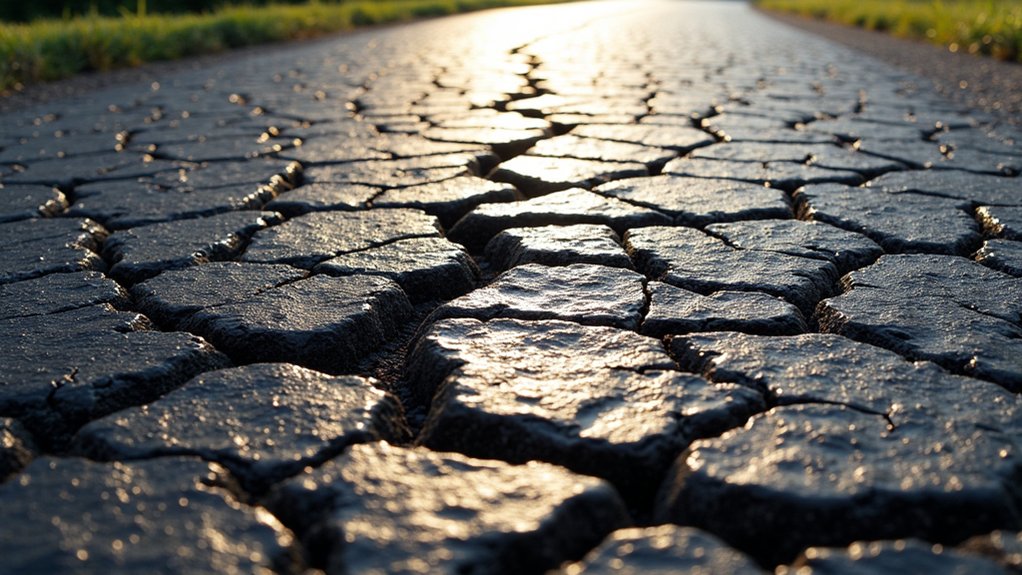
When interconnected cracks spread across your driveway’s surface in a distinctive pattern resembling reptile scales, you’re observing alligator cracking, a clear indicator of structural failure rather than simple surface wear. This network cracking stems from fatigue failure caused by repeated vehicle loading, particularly when your pavement wasn’t designed for current traffic demands. Inadequate subgrade preparation and insufficient compaction during installation create weak foundation layers that can’t withstand stress. Poor drainage allows water infiltration, eroding base materials and accelerating deterioration through freeze-thaw cycles. Excessive vibration during use from heavy vehicles further compromises already-weakened structures. The damage progresses through three distinct stages: early, moderate, and severe, with each level requiring increasingly extensive repair interventions. Low-quality materials used during the initial construction can accelerate the development of alligator cracking and reduce the overall lifespan of your pavement. Extreme heat can intensify the problem by creating stress cracks as the asphalt repeatedly expands and contracts with temperature fluctuations. Surface-only repairs like crack filling won’t address underlying base failure. You’ll need full-depth patching or complete replacement to restore structural integrity and prevent safety hazards from developing potholes.
Major Surface Distortions Including Warping and Rutting
If your driveway exhibits pronounced depressions along wheel paths or irregular surface undulations across broader sections, you’re witnessing major structural distortions, rutting and warping that signal fundamental pavement failure requiring immediate attention. These uneven surface displacement patterns indicate deteriorated base layers, compromised subgrade stability, or inadequate pavement thickness under traffic loads.
Pooling water in wheel channels and widespread rippling confirm accelerating deterioration that simple overlays won’t resolve. You’ll need an in-depth structural stability assessment to identify whether moisture infiltration, weak subgrade conditions, or improper mix design caused the failure. Contributing factors to these deformations include weak asphalt mixes, insufficient compaction during installation, and excessive moisture penetration into the pavement structure. Rutting results from consolidation or lateral movement of pavement layers or the subgrade beneath, fundamentally compromising the structural integrity of your driveway.
Severe rutting and warping necessitate full-depth reconstruction, removing failed layers and addressing underlying drainage deficiencies. Temporary patching merely postpones inevitable replacement while hydroplaning risks and rapid structural degradation continue threatening your property’s functionality and safety. Since rutting is a load-related distress, your driveway cannot develop these wheel path depressions without the repeated stress of vehicle traffic.
Multiple Potholes and Crumbling Driveway Edges
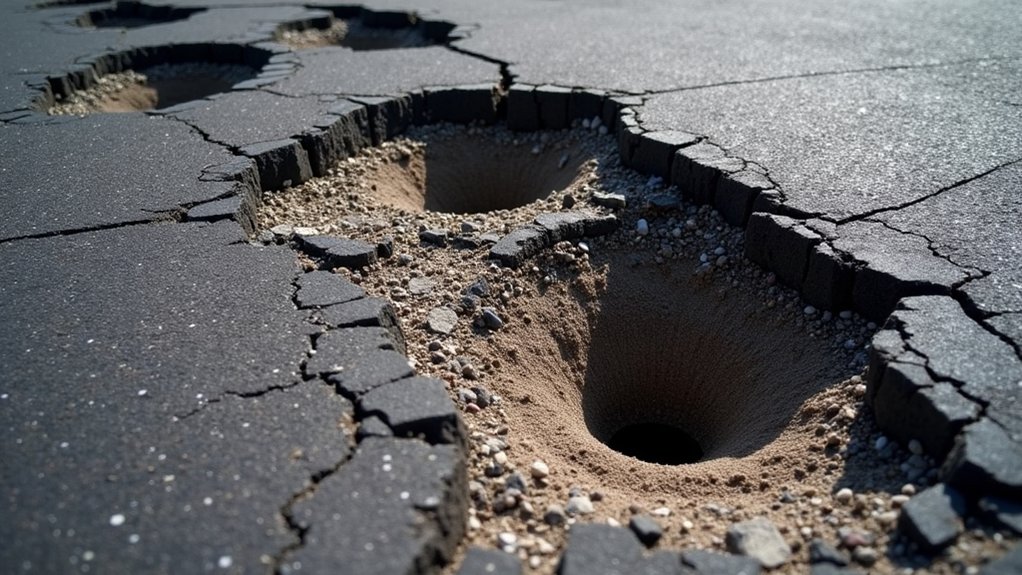
Though isolated potholes may seem like minor inconveniences, multiple surface voids combined with deteriorating perimeter edges signal systemic asphalt failure that demands extensive intervention. When you’re spending $35–$500 per pothole repeatedly, your ongoing repair cost analysis often reveals replacement becomes more economical than perpetual patching. Crumbling edges indicate compromised sub-base support, typically requiring full-depth excavation at $3–$13 per square foot. This interconnected damage follows an accelerated deterioration timeline, edge failure cascades into adjacent cracking and additional potholing. If your driveway’s approaching the 15–20 year threshold with multiple structural defects, contractors recommend shifting to full replacement rather than addressing individual failures. Persistent potholes and perimeter loss create liability hazards while diminishing property value, making proactive replacement the prudent solution. Regular maintenance programs can extend your asphalt driveway’s lifespan by up to 15 years, but once multiple structural failures appear, this preventive benefit no longer applies. Beyond the structural concerns, potholes can cause flat tires and bent rims to vehicles using your driveway, creating additional expenses and safety risks for household members and visitors.
Severe Fading With Surface Raveling and Material Loss
Beyond structural failures like potholes and edge deterioration, your asphalt driveway’s surface condition itself can dictate replacement necessity. Severe fading indicates binder oxidation severity that’s compromised your pavement’s integrity at the molecular level. When combined with progressive raveling, you’re witnessing active material loss that sealants can’t reverse.
Critical indicators demanding replacement include:
- Exposed aggregate condition showing bare stone and sand accumulation across widespread areas
- Loss of surface fines progressing to larger aggregate displacement, creating rough, pitted texture
- Brittle, discolored surface with loose debris indicating complete binder exhaustion
Once binder oxidation severity reaches this stage, the asphalt-aggregate bond has failed. Water infiltration accelerates sub-base deterioration, while reduced skid resistance creates safety hazards. Segregated areas with excess inter-connected voids allow water to penetrate and further weaken the pavement structure. You may also notice loose rocks scattered across the pavement surface or collected in gutters, confirming that active disintegration is underway. This deterioration often worsens into tripping hazards that pose safety risks for anyone walking across the affected areas. Replacement becomes your only cost-effective solution when widespread raveling exposes underlying layers.
Persistent Water Pooling Due to Drainage Failure
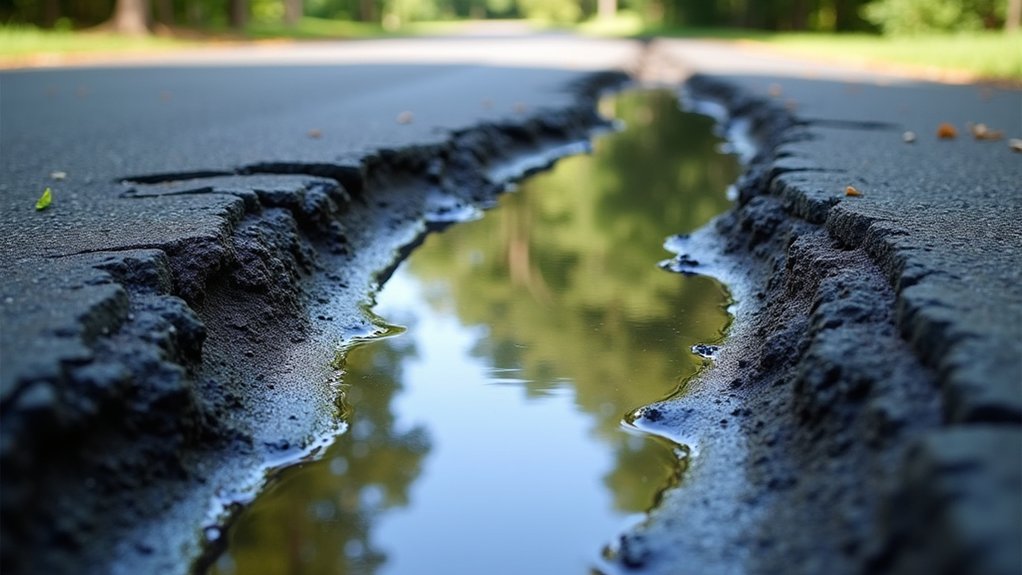
When persistent water pooling develops across your driveway surface, you’re observing a drainage failure that threatens both structural integrity and long-term performance. Improper grading during installation or subbase settlement creates depressions where water collects rather than drains. This standing water accelerates surface degradation, penetrates to the base layer, and triggers subsurface soil erosion that compromises foundational support. You’ll notice expanding cracks, potholes, and potential undermining of adjacent pavement sections. Water overflow may reach your home’s foundation or damage landscape features. Pooling water can permeate into existing cracks and openings, creating a destructive cycle that exponentially worsens the structural damage. While channel drains and French drain systems address minor issues, widespread pooling across multiple areas indicates structural failure requiring professional assessment. Subsidence and shifting of the asphalt subbase can create bowl-like depressions that collect water and worsen over time. The inability to effectively regrade severely compromised sections often necessitates full replacement rather than continued patching investments. Although asphalt has natural waterproofing properties, prolonged exposure to standing water will eventually overwhelm these protective characteristics and cause extensive damage.
Frequently Asked Questions
How Much Does Complete Asphalt Driveway Replacement Typically Cost?
You’ll pay an average cost per square foot of $8 to $15 for complete asphalt driveway replacement. Your estimated total project budget typically ranges from $3,129 to $7,402, with the national average hitting $5,265. For a standard 600 sq. ft. driveway, you’re looking at $4,800–$9,000. Factor in removal costs at $1–$2 per sq. ft. and labor averaging $5–$7 per sq. ft. when planning your investment.
Can I Replace Only Half of My Driveway to Save Money?
While partial driveway replacement is technically possible, it’s rarely advisable. You’ll likely face seam integrity issues, visible joints, and accelerated deterioration at junctures. Though you’ll save money upfront, frequent repairs at seams often negate initial savings. For cost effective options, consider asphalt overlays if your foundation’s sound, or invest in full replacement to avoid patchwork aesthetics and ongoing maintenance expenses. Professional assessment will determine whether targeted repairs truly address your driveway’s underlying structural concerns.
How Long Does the Asphalt Driveway Replacement Process Usually Take?
Your asphalt driveway replacement typically takes 2-7 days from demolition to completion. The project timeline includes one day for removal, sub-base preparation, and 1-2 days for paving. However, weather considerations like rain or extreme temperatures can extend this schedule. You’ll need to factor in additional curing time, light use is possible after 5-7 days, but full strength requires two weeks. Proper planning around these variables guarantees ideal results.
What Permits or Approvals Are Needed Before Replacing an Asphalt Driveway?
You’ll typically need municipal permits from your city or county building department before starting replacement work. Local zoning regulations dictate specific requirements based on driveway size, material changes, and drainage modifications. If your project affects public right-of-way or curb cuts, you’ll need additional access permits. Properties in HOAs require separate approval. Contact your jurisdiction’s planning department early, they’ll review site plans, verify compliance with stormwater codes, and schedule necessary inspections throughout construction.
Should I Choose Asphalt Again or Consider Concrete for Replacement?
When weighing concrete versus asphalt considerations, you’ll need to evaluate durability comparisons between materials against your budget and climate. If you’re in a cold region with freeze-thaw cycles, asphalt’s flexibility outperforms concrete’s crack-prone rigidity. However, concrete delivers 30–50 years of service versus asphalt’s 15–30, supporting heavier loads while requiring minimal maintenance. Choose asphalt for lower upfront costs and easier repairs, or concrete for long-term durability and design versatility.