
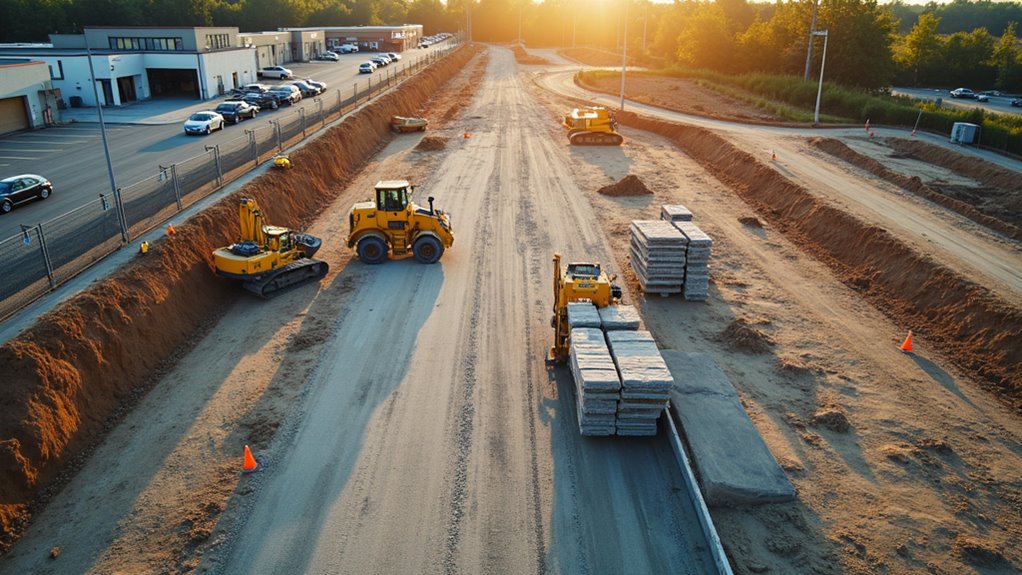
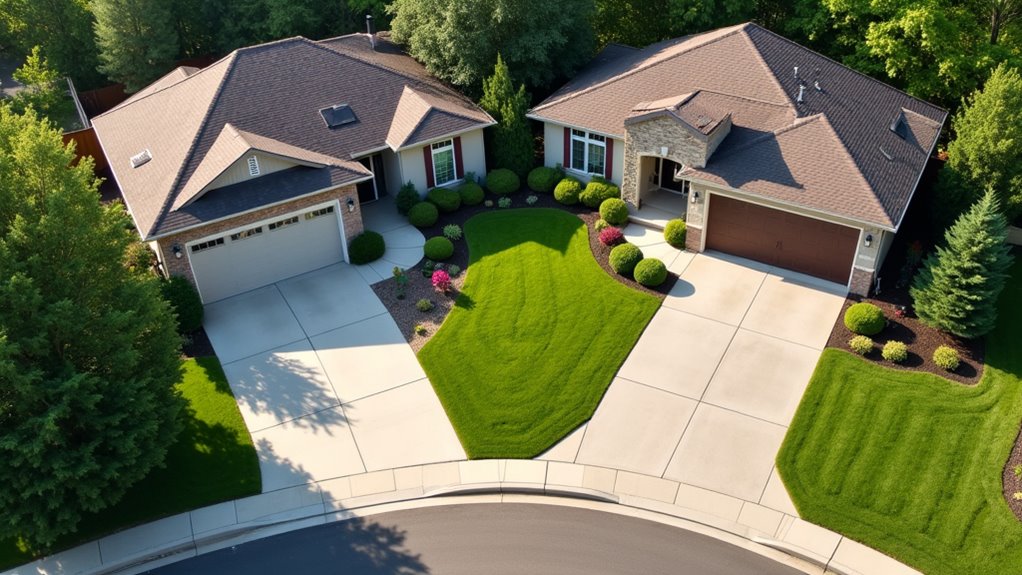
Professional asphalt repair begins with systematic inspection using grid patterns to document deterioration and identify underlying causes. You’ll then clean surfaces with power equipment and pressure washers before treating cracks based on width and applying appropriate fill methods. Next, you’ll select matching materials, hot mix for high-traffic areas or cold patch for temporary fixes, and compact them to 94% density using vibratory rollers. Finally, you’ll apply sealcoating and restripe lines. The following sections detail proper timing, equipment specifications, and cost-effective techniques for each phase.
Thorough Inspection and Damage Assessment
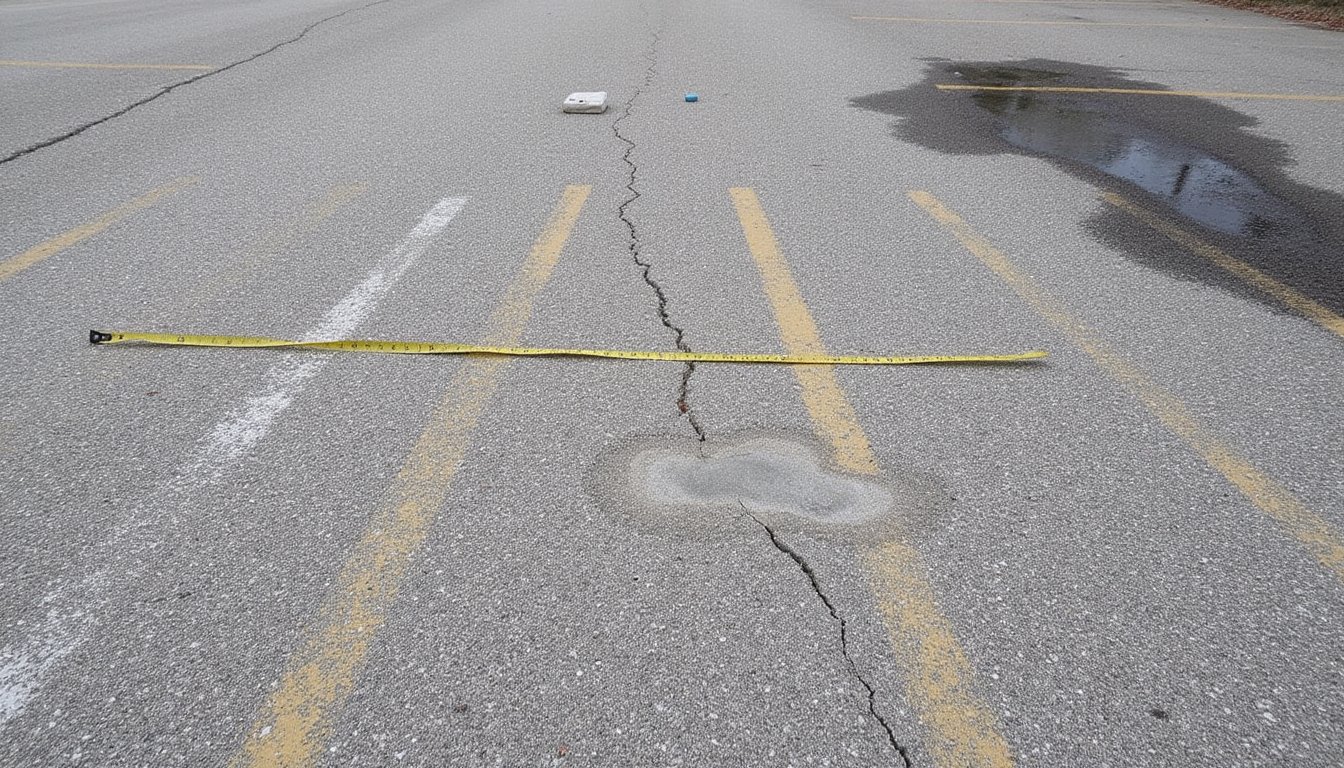
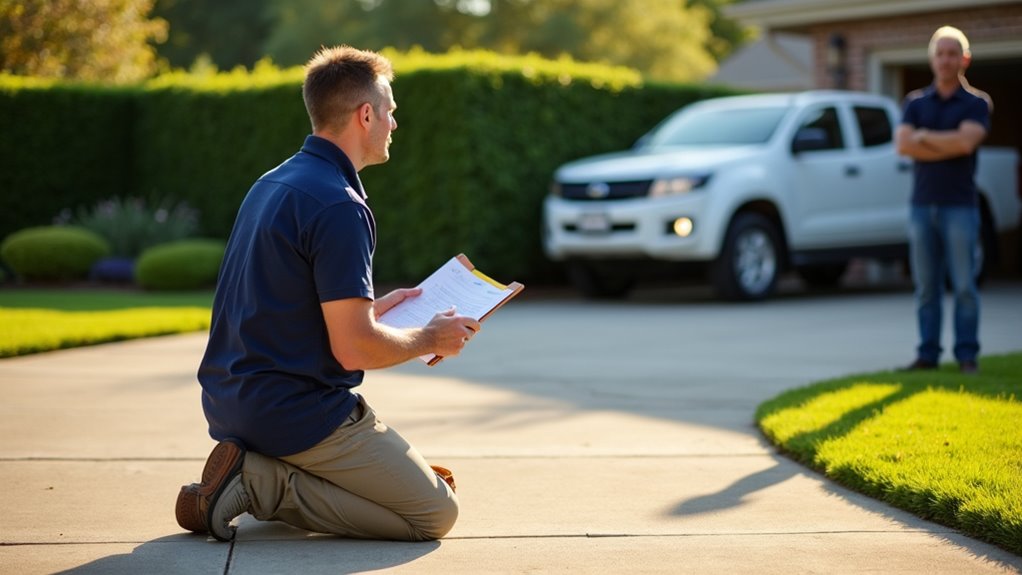
Before implementing any repair strategy, a systematic inspection establishes the full scope of parking lot deterioration and guides cost-effective remediation planning. You’ll conduct walk-throughs using grid patterns during ideal lighting conditions, typically morning or late afternoon when angled sunlight reveals surface irregularities. Document crack patterns (longitudinal, transverse, alligator), potholes, depressions, and raveling with photographs, measurements, and marked locations. Spring assessments after freeze-thaw cycles prove especially critical for identifying winter damage. Check drainage functionality by monitoring water pooling after rain events, as standing water accelerates base failure. Inspections should identify underlying causes such as water infiltration, freeze-thaw cycles, heavy traffic, or poor installation that contribute to pavement deterioration. Biannual inspections, supplemented by quick visual checks following significant weather events, ensure early damage detection and prevent minor surface issues from developing into costly structural failures. Professional assessments employ core sampling and ground-penetrating radar for documenting subsurface issues beyond visual inspection capabilities. PASER methodology provides objective 1-10 condition ratings, verifying structural integrity and establishing repair priorities based on safety risks and deterioration severity. Advanced inspections utilize AI and civil engineering frameworks to deliver actionable intelligence that enables strategic maintenance decisions and optimizes budget allocation.
Surface Cleaning and Preparation
Once inspection reveals the full extent of damage requiring attention, proper surface cleaning creates the foundation for successful repair work. You’ll begin by removing debris using heavy-duty brooms and gas-powered blowers, sweeping from uphill to downhill on slopes. Next, identify specific stains, oil, grease, or rust, and apply targeted treatments. Biodegradable cleaning solutions protect nearby landscaping while meeting EPA standards. For persistent stains, commercial degreasers or tri-sodium phosphate paste prove effective after adequate dwell time.
Industrial pressure washers operating at 2,000–4,000 PSI with rotary surface cleaners eliminate streaking and promote durable surface traction. Stiff-bristled brushes address inaccessible areas during pretreatment. High-pressure rinsing removes all chemical residues and dislodged particles, with wastewater containment systems preventing environmental contamination. A clean parking lot reflects care for business and creates a positive first impression for customers visiting the property. Adequate drainage systems prevent water pooling that can compromise the asphalt surface integrity. Before beginning pressure washing operations, check with local EPA representatives to ensure compliance with regional water discharge requirements. This methodical preparation optimizes adhesion for subsequent repair phases.
Crack and Pothole Repair
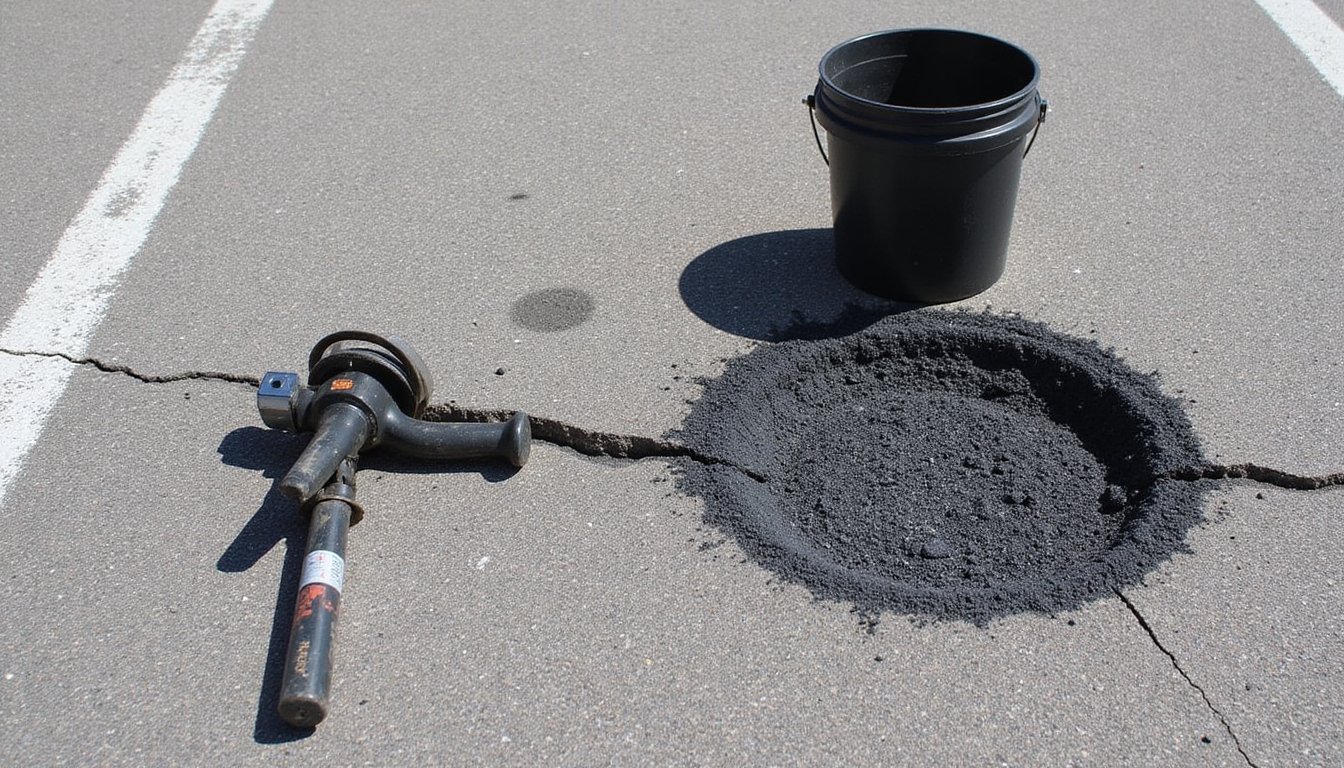
Effective crack and pothole repair hinges on matching the treatment method to the specific damage type and severity. You’ll need to assess crack width first: hairline cracks under 1/8 inch receive surface seals, while cracks between 1/8 and 1/2 inch require routing and sealing. Larger cracks demand asphalt emulsion slurry or hot mix treatments.
Successful pavement repair requires precise assessment of crack dimensions to select the appropriate treatment method for lasting results.
Seasonal factors profoundly impact repair success. You should schedule work between March and November during dry conditions, guaranteeing 24 hours without precipitation for proper curing. Early fall offers ideal conditions for crack sealing projects, with spring serving as an alternative when weather conditions remain mild.
For potholes, consider these approaches:
- Full-depth patching removes damaged pavement and subgrade, then refills with compacted asphalt
- Infrared heater patching blends new and existing asphalt cost-effectively
- Spray injection provides temporary emergency fixes in cold weather
Proper application techniques, including backer rods for deeper cracks and appropriate compaction, maintain structural integrity and extended pavement life. Crack filling is 20-30 times less expensive than replacing neglected asphalt, making it a smart preventive investment. Beyond their unsightly appearance, cracks and potholes create hazardous conditions for both vehicles and pedestrians navigating the parking lot.
Filling and Compaction
When repairing damaged asphalt, you’ll need to select fill material that matches the existing pavement’s performance characteristics and gradation specifications. For repairs exceeding two inches in depth, you must apply the material in compacted lifts no thicker than the equipment’s effective compaction range to achieve uniform density throughout the repair. Proper compaction tools, whether plate compactors for confined areas or vibratory rollers for larger sections, directly determine whether your repair reaches the target 94% density required for long-term durability. Successful compaction removes air voids and improves the load carrying capacity of the repaired pavement section. Achieving maximum density requires maintaining the fill material at its optimum moisture content during the compaction process. You should limit hand working of the asphalt mix during repair operations to ensure proper compaction and pavement quality.
Selecting the Right Material
The success of any asphalt parking lot repair hinges on material selection, compaction techniques, and proper application methods. You’ll need customized solutions based on your specific repair requirements and environmental conditions.
Material Selection Guidelines:
- Hot mix asphalt for high-traffic areas requiring permanent, structural repairs with specialized equipment
- Cold patch asphalt for temporary fixes and year-round pothole repair in low-traffic zones
- Polymer-modified asphalt for demanding environments where enhanced flexibility and durability are critical
Match repair materials to existing pavement composition to maintain structural integrity and prevent premature failure. Consider climate suitability, asphalt performs exceptionally in colder regions due to heat absorption properties. Implement preventive maintenance through regular sealcoating and crack filling every 2-3 years. Asphalt’s resilience to temperature changes helps minimize crack formation, making it an ideal choice for regions with fluctuating weather conditions. The recyclable nature of asphalt allows damaged material to be milled and repurposed for new repairs, reducing waste and material costs. Always verify foundation stability before material application to guarantee proper adhesion and long-term performance. For immediate pothole repairs, UPM Cold Mix provides a reliable solution that can be applied as needed throughout the year.
Layering for Deep Repairs
Deep structural failures in asphalt parking lots require systematic layering techniques to restore pavement integrity and prevent recurring damage. When repairs exceed 6 inches depth, you’ll divide the fill into multiple compacted lifts of 2–3 inches each. This layering sequence prevents settlement and guarantees structural stability throughout the repair zone.
You’ll use dense-graded hot mix asphalt (HMA) for ideal material compatibility with existing pavement. Apply tack coat to vertical edges and the excavation bottom before placing each lift, promoting proper bonding between layers. Compact each lift thoroughly before adding the next layer to eliminate voids and weak interfaces.
Your final lift incorporates smaller aggregate for enhanced surface smoothness. The surface course layer provides a smoother, quieter, and more aesthetic finish to the pavement. Allow adequate curing time between lifts to maximize longevity and prevent premature failure in the repaired area.
Compaction Tools and Techniques
Proper compaction equipment makes or breaks the structural integrity of your asphalt repair work. For parking lot repairs, you’ll need to match your compactor to the job size and access constraints. Walk-behind plate compactors excel in confined areas, while equipment attachments like vibratory plates transform excavators into versatile compaction machines for utility trenches.
Apply proper compaction methods using this sequence:
- Breakdown rolling: Compact immediately while asphalt remains hot, working from edges toward the center
- Intermediate rolling: Achieve target density with overlapping passes of at least half the roller width
- Finish rolling: Remove roller marks using static mode for the smoothest surface
Maintain optimal mix temperature throughout compaction. Stop rolling in arcs to prevent bumps and guarantee uniform density across your repair panel.
Sealcoating and Surface Protection
After completing crack repairs and structural fixes, sealcoating serves as the critical protective layer that shields asphalt parking lots from environmental damage and extends pavement lifespan by several years. Professionals apply two coats using mechanical sprayers for uniform coverage, beginning at edges and working inward. Sealcoating products include asphalt-based and coal-tar emulsions, often enhanced with sand for skid resistance and polymer additives for durability. The process requires thorough surface preparation, power blowing debris, treating oil stains with primer, and ensuring complete dryness. Application occurs in warm, dry conditions above 60°F, with a 24–48 hour curing period before reopening to traffic. These protective barriers prevent water intrusion, slow oxidation, and resist chemical degradation while offering environmental benefits through reduced long-term repair needs and material consumption.
Line Striping and Reopening
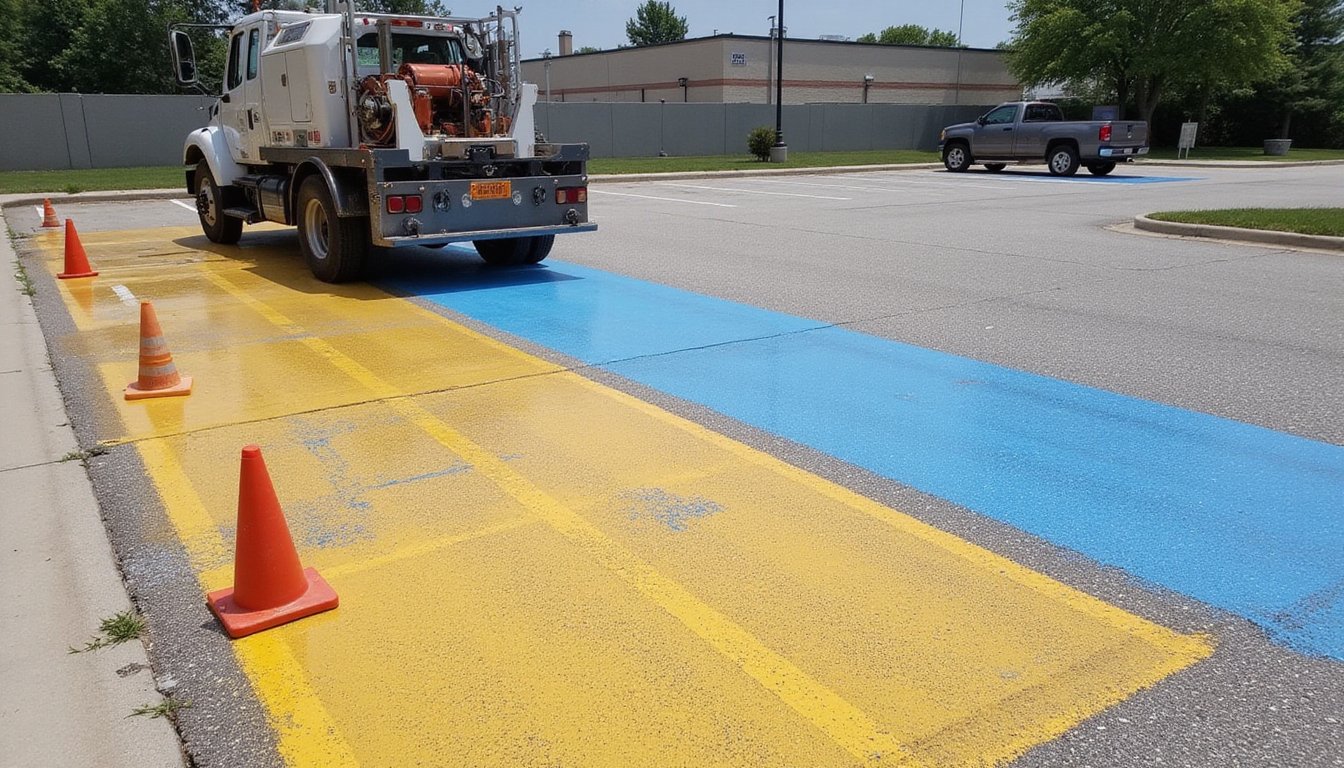
Reopening occurs in stages based on minimum curing times:
- Striping: 30 minutes
- Sealcoating: 24 hours
- Asphalt repairs: 24 hours
Post-project walkthroughs verify code compliance, reflectivity standards, and safe pedestrian access before final facility handoff.
Ongoing Maintenance Planning
Once your asphalt parking lot reopens, its longevity depends on structured maintenance protocols that address deterioration before it compounds. Implement annual condition assessments to detect early issues and shape remedial planning. Schedule crack filling annually and sealcoating every 2–5 years based on traffic and climate conditions. This customized maintenance frequency extends pavement lifespan to 30 years compared to 15 years without intervention.
Establish proactive budgeting for routine sweeping, seasonal inspections, drainage checks, and emergency repairs. Weekly to monthly cleaning prevents debris accumulation and surface damage. Inspect catch basins quarterly to guarantee proper water runoff and prevent freeze-thaw deterioration. Address cracks, potholes, and drainage deficiencies immediately to avoid safety liabilities and structural degradation.
Factor in seasonal demands, snow removal, deicing, and heavy vehicle restrictions to minimize accelerated wear and unplanned expenditures.
Frequently Asked Questions
How Much Does Professional Asphalt Parking Lot Repair Typically Cost?
You’ll typically pay $2–$5 per square foot for standard asphalt parking lot repairs, though average repair costs per square foot can range from $1–$12 depending on the method used. Typical labor and material expenses include $0.50–$3.00 per linear foot for crack filling and $250–$800 for hot patch repairs. Most contractors enforce minimum service fees of $100–$250, while complete lot replacement runs $3–$6 per square foot, ensuring proper structural integrity and safety compliance.
What Weather Conditions Are Best for Scheduling Asphalt Repair Work?
You’ll want to schedule asphalt repair when the optimal temperature range sits between 50°F and 90°F, with surface temps maintaining at least 175°F for proper bonding. Ideal moisture levels require completely dry conditions; avoid any rain or high humidity that’ll compromise compaction and adhesion. You should guarantee stable temperatures for 2–3 days before and after work. Target late spring through early fall for best results, and always monitor ground temperature since it’s typically lower than air temp.
How Long Do Asphalt Parking Lot Repairs Last Before Needing Redoing?
Your asphalt parking lot repairs typically last 5–10 years before requiring additional work, though proper asphalt maintenance like crack sealing every 3–5 years dramatically extends this timeline. Heavy traffic, freeze-thaw cycles, and drainage issues accelerate deterioration. Asphalt lifespan considerations indicate that once 25–35% of your pavement needs removal, you’ll achieve better cost-effectiveness through full replacement rather than repeated repairs. Consistent sealcoating and prompt patching maximize your repair longevity and overall pavement performance.
Can Parking Lot Repairs Be Done in Sections to Maintain Operations?
Yes, you can implement a phased repair approach that divides your parking lot into manageable sections, ensuring continuous lot operations throughout the project. Contractors use barriers and signage to isolate work zones while maintaining traffic flow and parking availability. You’ll schedule repairs during off-peak hours, targeting deteriorated areas with crack sealing, patching, or overlays. This method prevents complete closures, reduces revenue loss, and maintains customer access while addressing critical pavement damage systematically.
Do Professionals Offer Warranties or Guarantees on Their Repair Work?
Yes, you’ll receive thorough warranties from reputable contractors covering workmanship and materials for 1–5 years, depending on your repair type. Full-depth replacements typically offer longer coverage than overlay work. Detailed repair guarantees exclude pothole patches and damage from heavy loads or poor maintenance. You must maintain regular seal coating schedules to keep warranties valid. Performance warranties for larger projects can extend 5–10 years, but they require strict adherence to maintenance protocols and load capacity limits.