

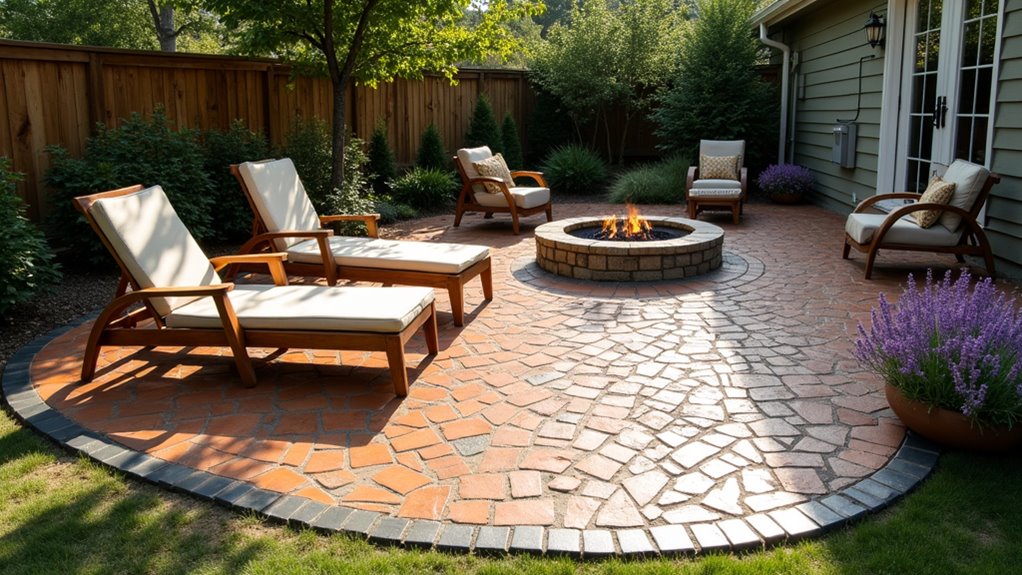
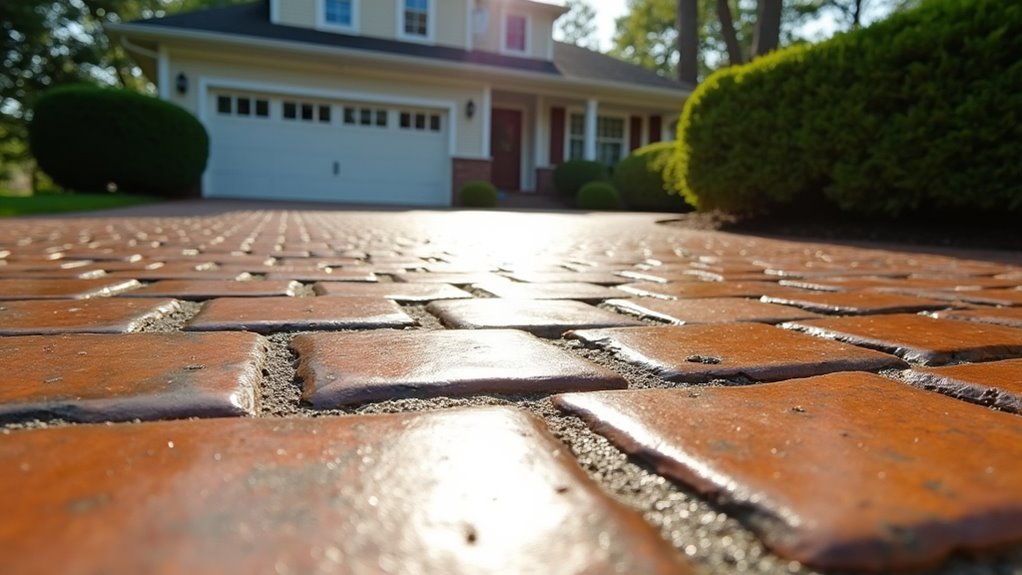

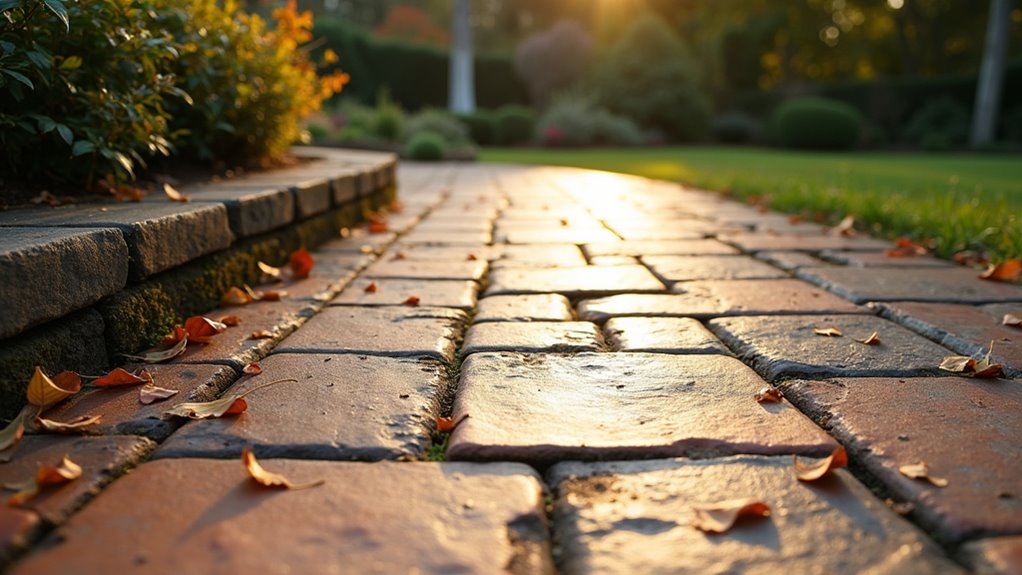
You’ll see Belgian block curbs along driveways, entrances, walkways, patios, and garden beds. They support asphalt and concrete edges, so pavement doesn’t crumble. On gravel drives, they contain loose aggregate and mark boundaries. You get granite that resists vehicle traffic, freeze-thaw cycles, and constant weather exposure. The blocks also hold back soil and mulch and manage small grade changes. Below, you’ll find how excavation, base prep, and grading decide their lifespan, drainage, and plowing performance.
Key Takeaways
- Belgian block curbs line asphalt, concrete, and gravel driveways, entrances, walkways, patios, and garden beds to define edges and boundaries.
- Durable granite withstands vehicle traffic, freeze-thaw cycles, and constant weather exposure, making these curbs long-lasting outdoor edging.
- Along paved driveways, block curbs support pavement edges and reduce crumbling, while along gravel drives they contain loose aggregate.
- Unlike monolithic poured concrete curbs, Belgian block curbs use individual granite units with visible joints for a traditional stone appearance.
- Durability depends on proper installation, including 8 to 12-inch excavation, compacted crushed-stone base, string-line alignment, and grading for drainage.
Where and why are belgium block curbs used
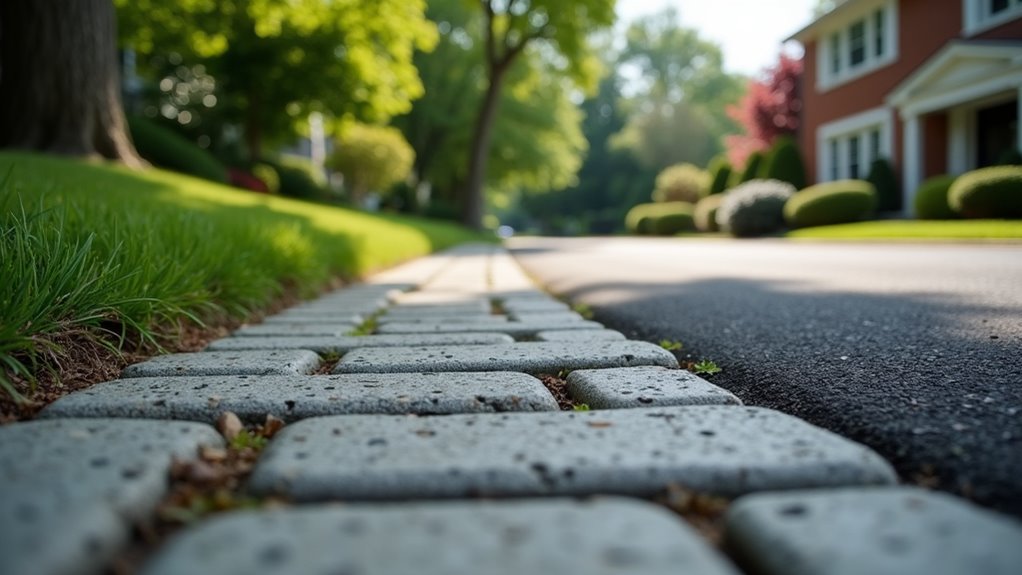
Belgian block curbs are used along driveways, entrances, walkways, patios, and garden beds because granite holds up to vehicle traffic, freeze-thaw cycles, and constant weather exposure, giving you a durable, defined edge. Along asphalt or concrete driveways, a belgian block curb supports pavement edges and reduces crumbling. On gravel drives, it contains loose aggregate and marks boundaries. At entrances, block aprons create a substantial street-to-property passage.
You’ll also use a belgium block curb to outline walkways, patios, and garden beds, where it contains soil and mulch and gives you a clean mowing line. Low block edges can manage small grade changes between driveways and landscaping.
Every belgian block curb detail matters: you’ll need excavation, a compacted crushed-stone base, string-line alignment, and proper jointing. Expect higher installation costs than with lightweight edging.
How do belgian block curbs compare to poured concrete curbs
Belgian block curbs use individual granite units set in a row, giving you visible joints and a natural-stone look, whereas poured concrete curbs form one continuous edge with a uniform, monolithic finish.
| Factor | Belgian Block | Poured Concrete |
|---|---|---|
| Appearance | Traditional, established stone character | Uniform, continuous surface |
| Construction | Separate blocks, visible joints | Single monolithic pour |
| Upkeep | Joints may need occasional attention | Continuous edge without unit joints |
Granite resists wear from vehicle traffic and harsh weather, so you get a durable edge that suits historic or old-world settings. Expect detailed installation work: you’ll excavate, compact a crushed-stone base, align each block with string lines, and finish the joints. Published sources don’t give a standardized cost comparison, so get quotes for both curb types.
What makes block curbing so durable
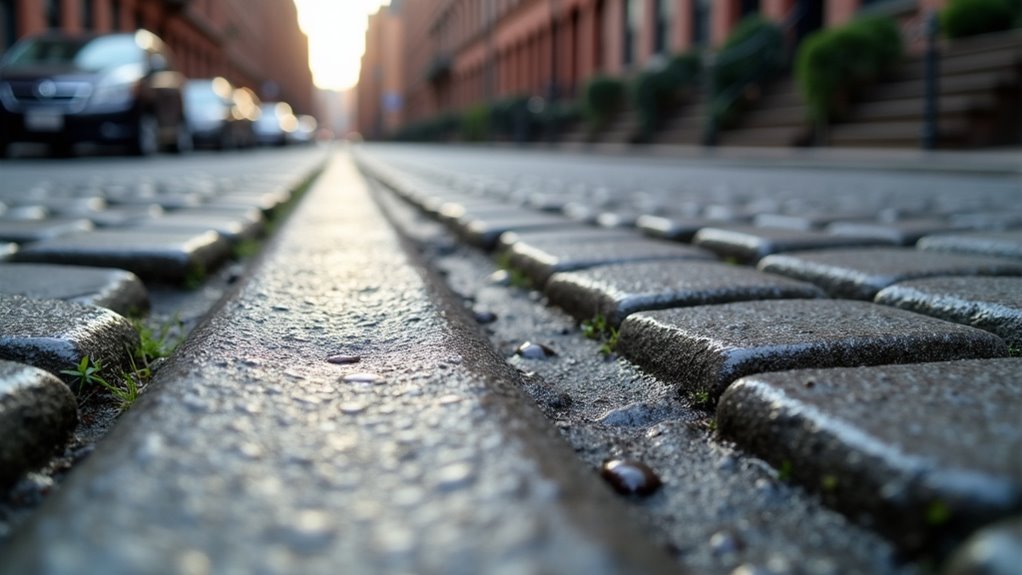
Block curbing gets its durability from granite, a natural stone that resists wear from vehicle traffic and harsh weather, according to product and installer sources, so your edge holds up in exposed outdoor settings. Because each curb is built from separate blocks, you’ll see visible joints, and those joints may need occasional attention.
Proper installation also determines performance. You’ll need proper excavation, often 8 to 12 inches deep depending on block size and use. A compacted crushed-stone base supports the blocks and aids drainage, while some designs add a concrete footing or bed. Use string lines and levels to keep block alignment and height consistent, and grade so water drains away. Built this way, your curb supports adjacent asphalt, pavers, gravel, or soil and helps limit displacement.
How are belgium block curbs installed
Belgian block curbs are installed by setting the blocks in a compacted trench, aligning them with string lines and a level, and filling the joints. Plan the curb’s finished height against the surrounding surface grades. One garden source cites about 4 inches of exposed curb as a common residential preference, but it isn’t a universal standard.
Excavate a trench sized to your block format and intended use. One installer guide suggests 8 to 12 inches deep. Compact a crushed-stone base to support the blocks and aid drainage. Depending on the design, you may also set the blocks on a concrete footing or bed.
Run string lines and check with a level as you place each block, keeping alignment and height consistent. Grade the finished edge so water drains away appropriately. Fill the joints with suitable material, and inspect them occasionally, since they may eventually need attention.
Where do these curbs work best around a property
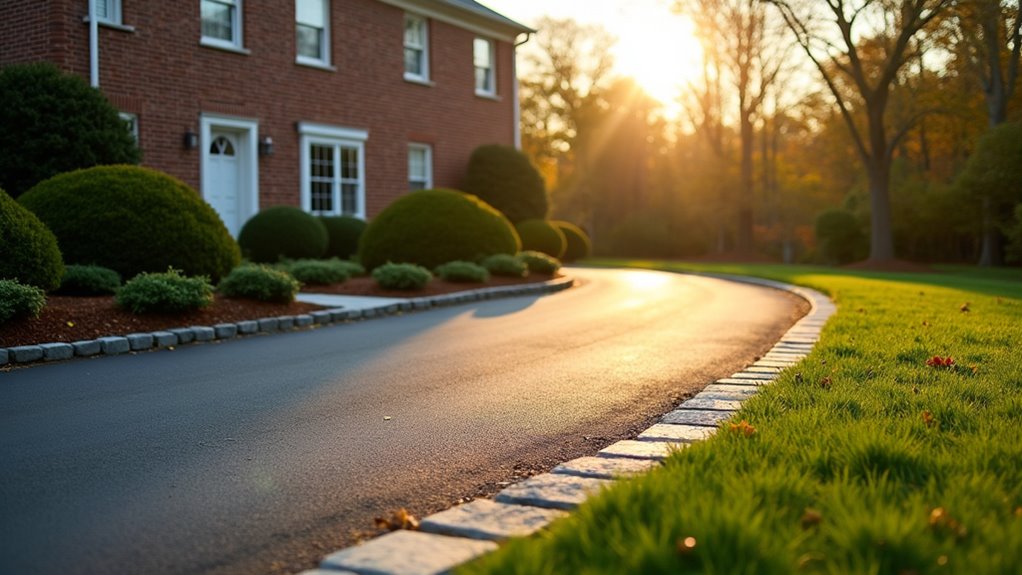
Belgian block curbs work best along driveways, walkways, patios, garden beds, and anywhere you need a durable, defined edge between two different surfaces. Along asphalt or concrete, a properly installed curb supports pavement edges and reduces crumbling. On gravel drives, it contains loose aggregate and marks the boundary.
Belgian block curbs create a durable, defined edge, supporting pavement, reducing crumbling, and keeping gravel neatly contained.
At the street entrance, you can build a block apron for a more substantial transfer onto your property.
Around walkways, paths, and patios, the blocks outline paved areas cleanly. In garden beds, they hold soil and mulch in place and give you a clear, consistent mowing line.
Where your driveway meets landscaped areas at a slightly different grade, a low block edge helps manage the change. If you’re designing for a historic or old-world look, they’re an especially good fit.
How do block curbs handle drainage and plowing
Block curbs handle drainage through careful grading and a supporting base, and they handle plowing by giving operators a durable, visible edge.
For drainage, set the curb height against the surrounding surface grades so runoff moves away from pavement edges, structures, and planting beds rather than pooling behind the blocks. A compacted crushed-stone base under the curb supports the blocks and can aid drainage, which helps limit shifting.
For plowing, granite’s resistance to vehicle wear and harsh weather is an advantage, and the curb gives operators a durable, visible edge to follow. Exposed height matters: one environment source cites about 4 inches as a residential preference, not a universal standard. Check the joints periodically after winter, since they’re the part most likely to need occasional attention.
Is block curbing the right call for your property
Block curbing is the right call if you want a durable, traditional granite edge and can accept higher installation work and cost. You’ll get an edge that resists vehicle wear and harsh weather, but you’ll also need excavation, a compacted base, and careful alignment. Evaluate these factors before committing:
- Surface type: Block curbs support asphalt edges, contain gravel, and hold soil and mulch, so they suit driveways, walkways, and garden beds.
- Budget and labor: Expect more installation work and cost than lightweight edging. Trenches typically run 8 to 12 inches deep, and some designs require a concrete footing.
- Design goals: If you want a historic or old-world appearance with natural-stone joints, granite blocks deliver it.
When durability and appearance outweigh upfront cost, block curbing is a sound long-term choice.
Add a Durable Granite Edge to Your Property
VF Paving provides paving and hardscape services for homeowners looking to create durable, defined edges around driveways and other outdoor areas. Belgian block curbs can frame asphalt, contain gravel, separate landscaping, and create a substantial border around entrances and walkways. Contact (203) 624-2449 to discuss your project and get an estimate.
Frequently Asked Questions
Why Are They Called Belgian Blocks if Most Aren’t From Belgium?
You’re right that the name doesn’t guarantee Belgian origin. Today, “Belgian block” describes a product type: individual, usually rectangular granite blocks or setts, often about 5 × 5 × 9 inches. A commonly repeated account links the name to historic European paving stones, but you should treat that as unverified. When you’re specifying blocks, focus on granite type, dimensions, and format rather than origin.
Are Belgian Blocks the Same Thing as Cobblestones or Granite Setts?
Often, yes. You’ll see suppliers use “Belgian block” for granite cobblestones or setts, so the terms overlap. They aren’t standardized, though, because block sizes and shapes vary by supplier. When you order, don’t rely on the name alone. Specify the format you need, such as regulation blocks (about 5 × 5 × 9 inches), jumbo, or cube. Then confirm dimensions before you plan trench depth and alignment.
What Colors and Surface Finishes Are Available for Belgian Block Curbs?
Here’s what you can count on: the blocks are granite, and their sizes and shapes vary by supplier. You’ll find regulation blocks around 5 × 5 × 9 inches, plus jumbo and cube formats. When you request samples, ask about available stone tones and textures before you finalize your layout.
Can Reclaimed or Salvaged Belgian Blocks Be Reused for New Curbing?
Yes, you can typically reuse salvaged Belgian blocks, since granite’s durability lets them withstand weather and traffic, though the sources here don’t address reclaimed stock directly. Inspect each block for cracks, and expect size variation, because dimensions differ by supplier. You’ll still need proper excavation, a compacted crushed-stone base, string-line alignment, and suitable jointing. Sort blocks by height so your exposed curb, often about 4 inches residentially, stays visually consistent.
Should Belgian Block Curbs Be Sealed or Cleaned to Prevent Staining?
You won’t find sealing or stain-prevention guidance in the cited sources, so treat sealing as an optional step. They describe properly installed granite block curbing as durable, weather-resistant, and low-maintenance, though you’ll occasionally need to inspect and repair joints. If you’re considering sealing, verify product compatibility with granite and your jointing material first. For routine care, clean debris from joints and keep grading directing water away from the curb line.