
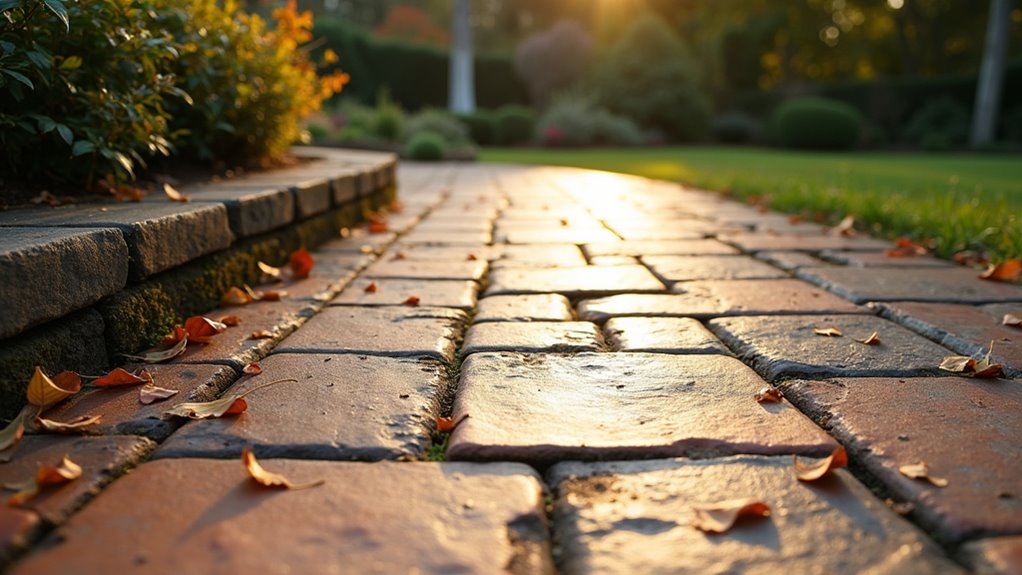
A stamped concrete driveway gives you the look of stone, brick, or wood for $10 to $14 per square foot, or $20+ for detailed multicolor work. With a 6-inch slab over a stable base, it’ll handle vehicles for 20 to 25 years. But tires, salt, and plow blades wear down the sealer, so you’ll reseal every 2 to 5 years. Cracks also interrupt the pattern and stand out. Here’s how to weigh durability, winter exposure, cost, and upkeep.
Key Takeaways
- Stamped concrete driveways typically cost $10 to $14 per square foot for basic patterns, rising past $20 for detailed multicolor designs.
- A properly installed slab at least 6 inches thick over a stable base supports vehicles and lasts about 20 to 25 years.
- Thinner pours, soil movement, heavy loads, and freeze-thaw cycles cause cracks that interrupt the pattern and are difficult to hide.
- Sealer resists oil stains but wears under tires, requiring resealing every 2 to 5 years, more often in harsh winters.
- Road salt and plow blades damage the finish, and glossy sealer becomes slippery when wet or icy, especially on slopes.
What should you expect from a stamped concrete driveway
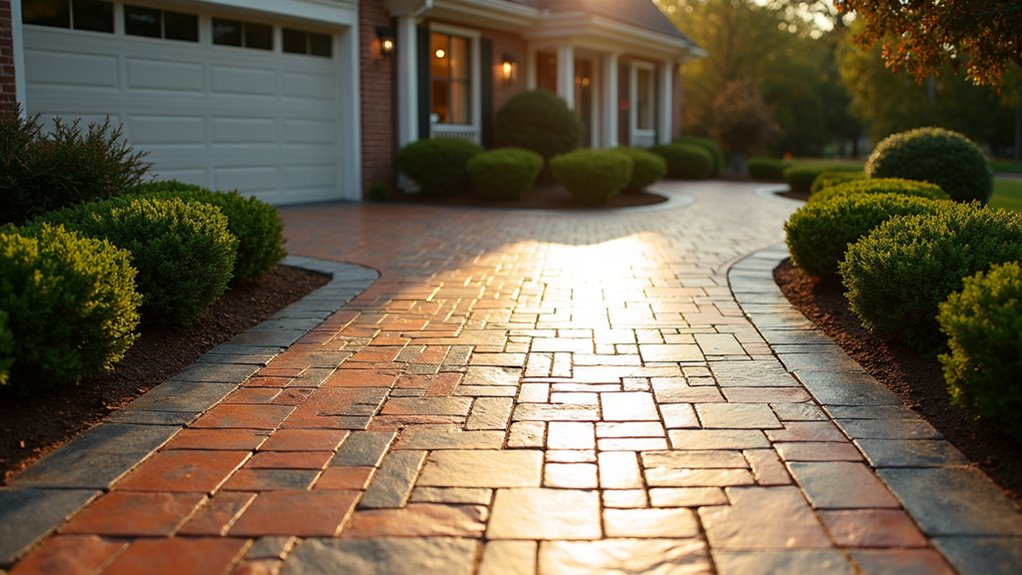
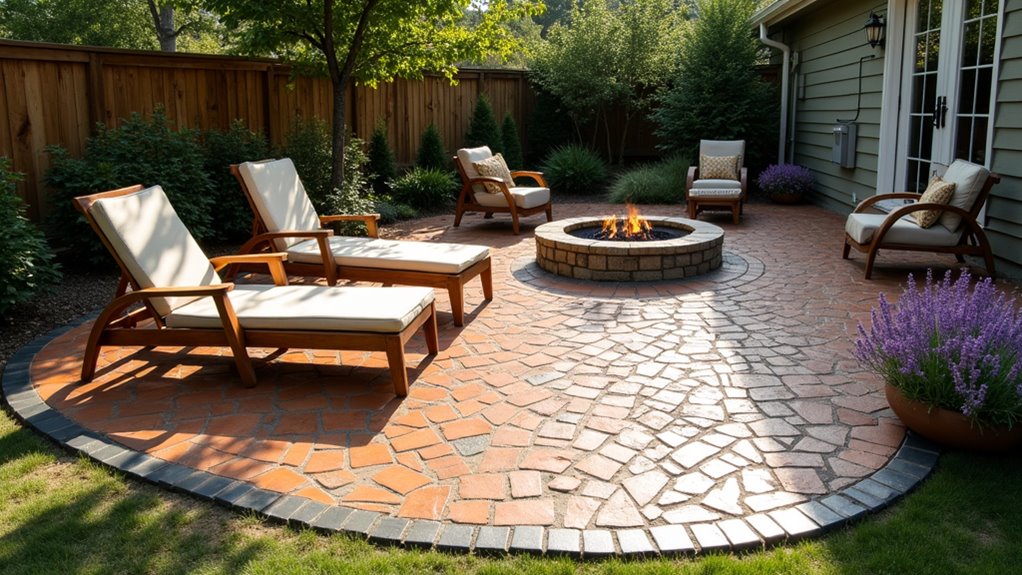
Expect a continuous poured slab that mimics stone, brick, cobblestone, or wood at a lower cost than most pavers or natural stone, typically $10 to $14 per sq. ft. for basic stamping and $20 or more for multicolor, detailed work. Plan for a slab at least 6 inches thick over a stable, well-graded base. With proper installation and maintenance, stamped concrete driveways can last 20 to 25 years. You’ll reseal every 2 to 5 years, clean oil promptly, and limit de-icing salts. Cracks will still happen. Joints guide them but can’t prevent them, and patches rarely blend with weathered color. Among the stamped concrete driveway pros and cons to weigh, slipping on slopes is one, so choose a low-gloss, textured sealer to reduce it, and hire an experienced installer.
What are the pros and cons for a driveway specifically
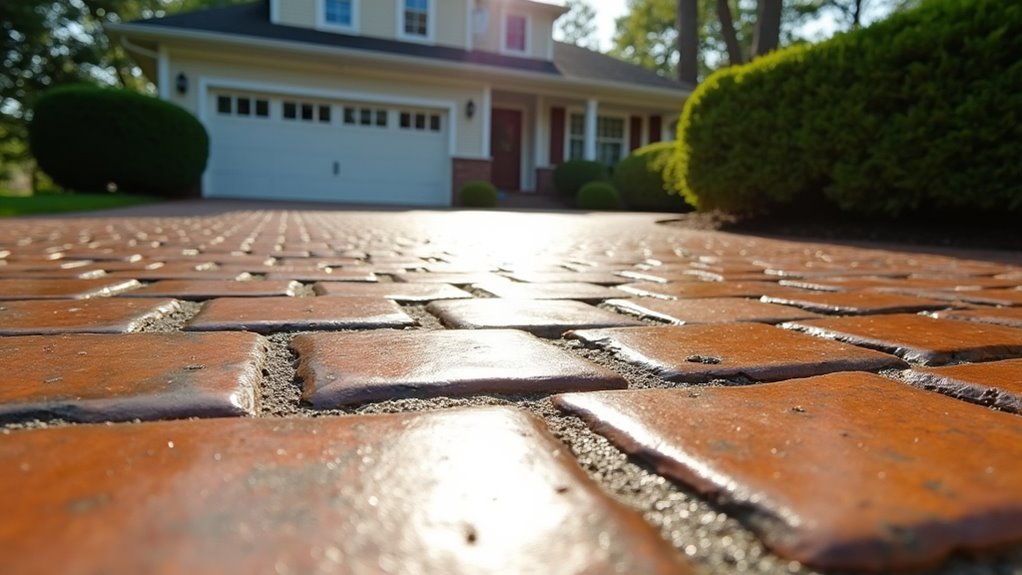
For a driveway, stamped concrete’s main pros are that a 6-inch slab handles vehicles, sealer resists oil stains, and a continuous slab has no loose pavers in winter. Its main cons are that thinner pours crack under weight, tires wear sealer faster, and salt and plow blades damage the finish. A driveway puts stamped concrete under harder conditions than a patio or walkway: vehicle loads, tire scuffing, oil drips, and, in cold climates, plowing and road salt tracked in from the street. Your slab’s thickness, base, and sealer matter more here than pattern choice.
| Factor | Pro | Con |
|---|---|---|
| Load | 6-inch slab handles vehicles | Thinner pours crack under weight |
| Surface | Sealer resists oil stains | Tires wear sealer faster; reseal every 2 to 5 years |
| Winter | Continuous slab has no loose pavers | Salt and plow blades damage finish |
Weigh the visual payoff against repair reality. A crack or patch across a high-traffic driveway is hard to hide in a stamped pattern. Choose a textured, low-gloss sealer for traction on slopes, and budget roughly $6,400, $8,960 for a basic two-car driveway.
How well does it hold up to vehicles
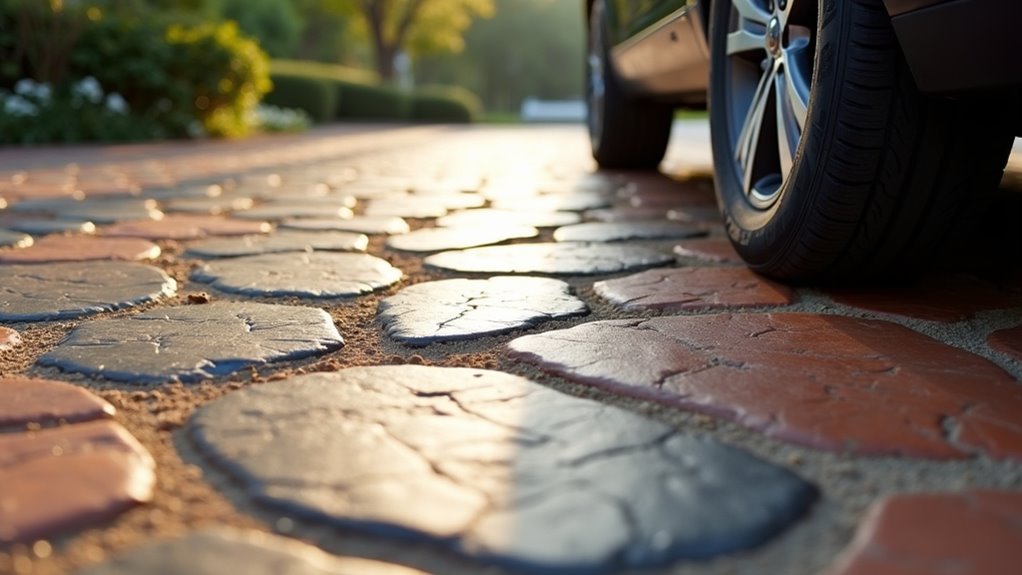
Stamped concrete holds up well to everyday cars, SUVs, and pickups when it’s built on a stable base at the right thickness, and it can last more than 20 years, with some estimates putting service life near 25. For vehicle loads, you’ll want a slab at least 6 inches thick, a compacted sub-base, and reinforcement suited to your site. Don’t drive on it until it’s adequately cured.
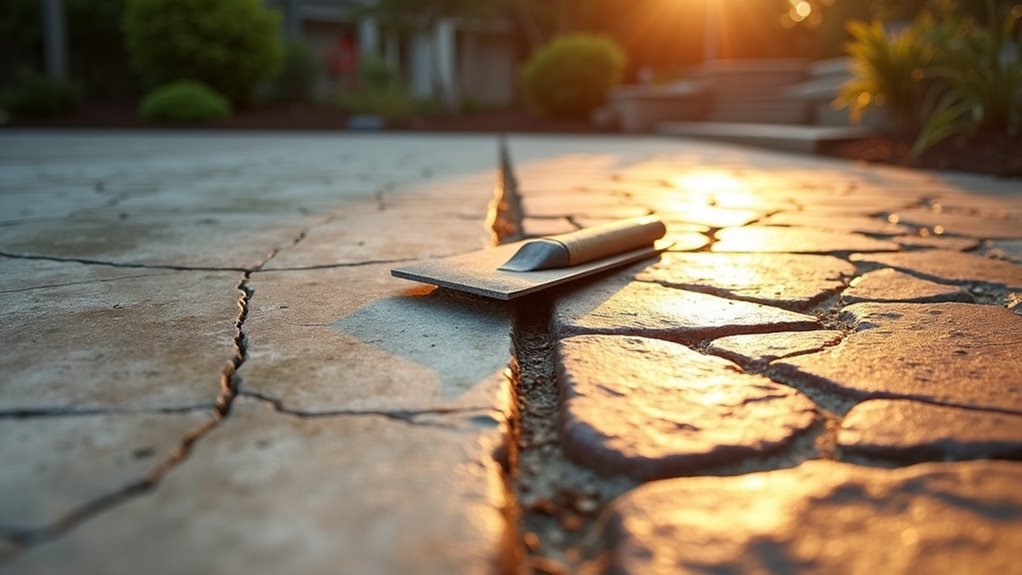
Concrete can crack from soil movement, heavy loads, freeze-thaw cycles, or poor preparation. Well-planned joints guide cracks but can’t eliminate them, and on stamped surfaces, a crack interrupts the pattern and stands out. Wipe up oil promptly to limit staining, avoid de-icing salts, and reseal every 2 to 5 years so the sealer keeps protecting the surface from moisture and weathering.
How does winter and road salt affect it
Winter freeze-thaw cycles and road salt are the biggest threats to a stamped driveway. Water that seeps into the surface expands as it freezes, stressing both the concrete and its sealer. De-icing salts compound the damage, attacking the sealer first and then the slab beneath it. The risk is greatest where winters bring repeated freeze-thaw cycles.
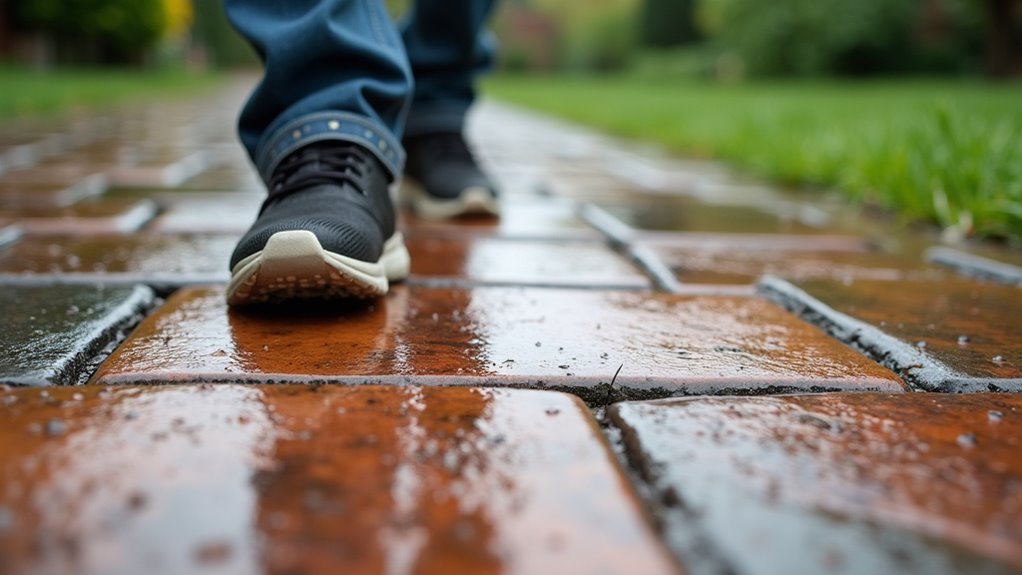
Your best defense is a well-maintained seal. Reseal every 2 to 5 years, leaning toward the shorter interval if you face harsh winters or heavy salt exposure. Skip de-icing salts on the driveway itself, and rinse off salty slush your car tracks in from treated roads. Keep drainage working so water doesn’t pool and refreeze. A glossy sealer gets slippery when wet or icy, especially on a slope, so choose a finish with adequate traction.
How much does a stamped concrete driveway cost
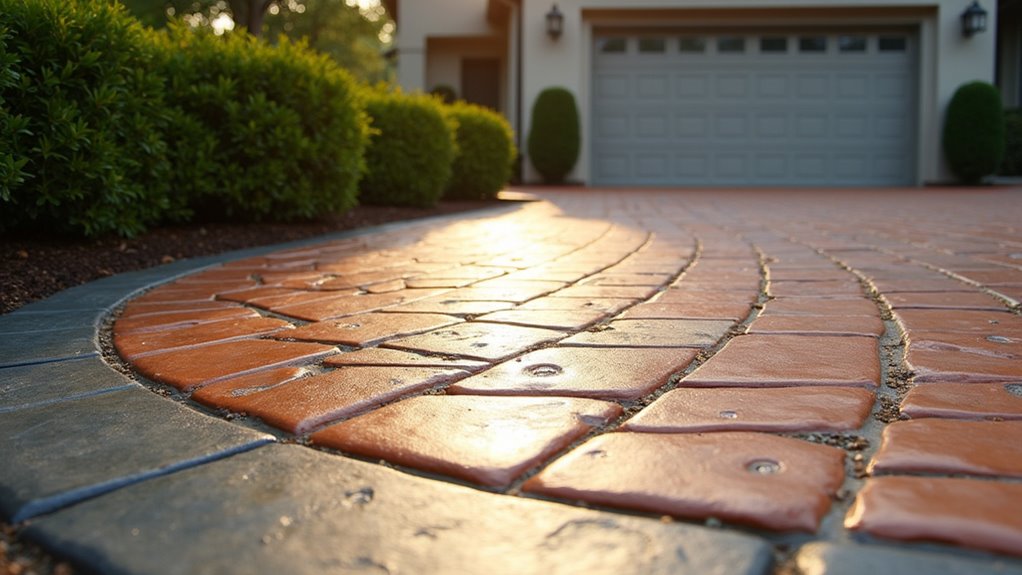
A stamped concrete driveway costs about $10 to $14 per square foot installed for basic stamped concrete, with detailed, multicolor finishes reaching $20 or more. Some estimates run $12 to $28, depending on your region and job scope. A typical 640-square-foot two-car driveway costs roughly $6,400 to $8,960 at the basic rate, before site-specific extras. Your price climbs with multiple colors, intricate patterns, borders, extensive base work, and higher local labor rates. Don’t skimp on thickness to save money. Vehicle loads call for at least 6 inches. Budget for resealing every 2 to 5 years, too. Stamped concrete costs more than plain concrete but less than most brick, paver, or natural-stone options. When reviewing bids, ask contractors to itemize base preparation, reinforcement, coloring, and sealing so you’re comparing equal scopes.
What upkeep does the driveway need
A stamped concrete driveway needs regular cleaning, prompt spill cleanup, and resealing every 2 to 5 years to protect the sealer, which shields color and texture from moisture, stains, and fading. This is more upkeep than plain concrete requires, but the routine is simple.
- Sweep and wash regularly: Remove dirt and debris before they grind into the pattern.
- Clean oil spills promptly: Fast cleanup reduces permanent staining.
- Reseal every 2 to 5 years: Climate, traffic, and sealer type determine your interval.
- Skip harsh chemicals and de-icing salts: Both degrade the sealer and can damage concrete, especially through freeze-thaw cycles.
- Choose traction-friendly finishes: Glossy sealers get slippery when wet, particularly on sloped driveways, so ask about anti-slip additives.
Inspect for cracks and worn sealer each season. Addressing problems early protects the surface and keeps repairs less noticeable.
Is a stamped concrete driveway right for your home
A stamped concrete driveway is right for your home if you want the look of stone or brick without paying paver prices and you’ll accept its upkeep and repair limits. Budget roughly $10 to $14 per sq. ft. for basic patterns and $20 or more for detailed finishes; a 640-sq.-ft. driveway runs about $6,400 to $8,960 before extras. Plan to reseal every 2 to 5 years, and expect cracks to stand out because they interrupt the pattern. Patches rarely blend after sun and traffic weather the surface. If you live with harsh freeze-thaw cycles and road salt, or your site drains poorly, weigh those risks carefully. Hire an experienced installer who specifies a 6-inch slab, stable base, proper grading, and planned joints, and you’ll get 20-plus years of service.
Upgrade Your Driveway With a Decorative Concrete Finish
A stamped concrete driveway can combine a more customized appearance with the strength of concrete. V&F Paving offers concrete driveway installation with decorative and stamped finish options for Connecticut homes. Call (203) 624-2449 or get a driveway estimate to discuss the size, layout, and finish you have in mind.
Frequently Asked Questions
Can Stamped Concrete Be Applied Over My Existing Concrete Driveway?
Not with traditional stamping. You can only stamp concrete while it’s fresh and workable, so your cured slab won’t take a pattern. You’d either pour a new stamped slab or ask a contractor about a stamped overlay system. Before choosing, have them inspect your driveway, since existing cracks, settling, or poor drainage can show through or undermine new work. If you repour, plan for at least six inches of concrete for vehicle loads.
Does a Stamped Concrete Driveway Increase My Home’s Resale Value?
It can help, but don’t count on a guaranteed return. Stamped concrete’s color and texture usually boost curb appeal over plain concrete, giving your exterior a stronger first impression. Value holds only if you reseal every 2 to 5 years and avoid conspicuous cracks, which interrupt the pattern and make patches tough to blend. At $10 to $14 per sq. ft., you’re paying more than plain concrete but less than pavers or stone.
Do I Need a Permit to Install a Stamped Concrete Driveway?
It depends on where you live, so check with your city or county building department before you pour. Many jurisdictions require permits for new driveways, widened driveways, or curb cuts into public right-of-way, and some regulate drainage and impervious surface. Since a sealed stamped slab won’t absorb water, you’ll need grading that sheds runoff away from your home. Your HOA may require approval too. A reputable contractor usually pulls permits.
Can I Add Heating Elements Under a Stamped Concrete Driveway?
Yes, you can, but you’ll need to plan it before the pour. Installers typically fasten electric cables or hydronic tubing to the reinforcement or base, then place concrete over them, so you can’t easily retrofit later. Coordinate stamping, joint layout, and slab thickness with the heating design to avoid damage. You’ll reduce de-icing salt use, which helps protect your sealer. Confirm costs and permit needs with your contractor and electrician.
How Do I Choose a Qualified Stamped Concrete Contractor?
Choose a contractor who’s completed stamped driveways, not just patios, and ask to see jobs that are several years old. You’ll want specifics: a stable compacted sub-base, at least 6-inch slab thickness, reinforcement, joint layout, and drainage away from the house. Ask which sealer they’ll use, how they’ll handle slip resistance, and when you’ll reseal. Get itemized written bids, and avoid crews who downplay cracking or how hard repairs blend.