
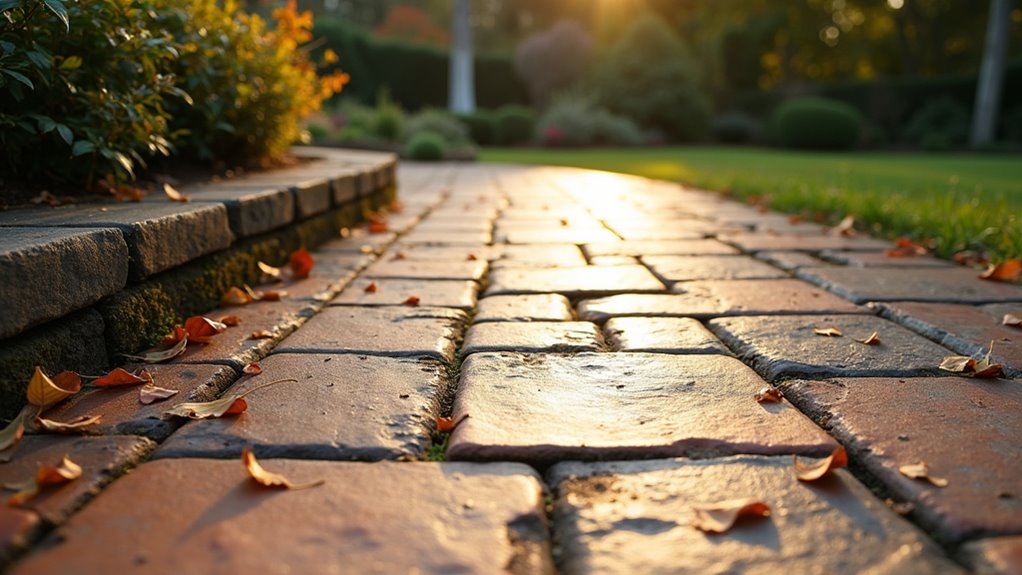
Yes, stamped concrete can get slippery, especially when it’s wet. You’ll face the most risk with high-gloss or wet-look sealers, or thick coats that fill the texture your shoes grip. Algae, oil, and dirt also create slick patches. Slopes, steps, and pool decks need extra care. You can restore traction with a matte sealer, thin coats, and a non-slip grit additive. Below, you’ll find how finishes compare and what keeps your surface safer underfoot year-round.
Key Takeaways
- Stamped concrete can be slippery, especially when wet, with risk depending more on surface condition and sealer than stamp pattern.
- High-gloss, wet-look, or over-applied sealers create smooth films that fill textured channels and significantly reduce wet traction.
- Contaminants like dirt, oil, algae, and mold form slick patches, so regular cleaning helps maintain safer footing.
- Adding non-slip grit, such as silica, polymer beads, or aluminum oxide, to thin sealer coats improves traction but doesn’t eliminate risk.
- Slopes, steps, and pool decks carry the highest slip risk and should be tested for wet traction after resealing.
Is stamped concrete slippery
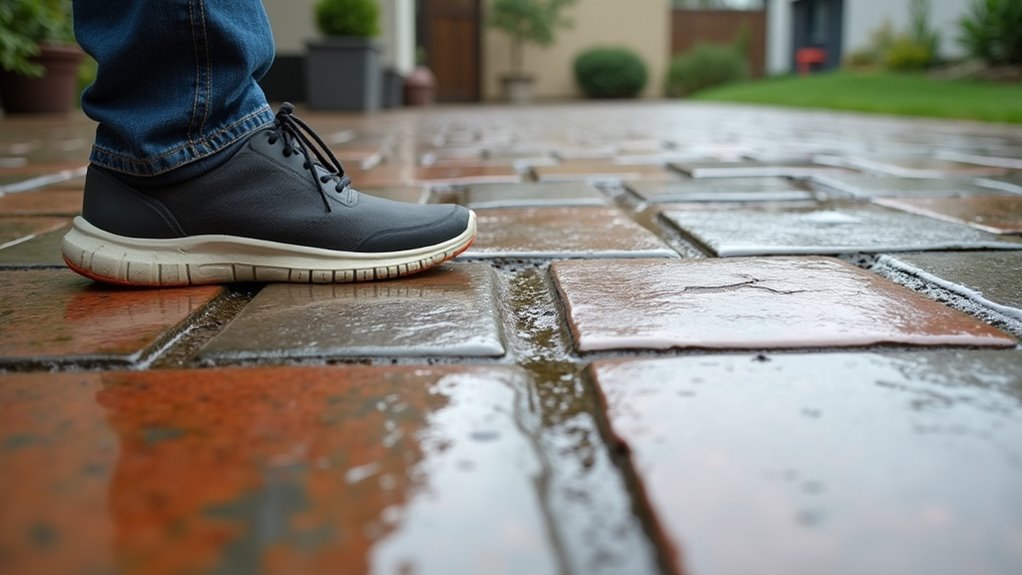
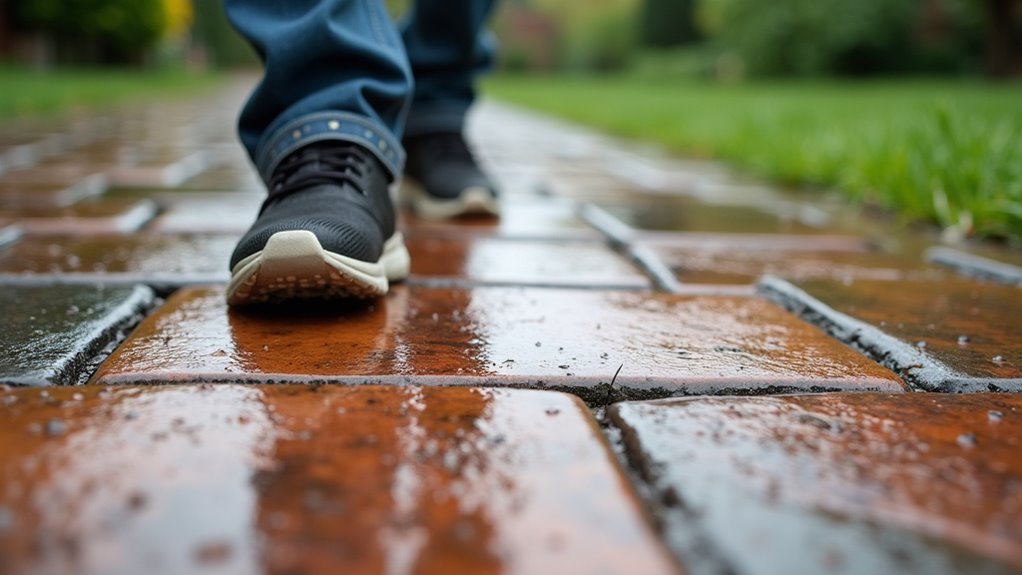
Yes, stamped concrete can be slippery, especially when it’s wet and coated with a smooth, glossy, or over-applied sealer, but it isn’t slippery by default. Its texture and channels can give you traction, but a thick, film-forming sealer coats that texture and cancels much of its grip. Water, algae, mold, oil, and ice make things worse. On a stamped concrete walkway or stamped concrete sidewalk, you’ll face the highest risk on slopes, steps, and areas that stay wet. Don’t judge safety by the stamp pattern alone. Slip resistance depends on pattern depth, sealer thickness, and surface condition. The NFSI 101-A standard reportedly defines high-traction surfaces at a wet static coefficient of friction of 0.6 or higher, so test your own surface wet.
How does traction compare across finishes
Stamped concrete offers moderate to high wet traction with a matte sealer, but a high-gloss sealer drops it to low to moderate, so it falls between broom-finished and smooth surfaces. Its traction depends on pattern depth, channel spacing, and sealer choice, so you shouldn’t assume it’s automatically safe on wet patios.
| Finish | Wet Traction | Key Factor |
|---|---|---|
| Broom-finished | High | Coarse texture grips |
| Stamped, matte sealer | Moderate to high | Pattern depth, channel spacing |
| Stamped, high-gloss sealer | Low to moderate | Film buries texture |
| Smooth or polished | Low | Minimal surface texture |
The NFSI 101-A standard treats a wet static coefficient of friction of at least 0.6 as high-traction. Remember that finish alone doesn’t prove slip resistance. Clean off algae, oil, and dirt, and watch pool decks, slopes, and steps, where water collects and grip drops fastest. Test your actual surface under wet conditions before deciding.
Why does stamped concrete get slippery when wet
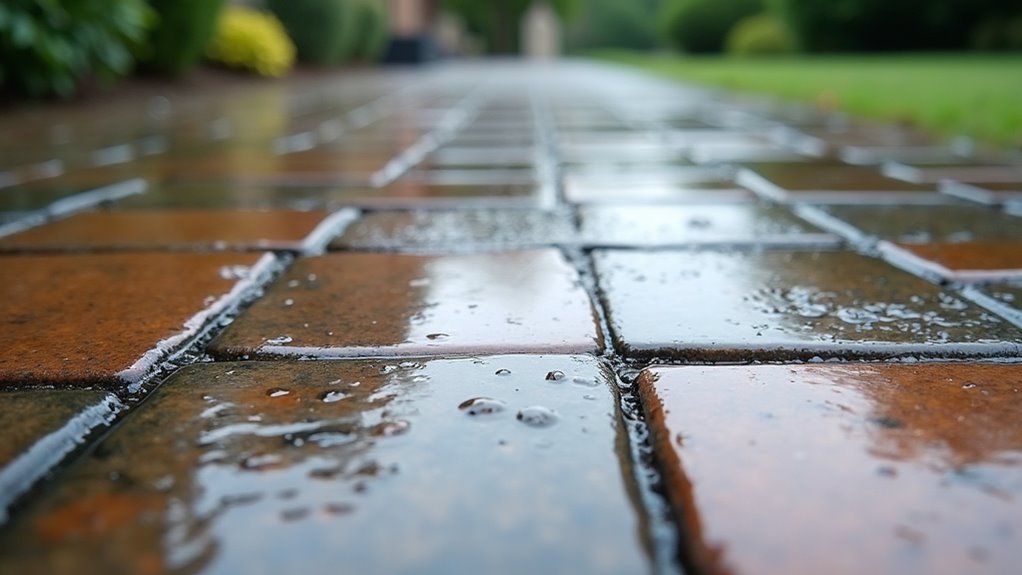
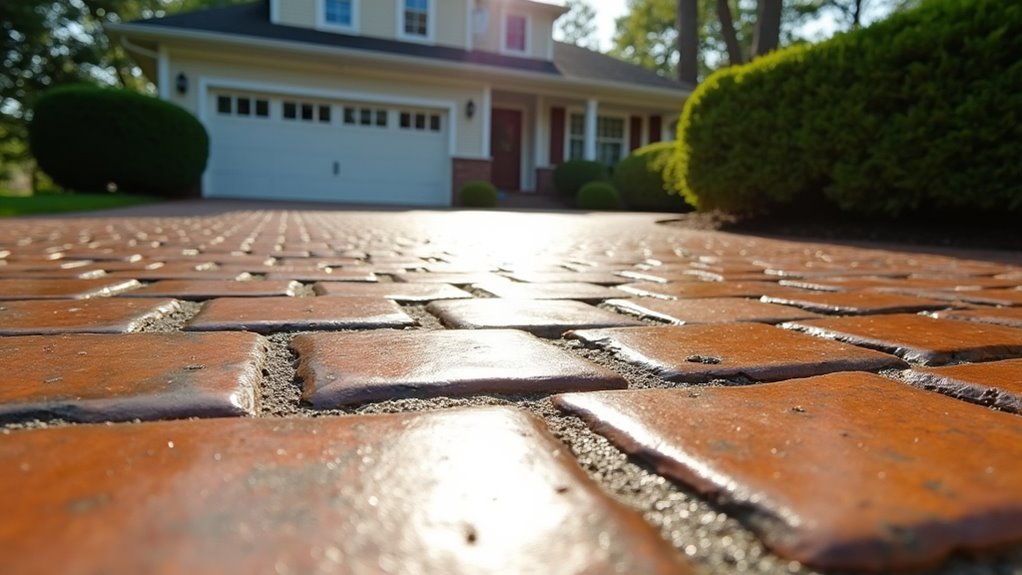
Stamped concrete gets slippery when wet mainly because of what’s on its surface, not the concrete itself. A thick, film-forming sealer coats the stamped texture, filling the channels that would otherwise give your shoes traction. High-gloss and wet-look sealers carry the most risk, and if you’ve applied sealer too heavily, water collects on that smooth film and creates a slick layer underfoot.
Surface contaminants make it even worse. Dirt, oil, algae, and mold form slick patches, especially in shaded or damp spots. Snow and freezing conditions cut your traction further.
Pattern matters too: shallow or widely spaced channels give you less grip than deep, closely spaced ones. Pay close attention to pool decks, sloped walkways, and steps, where water regularly sits or runs off.
How does a non-slip sealer additive help
A non-slip sealer additive restores traction by putting texture back on a surface that a film-forming sealer has smoothed over. You mix fine grit, typically polymer beads, silica, or aluminum oxide, into a compatible sealer. As the coating cures, those particles stay suspended in the film and create small peaks that give your shoes something to grip, even when water sits on the surface.
To get results, choose an additive the sealer manufacturer approves and follow their mixing and application directions. Stir often so the grit doesn’t settle, and apply thin coats to avoid glossy buildup. Test a small area first. Remember that an additive improves traction, but it doesn’t make your patio or pool deck categorically non-slip. Check grip under wet conditions afterward.
How does texture and finish change grip
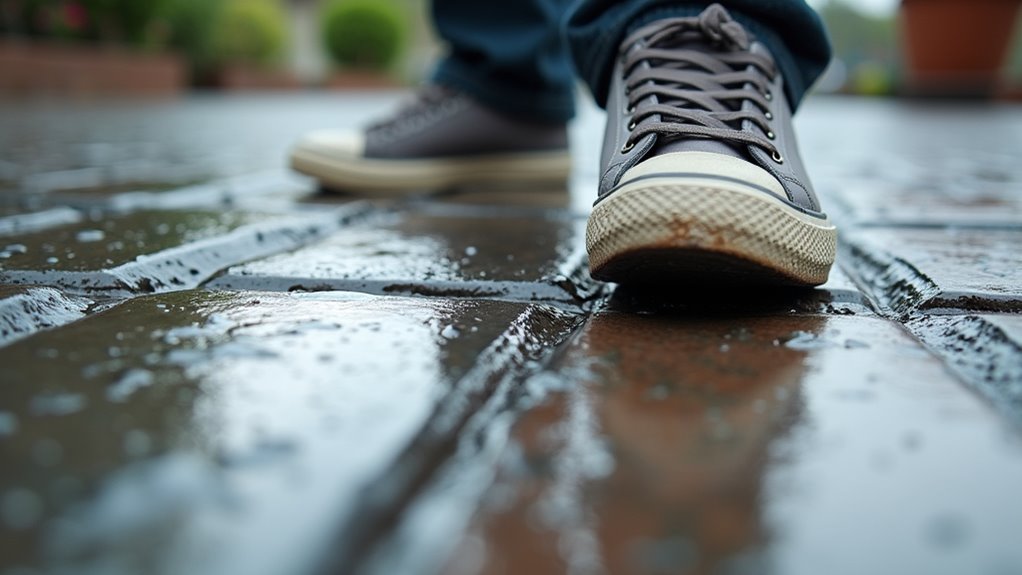
Texture adds edges for your shoes to grip, and the finish determines whether those edges stay exposed. Stamped patterns create channels that can outperform smooth concrete, but traction depends on the depth and arrangement of the pattern, so a stamp doesn’t guarantee slip resistance. Closely spaced channels usually grip better, and a broom finish offers more traction than a smooth one.
A thick, film-forming or high-gloss sealer coats the texture and can turn it slick when water collects. Matte or satin finishes look less glossy, but appearance alone won’t tell you the surface is safe. If you’re sealing a pool deck, slope, or step, apply thin coats, avoid buildup, and test the surface wet. Aim for NFSI’s 0.6 wet friction benchmark.
Where does slipperiness matter most
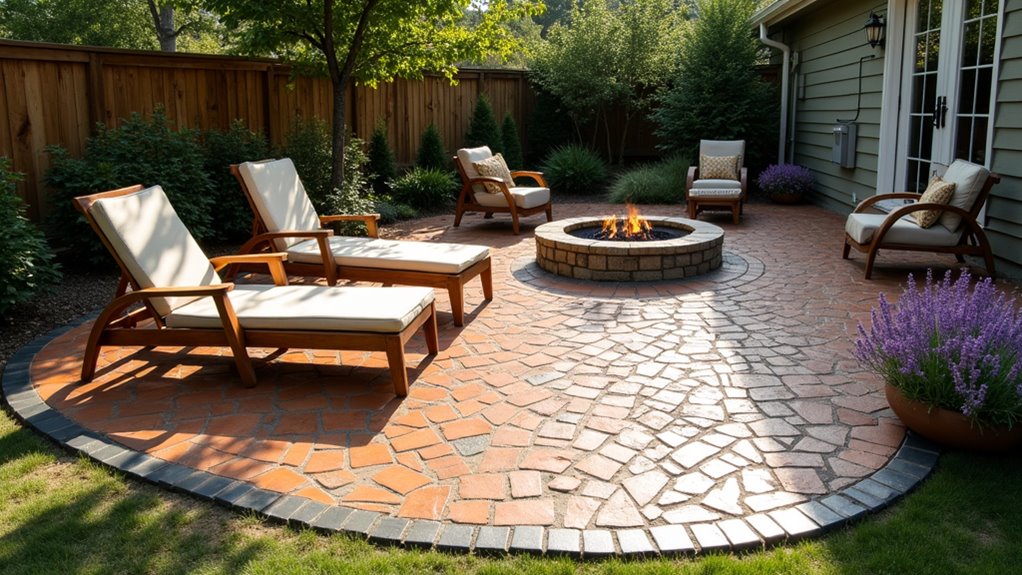
Slipperiness matters most on pool decks, sloped walkways, driveways, and steps, where water, slope, and foot traffic overlap. Pool decks top the list. They stay wet, you’re often barefoot, and a glossy sealer can turn textured stone patterns slick. Sloped walkways, driveways, and steps come next. Gravity adds force to every misstep, and water drains across these surfaces rather than evaporating.
Watch shaded patios and north-facing paths, too. They hold moisture longer, so algae and mold can form slick patches. Entries near downspouts, sprinklers, or outdoor kitchens collect water, dirt, and grease. In cold climates, snow and ice reduce traction on any finish.
Inspect these zones closely after cleaning or resealing. If you’re unsure about grip, test the surface while it’s wet. The stamp pattern alone won’t tell you how slippery it is.
How do you make stamped concrete safer underfoot
Make stamped concrete safer underfoot by applying sealer correctly, adding grit, and keeping the surface clean. Most slick stamped concrete traces back to the sealer, so choose a product suited to your concrete and its use, follow the manufacturer’s directions, and don’t apply film-forming sealers too thickly. Heavy coats bury the stamped texture and turn wet areas glossy and slick.
To add grip and keep it:
- Mix in a grit additive: Blend fine polymer, silica, or aluminum-oxide particles into a compatible sealer, but don’t treat the result as non-slip.
- Test first: Apply your sealer or additive to a small area to check compatibility, appearance, and traction.
- Clean regularly: Remove dirt, oil, algae, and mold before they form slick patches.
After resealing, check steps, slopes, and pool decks when wet. Watch for glossy buildup or uneven coverage, and reassess traction whenever you change products.
Plan a Safer Walkway or Patio Surface
Traction matters most on surfaces exposed to rain, snow, and frequent foot traffic. V&F Paving installs concrete walkways, patios, and hardscape surfaces with the layout, drainage, and finish considered as part of the overall project. Call (203) 624-2449 or contact V&F Paving to discuss a safer outdoor surface.
Frequently Asked Questions
How Often Should Stamped Concrete Be Resealed to Maintain Traction?
There’s no fixed resealing interval in the guidance, so you should follow your sealer manufacturer’s reapplication instructions. Don’t reseal on a calendar alone. Inspect for glossy buildup, uneven coverage, and slick spots on wet areas, slopes, and steps. You’ll lose traction if you over-seal, so apply thin coats. After each resealing, test a small area wet, and consider mixing in a compatible slip-resistant additive like aluminum oxide for extra grip.
Can an Existing Slippery Sealer Be Stripped From Stamped Concrete?
You’ll typically use a stripper compatible with your sealer type, then scrub and rinse it from the stamped channels. Test a small area first, since harsh methods can damage texture or color. After stripping, apply a thin, lower-gloss sealer with a slip-resistant additive, then check traction under wet conditions before you walk on it.
Does Stamped Concrete Become More Slippery as It Ages?
It can, though age itself isn’t usually the cause. Your stamped concrete gets slicker when repeated resealing builds up a glossy film over the texture, or when dirt, oil, algae, and mold collect in shaded or damp spots. You should inspect wet areas, slopes, and steps, clean off contaminants, and watch for uneven sealer coverage. After resealing, test traction on a small area first, and consider adding a grit additive.
Is Stamped Concrete More Slippery Than Pavers or Natural Stone?
Not necessarily; you can’t rank stamped concrete against pavers or natural stone by material alone. Traction depends on surface texture, channel pattern, sealer thickness, and gloss. A deeply textured stamp with a thin matte sealer can grip well, while a high-gloss, over-applied sealer can make any surface slick when wet. You’ll need to remove algae, oil, and dirt. For your pool deck or walkway, test traction on-site under wet conditions.
What Footwear Works Best on Wet Stamped Concrete Surfaces?
Choose shoes with soft rubber soles and deep, closely spaced tread; they’ll grip stamped channels better than hard, smooth soles or worn-out treads. Avoid leather soles and flip-flops on pool decks and slopes. Footwear can’t fix a slick surface, though. If you’ve got glossy sealer buildup, algae, or oil, you’re still at risk. Clean those patches, consider a grit additive in your sealer, and test traction yourself when it’s wet.