
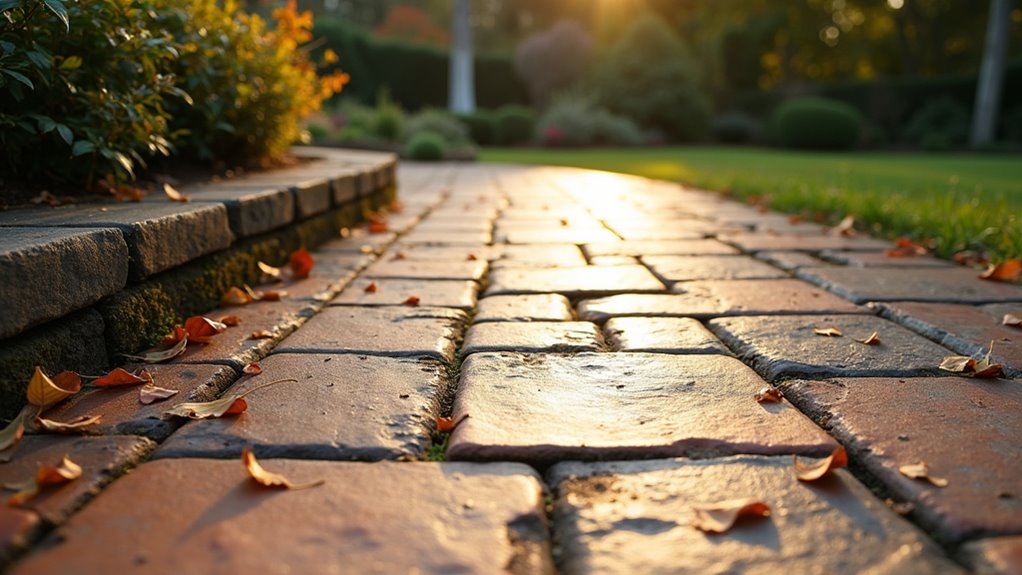
For a standout stamped concrete patio, you’ll want to pair a pattern with your home’s style. Ashlar slate’s staggered blocks mimic cut stone, random flagstone blends into gardens, and herringbone brick suits classic exteriors. Choose a base color, then add a darker release agent so the texture pops. Charcoal reads modern and hides stains, while cream keeps bare feet cooler. Seal it to protect the color. Next, you’ll see which finishes and layouts fit your space.
Key Takeaways
- Popular patterns include ashlar slate, random flagstone, herringbone brick, cobblestone, and wood plank, each suited to different architectural styles.
- Charcoal tones read modern and hide stains, while cream bases reflect heat and keep the surface cooler underfoot.
- A darker release agent over a lighter base color settles into low spots, highlighting stamped texture and adding depth.
- Texture skins create seamless stone-like surfaces, while patterned stamps cut defined joints resembling individual stones, bricks, or planks.
- Sealer protects and preserves color, and should be reapplied every two to five years, with non-skid additives recommended for wet areas.
What are the best stamped concrete patio ideas
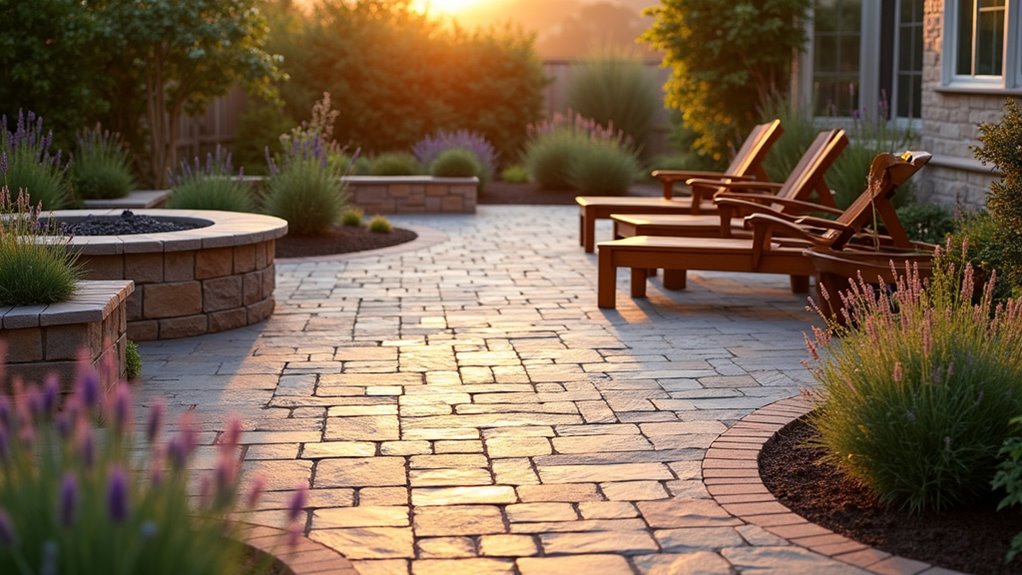
The best stamped concrete pattern for your patio is the one that matches your architecture. Ashlar slate’s staggered rectangular blocks mimic cut natural stone, while random flagstone’s irregular shapes create an organic look. Brick or herringbone suits classic exteriors, and angled layouts add visual movement. Cobblestone’s small, rounded impressions deliver a European feel. Wood plank stamps reproduce grain and grooves without rot, warping, or annual staining. Choosing the perfect pattern involves weighing the upsides and downsides of each option. For example, while cobblestone adds charm, it may be more challenging to maintain than a simple wood plank design.
Pair the pattern with stamped concrete patio colors. Charcoal reads modern and disguises stains, cream reflects heat, and terracotta suits Mediterranean designs. A two-tone combination, such as dove gray with charcoal release, emphasizes texture. Stamped concrete finishes complete the look: dry-shake hardener intensifies color, contrasting borders frame the perimeter, and sealer protects the surface. Well-planned stamped concrete patios balance style, durability, and budget.
How do popular patterns and colors compare
Popular patterns differ in scale, joint lines, and color behavior, so compare these on your stamped concrete patio before committing to choose between patterns that look alike on a sample board. Slip concerns explained can help you identify potential issues before they arise. Understanding the nuances of each pattern can save you both time and money.
| Pattern | Best Color Pairing | Visual Effect |
|---|---|---|
| Ashlar slate | Dove gray with charcoal release | Staggered cut-stone depth |
| Random flagstone | Desert tan with walnut release | Organic, irregular edges |
| Wood plank | Buff or sandstone | Grain without rot or staining |
Patio stamped concrete colors shift your design’s feel. Charcoal looks modern and hides surface stains, while cream reflects heat and keeps bare feet noticeably cooler. Terracotta suits Mediterranean homes. If you want stamped texture to pop, add a darker release agent over the base color. Dry-shake hardener gives you more intense color and a denser surface than integral pigment alone does.
Which stamp patterns work best for a patio
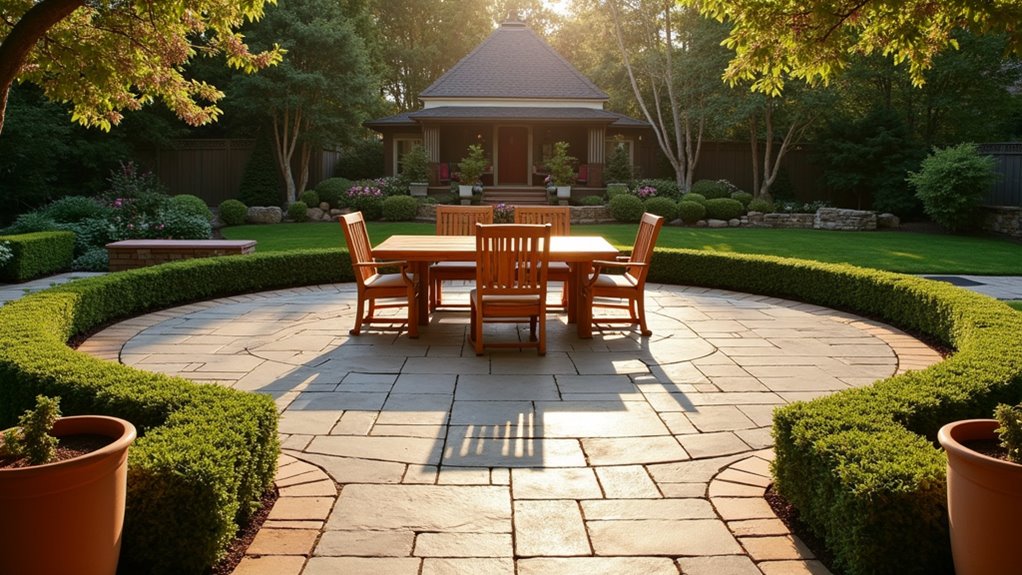
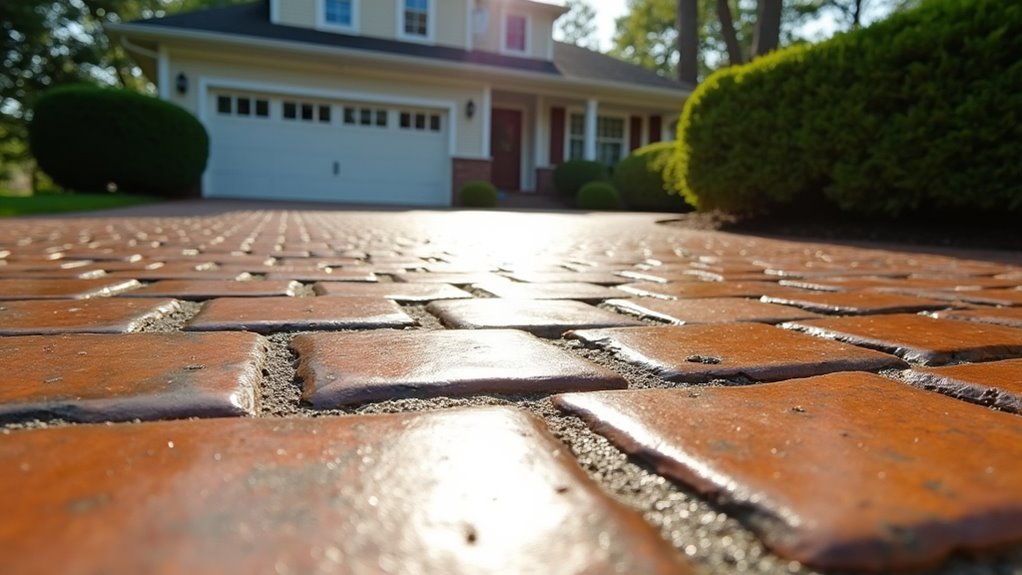
The best stamp patterns for a patio are ashlar slate, random flagstone, brick or herringbone, cobblestone, and wood plank, and your home’s architecture and the surface texture you want underfoot should guide which one you choose. Ashlar slate’s rectangular, staggered blocks mimic cut stone and suit structured, modern layouts; pair them with a contrasting release color to deepen the joints. Random flagstone’s irregular shapes give you an organic look that blends with gardens and natural landscaping. Brick or herringbone impressions complement classic exteriors, and angled layouts add visual movement. Cobblestone’s small, rounded impressions create a traditional European feel. Wood plank stamps reproduce grain and plank-width grooves without rot, warping, splintering, or annual staining. If you’d rather skip grout lines, use seamless texture skins for stone-like surfaces. Wherever your patio gets wet, add a non-skid additive so textured finishes stay safe for bare feet.
What colors and stains suit different homes
Match your patio color to your home’s architecture and how you’ll use the space. Buff and sandstone tones suit craftsman and colonial homes, while terracotta or brick red complements Mediterranean and traditional designs. Charcoal gives modern exteriors a sleek look and helps disguise surface staining. If your patio gets full sun, consider cream; it’s a warm, light base that reflects heat.
For more depth, pair a base color with a darker release agent. Desert tan with walnut or dove gray with charcoal highlights every groove and joint in the stamped texture. A contrasting border frames the perimeter and defines the space. Integral pigment colors the entire slab, while dry-shake hardener delivers more intense color and a denser, stronger surface.
What finishes change the texture and look
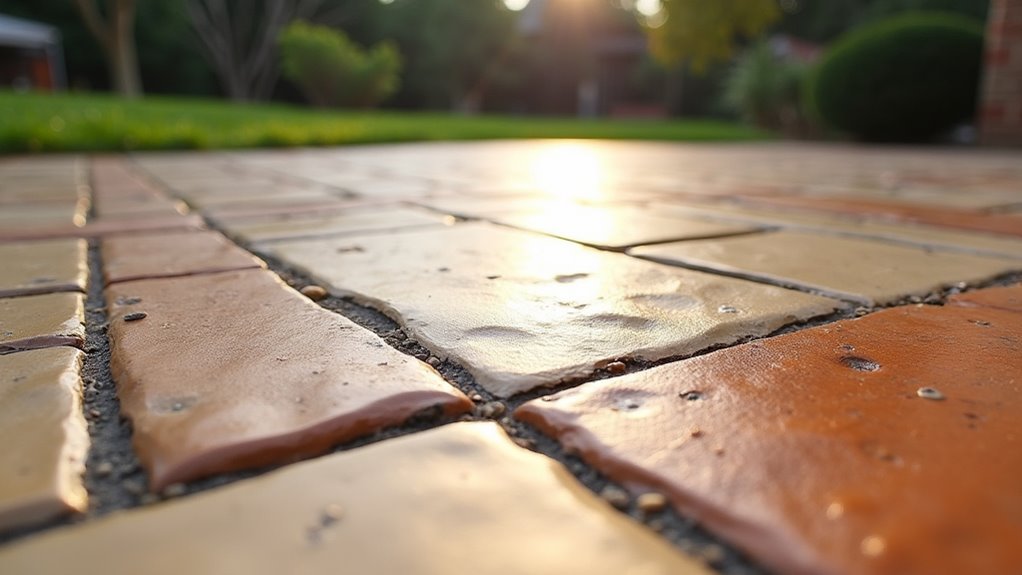
Texture skins, stamp patterns, color techniques, borders, and sealers all change the texture and look of a stamped concrete patio. Seamless skins press stone-like texture into the concrete without distinct grout lines, so you’ll get the look of slate or granite across an unbroken field. Patterned stamps cut defined joints that read as individual stones, bricks, or planks. Each technique comes with its own benefits and drawbacks. While seamless skins offer a uniform appearance, they may lack the character found in patterned stamps. Conversely, patterned stamps provide distinct visual interest but can sometimes require more maintenance.
Color technique adds depth. A contrasting release agent settles into low spots and highlights the stamped relief, while a dry-shake hardener intensifies surface color and increases density. You can frame the patio with a contrasting border for a crisp, finished edge.
Sealer protects the surface and preserves its color, and its longevity varies by product and conditions. If your patio gets wet often, consider adding a non-skid additive for better traction.
How do you tie the patio into your landscape
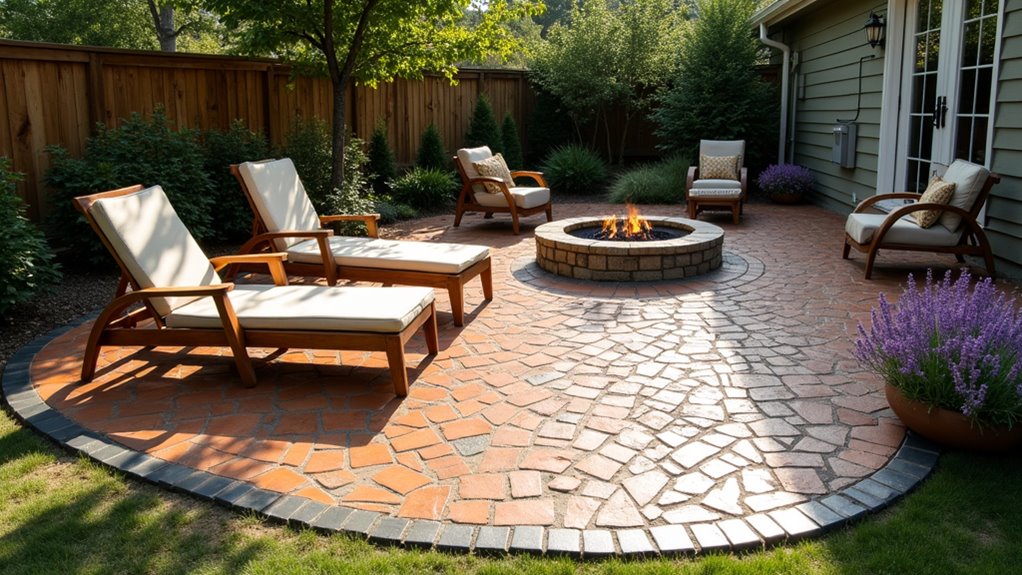
Tie the patio into your landscape by matching its pattern and color to your home’s architecture and the surrounding hardscape, so the slab reads as part of the site, not an add-on. Pair buff or sandstone tones with craftsman and colonial homes, terracotta or brick red with Mediterranean designs, and charcoal with modern exteriors. Choose random flagstone where planting beds and lawn edges curve, since its irregular shapes blend easily into natural surroundings. Use ashlar slate or herringbone near straight walls and walkways to echo crisp lines. Add a contrasting border to frame the perimeter and shift smoothly into surrounding turf or gravel. Repeat existing stone or brick colors through a release agent, such as walnut over desert tan, so the patio visually connects to nearby steps, garden walls, and paths.
What are the first steps to your stamped concrete patio
The first steps to a stamped concrete patio are measuring the patio area and setting a budget, since installation runs about $8 to $28 per square foot depending on coloring and design complexity. A 20-by-20-foot patio, for example, can cost $3,200 to $7,600.
Next, choose a pattern and palette that match your home: buff ashlar slate for a craftsman exterior, terracotta cobblestone for Mediterranean style, or charcoal wood plank for a modern look. Remember that borders, multiple colors, and custom inlays raise labor costs.
During contractor interviews, confirm a four-inch slab, ask where they’ll place control joints, and request a non-skid additive if the surface gets wet. Finally, budget for resealing every two to five years, especially if freeze-thaw cycles and deicing salts regularly hit your area.
Create a Patio That Fits the Rest of Your Property
The right stamped pattern, color, border, and surrounding hardscape can help a patio feel like a natural extension of the home. V&F Paving provides patio, walkway, concrete, and hardscaping services with multiple materials and finish options available. Call (203) 624-2449 or contact the team to start planning your patio.
Frequently Asked Questions
How Much Does a Stamped Concrete Patio Cost per Square Foot?
You’ll typically pay about $8 to $28 per square foot, depending on coloring and design complexity. A single pattern in one color, like buff ashlar slate, keeps you near the low end. You’ll climb toward the top when you add multiple colors, contrasting borders, intricate herringbone layouts, or custom inlays, since they demand more labor and material. For scale, one guide estimates a 20-by-20-foot patio at $3,200 to $7,600. Budget for resealing.
How Long Does a Stamped Concrete Patio Typically Last?
Your stamped concrete patio can last up to 25 years with proper installation and maintenance, and some sources estimate 25 to 50 years depending on care. You’ll extend its life by pouring a roughly four-inch slab, planning control joints, and resealing every two to five years to keep colors crisp and textures defined. Watch for freeze-thaw cycles and deicing salts; they can damage the surface, so you’ll want to patch cracks promptly.
How Often Should a Stamped Concrete Patio Be Resealed?
You’ll typically reseal your stamped concrete patio every two to five years, but exposure and sealer type set the exact interval. If your slab faces harsh freeze-thaw cycles or regular doses of deicing salts, you’ll lean toward the shorter end. Watch for dull, faded color or water that soaks in instead of beading. Gently clean the dusty surface first, then reseal to protect the finish and keep its color rich.
Can Freeze-Thaw Cycles and Deicing Salts Damage Stamped Concrete?
Yes, freeze-thaw cycles and deicing salts can damage your stamped concrete. When temperatures swing, you’ll want a protected surface, so keep your sealer fresh. Most guidance says you should reseal every two to five years, depending on exposure and sealer type. Clean gently to preserve the finish, and watch for cracks, fading, or surface damage. Act quickly, since repairs can be tricky to blend into slate textures or two-tone patterns.
Can Cracked or Faded Stamped Concrete Be Repaired to Blend In?
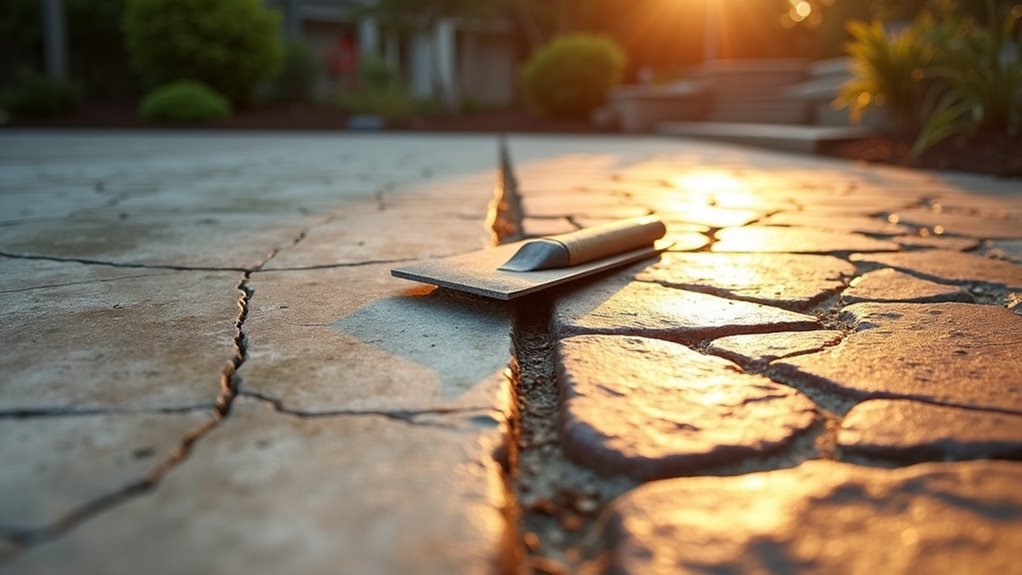
Yes, you can repair it, but don’t expect a perfect blend every time. You’ll patch cracks, restore faded color, and reseal the surface, yet matching the original texture and tone can be challenging. A patched seam may read lighter or flatter against a weathered charcoal or terracotta field. To keep repairs subtle, you’ll want to act promptly, reapply contrasting release color for depth, and reseal every two to five years.