
Yes, you can put stamped concrete over existing concrete, but only if your slab is sound and stable. A stamped overlay is a thin decorative layer, typically 1/4 to 3/4 inch thick, that bonds to your prepared slab. It won’t fix settlement, heaving, or wide active cracks, since that movement reflects right through. Hairline cracks and light crazing usually aren’t dealbreakers. Knowing which warning signs call for a full tear-out helps you choose the right fix.
Key Takeaways
- Stamped concrete can be installed over existing concrete if the original slab is structurally sound, stable, and free of active movement.
- A stamped overlay is a thin decorative layer, typically 1/4 to 3/4 inch thick, bonded to the prepared existing slab.
- Overlays improve appearance but do not repair structural problems like soil movement, settlement, or heaving.
- Hairline shrinkage cracks and light crazing usually aren’t dealbreakers, but wide or active cracks can split the stamped pattern.
- Extensive spalling, freeze-thaw damage, or hollow-sounding delaminated areas typically require tear-out and full replacement instead of an overlay.
Can you put stamped concrete over existing concrete
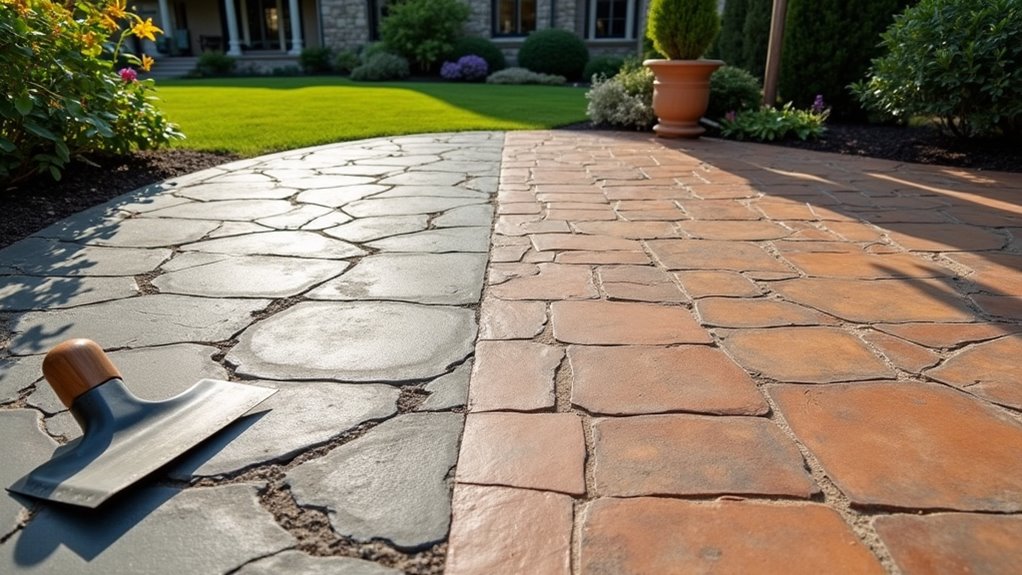
Yes, you can install a stamped concrete overlay over existing concrete, as long as the original slab is sound and stable. Whether your slab can support it is the real question. The overlay is decorative, not a structural repair. It won’t fix soil movement, settlement, or heaving. If your concrete has wide active cracks, extensive spalling, or freeze-thaw damage, you’ll likely need replacement instead.
You can stamp existing concrete both indoors and outside. Overlays work on patios, walkways, pool decks, and interior floors. Have a professional assess the slab to confirm it’s a good resurfacing candidate. That step saves you from costly, premature overlay failure.
How do overlay and full replacement compare
An overlay upgrades the appearance of a structurally sound slab without tearing it out, while full replacement makes sense when the slab can’t support resurfacing. An overlay is a decorative layer, typically 1/4 to 3/4 inch thick, bonded to prepared concrete.
| Factor | Overlay | Full Replacement |
|---|---|---|
| Best for | Sound slabs with minor defects | Severe cracking, settlement, or heaving |
| Structural fix | No; existing movement can reflect through | Yes, when soil issues are addressed |
| Key requirement | Thorough cleaning, repair, and profiling | Demolition, base work, and new pour |
Check for hollow-sounding areas, active cracks, and freeze-thaw damage. If you find them, an overlay won’t last, and cracks will reappear in the new surface. If the slab passes, an overlay saves demolition and delivers a crisp, durable stamped finish.
What is a stamped concrete overlay
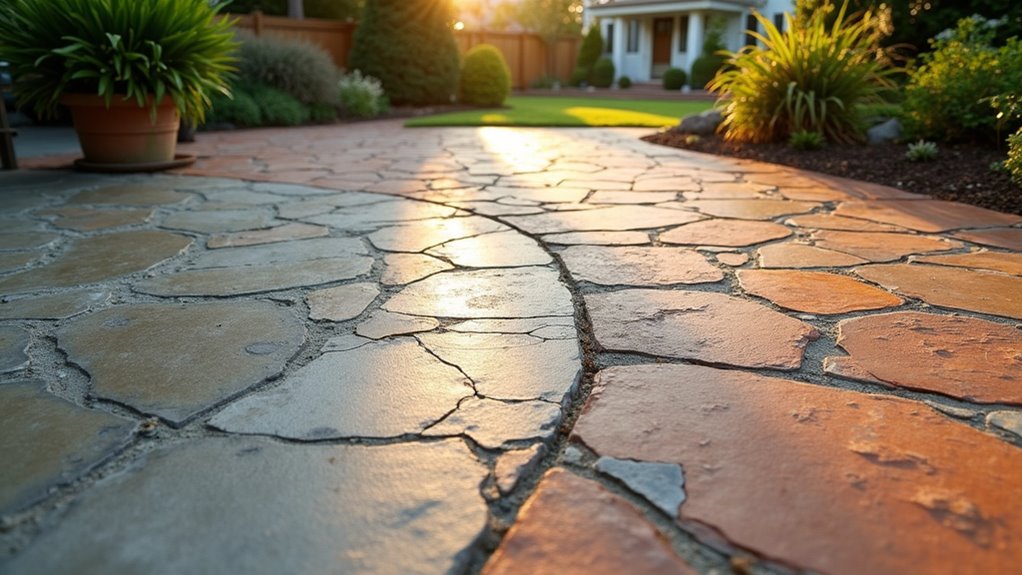
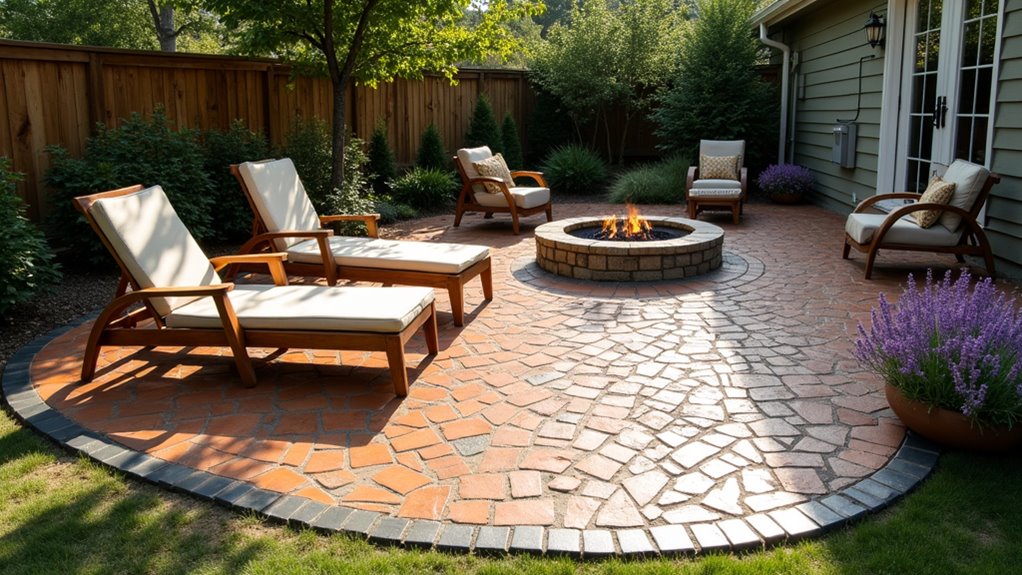
A stamped concrete overlay is a thin decorative layer, typically 1/4 to 3/4 inch thick, that’s bonded to an existing slab and imprinted with a pattern or texture while it’s still workable. It’s not a structural repair, so your slab must be sound first.
A properly installed overlay offers these benefits:
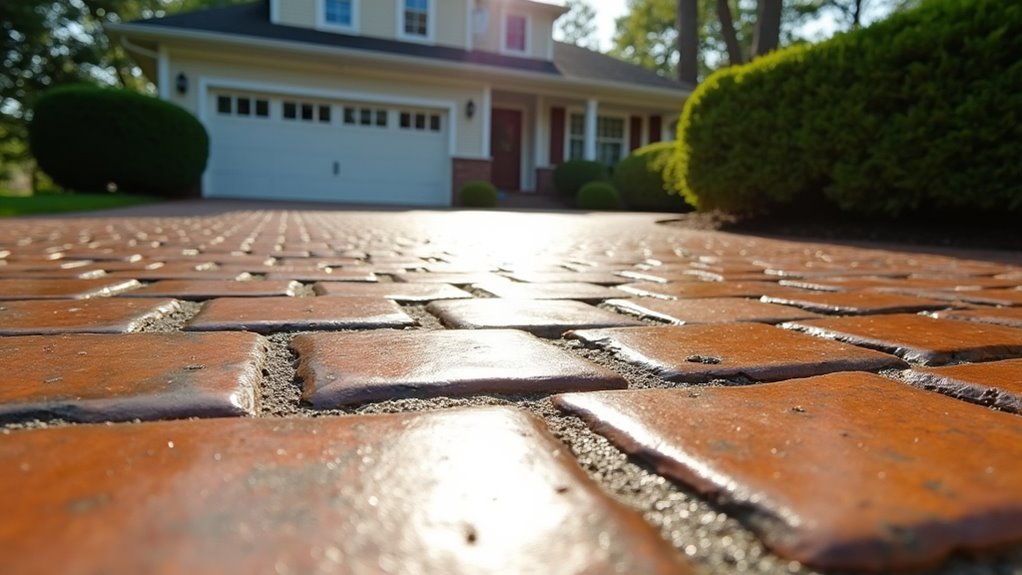
- Curb appeal you’ll love: stone, slate, or brick looks without tearing out your patio.
- Less mess and disruption: no demolition crews hauling debris from your yard.
- Versatility everywhere: it works on walkways, pool decks, and interior floors.
- Lasting protection: a sealer guards the surface and deepens its color.
Installers spread it evenly, stamp it at the right consistency, then cure and seal it. Choose pattern depth and thickness together for crisp detail.
When is the current slab solid enough to stamp on
Your slab is solid enough to stamp on when it’s stable, solid, and free of active movement.
Stamp only on a slab that’s stable, structurally sound, and free of active movement. Anything less will show through your new surface.
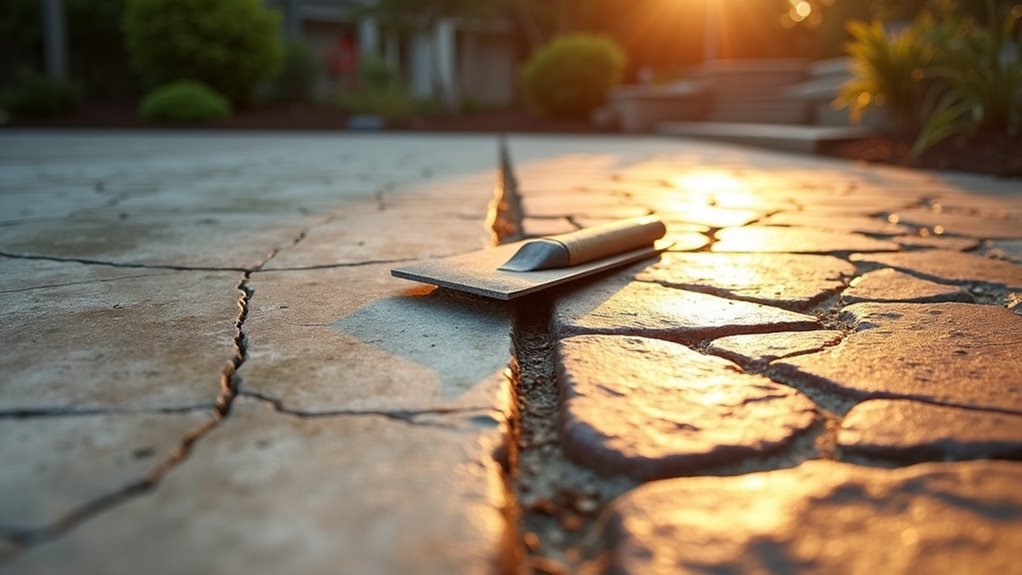
Walk the surface and look for wide or active cracks, uneven settlement, heaving, significant spalling, and delamination. Tap suspect areas with a hammer. Hollow-sounding or loose spots mean unsound concrete you’ll need to remove first.
Hairline shrinkage cracks and light crazing usually aren’t dealbreakers, since many overlay systems can cover them. Larger cracks need repair before you resurface.
If your slab is heaving, sinking, or breaking apart from freeze-thaw damage, an overlay won’t fix it. The movement will telegraph cracks right through the new surface. In that case, replacement is the smarter choice. When you’re unsure, get a qualified professional assessment.
When do you need to tear out and repour instead
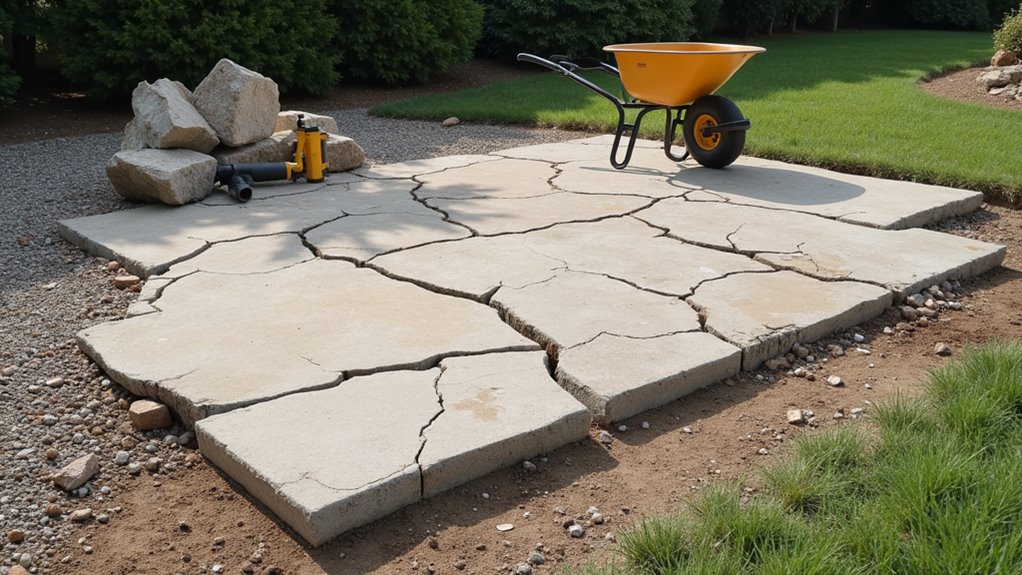
Tear out and repour when the problem sits in the slab or the soil beneath it rather than on the surface. An overlay is a decorative skin, not a structural fix, so it’ll only mirror whatever’s moving underneath. Replace the slab when you find:
- Wide or active cracks that keep growing and will split your new pattern within a season.
- Settlement or heaving that’s left sections uneven, creating trip hazards no stamp can level.
- Freeze-thaw damage or extensive spalling that’s crumbling the surface you’d be bonding to.
- Hollow-sounding or delaminated areas that’ll let your investment pop loose and flake away.
If you’re seeing several of these, don’t gamble on resurfacing. Get a professional assessment, correct the soil, and start fresh with a sound slab.
How durable is a stamped overlay over time
A stamped overlay holds up well to foot traffic, weather, and daily use on patios, walkways, and pool decks, provided it goes over a sound slab with thorough prep. Its long-term durability depends mostly on what’s underneath and how well the overlay bonds. Poor surface preparation is a common reason overlays fail, so don’t let your installer skip cleaning, repairs, or profiling. The overlay can’t stop the base slab from moving. If the slab shifts or existing cracks stay active, those cracks can reappear in the new surface. Joints also need proper treatment to limit reflective cracking. Protect the new overlay through the full manufacturer-specified curing period. Sealer protects the surface and enhances its color, and you can choose a finish from matte to high gloss.
How do you decide what your slab needs
You decide what your slab needs by inspecting the existing concrete honestly, because an overlay’s lifespan depends on the slab beneath it. Walk the surface, tap suspicious areas, and note every flaw. Then match what you find to the right path:
- Hairline shrinkage or crazing cracks: You’re in good shape. Clean, profile, and overlay with confidence.
- Minor spalling or isolated defects: Remove weak concrete, repair with compatible materials, then resurface.
- Hollow-sounding or delaminated areas: Don’t ignore them. Cut out the unsound concrete first, or your new surface will fail.
- Wide, active cracks, settlement, or heaving: Stop here. An overlay can’t fix soil movement or structural problems, so plan for replacement.
If you’re unsure which category fits, get a professional assessment before you invest in decorative work.
Find Out Whether Your Existing Concrete Can Be Reworked
Before planning an overlay or decorative finish, the existing slab needs to be checked for cracking, settlement, drainage problems, and structural deterioration. V&F Paving handles concrete paving, repairs, patios, walkways, and driveway projects and can help determine whether the current surface can be worked with or needs replacement. Call (203) 624-2449 or contact V&F Paving for an estimate.
Frequently Asked Questions
How Long Should You Stay off a New Stamped Overlay?
Stay off your new stamped overlay for the full curing period your overlay manufacturer specifies. There’s no universal number, because products and conditions vary. Check the product data sheet for separate foot-traffic, vehicle, and sealing timelines. Don’t rush it, or you’ll risk scuffing the imprint or damaging the surface. Once it’s cured, apply sealer to protect the surface and enhance color. Then let that sealer dry before you walk on it.
Can a Stamped Overlay Be Applied Over Concrete With Existing Sealer?
Not until you remove it. Existing sealer acts as a bond breaker, so the overlay won’t adhere and can delaminate. You’ll need to strip the sealer, along with paint, oil, or grease, then grind or profile the surface so it’s rough enough to grip the material. Next, repair cracks with compatible products and follow the manufacturer’s primer and bonding agent instructions. Skipping this prep is a common reason overlays fail.
How Thick Does a Stamped Concrete Overlay Need to Be?
You’ll typically apply a stamped overlay about 1/4 to 3/4 inch thick. Your stamp pattern drives the exact thickness, since deeper, more textured patterns need more material to keep the imprint crisp. Choose your overlay thickness and stamp design together, then spread the material at a consistent depth. Thickness won’t fix a weak slab, so you’ll still need sound concrete and thorough surface prep for a strong, durable bond.
What Happens to Control Joints When Stamping Over Existing Concrete?
You can’t simply bury control joints under a stamped overlay and forget them. Your existing slab still moves at those joints, and that movement can telegraph through as reflective cracks in your new surface. You’ll need to treat each control and expansion joint appropriately for your overlay system before stamping. Ask your installer how they’ll handle the joints, and confirm they’ll repair any moving or active cracks before work starts, too.
Can Stamped Overlays Be Installed Around Pool Decks Safely?
Yes, you can install a stamped overlay on a pool deck if the existing slab’s sound and stable. You’ll want to check for wide or active cracks, heaving, spalling, and freeze-thaw damage first, since an overlay won’t fix them. Thoroughly clean and profile the surface, repair defects, and treat joints properly to prevent reflective cracking. Protect it through the cure period, then seal it to guard the surface and color.