


You’ll use Belgian blocks, cut granite setts rather than rounded cobbles, to pave walkways, surface patios, and edge planting beds with crisp, durable lines. For walkways and patio borders, set regulation 5 × 5 × 9 in. blocks over compacted crushed stone. Switch to 4-inch cubes for tight curves and detailed accents. Keep tops level, joints consistent, and surfaces pitched away from buildings so water drains off. Below, you’ll find layouts, build steps, and finishes for each use.
Key Takeaways
- Belgian blocks are cut granite setts, typically 5 × 5 × 9 inches, offering clean lines for walkways, patios, and borders.
- Walkways are built over compacted crushed stone, with level tops and consistent joints for even footing.
- Patios can be fully paved or framed with Belgian blocks, pitched away from buildings to prevent water pooling.
- Borders can be set flat for mowable edging or upright as curbs, with mortar-set edges resisting shifting best.
- Use 4-inch cubes for curves and intricate patterns, and fill joints with sand, polymeric sand, or mortar.
How do you use belgium blocks for walkways, patios, and borders
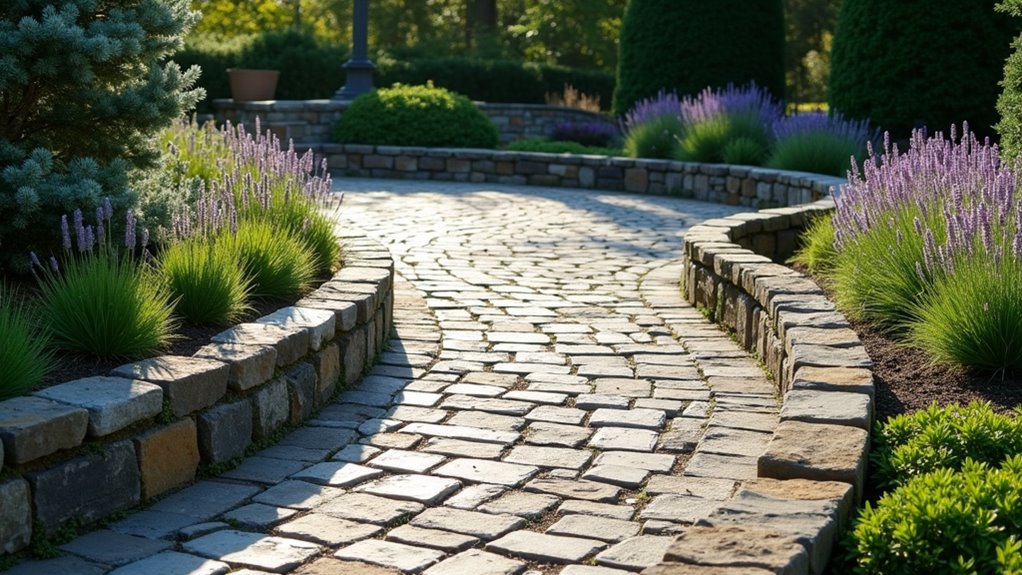
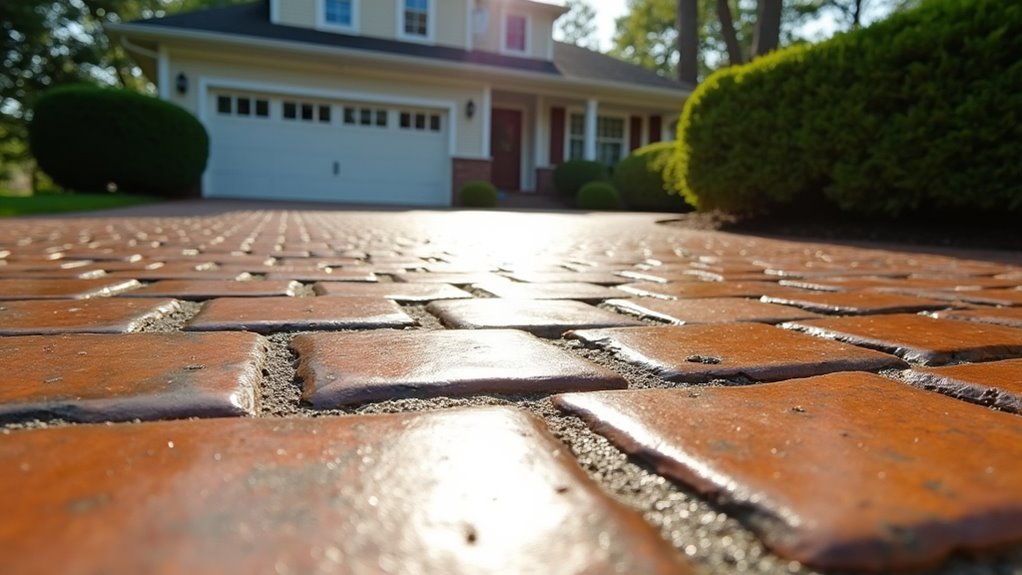
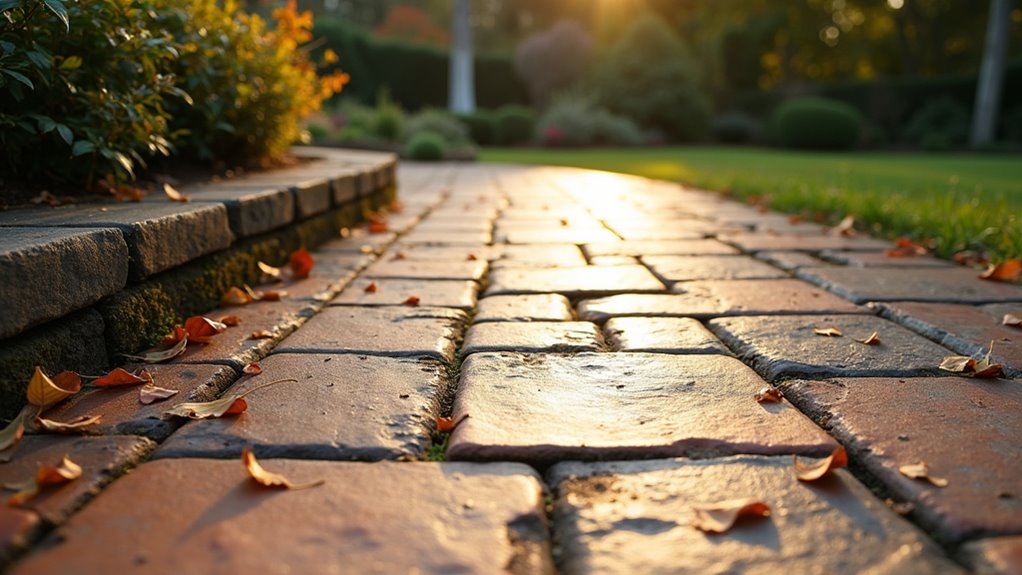
You use Belgian blocks to build full walkways, frame patios, and edge planting beds with clean, defined lines, since they are cut granite setts rather than rounded cobbles. For a belgium block walkway, you’ll typically lay regulation-size 5-by-5-by-9-inch blocks over compacted crushed stone, or choose 4-inch cubes for tight curves. Keep tops level and joints consistent for even footing. In a belgium block patio, you can use the granite as a perimeter frame, decorative band, or inset that contrasts with the main paving. For a belgium block border, set single or double rows flat for low edging or upright for a prominent curb that contains mulch and separates beds from lawn. Mortar-set edges typically resist shifting better than dry-set rows.
Which belgian block layouts suit each use
Regulation 5 × 5 × 9 in. blocks suit walkways and borders, while patios work with either regulation blocks or 4 × 4 × 4 in. cubes, and the best results come from matching block size and orientation to the job.
| Use | Recommended Block | Layout |
|---|---|---|
| Belgian block walkway | Regulation 5 × 5 × 9 in. | Full path or border around another paver |
| Belgian block patio | Regulation or 4 × 4 × 4 in. cubes | Framing bands, insets, transitions |
| Belgian block border | Regulation blocks | Single or double rows, flat or upright |
Use compact cubes where walkways curve or patterns turn intricate, since smaller units follow tight radii without wide joints. Set border blocks upright when you need a prominent curb that contains mulch or paving. Lay them flat for low, mowable edging. Keep tops level and joints consistent so every layout reads cleanly.
How do you build a belgian block walkway
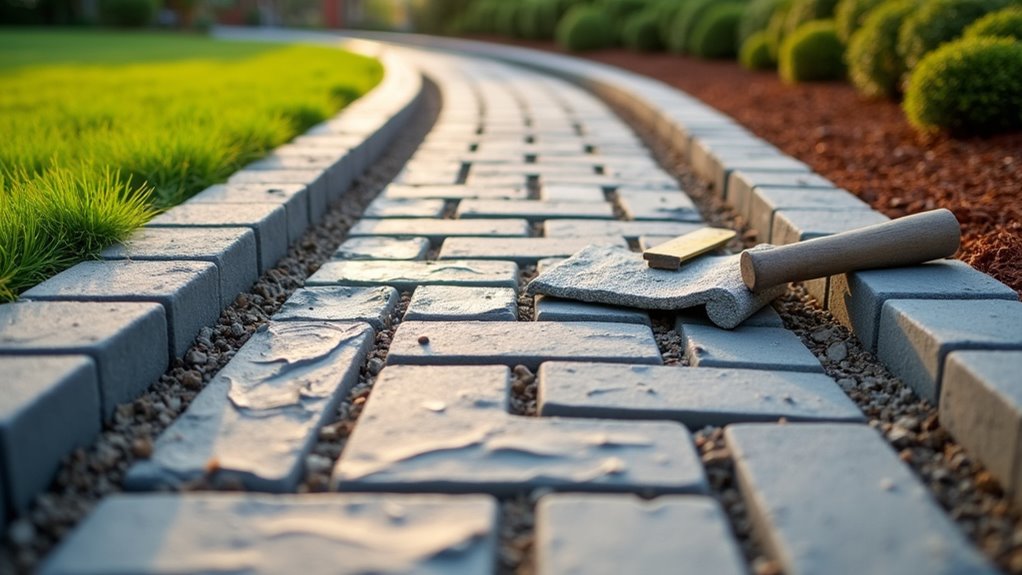
Build a Belgian block walkway by excavating a trench deep enough for the block and its foundation, compacting well-graded crushed stone in layers, setting the blocks on a sand, mortar, or concrete bed, and filling the joints.
Start by marking the path and running string lines to establish height, alignment, and slope. Pitch the surface away from buildings so water drains off rather than pooling. Compacting the base in layers gives you stable support and reduces shifting.
Choose your bedding based on the result you want. Sand creates a flexible installation, and mortar or concrete creates a rigid one. Check each block with a level to keep tops even and walking comfortable. Fill joints with sand or polymeric sand, then inspect them periodically for washout or movement.
How are the blocks used in a patio surface
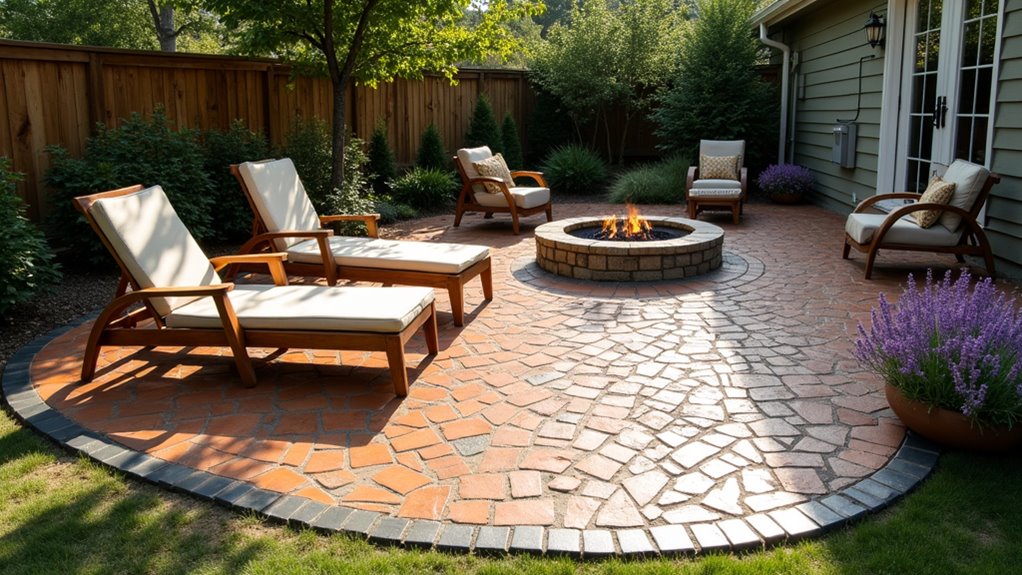
Belgian blocks are used in a patio surface to pave the entire area, frame the perimeter of another paving material, or form decorative bands and insets that break up a larger field. You’ll vary block size and layout to suit each role. Regulation 5 × 5 × 9-inch blocks give borders strong, clean lines, while compact cubes handle curves and tighter accents. Granite’s gray, charcoal, pink, and buff tones create natural contrast with surrounding pavers and planting. You can also extend the blocks to outline fire-pit surrounds or water features. Choose your joint material by installation method. Use sand or polymeric sand for a flexible system, and use mortar for a rigid one. Either way, pitch the surface away from buildings.
How do blocks frame garden and landscape beds
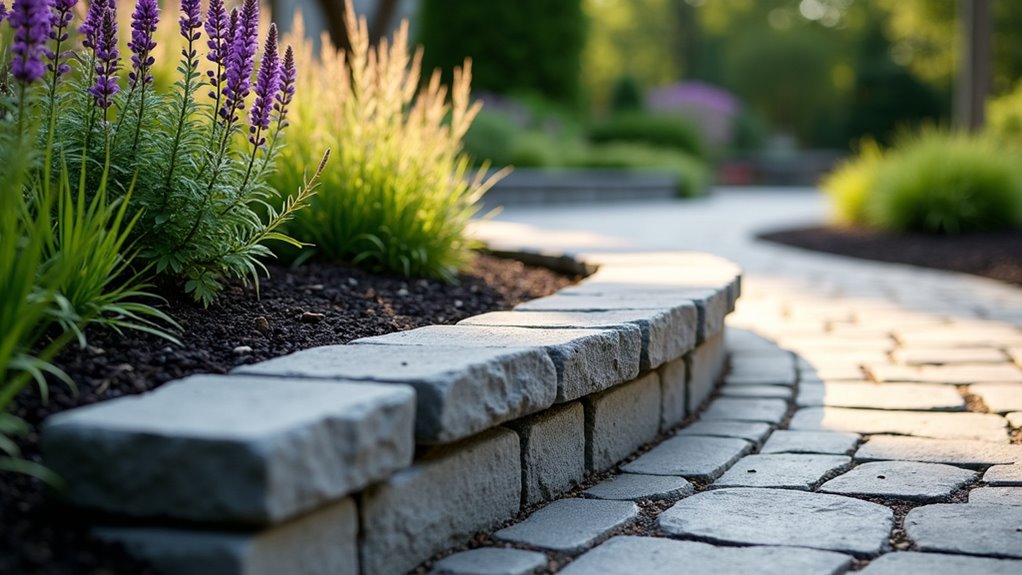
Granite blocks frame garden and yardscape beds by drawing a crisp, durable line between planting areas and lawn, set in single or double rows. That boundary keeps mulch contained, separates planting zones from grass, and helps hold soil in place to reduce edge erosion.
You can lay blocks flat for low, mower-friendly edging or set them upright to create a more prominent curb. Regulation 5 × 5 × 9-inch blocks give you strong, straight runs, while compact 4-inch cubes follow tight curves and intricate bed shapes more easily.
Choose split faces for a rugged look or cut surfaces for neater lines. Dry-set borders may shift over time, so where you need greater restraint, set blocks in mortar or concrete over compacted crushed stone.
What patterns and finishes can you create
You can create running-bond walkways, straight borders, curves, fans, intricate patterns, and split, rugged, or uniformly cut finishes with Belgian blocks. Each block is cut rather than rounded, so you can arrange them in deliberate, geometric layouts that river cobbles can’t match. Regulation 5 × 5 × 9-inch blocks suit running-bond walkways and straight borders, and 4 × 4 × 4-inch cubes handle curves, fans, and intricate patterns. You can mix sizes to frame a patio, create decorative bands, or set insets within another paving material.
Finish shapes the final look. Split or rugged faces give you a textured, old-world surface, and uniformly cut tops produce crisp, tighter lines. Color matters too. Gray, charcoal, pink, buff, and mixed tones vary by quarry, so you can contrast blocks against surrounding paving and planting. Your joint material also affects the result. Choose sand or polymeric sand to suit your installation method and design.
What does a belgian block landscape project involve
A Belgian block landscape project involves excavation, base preparation, bedding, precise setting, and jointing, whether you’re building a walkway, framing a patio, or edging a planting bed. First, you’ll excavate a trench or paving bed deep enough for the block and its foundation layer. Then you’ll add well-graded crushed stone, compacting it in layers for support and drainage.
Your bedding choice sets the system’s behavior: sand creates a flexible installation, while mortar or concrete produces a rigid one that better restrains borders prone to shifting. As you set each block, use string lines and levels to hold consistent height, alignment, and slope, pitching surfaces away from buildings. Finally, you’ll fill joints with sand or polymeric sand, then inspect them periodically for washout or block movement.
Create Durable Belgian Block Walkways and Landscape Borders
VF Paving provides paving and hardscape services for homeowners looking to add durable stone details to walkways, patios, garden beds, and other outdoor areas. Belgian blocks can create defined borders, patio frames, and durable landscape edges while complementing existing paving and planting. Call (203) 624-2449 to discuss your project and get an estimate.
Frequently Asked Questions
Are Belgian Blocks Slippery When Wet or Covered in Ice?
Belgian blocks with split or rugged faces give you more texture underfoot when wet, while smoother cut surfaces can feel slicker. No paving material fully resists ice, so you’ll still need caution in freezing weather. You can reduce hazards by compacting a well-graded crushed-stone base, pitching the surface away from buildings, and keeping tops level. Good drainage limits standing water that freezes, and maintained joints help prevent uneven, tripping edges.
Can Belgian Blocks Be Reused or Salvaged From Old Streets?
Yes, you can reuse salvaged Belgian blocks, since dense, weather-resistant granite holds up well over time. You’ll want to inspect each block for cracks, then clean off old mortar or soil. Because sizes can vary, sort blocks by height to keep level tops and consistent alignment. Then set them on compacted, well-graded crushed stone, pitch the surface for drainage, and fill the joints with sand or polymeric sand to finish.
Do Belgian Blocks Work Well With Radiant Snow-Melting Systems?
Yes, they can, though you’ll want to plan the system carefully. Granite’s density and freeze, thaw resistance suit heated surfaces, but block thickness slows heat transfer, so you’ll need adequate system output. You’ll typically embed tubing or cables in a concrete or mortar bed for rigid, even heat distribution. Keep a compacted, well-drained base, pitch surfaces so meltwater sheds away, and confirm specifications with your radiant-system installer before setting any blocks.
Is It Safe to Use De-Icing Salt on Granite Blocks?
Yes, you can generally use de-icing salt on granite Belgian blocks. Granite’s dense, weather-resistant structure handles freeze, thaw cycles well, so the stone itself rarely suffers. Your weak points are the joints and surroundings: salt can degrade mortar, loosen sand or polymeric sand, and harm adjacent plantings. Apply it sparingly, rinse residue in spring, and inspect joints and edges for washout. Where you’ve mortared joints, consider a gentler, less corrosive de-icer.
How Long Do Belgian Block Installations Typically Last?
Your Belgian block installation can last for decades because dense granite resists weathering and freeze, thaw cycles. The stone itself rarely fails. The base and joints determine longevity. You’ll extend service life by compacting well-graded crushed stone in layers, choosing a mortar or concrete bed where you need greater restraint, and pitching surfaces for drainage. Inspect joints periodically, refill washed-out sand, and reset shifted blocks before any minor movement spreads further.