
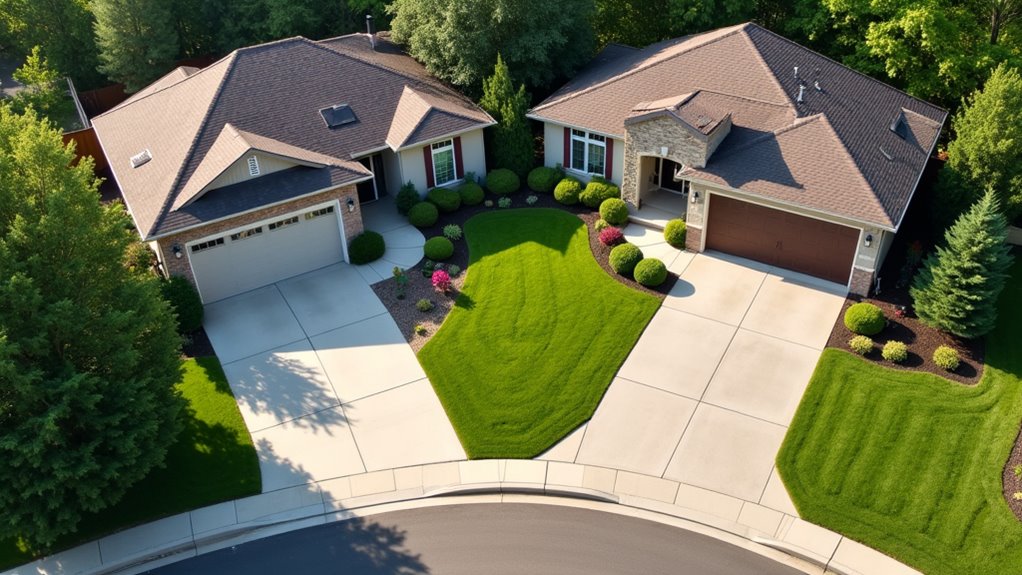
When comparing concrete and asphalt driveway repairs, you’ll find seven critical distinctions: asphalt accepts quick-cure fillers and overlays within hours, while concrete demands 1-3 weeks of curing time. Asphalt repairs cost $2-$5 per square foot versus concrete’s $6-$14 for slab replacement. You’ll reseal asphalt every 3-5 years but concrete every 2-3 years. Climate performance, lifespan expectations of 15-50 years, resurfacing limitations, and customization options further separate these materials—each factor considerably impacts your long-term investment.
Repair Difficulty and Visual Results
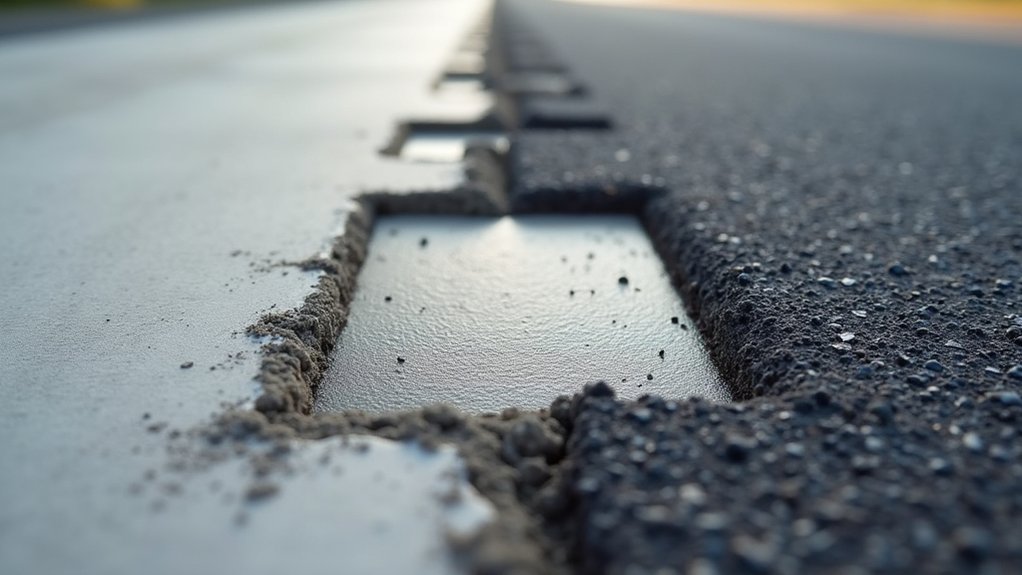
Cracks in asphalt driveways accept liquid or hot-pour rubber fillers with minimal surface preparation, and you’ll achieve drivable results within hours rather than days. The ease of application stems from asphalt’s flexible composition, which allows crack sealants to bond effectively without extensive grinding or priming. You can patch alligator cracking using Gator Patch products, maintaining a uniform surface appearance throughout the repair zone.
Concrete presents greater repair complexity. Minor surface damage requires full resurfacing, while major issues like heaving demand complete slab replacement. You can’t effectively resurface concrete cracks, and repairs remain visible against the original surface. With proper care, concrete driveways can last up to 50 years, making replacement a significant long-term investment when major repairs become necessary.
Asphalt repairs deliver aesthetically pleasing results with a clean, sleek finish that blends seamlessly. Sealing every two to three years preserves this visual integrity, whereas concrete patching typically creates noticeable color variations. Additionally, asphalt driveways can provide 30+ years of reliable use when you maintain a consistent resealing schedule. While asphalt repairs are more affordable, fixing concrete damage typically costs $3 to $25 per square foot depending on the type and severity of the issue.
Cost Comparison for Driveway Repairs
When comparing repair expenses, you’ll find asphalt projects typically range from $250 to $800 per repair, with DIY-friendly options for minor cracks and overlays costing $3 to $7 per square foot on stable bases. Concrete maintenance costs run higher at $3 to $25 per square foot for repairs, often requiring professional contractors for significant damage. However, concrete’s minimal ongoing maintenance requirements offset these repair costs, while asphalt’s mandatory resealing every 3-5 years at $300 to $800 per treatment accumulates substantially over the driveway’s lifespan. Neglecting regular asphalt maintenance accelerates deterioration and can lead to costly full replacements sooner than expected. When properly maintained, concrete driveways can last 25 to 80 years, making the higher repair costs a worthwhile investment compared to asphalt’s shorter lifespan. Keep in mind that asphalt repair costs can vary over time since asphalt prices fluctuate based on changes in crude oil prices.
Asphalt Repair Expenses
Asphalt driveway repairs break down into distinct cost tiers based on damage severity and repair method.
Standard Repair Cost Breakdown:
- Cold patch applications: $2–$4 per square foot, suitable for DIY repair considerations
- Hot patch installations: $2–$5 per square foot, requiring professional quality standards
- Crack filling: $0.50–$3.00 per linear foot
- Pothole repairs: $100–$400 per occurrence
- Full resurfacing: $1–$3 per square foot for overlay applications
You’ll encounter minimum call-out fees of $100–$250 regardless of repair scope. For a 5’x5′ patch, expect $50–$125 depending on material selection.
Resurfacing a 600–800 square foot driveway runs $1,200–$4,000. When damage includes alligator cracking or structural failure, complete replacement becomes necessary at $3,000–$10,000, with per-square-foot rates of $5–$12. Saw-cut asphalt repairs, which provide the cleanest edges for precise damage removal, cost $4–$12 per square foot. Scheduling repairs during off-peak months can reduce expenses since peak construction season typically drives prices higher.
Concrete Maintenance Costs
Concrete driveway repairs demand different budget considerations than asphalt, with national averages ranging from $829 to $2,827 depending on damage scope. Standard patching on a 24′ x 24′ surface typically runs $1,000 to $1,500, while crack sealing costs $0.50 to $3 per linear foot.
Concrete material durability directly impacts your repair frequency. Cracks exceeding 1/4 inch depth indicate structural compromise requiring slab replacement at $6 to $14 per square foot. Full replacement averages $6,400 versus $1,801 for targeted repairs. Driveways supporting heavy vehicles require 6-8 inch thickness, which increases both initial installation and replacement costs.
Your concrete life expectancy reaches 30 years with proper maintenance. Resealing every 2-3 years at $0.10 to $0.16 per square foot doubles surface longevity. A $10,000 driveway lasting 35 years breaks down to approximately $300 annually—making preventative maintenance investments substantially more cost-effective than deferred repair strategies. Labor costs for these maintenance projects typically run $65 to $85 per hour, with resealing jobs completing in 2-4 hours.
Maintenance Frequency and Scheduling
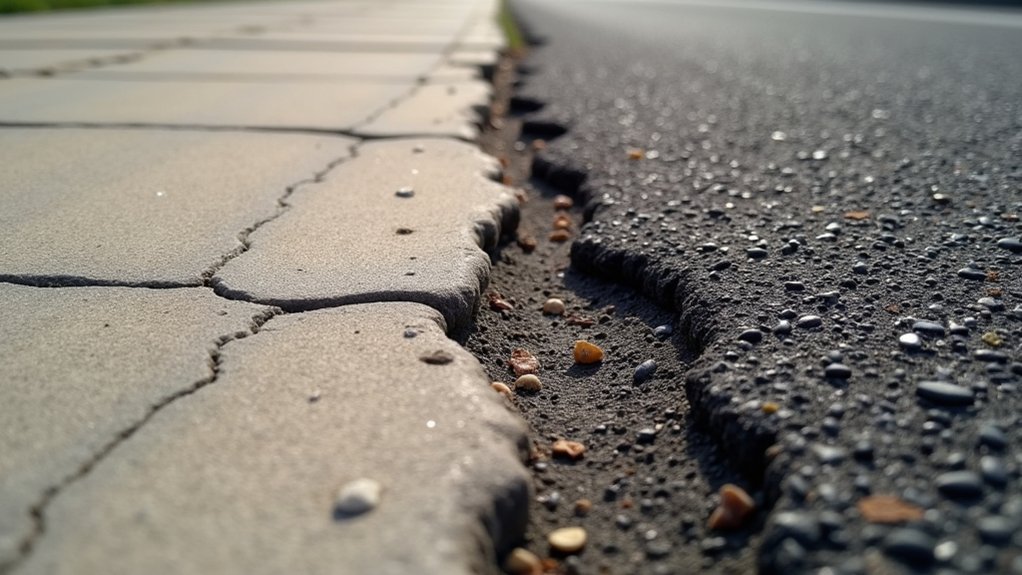
Establishing a consistent maintenance schedule directly impacts your driveway’s structural performance and service life. Your sealant application timing varies considerably between materials—concrete requires resealing every two to three years, while asphalt demands attention every three to five years. Periodic inspections conducted annually help you identify wear patterns before structural compromise occurs.
Consider these scheduling specifications:
- Seal concrete driveways exposed to freeze-thaw cycles every two years
- Apply crack sealant to asphalt surfaces every three years minimum
- Pressure wash concrete one to two times annually for debris removal
- Clean driveways in humid climates every three to four months
- Increase sealing frequency for high-traffic installations
Heavy vehicle loads and intense UV exposure accelerate sealant degradation. You’ll extend service intervals to five to ten years by specifying epoxy or polyurethane sealers. Selecting higher-quality sealers during initial application potentially extends the time between maintenance cycles, reducing long-term labor and material costs. Applying sealant after pressure washing creates a protective barrier against stains, moisture infiltration, and surface wear. Watch for discoloration or water pooling on your concrete surface, as these visual indicators signal that resealing has become necessary regardless of your scheduled timeline.
Lifespan Impact on Long-Term Repair Needs
When you’re evaluating long-term repair needs, asphalt driveways demand attention markedly sooner—typically requiring repairs after 15.5 years and resurfacing every 3-5 years according to MDOT specifications. Concrete’s cement-aggregate composition delivers 30-40 years of service before major repairs become necessary, effectively doubling asphalt’s functional lifespan. This durability differential means you’ll face two complete asphalt resurfacing cycles within a single concrete driveway’s operational span, directly impacting your total cost of ownership. Additionally, asphalt softens under intense sun and can develop depressions from parked vehicles, accelerating the timeline for necessary repairs in hot climates like South Florida.
Asphalt Repair Frequency
Although asphalt driveways can last 15 to 30 years with proper care, your long-term repair frequency depends directly on how consistently you’ve maintained the surface throughout its lifespan.
Sealant quality importance cannot be overstated—premium products withstand UV degradation and freeze-thaw cycles longer than budget alternatives. Your sealant application techniques also determine performance; proper coverage thickness and curing time maximize protection intervals.
Key factors affecting your resealing schedule:
- Initial application timing: Wait 6-12 months post-installation for proper curing
- Standard residential interval: Every 2-3 years in moderate climates
- Heavy traffic adjustment: Reduce to 1-2 years for commercial-grade loads
- Climate considerations: Freeze-thaw regions require vigilant monitoring
- Visual indicators: Gray fading, surface cracking, or water absorption signals immediate attention
Annual inspections help you catch deterioration before costly repairs become necessary.
Concrete Longevity Advantages
Concrete driveways deliver measurable lifespan advantages that directly reduce your long-term repair burden compared to asphalt surfaces. With proper installation expertise, you’ll achieve 25–30 years of service under standard conditions, extending to 35–50 years with consistent maintenance. Michigan DOT data confirms concrete averages 27.5 years before requiring repairs versus asphalt’s 15.5 years.
Your durability specifications matter considerably. A minimum four-inch slab thickness, reinforcement with rebar or metal sheets, and solid drainage foundations establish the structural integrity needed for decades of performance. In freeze-thaw climates like Minnesota, properly constructed concrete routinely reaches 30–50 years despite extreme temperature swings.
Federal highway studies demonstrate concrete lasts approximately 2.5 times longer than asphalt, translating directly to fewer repair cycles throughout your driveway’s functional lifespan.
Climate-Related Repair Challenges
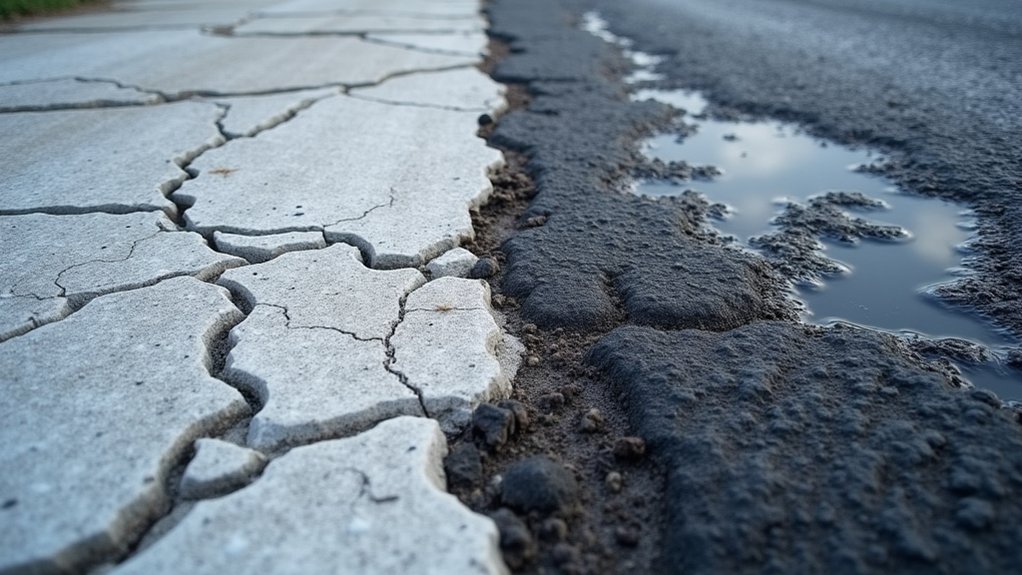
Climate-related repair challenges differ noticeably between asphalt and concrete driveways, with each material responding to freeze-thaw cycles, temperature fluctuations, and deicing chemicals in distinct ways. Thermal profile impacts determine repair frequency, as asphalt’s petroleum base allows contraction and expansion without stress cracks. Weathering resistance variations emerge most clearly during 30-40 annual freeze-thaw cycles in northern regions.
Asphalt bends while concrete breaks—climate dictates which driveway material wins the long-term repair battle.
- Asphalt flexes through extreme cold without breaking, while concrete’s rigidity causes splitting and rupturing
- Rock salt damages concrete considerably, especially during the first winter post-installation
- Asphalt’s dark surface melts ice faster, reducing mechanical removal strain
- Concrete requires air entrainment and proper joint spacing to resist random fractures
- Asphalt small cracks self-heal when warm weather softens the material
You’ll find asphalt demands annual sealcoating, while concrete needs sealing every 2-3 years.
Resurfacing Options and Limitations
Resurfacing your driveway presents distinct cost-benefit profiles depending on whether you’re working with asphalt or concrete substrates. Material installation costs favor asphalt greatly, as you can apply new layers directly over existing pavement without demolition or disposal expenses. Concrete resurfacing demands full removal, increasing labor and transport costs tremendously.
Your design application versatility expands immensely with concrete options. Stamped overlays apply polymer-modified concrete layers that replicate brick, stone, or custom patterns while adding protective wear resistance. Asphalt limits your aesthetic choices but delivers functional restoration efficiently.
Consider these specifications: asphalt achieves usability within hours post-application, while concrete requires one to three weeks for proper curing. However, asphalt overlays address surface-level defects only—they won’t resolve underlying structural failures. Concrete overlays provide both aesthetic enhancement and substrate protection simultaneously.
Customization Possibilities After Repairs
Once repairs stabilize your concrete driveway’s structural integrity, decorative overlays open up extensive customization options that transform worn surfaces into high-end finishes. You’ll find overlay versatility enables authentic stone appearances through real molds and hand-applied stains without material restrictions.
Your customization flexibility includes these specification-driven options:
- Stained, stamped, or hand-carved finishes replicating flagstone, cobblestone, Ashlar slate, and Roman slate
- Combined styles pairing hand-cut flagstone centers with stamped cobblestone borders
- Classic Texture diamond patterns or SunStamp European cobblestone transformations
- Aggregate Effects dual-color applications with stenciled designs
- PebbleKoat non-epoxy river rock overlays in multiple color selections
Jobsite samples confirm your exact specifications before full application begins. Stamped patterns maintain equivalent durability to smooth surfaces, ensuring aesthetic choices don’t compromise load-bearing performance. Most installations return driveways to service within one day.
Frequently Asked Questions
Can I Switch From Asphalt to Concrete Without Removing My Existing Driveway?
You can pour concrete over your existing asphalt driveway, but you’ll need to address specific concrete underlayment requirements first. For proper overlay installation, you should spread approximately one inch of sand over the asphalt to accommodate thermal expansion differences between materials. Your concrete slab needs to be at least 3.5 inches thick, and you’ll want rebar or mesh reinforcement to prevent layer separation. Consider using white fabric barriers to prevent adhesion issues.
How Long Should I Wait Before Driving on a Newly Repaired Driveway?
You’ll need to wait 7-10 days before driving regular vehicles on new concrete, with full curing time required reaching 28 days for heavier loads like trucks or RVs. For asphalt repairs using foam injection methods, you can drive within 30 minutes after hardening. Proper preparation steps include checking that no imprints remain and avoiding edge loading, which remains vulnerable longer. Traditional asphalt patches typically require hours to days depending on the repair method.
Are DIY Driveway Repair Kits Effective for Asphalt and Concrete Surfaces?
DIY repair kits show limited effectiveness for both surfaces. You’ll encounter significant diy repair kit limitations—cold patch asphalt lacks hot-mix durability, while concrete compounds require precise mixing techniques. Approximately 73% of DIY repairs fail within six months. For minor crack filling under 1/4-inch width, you can achieve acceptable results. However, professional repair benefits include proper compaction equipment, structural-grade materials, and installations lasting 15-20 years versus months for DIY applications.
Do Driveway Repairs Affect My Home’s Resale Value Differently for Each Material?
Yes, driveway repairs affect your home’s resale value differently based on material. Well-maintained concrete delivers 50-80% ROI with superior curb appeal due to its 30-50 year lifespan specification. Asphalt repairs maintain home market appeal but require sealing every 3-5 years at $0.68-$1.64 per square foot to prevent structural degradation. You’ll maximize value with either material by addressing cracks promptly—visible damage signals neglect, reducing buyer confidence regardless of surface type.
What Environmental Impact Do Asphalt and Concrete Driveway Repairs Have?
Asphalt repairs generate a higher carbon footprint of materials due to heating requirements during production and installation. However, you’ll find recycled asphalt pavement (RAP) substantially reduces emissions while maintaining structural integrity. Concrete repairs involve energy-intensive cement production but offer longer intervals between maintenance cycles. For disposal of old material, asphalt’s 100% recyclability through cold in-place recycling eliminates transportation emissions, while concrete requires crushing and typically downcycles into aggregate applications.