

Superior Load-Bearing Capacity That Withstands Heavy Vehicles
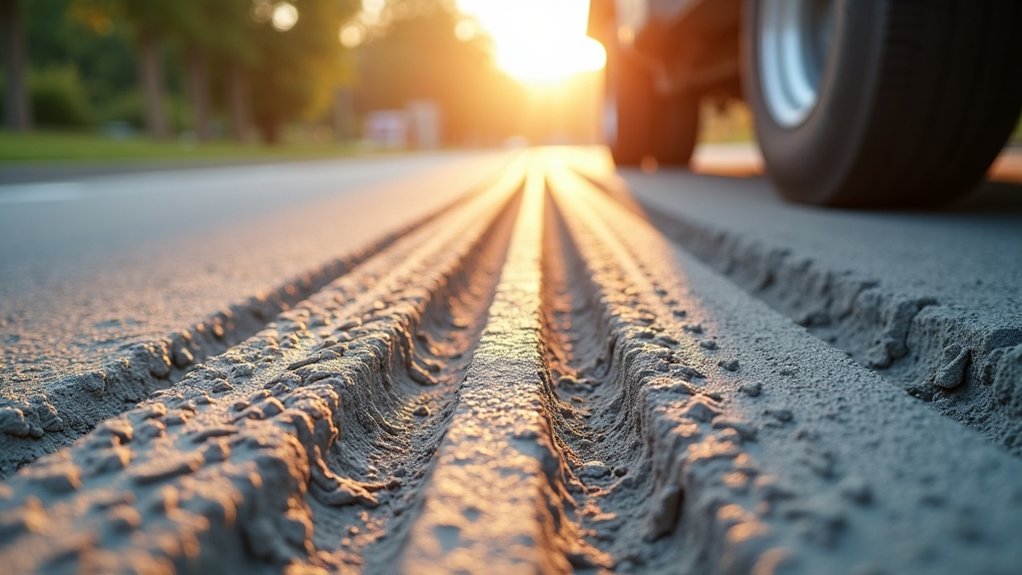
Concrete driveways deliver measurable load-bearing advantages that asphalt simply can’t match. Standard residential concrete achieves 4,000 PSI compressive strength, while commercial-grade mixes reach 4,500-5,000 PSI for sustained heavy truck traffic.
You’ll find that thickness directly impacts performance. A 4-inch slab supports vehicles up to 8,000 pounds, but upgrading to 6 inches handles 70,000-pound loads—an 875% capacity increase. This controlled stress distribution spreads concentrated weight across larger surface areas rather than focusing pressure on single points. A properly installed 6-inch slab can support up to 3,000 lbs per square foot, making it ideal for foundations and garage floors alike. Upgrading from 4 to 5 inches alone can boost load capacity by nearly 50%, providing significant performance gains for homeowners with heavier vehicles.
When you integrate steel rebar or welded wire mesh, your driveway gains consistent structural integrity that prevents stress-induced cracking. Reinforcement distributes tensile forces throughout the slab, eliminating localized failure points. Combined with proper subgrade compaction, concrete maintains this performance for decades without the thermal degradation asphalt experiences. Properties with clay soils benefit from additional reinforcement measures compared to those with sandy soil bases, ensuring optimal load distribution regardless of ground conditions.
Extended Lifespan of 30-40 Years With Minimal Maintenance
When you invest in a properly installed concrete driveway, you’re securing a surface that delivers 30-40 years of reliable performance—far exceeding asphalt’s 15-20 year typical lifespan. High-quality concrete mix with proper aggregate ratios, combined with minimum four-inch slab thickness, guarantees structural integrity throughout decades of use. A well-compacted subgrade during installation eliminates debris and creates a stable base that prevents settling and cracking over time.
A properly installed concrete driveway delivers 30-40 years of reliable performance, far outlasting asphalt alternatives.
Your maintenance requirements remain straightforward and cost-effective:
- Sealer application every two to three years creates protective barriers against moisture and chemicals
- Easy cleaning routines including annual pressure washing prevent surface deterioration
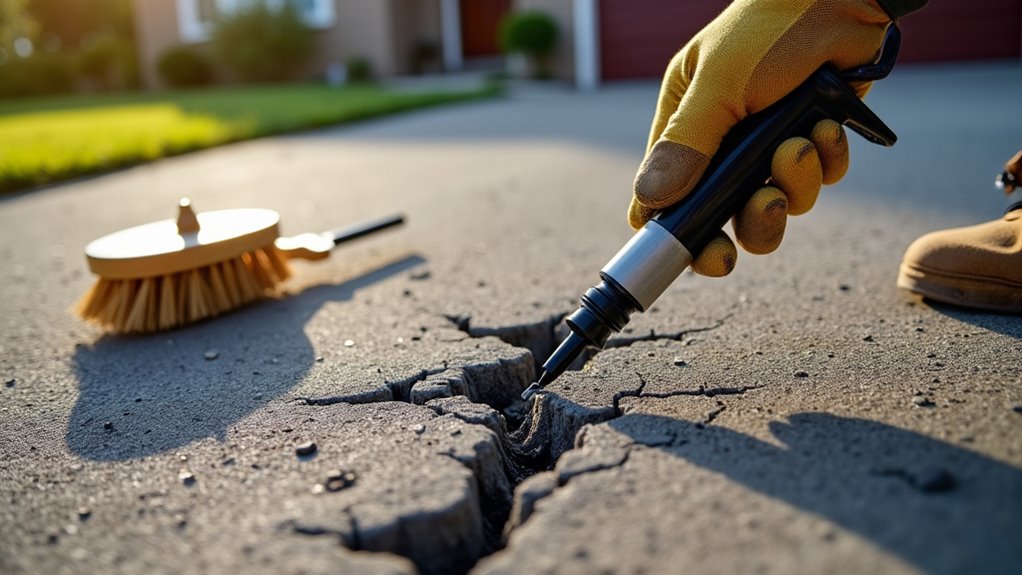
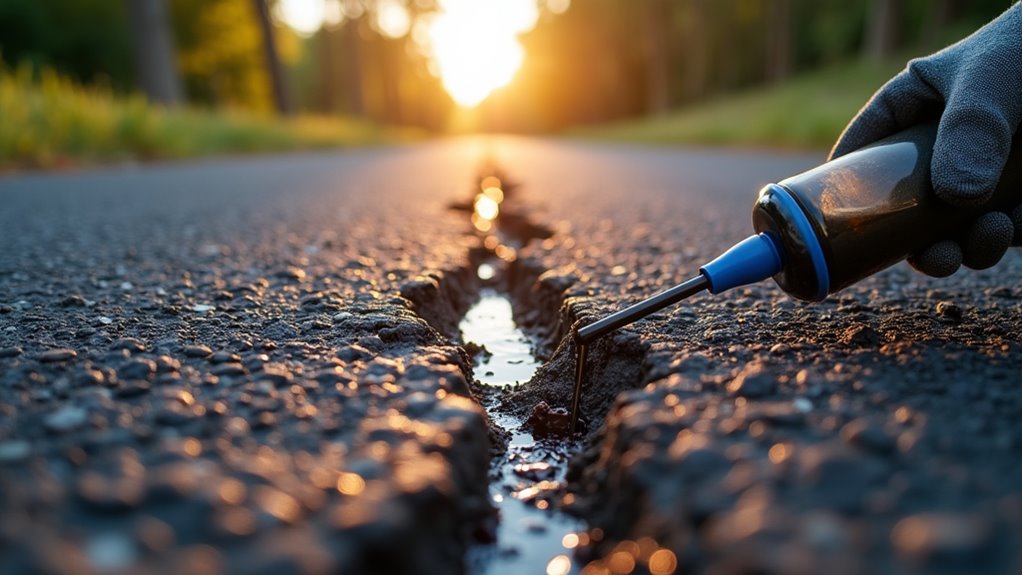
- Prompt crack repair stops water infiltration before structural damage occurs
- Drainage system maintenance protects subgrade stability and prevents settling
- Customized aesthetics retain visual appeal without compromising durability specifications
Fiber reinforcement and professional curing techniques maximize your driveway’s longevity while minimizing intervention frequency. Ensuring gutter downspouts direct water away from the driveway prevents soil erosion that creates voids and causes concrete slabs to sink and crack. In regions like Kansas City, freeze-thaw cycles can accelerate concrete deterioration if the surface isn’t properly sealed and maintained.
Weather Resistance That Protects Against UV Damage and Temperature Extremes
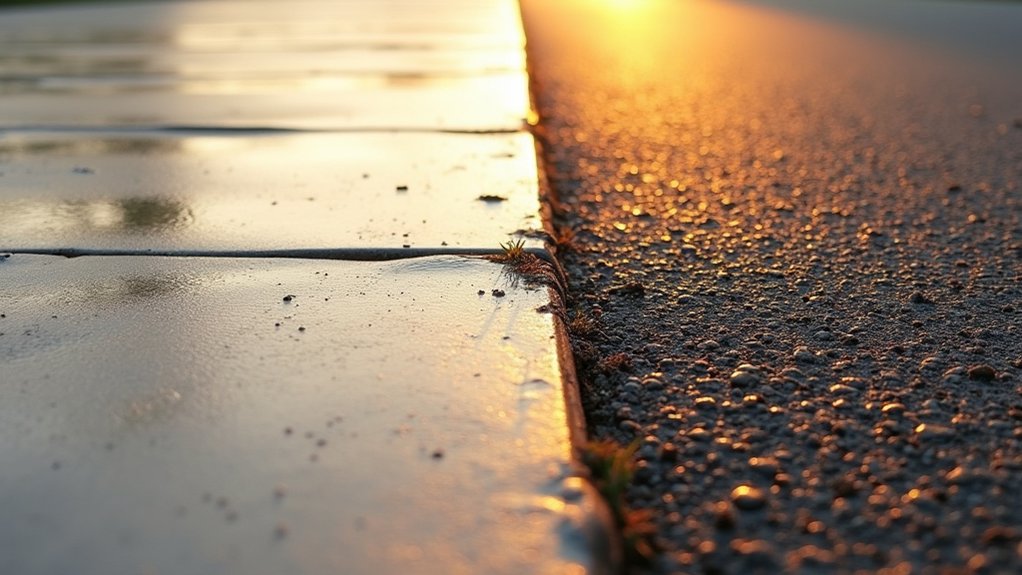
Beyond structural longevity, your driveway’s performance depends heavily on its ability to withstand environmental stressors—particularly UV radiation and temperature fluctuations that degrade unprotected surfaces.
Polyaspartic coatings deliver high UV stability, preventing yellowing and color degradation that asphalt experiences through rapid oxidation. These protective barriers block solar radiation from weakening surface integrity while maintaining aesthetic consistency. Constant sun exposure can fade and dull the color of unprotected driveways, making UV-resistant technology essential for preserving your investment.
Thermal expansion presents significant challenges during summer months. Quality sealers enable concrete to handle expansion-contraction cycles without cracking—a critical advantage over asphalt, which blackens and fractures under identical conditions. Sudden temperature shifts can cause surface cracking from thermal expansion and contraction, making protective coatings essential for Colorado’s unpredictable climate.
Modern formulations provide breathable water resistance, allowing moisture vapor transmission while rebuffing storm water intrusion. This prevents foundation-compromising moisture accumulation common in porous asphalt. Additionally, slip-resistant application guarantees safe traction during wet conditions, combining protective performance with functional safety across seasonal weather extremes. Proper UV protection significantly extends the longevity of concrete driveways, parking lots, patios, and other outdoor surfaces exposed to constant sunlight.
Frequently Asked Questions
How Often Does Asphalt Need Seal Coating Compared to Concrete Driveways?
You’ll need to seal coat your asphalt driveway every 2-3 years, while concrete requires sealing only every 5 years. This maintenance frequency difference substantially impacts long-term resurfacing requirements. Asphalt’s more porous composition demands frequent protection against oxidation and moisture penetration. You’ll find concrete’s denser structure tolerates longer intervals between applications. Over-sealing either surface causes damage, but asphalt’s accelerated maintenance schedule means you’re investing more time and resources in protective treatments.
Is Concrete or Asphalt More Environmentally Friendly Over Its Lifespan?
Concrete generally offers better environmental impact over its lifespan due to key sustainability factors. You’ll find concrete’s 20-40+ year durability reduces cumulative maintenance emissions and raw material consumption. Its lighter surface reflects sunlight, mitigating urban heat island effects. While cement production generates significant CO2, lifecycle assessments indicate concrete’s longevity often results in lower lifetime emissions. However, you should consider asphalt’s 99% recyclability rate when evaluating overall sustainability factors.
Why Does Asphalt Develop Potholes More Frequently Than Concrete Surfaces?
Asphalt develops potholes more frequently because its flexibility allows permanent deformation under repeated heavy loads. When you drive on asphalt, the softer binding agents compress unevenly, creating weak spots that expand into holes. Water infiltration further accelerates base layer deterioration. In contrast, concrete’s weight bearing capacity of approximately 80,000 pounds distributes stress evenly across the surface, preventing the localized compression and subsidence that characterize pothole formation in asphalt driveways.
What Materials Make Concrete More Rigid and Durable Than Asphalt?
Concrete’s high compressive strength comes from its cement, sand, and gravel composition, where cement binds these materials into a rigid, stone-like matrix. You’ll find that reinforced construction with steel rebar further enhances this structural integrity. Unlike asphalt’s petroleum-based bitumen binder that remains flexible, concrete’s mineral-based paste creates a denser foundation. This composition gives you superior resistance to heavy loads, UV radiation, and chemical damage throughout the material’s lifespan.
Can Concrete Cracks Be Prevented With Proper Installation Techniques?
Yes, you can markedly deter concrete cracks through proper installation techniques. You’ll want to implement reinforcement techniques like synthetic micro fibers and strategic control joint placement to distribute stress effectively. Proper curing processes are equally critical—you should maintain adequate moisture levels and monitor temperature during placement to control volume changes. Additionally, you’ll need to guarantee correct subgrade compaction, ideal mix design with water reducers, and sufficient concrete cover to minimize shrinkage-related cracking.