
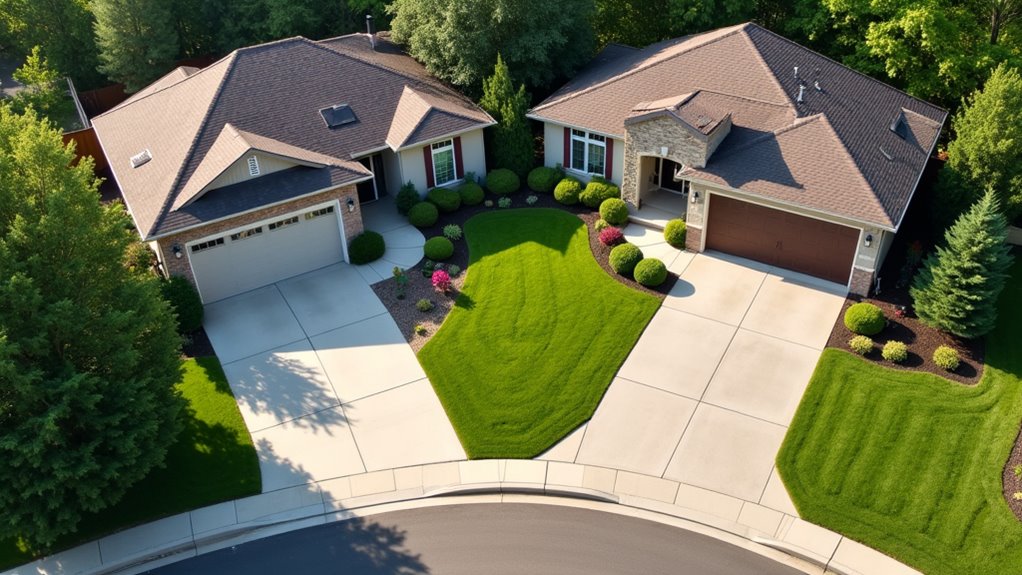
Yes, paving your driveway increases your home’s market value independent of ROI calculations, typically adding $5,000-$20,000 to your property’s assessed worth. This value addition occurs because 44% of homebuyers identify cracked driveways as major deterrents, while paved surfaces signal consistent property maintenance. Your home will attract more serious buyers and sell faster in competitive markets, with the actual return varying between 50-109% depending on material choice and neighborhood standards. Understanding which paving materials deliver maximum value in your specific market helps optimize this investment.
The Direct Impact of Driveway Paving on Property Value and Sale Speed
When evaluating home improvement investments, driveway paving stands out as one of the most financially impactful exterior upgrades you can make. According to National Association of Realtors® data, paved driveways can add $5,000–$20,000 to your property’s value, representing a 5–10% uplift depending on location. Properties with newly paved surfaces typically attract more serious buyers and sell faster, as they eliminate immediate maintenance concerns that create negotiation points. The return on investment varies considerably based on neighborhood driveway standards; you’ll see higher premiums in areas where paved driveways aren’t universal. Driveway material popularity also influences market performance; homes featuring high-quality surfaces like custom pavers differentiate themselves in competitive markets. Pavers can last over 30 years with minimal maintenance, making them particularly attractive to quality-conscious buyers. Appraisers consistently recognize driveways as key curb appeal factors, with well-maintained surfaces contributing to stronger overall property valuations during formal assessments.
How Different Paving Materials Affect Your Return on Investment
Your choice of paving material directly influences both upfront costs and long-term ROI, with each option serving distinct market segments and budget constraints. Asphalt offers the lowest initial investment at $3–$15 per sq ft and performs well in cold climates, though its 15–20 year lifespan requires ongoing maintenance that moderates returns. Concrete provides a mid-range alternative at $4–$15 per sq ft with 30–40 year durability and customization options, while pavers command $10–$30+ per sq ft but deliver the highest ROI through superior aesthetics, 30–50+ year longevity, and easy repairs that appeal to premium buyers. Permeable pavers provide enhanced drainage and reduced water runoff, making them particularly valuable in areas with strict stormwater regulations or heavy rainfall patterns. Concrete driveways typically range from $2,560 to $10,240 depending on thickness and reinforcement, with decorative finishes commanding premium pricing in competitive real estate markets. Labor costs typically constitute half of total cost, making contractor selection critical to maximizing value while controlling expenses.
Asphalt: Affordable Cold-Climate Choice
Among paving materials, asphalt delivers a solid return on investment while addressing the practical demands of cold-weather regions. You’ll typically see ROI between 65–75%, with property values increasing $5,000–$20,000. Installation costs $7–13 per square foot, positioning asphalt as a mid-tier investment, less expensive than pavers, more valuable than gravel.
The material strength of asphalt lies in its flexibility, which reduces cracking during freeze-thaw cycles. Its climate performance includes faster snow melting due to heat-absorbing dark surfaces, improving winter accessibility. Asphalt’s timeless aesthetic with its black surface creates a classic look that appeals to traditional buyers. You’ll need sealing every 3–5 years to maintain the 15–30 year lifespan.
First-time paving generates higher returns than resurfacing, particularly in neighborhoods where paved driveways represent the standard. Markets experiencing harsh winters show the strongest buyer response to asphalt installations. Professional contractors ensure proper base preparation, drainage, and material application that DIY approaches often fail to achieve.
Concrete: Durable Customizable Mid-Range
Concrete delivers a 50–80% ROI with property value increases of $5,000–$20,000, positioning it as a mid-range investment that balances upfront costs against exceptional longevity. Your cost-benefit analysis should account for 30-year lifespan versus asphalt’s 15–20 years, reducing lifecycle expenses considerably.
| Factor | Concrete | Impact on Value |
|---|---|---|
| Installation Cost | $4–$15/sq. ft. | Higher upfront barrier |
| Lifespan | 30 years | Lower maintenance costs |
| Customization | Stamped, stained, aggregate | Enhanced curb appeal |
| Maintenance | Minimal sealing | Reduced buyer concerns |
| Market Perception | Premium durability | 5–10% value uplift |
Customization options, stamped patterns, stains, and exposed aggregate differentiate your property in competitive markets. Mid-range performance shines through weather resistance, minimal rutting, and sustained visual appeal. Appraisers recognize concrete’s structural superiority, particularly in freeze-thaw climates where alternatives deteriorate faster. Properties with concrete driveways often experience faster sale times, typically closing 7–10 days quicker than comparable homes with unpaved alternatives. The versatility of concrete allows it to complement various architectural styles, enhancing its appeal across diverse property types and buyer preferences.
Pavers: Premium Luxury Investment
Pavers command $10–$50 per square foot but deliver 50–109% ROI, positioning them as the highest-performing driveway material in premium markets. You’ll achieve maximum value appreciation in neighborhoods where exotic pavers differentiate your property from standard asphalt installations. Customized hardscapes featuring premium brick, stone, or decorative block appeal directly to buyers seeking luxury finishes and architectural character.
Your investment yields 25–50 year durability with individual unit replaceability, eliminating total surface replacement costs. Permeable options address sustainability trends while maintaining premium aesthetics. Market data confirms landscape upgrades featuring pavers recoup up to 100% of installation costs.
ROI peaks when you’re upgrading in areas where pavers remain uncommon, your property commands attention in listing photography and appraisals. Regional labor costs and climate conditions affect total investment but rarely diminish long-term value recoupment in upscale segments. Understanding that pavers represent only 30-40% of your total project cost helps you budget appropriately, as base preparation, drainage systems, and professional installation comprise the remaining investment.
Why Curb Appeal Starts With Your Driveway Surface
Your driveway is the first feature most buyers evaluate when they arrive at your property, establishing their initial perception before they reach the front door. Real estate professionals identify it as a critical selling point because 44% of homebuyers flag a cracked driveway as a major deterrent. This immediate visual assessment directly influences how quickly your home sells and the offers you’ll receive. A well-maintained driveway signals to potential buyers that the interior has likely received the same level of care, reducing concerns about hidden maintenance issues that cause nearly 1 in 5 home contracts to fall through. Properties with appealing exteriors consistently attract more serious buyers who are ready to make competitive offers.
First Impressions Matter Most
When potential buyers approach a property, the driveway serves as the first structural element they’ll evaluate, and research confirms this initial assessment carries substantial weight. A well-maintained surface demonstrates consistent care and establishes quality expectations before prospects enter your home.
| Element | Negative Signal | Positive Signal |
|---|---|---|
| Surface condition | Cracks, stains | Smooth, uniform appearance |
| Maintenance level | Weeds, debris | Clean, organized |
| Safety features | Potholes, uneven terrain | Stable, accessible surface |
| Property perception | Overall neglect | Professional upkeep |
| Market positioning | Reduced interest | Increased buyer confidence |
Real estate professionals report that 76% of agents identify curb appeal as the primary factor influencing sale price. Your driveway’s uniform appearance eliminates red flags that signal deferred maintenance, directly supporting higher appraisals and faster market transactions. Superior paving delivers a sleek, durable feature that creates a welcoming atmosphere and communicates the overall quality of your property to prospective buyers.
Visual Impact On Buyers
Before prospects step through your front door, the driveway establishes their price expectations and purchase intent. Properties with paved surfaces command $5,000–$20,000 higher resale values and sell 7–10 days faster than gravel or dirt alternatives. This accelerated timeline stems from reduced buyer hesitation when appearance cohesion signals thorough property maintenance.
Material selection drives differentiation in competitive markets. Paver driveways offer customizable colors and patterns that create visual harmony between hardscaping and landscaping elements, strengthening listing photos and marketing effectiveness. In neighborhoods where most homes feature standard concrete, premium materials like block paving fill local gaps and justify higher asking prices.
Buyers interpret surface quality as evidence of overall home care. Cracked or stained driveways trigger concerns about hidden issues, prompting discounting during negotiations. Conversely, well-maintained surfaces increase perceived value by up to 10%.
Regional Market Differences That Influence Driveway Value Addition
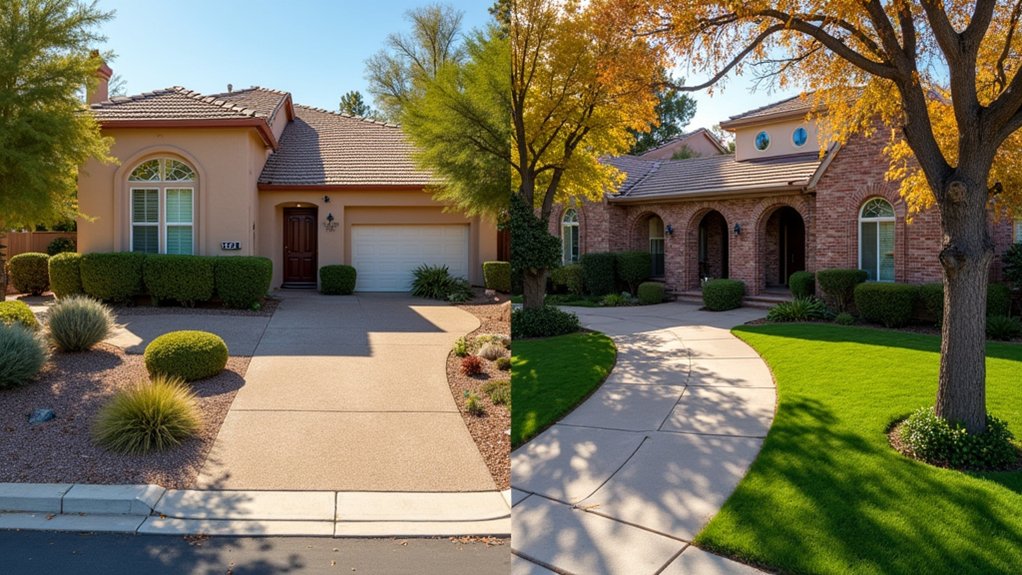
Regional climate conditions directly shape which driveway materials deliver the strongest return on investment in your local market. Harsh winters favor asphalt due to faster snowmelt, while hot climates often demand concrete or pavers for superior durability. These seasonal variations in paving ROI substantially impact material selection and value expectations.
Neighborhood standards prove equally critical. Where paved driveways are universal, your ROI diminishes because buyers expect this feature. Conversely, markets with prevalent gravel driveways reward pavement upgrades with higher premiums due to scarcity value. Regional differences in paving norms directly influence appraisal comparisons and formal valuations.
Market conditions further modulate driveway value. Buyer’s markets amplify curb appeal benefits, while seller’s markets compress differentiation advantages. Street parking availability also determines whether your private driveway commands premium pricing or represents standard functionality.
Buyer Psychology: What a Paved Driveway Signals to Potential Purchasers
Though often underestimated, buyer psychology transforms a paved driveway from a functional feature into a powerful value signal that shapes purchasing decisions before potential buyers enter your home. A well-maintained paved surface triggers home hygiene perception, signaling extensive property care and reducing concerns about deferred maintenance. Buyers associate smooth, uniform driveways with move-in readiness, eliminating immediate repair negotiations that typically reduce final sale prices.
Premium materials like pavers communicate status and quality investment, positioning your property favorably against comparable listings. The emotional investor reassurance provided by intact paving addresses safety concerns, weather protection, and long-term durability, critical factors in buyer confidence. Appraisers document driveway condition in valuation reports, while superior curb appeal can command up to 7% higher market values. Conversely, neglected driveways decrease perceived value by $15,400 and extend selling times greatly.
Property Tax Implications When You Increase Home Value Through Paving
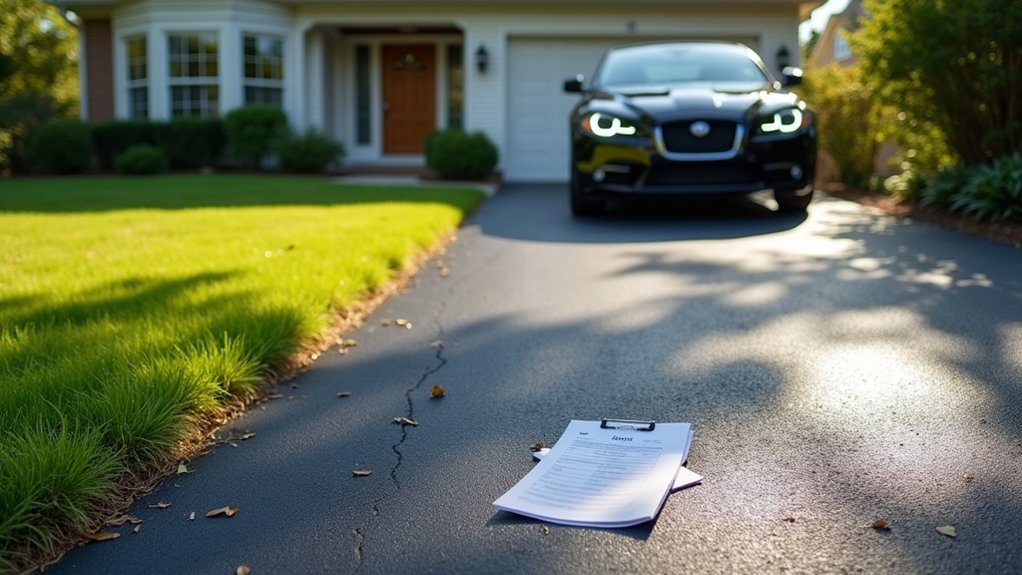
While paved driveways enhance buyer appeal and justify higher asking prices, they also trigger property tax adjustments that homeowners must factor into their investment calculations. Your property’s assessed value typically increases by $5,000 to $7,000 after paving, translating to roughly $75 in additional annual taxes at standard 1.5% rates. Tax assessment timing varies considerably by jurisdiction, some municipalities reassess immediately following permit processes, while others incorporate improvements during routine cycles or property sales. Permit processes serve dual purposes: verifying code compliance and informing assessors of permanent improvements. Though tax increases remain modest for standard residential driveways, you’ll want to verify local assessment protocols with your county assessor’s office. This guarantees accurate ROI projections that account for both enhanced resale value and ongoing tax obligations throughout ownership.
Maintenance Requirements That Protect Your Driveway Investment Over Time
Protecting your driveway investment requires systematic maintenance that directly impacts both longevity and property value retention. You’ll need to implement monthly debris removal to prevent moisture accumulation and surface deterioration. Fill cracks immediately with flexible sealant to avoid water infiltration and freeze-thaw expansion that weakens the subbase. Apply seal coating every 2–3 years to establish UV-resistant barriers against oxidation and chemical damage.
Surface preservation measures include establishing proper grading techniques that direct water away from foundations, eliminating pooling that undermines structural integrity. You must maintain clear drainage systems during storms to prevent costly freeze-thaw cycles. For winter conditions, minimize deicing salt application, it degrades surfaces over time. Instead, use sand for traction. Regular inspection during cleaning identifies developing issues before they require expensive large-scale repairs, maximizing your investment’s return.
Frequently Asked Questions
Can I Claim Driveway Paving Costs as Tax Deductions When Selling?
You can’t directly deduct driveway paving costs when selling your primary residence, but you’ll add them to your home’s adjusted basis, reducing capital gains taxes. The paving material costs, whether asphalt, concrete, or pavers, increase your property’s basis dollar-for-dollar. Unlike maintenance requirements, which are repairs, new paving qualifies as a capital improvement. You’ll need receipts documenting all expenses. This basis adjustment provides tax savings by lowering your taxable profit at sale.
Does HOA Approval Affect Driveway Paving ROI and Resale Value?
Yes, HOA approval directly impacts your driveway paving ROI and resale value. Community approval requirements can delay projects and mandate costly materials, affecting upfront costs. However, HOA aesthetic standards consistently maintain neighborhood appeal, supporting property values by 5-10% in well-managed communities. Non-compliance risks forced alterations and buyer deterrence. You’ll maximize ROI when your paving aligns with HOA guidelines, ensuring faster sales, reduced liability, and enhanced buyer confidence through uniform community appearance and professional maintenance standards.
Should I Pave Before Listing or Negotiate Costs With Buyers?
You’ll typically see better ROI by paving before listing, as it can boost home value 5-10% ($5,000-$20,000) and accelerate offers. However, you should review local market trends first, if paved driveways aren’t standard in your neighborhood, negotiating costs might attract budget-conscious buyers. Consider curb appeal factors: damaged driveways signal neglect and invite aggressive price negotiations. In competitive markets where paved is expected, investing upfront ($4,900 average) generally outperforms leaving repairs to buyer negotiations.
Do Appraisers Always Factor Paved Driveways Into Official Home Valuations?
Appraisers don’t automatically assign value to paved driveways; it depends on neighborhood norms and comparable properties. If comps feature paved driveways, yours will be evaluated accordingly. In markets where paving is standard, its absence can reduce appraised value by up to 10%. Appraisers categorize driveways alongside other curb appeal enhancements and landscaping upgrades, examining overall exterior condition. Your driveway’s impact varies by local expectations, condition, and how it compares to surrounding properties in your specific market.
Will Financing Options for Paving Improve or Hurt My Investment?
Financing can hurt your investment if interest rates exceed your home’s appreciation rate. High monthly payments strain cash flow and erode ROI, especially when borrowing costs add 6–20% annually to your project expense. However, favorable financing terms, like 0% promotional rates or short repayment periods, minimize cost impact. You’ll improve investment outcomes by securing low-rate financing and selling quickly, ensuring added home value ($5,000–$10,000) outpaces accumulated interest charges before profitability diminishes.