
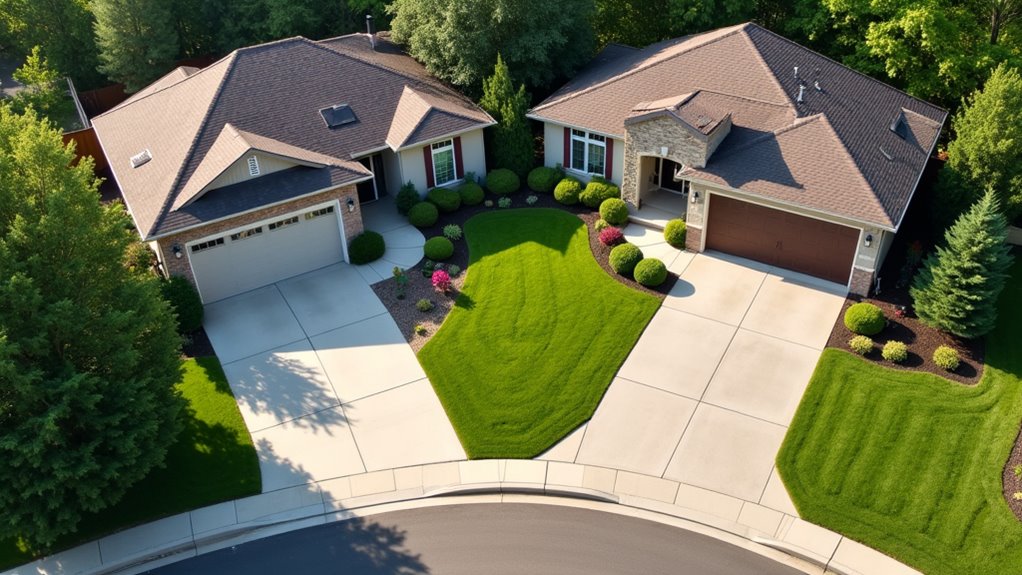
How Long Do Epoxy Driveways Last in Residential Settings
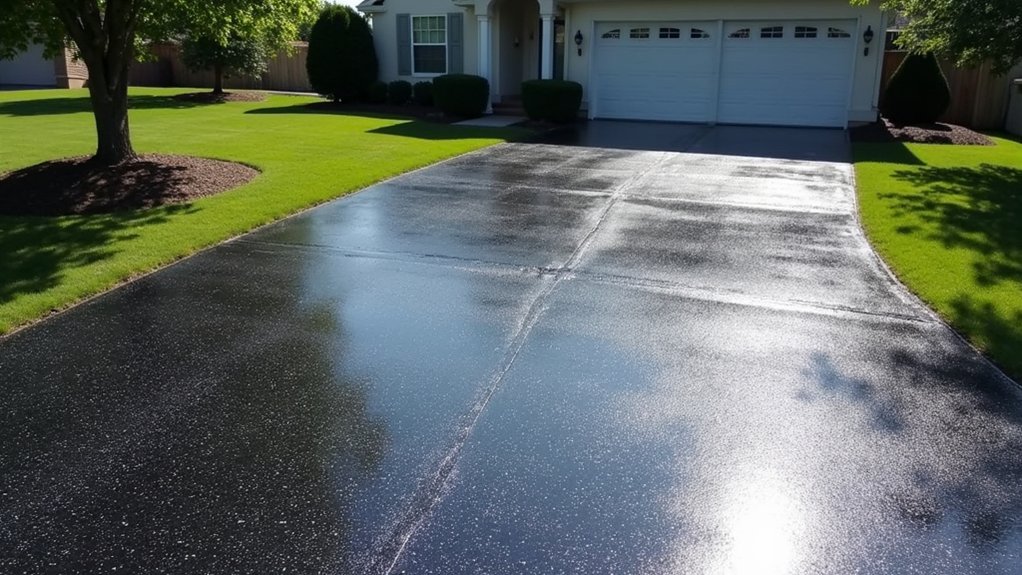
When you’re evaluating epoxy driveways for residential applications, installation quality stands as the primary determinant of coating longevity. Professional installers guarantee proper mixing ratios between epoxy resin and polyamine hardener, creating ideal molecular bonds during the critical 2-3 day curing period. Improper application techniques result in premature failure within 3-5 years. DIY epoxy installation can lead to low-quality work and costly issues that compromise the entire coating system.
Substrate integrity directly influences your epoxy’s performance lifespan. Concrete PSI requirements specify minimum 2500 PSI for adequate support, though commercial-grade substrates exceeding 3000 PSI deliver superior foundation strength. You can apply densifiers to weaker concrete to enhance coating adhesion. Proper concrete sealing before application is essential to prevent epoxy failure and ensure strong bonds.
Standard residential epoxy coatings measure 0.4-1 millimeter thick. Thicker applications resist wear longer. However, polyaspartic and polyurea alternatives outperform traditional epoxy, achieving 15-40+ years of service life under comparable conditions. With proper maintenance and regular cleaning, outdoor epoxy can last around 10 years while protecting your driveway from stains, impacts, and abrasions.
The Role of Traffic and Daily Usage on Epoxy Durability
Traffic patterns and daily usage intensity directly determine your epoxy driveway’s operational lifespan beyond the baseline variables of installation quality and substrate strength. When you combine proper subgrade preparation with light residential foot traffic, you’ll achieve the 10-20 year durability threshold. However, heavy vehicular loads and seasonal temperature fluctuations accelerate surface degradation substantially.
Your epoxy’s longevity depends on these load-specific factors:
- Standard passenger vehicles maintain coating integrity through routine pressure distribution across properly cured surfaces.
- Heavy machinery or forklift operation reduces lifespan to under 3 years without specialized protective top coats.
- High daily foot traffic in concentrated areas wears surfaces faster, limiting durability to 2-3 years.
You’ll preserve maximum epoxy performance by matching coating specifications to your actual traffic demands and avoiding commercial-level usage patterns. For residential driveways, a 40-60 mils high-build epoxy with UV-resistant polyaspartic finish provides optimal protection against daily vehicular stress. The epoxy’s seamless and non-porous surface prevents dirt and debris from becoming trapped, which helps maintain its protective qualities over time. Implementing proper floor care and maintenance routines, including regular cleaning and timely repairs, can significantly extend your driveway’s functional lifespan regardless of traffic intensity.
Why Professional Installation Makes a Difference in Longevity
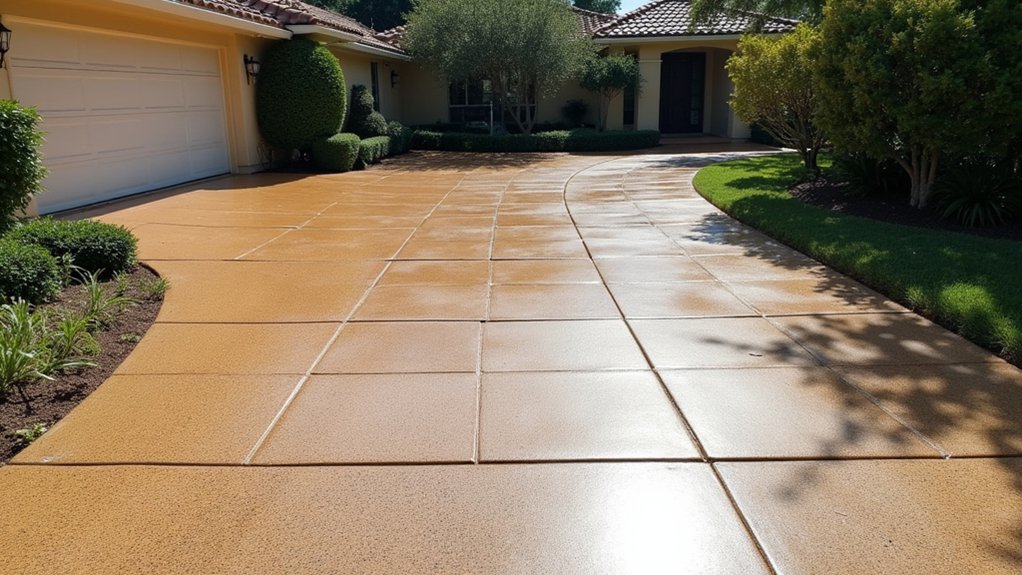
Although DIY epoxy kits promise substantial cost savings, the technical demands of driveway coating installation directly determine whether you’ll achieve a 15-20 year lifespan or face complete failure within 1-3 years. Proper surface preparation requires grinding, crack repair, and contaminant removal that consumer equipment can’t match. Professionals also test concrete strength, applying densifiers when PSI ratings fall below 3000.
Expert application techniques eliminate bubbles, pinholes, and thickness inconsistencies that compromise durability. Pros mix resin-to-hardener ratios precisely, preventing brittleness and incomplete curing. They’ll apply multiple coats using specialized rollers, then broadcast decorative flakes and UV-stabilized topcoats for Arizona’s intense sun exposure. Professional-grade installations also resist hot tire pickup, a common problem in Phoenix’s triple-digit summer temperatures that causes inferior coatings to peel and lift.
You’re also getting warranty-backed performance. Certified installers stand behind their work with 10-20 year guarantees, providing recourse DIY projects simply can’t offer. Additionally, professionals understand that regular cleaning and proper maintenance routines are essential to maximize the longevity of your epoxy driveway investment. Cutting corners during installation, such as improper mixing ratios or inadequate surface preparation, can result in adhesion issues and significantly reduced durability over time.
Optimal Coating Thickness for Residential Driveways
Your residential driveway epoxy coating should measure between 16-40 mils total thickness, with 20 mils representing the perfect target for vehicle traffic durability. You’ll achieve this specification through a multi-layer system comprising a 4-mil primer coat, 12-20 mil base coat, and 3-10 mil protective topcoat. Each layer serves a distinct function—the primer guarantees concrete adhesion, the base provides structural thickness, and the topcoat delivers UV resistance and wear protection. This thickness range falls within the professional-grade system standards of 20-250 mils recommended for moderate to heavy-duty applications. When incorporating decorative color flakes, remember that these additions displace some epoxy material, effectively reducing your actual coating thickness and requiring adjustment to maintain optimal protection levels. Contractors use specialized wet film gauges to verify each layer meets the desired thickness specifications during application.
Recommended Mil Thickness
When selecting epoxy coating thickness for residential driveways, you’ll need to match mil specifications to your specific load requirements and substrate conditions. Proper concrete substrate preparation determines whether you’ll apply 8-12 mils for new surfaces or 20+ mils for damaged areas.
For optimal performance, consider these load-based specifications:
- Light vehicle traffic: 8-12 mils provides adequate protection while maintaining architectural aesthetics
- Standard residential use: 16-20 mils base coat delivers enhanced durability for daily driving
- Budget-conscious applications: 4-6 mils works for low-traffic driveways with minimal heavy loads
Your total system should include approximately 4 mils primer, 12-20 mils base coat, and 3-10 mils topcoat. This layered approach guarantees 10-20 years of service life compared to 3-5 years for thinner applications. When coating thickness drops below recommended levels, you risk peeling and chipping, poor adhesion, and increased susceptibility to chemical damage from vehicle fluids. To visualize these measurements, consider that a credit card is approximately 30 mils thick, making standard residential coatings roughly half to two-thirds that thickness. For driveways exposed to rain or irrigation runoff, selecting waterproof epoxy formulations helps protect against moisture penetration that can compromise adhesion over time.
Multi-Layer System Benefits
Because a four-coat epoxy system cures each layer to full hardness before you apply the next, you’re building a multi-layered structure that outperforms thicker single-coat applications in impact resistance and abrasion tolerance. The curing process guarantees chemical compatibility between successive coats, creating molecular bonds that prevent delamination under thermal stress.
Your base layer functions as a moisture vapor barrier, while intermediate coats add tensile strength and texture. The topcoat delivers chemical resistance and UV stability. This specification-driven approach handles vehicle loads, equipment weight, and daily foot traffic without cracking.
Each layer serves a distinct protective function. The system accommodates substrate movement, thermal expansion, and structural settling. You’ll reduce maintenance frequency compared to two-coat alternatives, and the non-porous surface resists mold infiltration and grime accumulation throughout its extended service life. The seam-free finish means weeds are less likely to break through the surface, eliminating gaps where unwanted growth typically takes hold.
Maintenance Practices That Extend Your Epoxy Driveway Lifespan
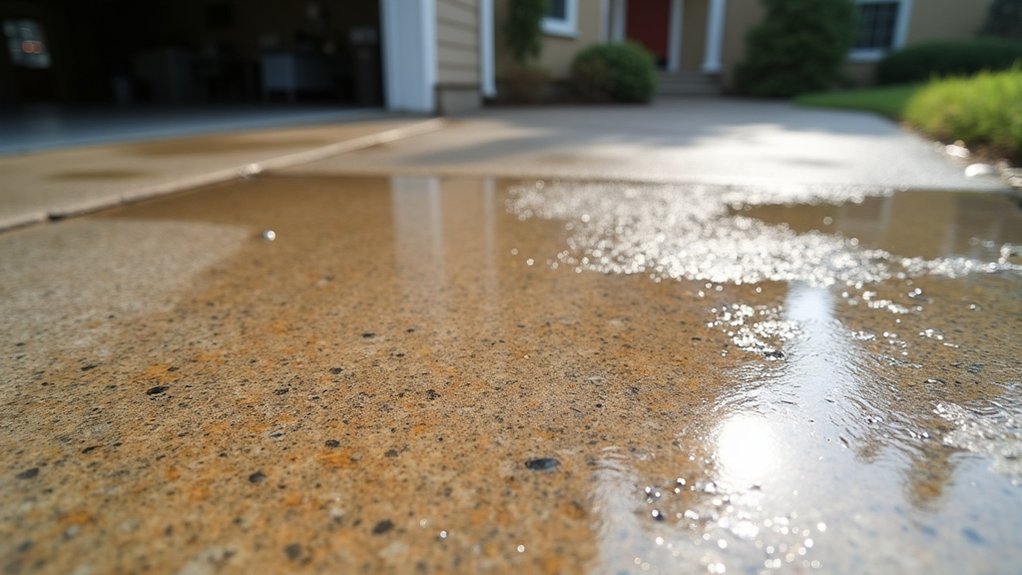
You’ll maximize your epoxy driveway’s service life by implementing daily cleaning routines that prevent abrasive particle accumulation from degrading the coating’s surface integrity. Sweep with soft-bristle brooms or microfiber dust mops each day, as embedded dirt and debris act like sandpaper under vehicle traffic loads. Complement this regimen with protective sealant applications that shield against oil penetration, UV exposure, and freeze-thaw cycle damage.
Daily Cleaning Routines
Sweeping away loose debris each day stands as your first line of defense against surface abrasion on epoxy driveways. Your routine sweep schedule prevents grit particles from grinding into the coating under vehicle weight and foot traffic. Among effective cleaning methods, soft-bristled brooms and microfiber dust mops deliver ideal performance without scratching the surface.
Follow these specifications for daily maintenance:
- Use a soft-bristled indoor broom to remove sand, dirt, and small stones that cause micro-abrasions under load pressure.
- Deploy microfiber dust mops weekly to capture fine particles standard sweeping misses.
- Address spills immediately—absorb liquids first, then clean to prevent chemical erosion of the epoxy resin.
This systematic approach safeguards your driveway’s structural integrity and maintains its protective coating against daily residential demands.
Protective Sealant Applications
Beyond daily debris removal, protective sealant applications deliver the most significant lifespan extension for your epoxy driveway—often doubling its service life under heavy traffic conditions.
The sealant application process requires thorough surface cleaning and crack repair before coating. You’ll roll out sealer using the cross-roll technique to maintain wet edges and guarantee complete coverage. For deep areas, apply in increments with 30-minute set times between layers.
Understanding coverage and application rates helps you calculate material needs accurately. One gallon seals 75-100 square feet, depending on surface roughness and prior coatings. A 5-gallon unit covers approximately 500 square feet—no dilution required.
After application, you’ll walk on the surface in 24 hours and drive on it within 72 hours. The sealed surface resists chemical de-icing salts, gasoline, oil, and temperature-induced cracking.
How Arizona Weather Conditions Affect Epoxy Driveway Performance
Arizona’s extreme climate creates unique challenges that many standard epoxy systems simply can’t withstand. You’ll face temperature control challenges that cause thin coatings under 40 mils to crack during thermal expansion cycles. Meeting moisture barrier requirements becomes critical when monsoon humidity attacks your curing process.
Here’s what Arizona weather does to unprotected epoxy:
- UV radiation degrades surfaces within months, causing yellowing and chalking without polyaspartic protection
- Summer heat disrupts curing chemistry, leading to peeling, clouding, and premature failure
- Moisture intrusion from desert humidity creates bubbling and delamination in improperly sealed systems
You need high-build systems rated 40-60 mils with UV-resistant topcoats to achieve 15+ year performance. Industrial-grade specifications aren’t optional in this environment—they’re essential for residential durability.
Frequently Asked Questions
Can Epoxy Driveways Withstand Heavy Vehicle Weight Without Cracking or Damage?
Yes, epoxy driveways can withstand heavy vehicle weight without cracking when you apply them correctly. You’ll need concrete strength at 3000 PSI minimum and coating thickness between 0.4-1mm for ideal load distribution. High-performance epoxy systems handle heavy equipment usage and resist vehicle-induced stress effectively. For extreme temperature resistance, you should add protective topcoats that prevent thermal expansion damage. Proper surface preparation guarantees your bond remains intact under repeated vehicular loads.
How Does Epoxy Driveway Durability Compare to Concrete or Asphalt Alternatives?
Epoxy outperforms both concrete and asphalt when you factor in epoxy driveway installation considerations like proper thickness (40-60 mils) and surface preparation. You’ll get 10-20 years of residential service versus asphalt’s 5-10 year resurfacing cycle. Epoxy driveway maintenance requirements remain minimal—regular sweeping and occasional deep cleaning—while bare concrete demands frequent repairs. Your coating resists oil, chemicals, and heavy vehicle loads better than unprotected alternatives, delivering superior long-term value.
What Signs Indicate My Epoxy Driveway Needs Replacement or Repair?
You’ll notice several common wear patterns signaling repair needs: surface discoloration, hairline cracks, and chips from impact loads. Watch for oil stains bleeding through and water pooling—both indicate compromised seal integrity. Environmental factors affecting lifespan include UV exposure causing fading and temperature fluctuations creating adhesion failure. When your maintenance routine requires harsh chemicals or resealing more frequently than every 1-2 years, you’re approaching replacement threshold specifications.
Are Epoxy Driveways Slippery When Wet or During Rain?
Standard epoxy surfaces become slippery when wet, but you’ll achieve reliable slip resistance by incorporating additives like aluminum oxide or silica sand into your topcoat. These aggregates create textured surfaces that maintain traction in wet conditions, meeting OSHA’s 0.6 coefficient standard. Your epoxy driveway can reach 0.7 on slip meters with proper additive application. You should specify UV-resistant formulas with broadcast media for ideal rain exposure performance.
Can I Apply Epoxy Coating Over My Existing Damaged Driveway Surface?
You can apply epoxy coating over a damaged driveway, but you’ll need to address surface preparation requirements first. You must repair all cracks and damage before application—epoxy won’t bond properly to compromised concrete. If your concrete measures below 2500 PSI, you’ll need densifiers for reinforcement. Proper prep guarantees the coating achieves its full impact resistance capabilities, handling vehicle loads without failure and lasting 10-20 years under residential conditions.