



You’ll pay about $5,000 to $9,000 to heat a 600-square-foot driveway with an electric system. A hydronic system runs $7,000 to $15,000 for the same space, typically 30% to 50% more upfront than electric. Per square foot, expect roughly $8 to $15 for electric and $12 to $25 for hydronic. Heating only tire tracks can cut element and control costs nearly in half. Removal, excavation, labor, and surfacing push totals higher, and seasonal operating costs matter too. Here’s how each factor shapes your final price.
Key Takeaways
- A 600-square-foot heated driveway costs about $5,000 to $9,000 with an electric system and $7,000 to $15,000 with a hydronic system.
- Electric systems run about $8 to $15 per square foot, while hydronic systems cost $12 to $25 and typically 30% to 50% more upfront.
- Heating only tire tracks instead of the full surface cuts element and control costs nearly in half.
- Driveway removal adds $1 to $2 per square foot, and excavation, site preparation, and surfacing can raise totals further.
- Operating costs typically range from $100 to $300 per season for 400 square feet to $120 to $600 per winter for 1,000 square feet.
How much does a heated driveway cost

A heated driveway’s cost depends on project scope, with electric systems generally running cheaper upfront and hydronic systems costing 30% to 50% more. Some quotes cover only heating equipment, while others include excavation, surfacing, and labor.
Your total heated driveway cost also rises with heated area, full-surface coverage versus tire tracks, driveway removal at $1 to $2 per square foot, and any electrical panel upgrades. Compare itemized bids so you can judge the cost for heated driveway installation.
What does a heated driveway cost by system and size
A 600-square-foot heated driveway costs $5,000 to $9,000 with an electric system and $7,000 to $15,000 with a hydronic system, before site work. Expect water-based systems to cost 30% to 50% more upfront.
Coverage changes your radiant heat driveway cost just as sharply. Heating only tire tracks cuts element and control costs nearly in half:
| Driveway Size and Coverage | Elements and Controls |
|---|---|
| 20×20, full coverage | $5,379 |
| 20×20, tire tracks | $2,991 |
| 30×20, full coverage | $7,629+ |
If you want every square foot clear after a storm, budget for full coverage. If you can live with snow between the tracks, you’ll save thousands on a 20×20 driveway. Bigger driveways push costs higher because you need more heating material and labor.
How does electric versus hydronic change the price
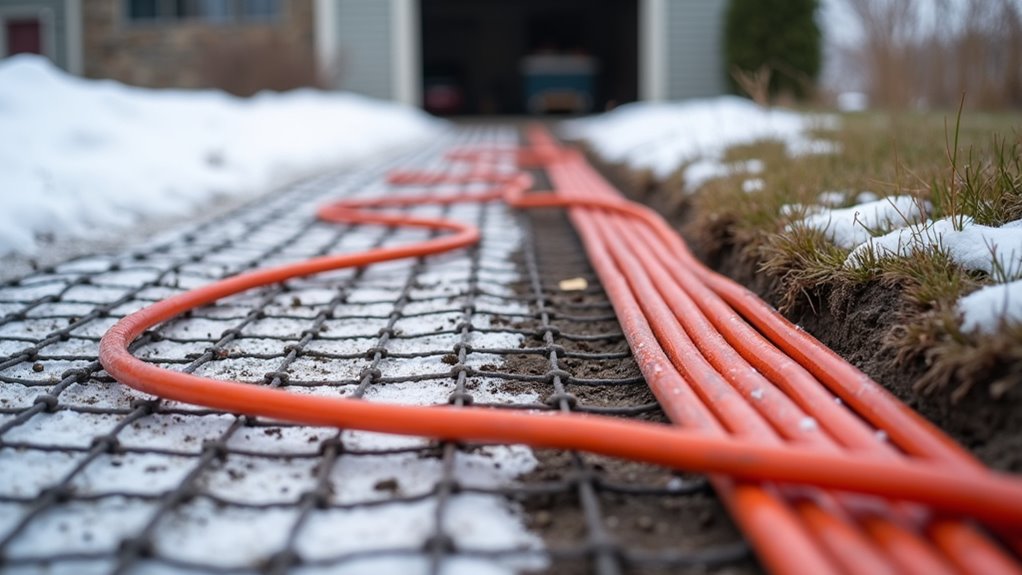
Electric systems cost less to install, while water-based hydronic systems typically cost 30% to 50% more upfront. Most homeowners see the gap right away in equipment pricing. Electric heating equipment runs $3,200 to $5,800, while hydronic system-only estimates reach $4,200 to $8,700. Per square foot, you’ll pay about $8 to $15 for electric versus $12 to $25 for hydronic. On a 600-square-foot driveway, expect $5,000 to $9,000 for electric and $7,000 to $15,000 for hydronic before site work.
Hydronic’s premium comes from added equipment: you’ll need a boiler or heat pump, pumps, and related components. Electric systems skip that hardware, but they carry their own risk. If your existing service can’t support the load, you may need a panel upgrade or secondary panel. Get a load assessment before comparing quotes so you’re pricing each system’s true installed cost.
How does driveway size affect the total
A larger driveway raises your total project cost because heating materials and labor scale with square footage.
For a 20-by-20-foot driveway, you’ll pay about $5,379 for heating elements and controls with full coverage. Expanding to 30 by 20 feet pushes that figure to $7,629 or more.
You can cut costs by heating only the tire tracks. That option runs about $2,991 for a 20-by-20-foot driveway and $4,129 or more for a 30-by-20-foot layout, saving you roughly 45% versus full coverage.
These figures cover equipment only. Excavation, surfacing, and labor add to your total, and a bigger footprint also increases operating costs because you’re heating more surface each hour. Measure your driveway before requesting quotes so you can compare bids directly.
What do installation and materials add

Installation and materials can push your total well beyond the $3,200 to $8,700 system-only range. If you’re replacing an existing driveway, removal adds $1 to $2 per square foot, and excavation and site preparation raise costs further. Soil conditions, drainage, slope, and groundwater determine how much prep work you’ll need. Your surface choice matters too: you’ll embed cables or mats in concrete or asphalt, or set them in a sand bed beneath pavers.
System type adds its own expenses. An electric setup may require a panel upgrade or secondary panel if your existing service can’t handle the load. Hydronic projects need a boiler or heat pump, plus pumps and related equipment. Controls range from manual to Wi-Fi-enabled, affecting upfront cost.
What does it cost to run a heated driveway each winter
A standard 400-square-foot, full-coverage electric driveway will likely cost $100 to $300 per season to run in a moderate climate, based on one estimate of about $3.25 per hour at average electricity rates and 50 to 150 hours of run time. A larger 1,000-square-foot driveway may cost $120 to $600 per winter, according to a separate cost guide. Operating costs depend on heated area, system type, local energy prices, snowfall, and how many hours the system runs.
You can cut run time with snow sensors and automatic controls, which activate the system only when snow and temperature conditions qualify. Wi-Fi-enabled controllers raise upfront cost but give you tighter control over energy use. Heating just the tire tracks also reduces the area you’re paying to warm.
How do you price out a heated driveway accurately
To price out a heated driveway accurately, measure the exact square footage you’ll heat and base your estimate on that heated area, not a national average. Decide between full coverage and tire tracks. On a 20-by-20-foot driveway, that choice alone moves element and control costs from $2,991 to $5,379.
Choose your system. Electric runs about $8 to $15 per square foot. Hydronic runs $12 to $25 and may cost 30% to 50% more upfront. Make sure every quote you collect states whether it covers equipment only or includes excavation, surfacing, and labor.
Add site-specific costs. Budget $1 to $2 per square foot for removing an existing driveway, plus excavation and grading. Factor in a panel upgrade for electric systems or a boiler and pumps for hydronic ones. Account for your controller and sensors, since they affect both upfront and operating costs.
Get a Clear Quote for the Paving Work
Heated driveway costs can involve more than the heating equipment, especially when an existing surface needs removal, replacement, grading, or a new concrete or asphalt finish. V&F Paving can provide an estimate for the driveway paving portion of your project. Call (203) 624-2449 or request a free estimate.
Frequently Asked Questions
Can a Heated Driveway Be Added to an Existing Driveway Without Replacing It?
Usually, you can’t. Because you’ll need to embed cables, mats, or tubing within the surface, or in a sand bed beneath pavers, you’ll have to tear out your existing driveway, adding $1 to $2 per square foot for removal plus excavation. With pavers, you may lift and reset them instead. Want to avoid demolition? You can lay portable heated mats on top for $5 to $10 per square foot, roughly $1,600 per mat.
How Long Does a Heated Driveway System Typically Last?
You can expect a well-installed heated driveway to last 20 years or more. Embedded electric cables or hydronic PEX tubing often match your driveway’s lifespan, but your hydronic boiler or pumps may need replacement sooner, adding equipment costs. Because repairing buried elements means cutting pavement, protect your $12 to $25-per-square-foot investment with quality installation. Snow sensors and automatic controls also limit run time and reduce wear on system components.
Does a Heated Driveway Increase Home Resale Value?
It can, but you shouldn’t count on recouping the full installation cost. A heated driveway’s resale appeal depends on your market; buyers in snowy climates may value it more. Since you’ll typically spend $12 to $25 per square foot, or $7,000 to $16,000 for a two-car driveway, compare that against recent sales of comparable local homes. Highlight potentially low operating costs, like $100, $300 per season with automatic snow sensors, to strengthen your listing’s case.
Do Heated Driveways Require Regular Maintenance or Repairs?
Yes, but it’s usually minimal. Electric systems have no moving parts, so you’ll mainly check snow sensors and controllers. Hydronic systems need more upkeep: you’ll service the boiler or heat pump, pumps, and heated fluid periodically. Repairs can cost more because cables and tubing sit beneath concrete, asphalt, or pavers, so a fault can mean cutting the surface. Pavers are easier to lift. Professional installation helps you avoid costly failures.
Are Heated Driveways Safe for Pets, Children, and Vehicles?
Yes, heated driveways are generally safe for your pets, kids, and vehicles. The surface stays warm enough to melt snow, not hot enough to burn paws or skin, and the elements sit embedded beneath concrete, asphalt, or pavers. Snow sensors and automatic controls limit run time, cutting your operating costs. If you’re choosing electric, budget for a licensed electrician and a possible panel upgrade to keep wiring safe and code-compliant.