
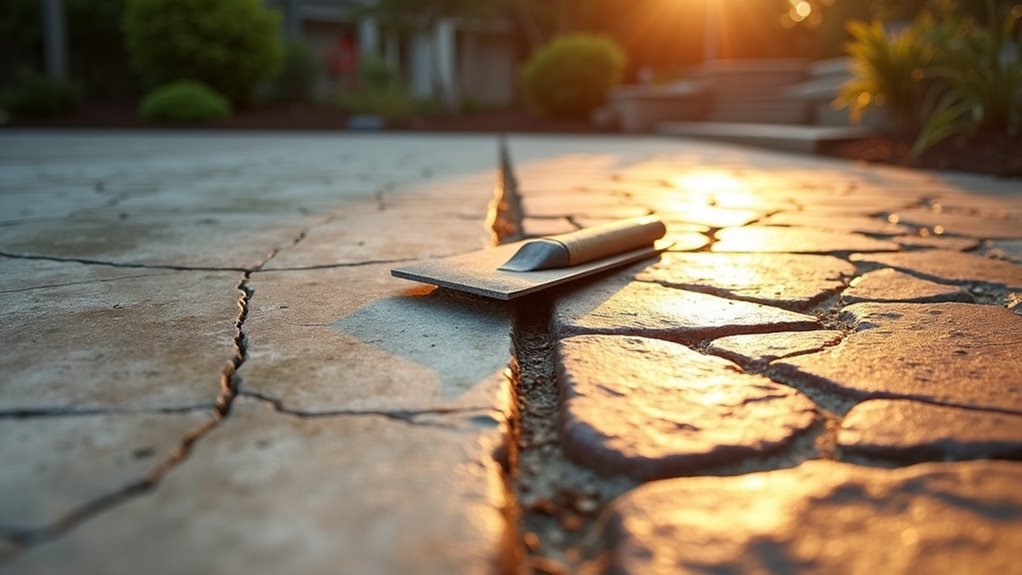



Yes, you can add a heated driveway to your existing pavement, and you won’t always need to tear it out. Installers saw-cut narrow grooves into concrete or asphalt, set electric cables, and seal them flush. On asphalt, they can lay cables on top and cover them with a new overlay. Electric cables work best since they’re far thinner than hydronic tubing. Your pavement’s condition decides feasibility, and the right method depends on a few key factors.
Key Takeaways
- Heated driveways can often be retrofitted into existing pavement without full removal, typically by saw-cutting grooves or adding an asphalt overlay.
- Electric heating cables suit most retrofits because they are much thinner than hydronic tubing, which rarely fits saw-cut grooves.
- Retrofit success depends on pavement condition, since saw-cutting cannot fix major cracking, deterioration, or poor drainage.
- Paver driveways can be retrofitted by lifting pavers, installing heating in the base, then resetting the pavers.
- Heating only tire tracks shrinks the installation area, reducing disruption and cost compared with heating the full driveway surface.
Can a heated driveway be installed under an existing driveway
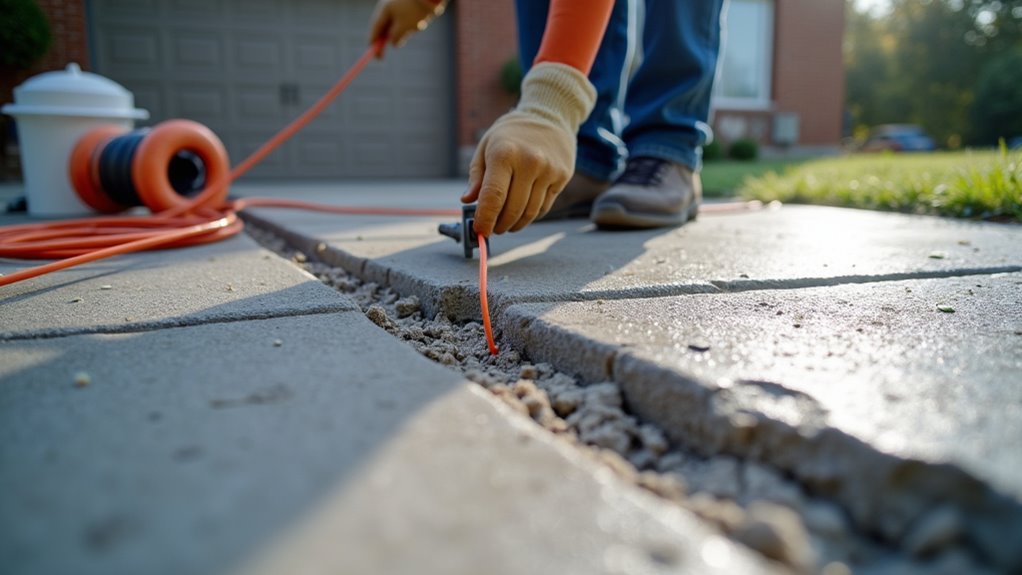
Yes, you can add a heated driveway to an existing driveway, and you don’t always have to tear it out first. Most retrofits use one of two methods: saw-cutting narrow grooves into concrete or asphalt, or placing cables over asphalt and covering them with a new layer. Electric cables are easier to retrofit than hydronic tubing because they’re much thinner. Retrofit heated driveway installation works best when your pavement is sound and has substantial service life left. If you see major cracking, deterioration, or poor drainage, you’ll get better results adding heating cables during repair or replacement. Have qualified heated driveway installers assess pavement condition, electrical capacity, and drainage to heat driveway surfaces properly, then design groove dimensions and cable spacing to manufacturer specifications and local code.
How do retrofit and new-build approaches compare
Retrofits add heating to your existing pavement with less construction, while new-build approaches replace the surface entirely and cost more but allow more system options. Deciding how to heat a driveway means weighing disruption, cost, and system options.
| Approach | Method | Key Tradeoff |
|---|---|---|
| Saw-cut retrofit | Cables sealed in grooves | Minimal disruption; cuts complicate repairs |
| Asphalt overlay | Cables under new asphalt | Requires new paving material |
| Full replacement | Components embedded in new surface | Adds removal and reconstruction costs |
Retrofits typically run $7 to $17 per square foot and favor electric cables, which fit narrow channels. Tire-track-only heating reduces installed area and cost. Choose full replacement if your driveway shows major cracking or poor drainage, or if you want hydronic tubing. Get site-specific bids itemizing equipment, electrical work, surface repairs, and controls.
Why does most heated driveway installation need new pavement
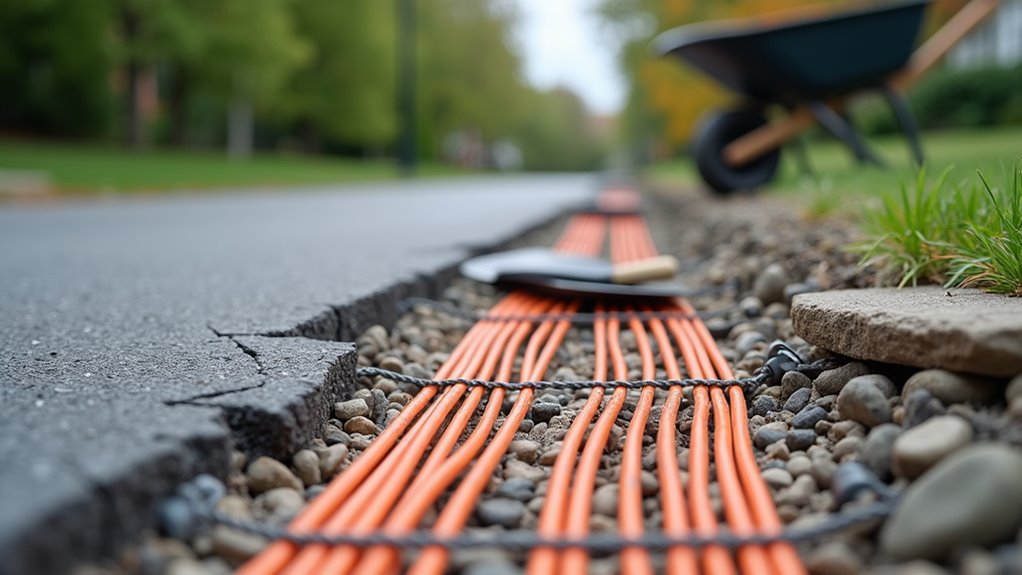
Most heated driveway projects need new pavement because deteriorated surfaces, hydronic system requirements, and asphalt overlay methods all call for fresh paving material.
If your driveway has major cracking, deterioration, or poor drainage, saw-cutting it won’t fix those problems, and you’ll likely need repairs that disturb the heating cables. Replacement gives you a sound base and lets you embed components correctly.
Hydronic tubing is thicker than electric cable, so it doesn’t fit practical saw-cut grooves. You’ll typically need extensive construction, plus space for a boiler and pump.
An asphalt overlay keeps your old pavement but still requires new paving material over the cables.
If your surface is sound, you can retrofit electric cables instead. Get bids that separate heating, electrical, and surface costs.
What retrofit options exist for an existing driveway
Existing driveways can be retrofitted for heat in four main ways, provided the pavement is sound.
If your pavement is sound, there are four main ways to retrofit your existing driveway with heat.
- Saw-cut retrofit: Your contractor cuts narrow grooves into concrete or asphalt, lays electric heating cables, then seals the cuts flush with the surface.
- Asphalt overlay: You place cables over the existing asphalt and cover them with a new asphalt layer.
- Paver retrofit: You lift the pavers, install the heating system in the base, then reset the pavers.
- Tire-track heating: You heat only the wheel paths, shrinking the installation area, disruption, and cost.
Electric cables suit most retrofits because they’re much thinner than hydronic tubing. Whichever method you choose, follow the manufacturer’s groove dimensions, cable spacing, embedment depth, and sealing specs, plus local electrical code requirements.
How does the process actually work
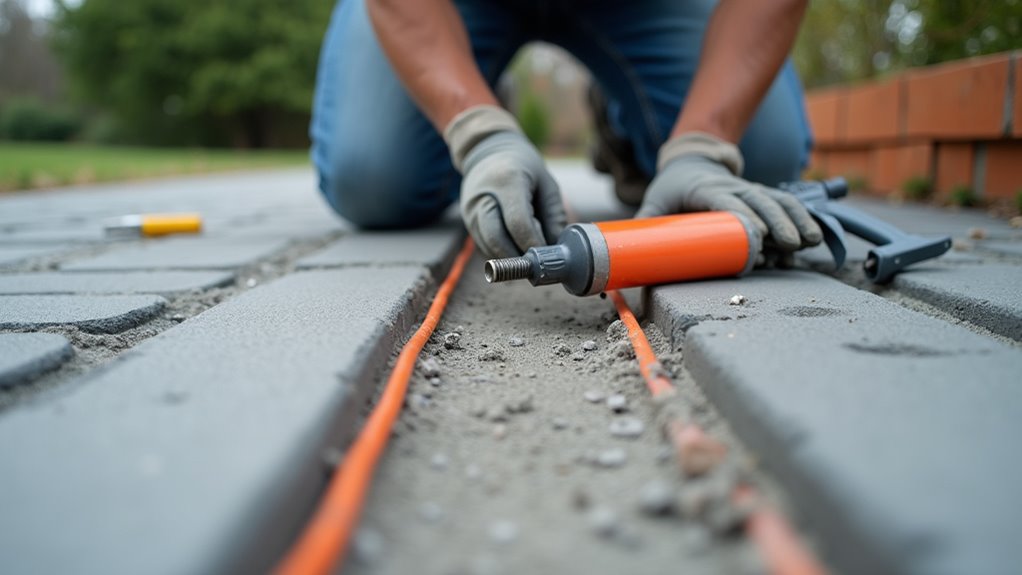
A retrofit works by saw-cutting narrow grooves into your existing driveway, pressing heating cables into them, sealing the cuts, and wiring the system to controls. A qualified contractor first checks the driveway’s condition, drainage, and available electrical capacity to confirm it can support a retrofit. They’ll also help you decide whether to heat the full surface or only tire tracks.
Next, the crew marks a layout matching the manufacturer’s cable spacing, then saw-cuts narrow grooves to the specified depth. They clean the channels, press the heating cables in, and test each cable as directed. Then they seal the cuts flush, using a sealant suited to concrete or asphalt. An electrician runs code-compliant wiring through conduit to a junction box and connects the controls.
If you’re adding an asphalt overlay, cables go on the old surface before new paving covers them. Crews simply lift pavers.
How long does the work take
The work takes the least time with a saw-cut retrofit and the most with full replacement, and project length depends mostly on the installation method you choose, because each one disturbs a different amount of pavement. A saw-cut retrofit is usually the quickest: your contractor cuts narrow grooves, lays electric cable, tests it, and seals the cuts flush, leaving the slab in place. A paver retrofit takes longer because crews lift pavers, install heating in the base, then reset everything. An asphalt overlay adds paving and cooling time. Full replacement runs longest, since removal, embedding, and new pavement all happen in sequence.
Other factors extend your schedule: heating the full drive instead of tire tracks, upgrading electrical capacity, installing hydronic boilers and pumps, repairing cracks, and waiting for sealants or concrete to cure. Ask each contractor for a detailed written phase-by-phase timeline.
How do you plan a heated driveway installation
You plan a heated driveway installation by checking your pavement’s condition, choosing a system and installation method, and confirming power, coverage, and drainage before anyone cuts the surface. Start with an assessment. If your driveway is sound and has substantial life remaining, it’s a strong retrofit candidate. If it has major cracking or poor drainage, consider adding heat during replacement instead.
Next, pick your system. Electric cables usually suit retrofits best. Hydronic tubing requires boiler, pump, and space capacity. Decide whether you’ll heat the full drive or only the tire tracks. Then confirm your electrical capacity and design drainage so meltwater won’t refreeze elsewhere. Match groove dimensions and cable spacing to manufacturer instructions and local code. Finally, get itemized bids covering equipment, wiring, surface repairs, controls, warranty, and repair access.
Know When Your Driveway Needs Repaving
Adding a system beneath an existing driveway may require work to the pavement above it, depending on the condition and installation approach. V&F Paving handles driveway installation and resurfacing for homeowners who need a durable finished surface after pavement work. Call (203) 624-2449 or contact the paving team to review your driveway.
Frequently Asked Questions
How Much Does It Cost to Operate a Heated Driveway Each Winter?
Your winter operating cost depends on your system and usage, so there’s no single figure; you’ll need site-specific numbers. Electric consumption scales directly with heated area, so heating only tire tracks shrinks the area you pay to warm. Hydronic costs hinge on your boiler’s fuel type and efficiency. Your local energy rates, snowfall, and controls matter too. Before installation, ask your contractor to estimate detailed seasonal operating costs in writing.
Will Saw-Cut Grooves Weaken My Driveway or Cause Cracking Over Time?
Properly cut and sealed grooves shouldn’t substantially weaken a sound driveway, since they’re narrow and shallow. Problems usually start when you cut into pavement that’s already cracked or deteriorating, or when sealing fails and lets water infiltrate. You’ll reduce risk by having a qualified contractor follow the manufacturer’s groove dimensions and spacing, using the right sealant for concrete or asphalt, and inspecting seals regularly. Remember, cuts can complicate future repairs.
Does a Heated Driveway Increase Home Value or Affect Property Taxes?
It can, but you shouldn’t count on it. A heated driveway may appeal to buyers in snowy climates, yet resale value depends on your local market, and retrofit saw cuts may complicate future surface repairs. Property tax effects vary by jurisdiction, so check with your local assessor before you install. Get site-specific bids, confirm transferable warranty coverage and operating costs, and keep documentation you can show buyers or appraisers later.
What Happens if a Heating Cable Fails After Installation?
If a cable fails, you’ll lose heat in that zone. Repair usually means locating the fault and cutting into the surface to splice or replace the cable. That’s why you should test cables during installation as the manufacturer directs and confirm warranty coverage and repair access before work begins. Remember, retrofit saw cuts can complicate future surface repairs, so ask your contractor how they’d handle a cable fault.
Are Heated Driveways Covered by Homeowners Insurance or Manufacturer Warranties?
It depends on your policy and product terms. Manufacturer warranties may cover heating cables or mats, but terms vary and may require installation to the manufacturer’s specifications. Before work begins, confirm warranty length, exclusions, and whether labor’s included. Don’t assume homeowners insurance covers it; call your insurer and ask directly. You should also get your contractor’s workmanship warranty in writing, since retrofit saw cuts can complicate future repairs and cable access.