


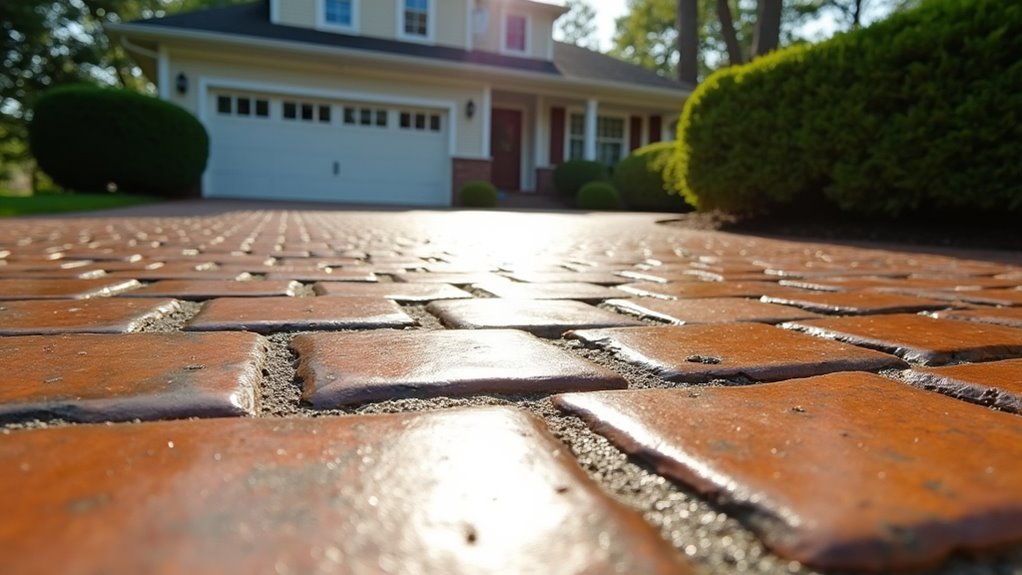


A heated driveway warms your pavement from below. Electric resistance cables or hydronic PEX tubing sit beneath your concrete, asphalt, or pavers. When sensors detect cold temperatures and moisture, the controller activates the system. Electric setups power the cables, while hydronic setups circulate boiler-heated antifreeze. Heat rises through the surface and melts snow and ice on contact. Meltwater then drains away. Understanding each component, trigger, and energy cost helps you decide if it’s right for you.
Key Takeaways
- Heating elements beneath concrete, asphalt, or pavers warm the pavement from below, melting snow and ice at the surface.
- Electric systems use resistance cables or mats, while hydronic systems circulate boiler-heated antifreeze through PEX tubing.
- Temperature and moisture sensors send readings to a controller, which activates heating only when both meet snow-melting settings.
- An after-run cycle continues heating briefly after snowfall ends to dry the surface and reduce refreezing.
- Meltwater must drain away through planned routes or driveway edges to prevent it from refreezing on the surface.
How does a heated driveway work

A heated driveway works by using embedded heating elements beneath the concrete, asphalt, or pavers to warm the pavement from below. The driveway heater transfers heat upward through the pavement, melting snow and ice at the surface before they accumulate. Meltwater then drains away through planned drainage routes or toward the driveway edges, so it doesn’t refreeze. You can heat the full driveway or only selected tire tracks. The system prevents buildup; it doesn’t push or lift snow mechanically. You’ll choose between two main types: electric systems, which convert electricity into heat through resistance cables, coils, or mats, and hydronic systems, which circulate heated antifreeze from a boiler through flexible PEX tubing.
How do the parts of a heated driveway fit together
In every heated driveway, the parts fit together in the same control chain: sensors detect conditions, a controller makes the decision, and the heating elements deliver heat to the pavement. When cold and precipitation conditions meet the controller’s activation settings, it powers electric cables or starts the pump that circulates heated antifreeze from your boiler. Heat moves upward through concrete, asphalt, or pavers, and meltwater drains toward the edges. After snowfall ends, an after-run cycle keeps heating briefly to dry the surface and reduce refreezing. Depending on installed controls, you can operate many systems manually.
| Component | Function |
|---|---|
| Sensors | Detect temperature and moisture |
| Controller | Activates heating when settings are met |
| Heating elements | Warm pavement through cables or PEX tubing |
What triggers the system to turn on

Automatic controls turn on a heated driveway when temperature and moisture sensors detect snow-melting conditions. The sensors monitor your driveway, and when cold temperatures and precipitation meet the activation settings you’ve chosen, the sensor signals the controller. The controller powers electric resistance cables or starts the hydronic boiler and pump, sending heated fluid through the PEX tubing.
Because the system only runs when conditions call for it, you avoid unnecessary runtime. After snowfall ends, an after-run cycle keeps heating briefly to dry the surface and reduce refreezing.
You can also operate some systems manually, depending on the controls installed. To keep automatic activation reliable, clear leaves and debris from sensors and confirm the system starts and shuts off correctly before winter.
How do sensors detect snow and temperature
Snow-melting sensors detect snow and temperature through two inputs: a temperature sensor that tells the controller whether conditions are cold enough for snow or ice to form, and a moisture sensor that detects precipitation at the surface. Neither reading alone activates your system. The controller compares both against its activation settings.
If cold and precipitation conditions meet those settings, the sensor signals the controller. It powers your electric cables or starts the hydronic circulation equipment. An after-run cycle can keep heating briefly after snowfall ends to dry the pavement and reduce refreezing.
Accurate detection depends on a clear sensor. Leaves and debris can block it from reading surface conditions, so you’ll want to keep it clean. Confirm the system starts and shuts off correctly before winter.
How does heat move through the driveway surface

Heat travels upward through the pavement from heating elements installed beneath concrete, asphalt, or pavers, reaching the surface where it melts snow and ice. With an electric system, resistance cables, coils, or mats convert electricity directly into heat. With a hydronic system, a pump circulates boiler-heated water and antifreeze through PEX tubing, transferring heat into the slab.
You don’t need to heat every square foot; you can design coverage for the full driveway or only the tire tracks. As surface snow melts, the water must drain through planned routes or toward the driveway edges. If it can’t escape, it’ll refreeze on or beside the heated area. Keep in mind that the system prevents buildup by melting; it doesn’t mechanically move snow off your pavement.
How much energy does a heated driveway use
A heated driveway’s energy use varies, with one estimate putting seasonal operating costs at about $120, $600 for a 1,000-square-foot driveway. Your actual figure shifts with snowfall totals and energy prices.
Five variables determine your heated driveway’s energy consumption: system type, heated area, weather, operating hours, and local utility or fuel rates.
Electric systems convert electricity directly into heat, but they can cost more to run than hydronic systems in some settings. Hydronic systems can deliver lower operating costs in larger installations, though you’ll pay more upfront for the boiler, pump, and tubing.
You can reduce runtime by installing automatic sensors. They activate the system only when temperature and moisture conditions meet your settings, which prevents unnecessary operation. Heating only the tire tracks also shrinks the total area you’re paying to warm.
What should you know before installing one
Installing a heated driveway usually means pavement work, because heating cables or tubing sit beneath the paved surface, so it’s easiest to plan one alongside a new pour or a full replacement. You can sometimes add an electric system to an existing driveway, but confirm first whether doing so affects your pavement warranty. Hydronic systems demand more: excavation, insulation, tubing, and a connection to a boiler or other heat source.
Define coverage as well. Heating the full driveway maximizes clearing, while limiting heat to tire paths reduces the heated area. Factor in your climate, driveway size, pavement material, local energy prices, and equipment, since each shapes design and cost. Plan drainage so meltwater leaves the driveway instead of refreezing on or beside the heated area.
Build Your Driveway on a Strong Foundation
A snow-melting system performs within the pavement, but the driveway itself still needs proper installation to handle vehicles, drainage, and Connecticut winters. V&F Paving offers asphalt and concrete driveway paving for new and replacement surfaces. Speak with the team at (203) 624-2449 or request a paving consultation.
Frequently Asked Questions
How Long Does a Heated Driveway Typically Last Before Needing Replacement?
You can extend its service life through consistent maintenance: inspect sensors, controls, and electrical connections regularly. If you’ve got a hydronic system, check liquid levels, circulation, leaks, and component condition. Keep sensors free of debris, confirm proper start-up and shutoff before winter, and ensure melting water drains away rather than refreezing on or close to heated surfaces.
Is a Heated Driveway Safe for Pets, Children, and Bare Feet?
Generally, yes. You don’t touch the heating elements; installers embed electric cables, mats, or hydronic PEX tubing beneath the concrete, asphalt, or pavers. The system warms the pavement only enough to melt snow and ice, so your surface won’t function like a hot plate. Still, you should verify surface temperatures with your manufacturer, keep drainage working to prevent refreezing, and inspect electrical connections and hydronic lines for damage or leaks.
Can a Damaged Heating Cable or Tube Be Repaired Without Replacing Pavement?
Usually not entirely. Since cables and PEX tubing sit embedded beneath concrete, asphalt, or pavers, you’ll typically need to open the pavement above the fault. You don’t always have to replace the whole driveway, though. A technician can often locate the damage and cut out a limited section for splicing or coupling, then patch it. With pavers, you can lift and reset units. Confirm repair methods and warranty terms first.
Does a Heated Driveway Increase a Home’s Resale Value?
There’s no reliable figure showing whether a heated driveway raises your home’s resale value, so you can’t count on a fixed return. You can still assess factors buyers may weigh: your climate, driveway size, pavement material, and system type. You’ll also want to document operating costs, which one estimate places at $120 to $600 per season for 1,000 square feet, plus maintenance records confirming sensors, controls, and drainage work correctly.
Will a Heated Driveway Cause the Concrete or Asphalt to Crack?
A properly designed and installed heated driveway shouldn’t, by itself, crack your concrete or asphalt. Your risk depends on execution. If you retrofit electric cables into existing pavement, the installation work can affect your pavement warranty, so confirm terms first. You’ll also need reliable drainage; otherwise meltwater can refreeze on or beside the heated area. Specify an after-run cycle to dry the surface, and inspect sensors and controls before winter.