
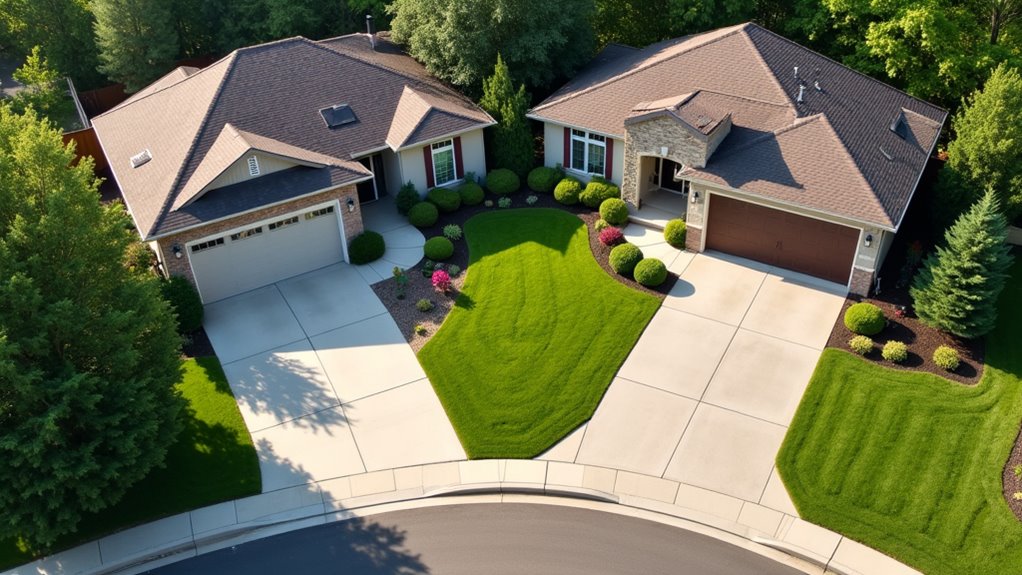
Your asphalt driveway can last 25 to 30 years when you combine professional installation with diligent maintenance. The key factors include proper subgrade preparation, quality mix design, and consistent upkeep routines. You’ll need to apply sealcoat every three years and address cracks promptly before freeze-thaw cycles cause expansion. Without this attention, you’re looking at just 12 to 15 years of service life. The strategies below will help you maximize your driveway’s full lifespan potential.
Average Lifespan Expectations for Asphalt Driveways
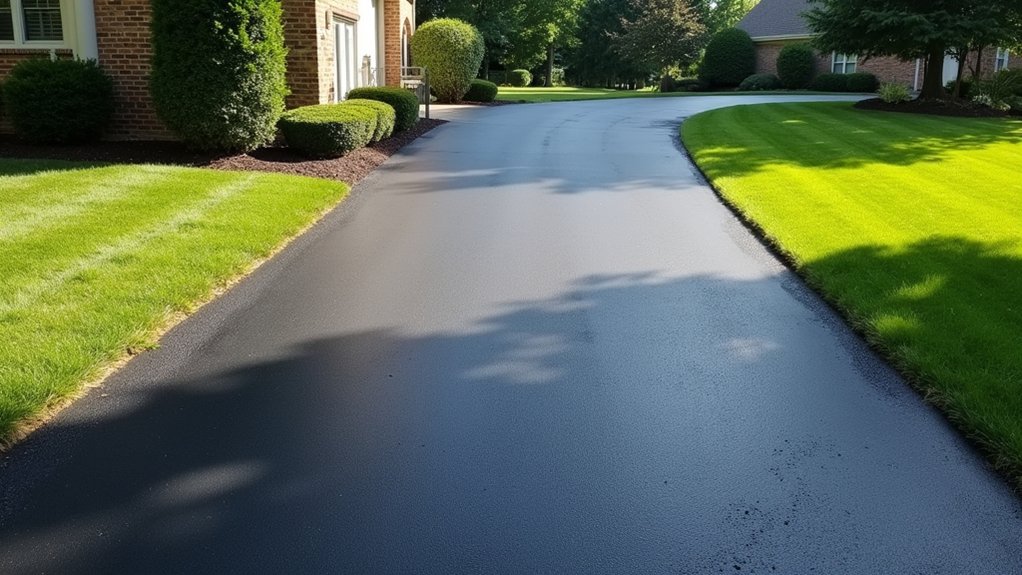
When you invest in an asphalt driveway, you’re looking at a lifespan of 15 to 25 years under standard conditions. With professional installation and routine maintenance, you can push that upper range to 25 to 30 years. However, poor installation or neglected upkeep drops performance to just 12 to 15 years. Sealing cracks promptly is one of the most effective maintenance practices to extend your driveway’s lifespan toward that upper range.
Regional variations considerably impact durability expectations. In Arizona, intense sun and UV exposure limit driveways to 15 to 20 years, regardless of asphalt binder quality. Surface temperatures exceeding 160°F cause softening and rutting that accelerate wear on your pavement. Your residential driveway will typically outperform commercial applications because it handles lighter traffic loads. In Massachusetts, harsh freeze-thaw cycles combined with snowplow damage and deicing salts create additional stress that requires local expertise to address properly.
The key factors determining where your driveway falls within these ranges include installation quality, local climate conditions, and your commitment to preventive maintenance throughout its service life.
Why Installation Quality Determines Long-Term Durability
Before your asphalt driveway can deliver decades of reliable performance, the installation process must establish a solid foundation through proper subgrade preparation. Poor subgrade work alone shortens 2 to 5 years from your driveway’s expected lifespan.
Proper mix design tailored to your climate and traffic conditions prevents premature cracking and rutting. When contractors apply ideal installation techniques—including precise compaction verified through nuclear density testing—you’ll achieve a stronger, longer-lasting surface. Asphalt’s composition of approximately 95% aggregates bound with asphalt cement creates a highly engineered material designed to withstand heavy use and fluctuating weather conditions. Modern paving crews also utilize GPS and laser-guided systems to ensure precise material placement and consistent thickness across the entire driveway surface.
| Installation Factor | Poor Quality Impact | Quality Standard |
|---|---|---|
| Subgrade Preparation | 2-5 years lost | Graded, compacted, drained |
| Compaction | Decreased longevity | Nuclear density verified |
| Temperature Control | Premature hardening | Sensor-monitored application |
Choosing an experienced contractor who monitors performance guarantees your driveway exceeds the 25-year threshold. Proper drainage planning during the installation phase is equally critical, as water infiltration can weaken the foundation and lead to premature structural failure.
Essential Sealcoating Schedules to Protect Your Investment
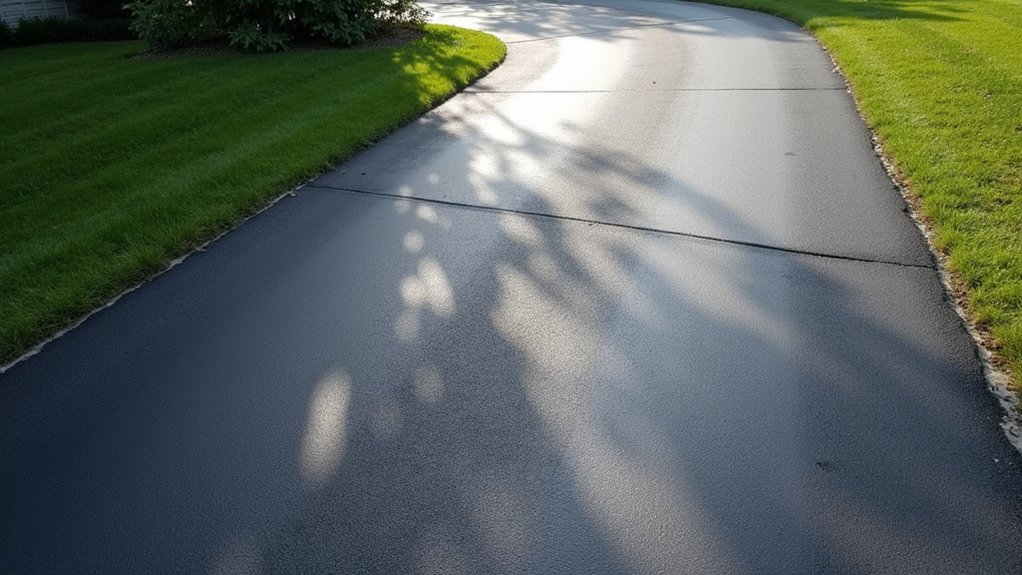
A properly timed sealcoating schedule protects your asphalt driveway from UV damage, water infiltration, and oxidation—the three factors that cause premature surface deterioration.
For new asphalt, wait 6 to 12 months before applying your first sealcoat. Early application traps oils and compromises the bond. After this initial treatment, residential driveways typically need resealing every 3 years under moderate use, while commercial surfaces require 2-year intervals. The frequency of sealing also depends on your local climate conditions and the amount of traffic your driveway receives.
Your maintenance schedule record keeping should track application dates, weather conditions, and product specifications. This data helps you identify when proper sealcoat formulations perform best on your surface. For optimal results, commercial grade sealants provide the strongest protection against wear and environmental damage.
Before each application, repair cracks, clean thoroughly, and guarantee temperatures exceed 50°F. Small cracks should be addressed promptly because water can seep in, freeze during winter, and cause expansion damage that leads to more extensive repairs. Allow 24-48 hours for curing, then wait 3-5 days before driving. Avoid over-sealcoating—it causes peeling without added protection.
Crack Sealing and Pothole Repairs That Extend Driveway Life
You’ll extend your driveway’s lifespan by 10+ years when you catch cracks early through regular visual inspections and address them before they become potholes. Knowing when to handle minor crack filling yourself versus calling professionals for extensive damage saves both time and money while ensuring proper repair techniques. Professional inspectors can identify potential issues before they escalate into costly repairs that compromise your driveway’s structural integrity. Timing your repairs during dry weather conditions and before seasonal temperature extremes maximizes sealant adhesion and long-term durability. In colder climates, freeze-thaw cycles cause water to seep into small cracks and expand, making prompt repairs essential before winter arrives. With excellent maintenance including prompt crack repairs, your asphalt driveway can achieve a 25-30+ year lifespan rather than deteriorating prematurely.
Early Crack Detection Methods
Catching cracks early is the single most effective way to extend your asphalt driveway’s lifespan and avoid costly repairs down the road. You’ll want to perform routine visual inspections, walking your driveway to identify hairline cracks under 1/4 inch wide before they expand. Ignoring these early warning signs can lead to water penetration and potholes that require significantly more expensive interventions. When measuring cracks, use a measuring tape or ruler to accurately document crack length and width for proper repair material selection.
| Detection Method | Best Application |
|---|---|
| Visual inspection | Routine monitoring |
| Multi modal detection | Complex crack patterns |
| Deep learning evaluation | Precise crack mapping |
| Infrared imaging | Growth tracking |
Modern AI systems using improved U-net networks with VGG16 backbones now achieve 13.6% higher F1-scores than traditional methods. These deep learning evaluation tools distinguish cracks from background noise through channel and spatial attention mechanisms. You’re getting superior accuracy for identifying alligator, transverse, and longitudinal cracks requiring immediate attention. These advanced detection methods also address local branch and endpoint discontinuity problems that previously caused traditional segmentation networks to miss critical damage areas.
DIY Versus Professional Repairs
Small cracks and potholes don’t stay small—they’re entry points for water that accelerates asphalt deterioration through freeze-thaw cycles and base erosion.
DIY repairs offer affordable maintenance options for minor damage. You’ll spend $20-50 on sealant covering 100-200 linear feet of cracks under 1/2 inch wide, with repairs lasting 1-2 years. Cold patch asphalt handles small potholes for $10-30 per bag, though durability drops to 6-12 months under traffic.
Professional repairs deliver superior longevity. Proper sealant application using hot-applied rubberized materials and crack routing extends seal life to 3-5 years. Infrared patching and hot-mix asphalt create structural repairs lasting 5-15 years. Studies show professionally maintained driveways retain 80% integrity after 20 years versus 55% for DIY-only approaches—adding 10-25 years to your driveway’s functional lifespan. Without proper care, asphalt can lose 45% of initial durability after just 20 years, making timely repairs essential.
Seasonal Repair Timing Tips
Timing your driveway repairs to match seasonal conditions directly impacts how long those fixes last. During early spring preparations, inspect your surface for freeze-thaw damage, then fill cracks and patch potholes while temperatures remain mild. This guarantees water infiltration before summer heat arrives.
Summer offers ideal conditions for major resurfacing projects. Warm, stable temperatures ensure proper material curing. Apply sealcoat mid-morning or early evening to avoid uneven finishes from midday heat.
Your thorough fall checkup should prioritize sealing cracks before frost sets in. Apply protective sealcoat to guard against winter’s freeze-thaw cycles while weather still permits proper adhesion.
Winter limits you to emergency repairs only—cold temperatures significantly weaken material bonds. Instead, focus on snow removal with plastic tools and asphalt-safe ice melt products.
How Traffic and Vehicle Weight Affect Asphalt Longevity
The weight and frequency of vehicles on your driveway directly determine how quickly your asphalt deteriorates. Heavy vehicles like trucks and RVs create substantially more strain than passenger cars, accelerating the formation of ruts, cracks, and potholes—especially if your base layer wasn’t properly compacted. Understanding your daily traffic patterns helps you anticipate maintenance needs and take protective measures before serious damage occurs.
Heavy Vehicle Damage Effects
When heavy vehicles regularly use your asphalt driveway, they create stress loads that standard residential installations weren’t designed to handle. Delivery trucks, RVs, and construction equipment exert concentrated pressure that accelerates surface deterioration, causing premature cracking and structural failure.
You’ll need proper compaction techniques during installation to guarantee your subgrade can support these increased loads without shifting. Without adequate foundation reinforcement, heavy vehicles compress underlying materials unevenly, creating depressions and compromising drainage patterns.
The damage compounds when weather enters the equation. Heavy loads widen existing cracks, allowing water infiltration that freezes and expands during winter months. Summer heat softens your asphalt, making it vulnerable to rutting from parked heavy vehicles.
To combat these effects, consider increasing asphalt thickness to 4-5 inches and scheduling more frequent maintenance inspections.
Daily Traffic Wear Patterns
Every vehicle crossing your driveway contributes to cumulative pavement fatigue, and understanding these daily wear patterns helps you predict maintenance needs more accurately. Your driveway functions like a miniature version of high volume corridors, concentrating stress along predictable wheel paths where rutting develops over time.
Daily traffic patterns create localized damage zones that require targeted maintenance attention:
- Wheel path concentration causes permanent surface deformation through repeated loading cycles
- Stop-start movements intensify stress at entry points and turning areas
- Parking positions create predictable wear spots requiring periodic rotation strategies
- Temperature accumulation from idling vehicles accelerates oxidation in stationary zones
You’ll extend pavement life by varying parking locations and addressing wheel path deterioration before structural failure occurs.
Climate Factors That Impact Your Driveway’s Condition
Climate conditions directly determine how long your asphalt driveway will last, often more than any other single factor. Extreme temperatures create significant stress on your pavement—heat softens the surface and causes deformation, while cold makes it brittle and crack-prone. In hot climates, your driveway’s surface can reach 130–140°F under direct sun, accelerating binder breakdown.
Freeze thaw cycles pose particular threats in colder regions. Water infiltrates small cracks, freezes, expands, and fractures the asphalt structure. This repeated process undermines your base layer’s stability over time.
UV radiation and moisture compound these effects. Sunlight breaks down binder oils, causing brittleness and graying. Standing water seeps into layers and accelerates degradation. You’ll need climate-appropriate maintenance strategies—including crack sealing and sealcoating—to counteract your region’s specific environmental challenges.
Comparing Asphalt Driveways to Alternative Paving Materials
Although asphalt remains the most popular driveway choice for homeowners, understanding how it stacks up against concrete and other paving materials helps you make a cost-effective decision.
Asphalt leads the pack for driveways, but comparing materials ensures you’re investing wisely for your home.
- Lifespan comparison: Asphalt driveways last 15-30 years, while concrete driveways extend 30-50 years with proper care.
- Maintenance demands: You’ll sealcoat asphalt every 3-5 years versus concrete’s 5-10 year maintenance intervals.
- Cost considerations: Asphalt’s lower upfront costs offset its shorter lifespan, though concrete proves more economical over 30-40 years.
- Environmental impact: Asphalt offers superior recycling options since it’s 100% recyclable, reducing landfill waste extensively.
Gravel bases under asphalt enhance durability when installed at 3-4 inch thickness. For heavier traffic areas, thicker asphalt layers outperform thin applications and extend your driveway’s functional lifespan tremendously.
Proven Maintenance Strategies to Achieve 25+ Years of Performance
Selecting the right driveway material only gets you halfway to maximizing your investment—the other half depends entirely on your maintenance discipline. The impact of proactive care directly determines whether your asphalt surface lasts 15 years or exceeds 25.
Proper maintenance regimens begin with bi-annual professional inspections and monthly visual checks to catch cracks before they propagate. You’ll want to apply sealcoat every 3-5 years, starting at the five-year mark, to prevent oxidation and water infiltration. Repair cracks promptly—especially in autumn before freeze-thaw cycles cause expansion damage.
Clean your surface monthly, removing debris and oil that accelerate deterioration. Guarantee proper drainage grading to eliminate water pooling, which undermines your asphalt’s structural integrity. These systematic practices, executed consistently, transform standard driveway longevity into exceptional multi-decade performance.
Frequently Asked Questions
Can I Install a New Asphalt Driveway Over My Existing Damaged One?
Yes, you can install new asphalt over your existing damaged driveway through overlay installation, but success depends entirely on the condition beneath. You’ll need an underlying pavement inspection to assess structural integrity—extensive cracking, pooling water, or severe rutting indicates base failure that overlay can’t fix. If your foundation remains sound, proper preparation including pothole repair and adequate compaction guarantees the new surface functions exceptionally and achieves maximum durability.
How Long Should I Wait Before Parking on Newly Installed Asphalt?
You should wait at least 14 days before parking on your newly installed asphalt driveway to allow proper curing time. For the first 72 hours, avoid driving on it entirely. You’ll want to avoid heavy vehicles during curing—trucks and RVs require a full 30 days. Hot weather extends this timeline considerably. Remember, full curing takes up to six months, so vary your parking spots and consider placing boards under tires.
Does the Color of My Asphalt Driveway Indicate Its Remaining Lifespan?
Color alone doesn’t reliably predict your driveway’s remaining lifespan. While faded color signals UV damage and oxidation, a gray driveway can still last 10+ years with proper maintenance. You’ll get more accurate assessments by examining structural indicators like an uneven surface, cracks, and base stability. Regular sealcoating every 2-3 years restores protection and extends durability, but don’t rely solely on appearance—schedule professional inspections to evaluate actual structural integrity.
Will Tree Roots Near My Driveway Cause Damage to the Asphalt?
Yes, tree roots near your driveway will likely cause damage over time. Roots expand beneath the surface, creating cracks, heaving, and buckling in your asphalt. You’ll want to implement root barrier installation during construction, placing barriers 2-3 feet deep to block intrusion. Proper tree trimming helps control canopy size, which directly limits root spread. Maintain a 10-20 foot buffer between trees and your driveway’s edge to protect its structural integrity.
Can I Apply Sealcoating Myself or Should I Hire Professionals?
You can apply sealcoating yourself, but hiring professionals delivers superior results. DIY sealcoating techniques often produce uneven coverage and use lower-quality, water-based products lasting only 1-2 years. Professional-grade sealants provide 3-5 years of protection. While sealcoating costs run higher upfront for professional service ($200-$800 versus $73-$250 DIY), you’ll save money long-term through fewer reapplications and better pavement protection—essential for maximizing your driveway’s 25+ year lifespan.