
Your sealcoated driveway typically dries to the touch within 3–4 hours under ideal conditions, but you’ll need to wait 24–48 hours before driving on it. When homeowners ask how long driveway sealcoating takes to cure, the answer depends on the type of sealer used. Coal tar formulations usually need 24–48 hours, while oil-based sealers require a minimum of 72 hours. However, full curing and maximum hardness can take up to 30 days after application. Temperature, humidity, and sunlight exposure all play a major role in this process, and understanding these factors helps protect your investment.
Initial Drying Time for Light Foot Traffic
Most sealcoating applications dry to the touch within 3-4 hours under ideal conditions, allowing light foot traffic on your newly sealed driveway. You’ll achieve these results when temperatures range between 50°F and 90°F with humidity below 60%.
Sealcoating dries to the touch in 3-4 hours when temperatures stay between 50°F and 90°F with low humidity.
Your drying conditions directly impact cure time. Direct sunlight accelerates the process, while shade, high humidity, or cold temperatures extend it considerably. Summer applications typically reach surface-dry status within 4-6 hours. Light foot traffic is usually safe after 24 hours for complete confidence in surface stability. A gentle breeze helps evaporate moisture more quickly, leading to faster drying times overall.
Application thickness also affects timing. Thicker coats require extended drying periods, so you’ll want to apply consistent, manufacturer-recommended coverage. Fast-dry acrylic formulations can reduce wait times to 2-4 hours for initial foot traffic. Water-based sealers typically dry faster than coal-tar or asphalt-emulsion types, giving you more flexibility with timing.
Before walking on the surface, verify it’s completely dry to the touch—if it feels tacky or soft, delay access until fully cured.
When Your Driveway Is Ready for Vehicle Traffic
Your sealed driveway requires substantially more cure time before supporting vehicle traffic than it does for foot traffic. The recommended cure duration varies by sealant type: coal tar formulations need 24–48 hours, asphalt emulsions require 24–36 hours, and oil-based sealers demand 72 hours minimum under best conditions.
Weather directly affects sealant surface impacts and readiness timelines. Temperatures between 70°F–90°F with humidity below 60% accelerate curing, while cool or damp conditions extend waiting periods to 72 hours or longer. Before driving on your sealed surface, perform a texture check—if it feels tacky or soft, wait an additional 12–24 hours. Rushing the cure can result in permanent tire tracks and scuff marks that compromise your driveway’s appearance.
Standard industry practice recommends waiting 48 hours minimum, with 72 hours providing ideal protection. Avoid sharp steering movements, as soft sealant tears easily under tire pressure. Larger vehicles such as trucks, trailers, and RVs should stay off the driveway for a minimum of 72 hours, even in perfect weather conditions. Keep in mind that full cure takes up to 30 days before the surface reaches maximum hardness and durability.
Heavy Vehicle and Commercial Traffic Waiting Periods
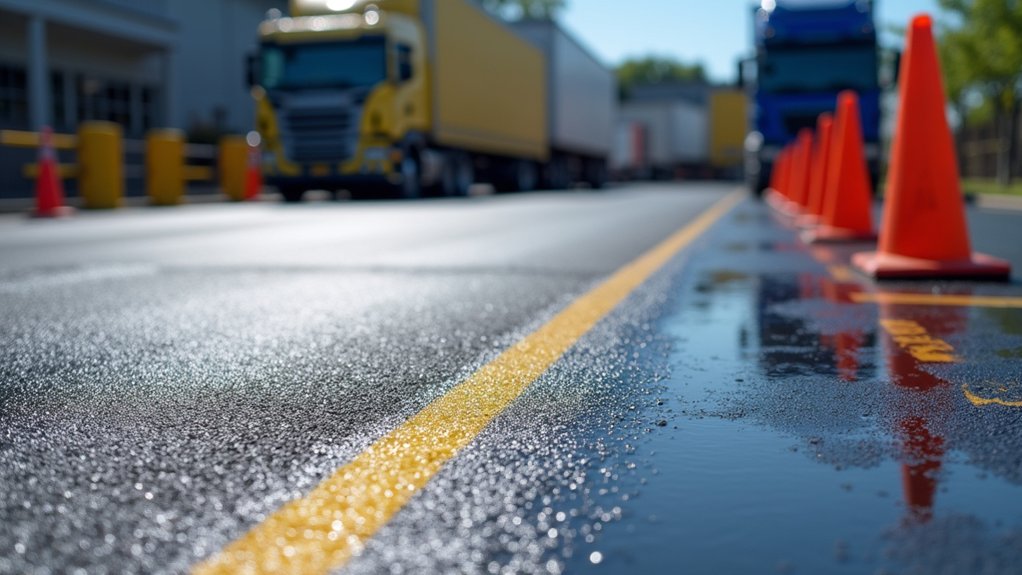
Heavy trucks, trailers, and commercial vehicles demand considerably longer cure times than standard passenger cars due to concentrated tire pressure and weight distribution that can permanently damage uncured sealant. You’ll need to keep these heavy loads off your freshly sealcoated driveway for a minimum of 48 to 72 hours, though many industry professionals recommend waiting up to 7 days for maximum surface protection. This extended waiting period prevents tire impressions, surface gouging, and premature wear that heavy equipment can cause when the lower layers haven’t fully hardened. If rain is in the forecast or you’re facing time constraints, consider using sealcoat additives like FSA Fast Sealing Additive to cut drying and curing time in half. Rushing the process can compromise the sealcoat, leading to peeling, scuffing, or reduced effectiveness that shortens your driveway’s lifespan.
Truck Weight Considerations
Garbage trucks, delivery vehicles, and commercial trailers place substantially greater stress on freshly sealcoated surfaces than standard passenger cars. You’ll need to enforce commercial load restrictions for a minimum of 48-72 hours, though 7 days provides ideal protection in cooler or humid conditions.
| Vehicle Type | Minimum Wait | Ideal Heavy Vehicle Wait Times |
|---|---|---|
| Garbage Trucks | 48 hours | 72+ hours |
| Delivery Trucks | 48 hours | 72 hours |
| Commercial Trailers | 72 hours | 7 days |
Premature access causes sealant displacement, tire tracking, and permanent surface damage. Heavy axle loads compress uncured material, reducing your sealcoat’s protective lifespan. Driving on a sealed surface before it has fully cured can compromise the seal and shorten its lifespan significantly. You should coordinate with waste management and delivery services to redirect traffic during the curing window.
48-72 Hour Guideline
Commercial properties and high-traffic driveways require strict adherence to the 72-hour guideline before permitting heavy vehicle access. This waiting period guarantees complete curing before garbage trucks, delivery vehicles, and similar heavy-duty equipment apply concentrated pressure to your sealed surface.
Proper driveway preparation doesn’t end at application—you must protect your investment during the critical curing window. Under favorable conditions above 70°F with low humidity, 48 hours represents the absolute minimum. However, 72 hours provides the safety margin that prevents tire marks, scuffing, and premature wear.
Before allowing access, check for initial surface roughness and any remaining tackiness. If temperatures drop below 70°F or humidity exceeds 60%, extend your waiting period to seven days. Commercial properties with intensive daily traffic should follow this extended timeline to maximize surface durability.
Preventing Surface Damage
Properly timed vehicle restrictions protect your sealcoating investment from irreversible damage during the critical curing phase. When heavy vehicles access uncured surfaces prematurely, you’ll experience tire marks, scuffing, and a discolored surface that compromises appearance.
The consequences extend beyond aesthetics. Early heavy traffic prevents proper hardening of the sealant layer, resulting in reduced durability and accelerated wear patterns. Garbage trucks and heavy-duty vehicles require 48 to 72 hours minimum before entry under elevated conditions.
Before permitting commercial traffic, verify the surface isn’t tacky to the touch. If conditions include temperatures below 70°F or heightened humidity, extend wait times up to seven days. Plan deliveries and heavy equipment access around these cure windows. Full sunlight and dry weather optimize hardening, allowing quicker resumption of normal operations.
Environmental Factors That Affect Cure Time
Environmental conditions directly control how quickly your sealcoating migrates from wet application to fully cured surface. Ideal surface preparation means nothing if you apply sealer under poor weather conditions. Temperature, humidity, and sunlight work together to determine your actual cure timeline.
| Factor | Preferred Condition |
|---|---|
| Temperature | 50°F–90°F |
| Humidity | Around 50% |
| Wind | Light breeze |
| Sunlight | Direct exposure |
| Rain-free window | 24+ hours |
You’ll need curing monitoring techniques that account for these variables. High humidity above 80% doubles standard dry times. Temperatures below 50°F cause uneven surfaces and delayed drying. Direct sunlight accelerates evaporation, while shaded areas lag behind. Maintain surface and air temperatures above 55°F for 24 hours post-application. Strong winds may cause uneven curing patterns across your driveway surface despite otherwise favorable conditions. Mostly cloudy skies can prolong drying time or prevent proper curing altogether since cloud cover reduces the direct sunlight needed for evaporation. Nighttime humidity tends to rise, and without sunlight to encourage evaporation, the sealer may stay tacky or uneven leading to premature damage.
The 30-Day Journey to Maximum Hardness
While surface drying occurs within hours, your sealcoating won’t reach maximum hardness for approximately 30 days after application. During this critical period, the sealer continues cross-linking and bonding to attain optimal adhesion strength with your asphalt substrate.
Throughout the first month, you’ll notice gradual changes in your driveway’s appearance. Initial tire marks that appear during early use will fade as the curing process completes. This indicates the sealer is hardening properly.
For long term maintenance success, avoid parking vehicles in the same spot repeatedly during this 30-day window. Rotating parking positions prevents indentations and guarantees uniform hardening across the entire surface. You should also avoid exposing the fresh sealcoat to harsh chemicals during this initial curing month.
Once fully cured, your sealcoat delivers 2-3 years of protection, making this patience period worthwhile for lasting results.
Signs Your Sealcoating Has Properly Cured
Visual confirmation serves as your most reliable indicator that sealcoating has reached full cure. You’ll notice a uniform sealcoat appearance—deep black coloration without patchy or streaked areas. The surface progresses from glossy to a matte, non-tacky finish that feels firm under light pressure. This rich black color is essential, as fading to dull gray over time indicates aging and the eventual need for reapplication.
Test water repellency by spraying the surface. Properly cured sealcoat causes water to bead and run off rather than absorb. This beading confirms your waterproof barrier has formed correctly and prevents water ponding issues that can weaken asphalt over time.
Check for proper surface bonding by inspecting edges and high-traffic zones. You shouldn’t see peeling, flaking, or lifting from the underlying asphalt. The texture remains smooth and uniform without loose aggregate or rough spots. If you notice any areas where the coating appears to be separating, this may indicate improper surface preparation during application. These indicators collectively verify your sealcoat has achieved maximum protective hardness.
Protecting Your Investment During the Curing Process
Your sealcoating investment requires active protection during the critical 48-72 hour curing window to achieve maximum durability. The protective barrier application depends on maintaining strict traffic restrictions and environmental controls throughout this period.
| Protection Category | Immediate Actions | Long-Term Requirements |
|---|---|---|
| Traffic Control | Block all access 24-48 hours | Heavy vehicles wait 7 days |
| Weather Monitoring | Verify no rain 48 hours | Maintain 50°F-90°F temps |
| Chemical Avoidance | No de-icers first season | Use sand for traction |
| Vegetation Management | Relocate nearby plants | Keep roots away 6 weeks |
| Surface Inspection | Check for tackiness | Monitor for standing water |
Establish your long term maintenance schedule immediately after full cure. You’ll maximize sealer lifespan by avoiding chemical exposure and implementing sand-based winter traction protocols.
Frequently Asked Questions
Can I Apply Sealcoating to a Brand New Asphalt Driveway Immediately?
You can’t apply sealcoating to a brand new asphalt driveway immediately. You’ll need to wait approximately 90 days minimum, though industry professionals recommend a full year for ideal results. Proper surface preparation requires the asphalt to fully cure first—applying sealer too early traps moisture in the base layer. Temperature considerations also matter; you’ll want warm, dry conditions when you finally seal to guarantee maximum adhesion and protection longevity.
How Often Should I Reapply Sealcoating to Maintain My Driveway’s Protection?
You should follow a suitable sealcoating frequency of every 2-3 years for most residential driveways. However, your specific driveway maintenance schedule depends on traffic volume, climate conditions, and visible wear indicators. Watch for fading color, water absorption, and hairline cracks—these signal it’s time to reapply. If you’re in a region with harsh winters or heavy vehicle use, you’ll need more frequent applications to maintain adequate protection.
Will Rain Damage My Sealcoating if It Falls Within 24 Hours?
Yes, rain will damage your sealcoating if it falls within 24 hours of application. Moisture washes away uncured sealant, causing uneven surfaces and compromised adhesion. You’ll need to monitor curing time closely—initial set requires 3-4 hours, but full vulnerability persists until the 24-hour mark. Avoid applying sealant during high humidity, as this extends drying time and increases rain exposure risk. If rain occurs prematurely, you’ll likely need reapplication for proper protection.
Can I Sealcoat My Driveway Myself or Should I Hire Professionals?
You can sealcoat your driveway yourself, but you’ll face significant DIY sealcoating challenges including achieving uniform application thickness, proper surface preparation, and timing around weather conditions. Professional sealcoating advantages include expert sealer selection based on your surface condition, efficient heavy equipment for larger areas, and warranties on workmanship. If you’ve got a small driveway, adequate skill level, and favorable weather conditions, DIY’s feasible—otherwise, hiring professionals guarantees lasting results.
What Happens if Tire Marks Appear on My Freshly Sealed Driveway?
If tire marks appear on your freshly sealed driveway, don’t panic—they’ll typically fade within a few weeks as the sealer fully cures over 30 days. Avoid parking on sealcoated driveway surfaces during this critical curing period to prevent worsening impressions. You should consult sealant manufacturer recommendations for specific cure times based on your product. Skip harsh chemicals during the initial month, allowing natural curing to eliminate surface imperfections.