





To clean an oil spill on your concrete driveway fast, blot the fresh spill immediately with clean rags—press firmly, don’t rub. Spread a half-inch layer of non-clumping cat litter or cornstarch over the stain and let it sit for 15–30 minutes to absorb the oil. Sweep it up, then scrub the area with Dawn dish soap and hot water using a stiff-bristled brush. For older or stubborn stains, you’ll find stronger methods below.
Blot the Oil Spill Before It Soaks In
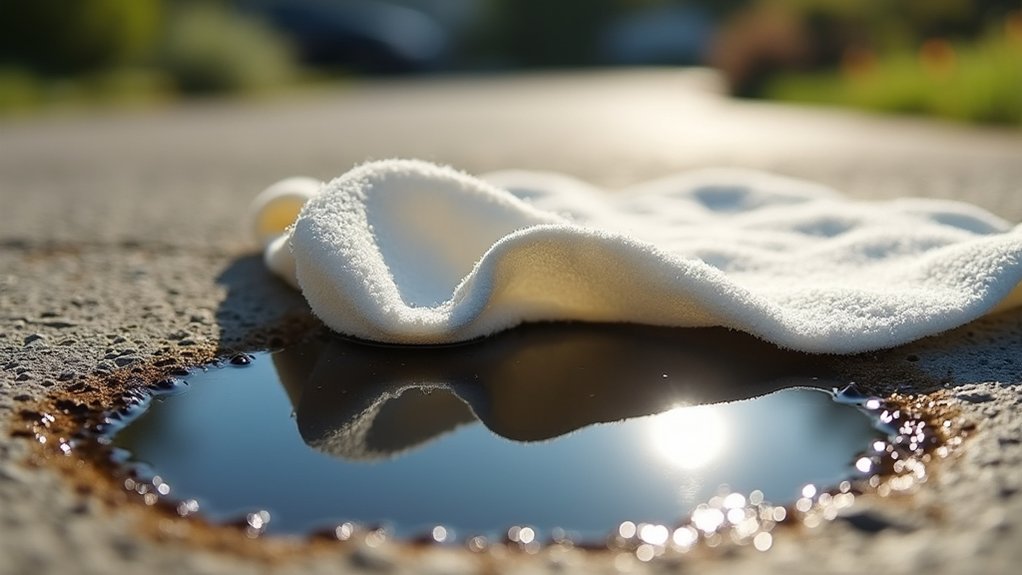
When oil hits your concrete driveway, you’ve got minutes—not hours—to act before it seeps into the porous surface. Start by grabbing clean rags or paper towels and pressing them firmly into the spill. Don’t rub—this pushes oil deeper into concrete pores.
For effective absorbent material oil spill containment, layer clay cat litter, cornstarch, or sawdust directly over the wet area. Let it sit for 15–30 minutes to draw out surface oil. Proper blotting techniques require removing saturated material and reapplying fresh layers until no sheen remains.
Quick action within the first hour yields up to 80% surface oil removal. Sweep up spent absorbent, rinse with low-pressure water, and inspect the area. Repeat if oil’s still visible before moving to chemical cleaning. Once the excess oil is removed, scrub the remaining residue with diluted dish detergent and a stiff nylon brush for the most effective results. Since your driveway is a high-traffic area that directly impacts overall curb appeal, addressing oil spills promptly helps prevent lasting eyesores and long-term surface damage.
Use Cat Litter or Baking Soda to Absorb Oil Stains
After blotting removes the surface-level oil, your next step is applying a dry absorbent—cat litter or baking soda—to pull residual oil from concrete pores. For kitty litter oil spill absorption, spread non-clumping litter in a half-inch layer across the stain. Leave it undisturbed for 8–10 minutes, then sweep it up with a push broom.
For baking soda oil spill treatment, apply a generous coating directly onto the affected area. Baking soda works especially well on smaller, fresh spills where its fine particles maximize surface contact. Following up with a baking soda and vinegar scrub can further enhance results on stubborn discoloration.
Expect visible clumping within three hours, signaling active absorption. Fresh spills respond quickly, while aged stains require multiple applications to progressively reduce discoloration. Approximately five pounds of litter covers a standard stain. Budget under $10 per bag for an economically accessible cleanup solution.
Scrub Fresh Oil Stains With Dish Soap and Water
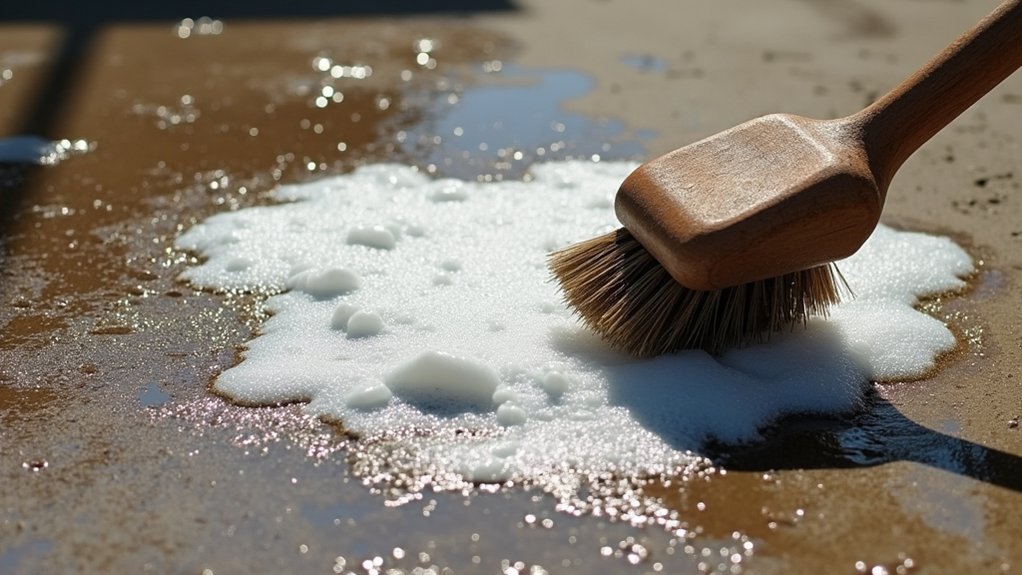
Grab a bottle of liquid dish soap—Dawn works particularly well—and squeeze it directly onto the oil stain without diluting it first. Let the detergent sit for several days without rinsing, allowing it to penetrate the concrete and emulsify the oil particles.
Scrub the area with a stiff-bristled brush, working the soap deep into the surface. Combining hot water during scrubbing improves emulsification. Don’t hose it off—let the soap dry naturally for maximum effectiveness. Time your application before forecasted rain so natural water activates the remaining detergent.
For fresh, small spills, dish soap delivers solid results. However, it won’t match a concrete degreaser heavy duty cleaning agents provide on older, deeply set stains. If residual discoloration persists after one cycle, repeat the process before escalating to stronger solutions.
Apply a Concrete Degreaser for Stubborn Oil Stains
Switch to a dedicated concrete degreaser once dish soap fails to lift stubborn or deeply set oil stains. Products like PROSOCO Cleaner/Degreaser or Pour-N-Restore use surfactant-based formulas that penetrate concrete pores, emulsifying embedded oil that liquid detergent degreasing concrete methods can’t reach.
Follow this process for effective concrete oil residue removal techniques:
- Saturate the stain with your chosen degreaser and allow full dwell time per label instructions.
- Scrub vigorously with a stiff nylon brush to maximize chemical contact within the porous surface.
- Rinse with hot water to flush emulsified oil droplets from capillaries and surface pores.
Repeat this cycle two to four times for older stains. Professional-grade degreasers outperform household options, restoring concrete color without acid etching or surface damage.
Draw Out Set-In Oil Stains With a Poultice
When surface degreasers can’t reach oil that’s migrated deep into concrete’s porous structure, a poultice draws it out through capillary action. You’ll mix baking soda and acetone into a thick paste, apply it over the stain, and let it dry to pull the embedded oil to the surface. This method works in three stages: mix your poultice, apply and dry it under plastic wrap, then scrape the residue and repeat as needed.
Mix Your Poultice
Combine baking soda with acetone until the mixture reaches a thick, peanut butter-like consistency—this ratio guarantees the poultice stays in place while actively drawing oil from the concrete’s pores. Spread the paste 1/4 inch thick over the entire stained area. The acetone acts as a solvent, pulling embedded oil upward through capillary action.
If you’d prefer alternatives, consider these options:
- Flour and turpentine poultice — mix until spreadable, leave for 12 hours, and sweep clean. This outperforms the sawdust oil spill cleanup method and standard pressure washing.
- Commercial oil spill cleaners concrete — products like Prosoco Oil & Grease Stain Remover require no mixing and cure in 5–8 hours.
- Degreaser-saturated towel poultice — cover with plastic to prevent evaporation while oil extracts.
Apply And Dry
Once your poultice is mixed, pour it directly over the entire grease stain, tilting the container to lay down a thick layer—think pancake batter consistency. Use one quart for stains under six square feet. Spread evenly without scrubbing—full contact with set-in oil is essential.
Allow the poultice to sit 5–12 hours until completely dry. Surface cracking indicates normal drying and confirms the poultice is drawing oil upward through evaporation. For deeper stains, leave it overnight. Among oil spill pretreatment solutions that concrete surfaces respond to, this method outperforms pressure washing or degreasers alone.
You’ll notice stain lightening at the edges as contaminants lift. Once hardened, the material won’t reabsorb into pores. This ranks among the most effective heavy-duty driveway cleaning practices for stubborn, set-in petroleum stains.
Scrape And Repeat
Peel the dried poultice off the concrete using a plastic scraper—never metal, which scratches the surface. Scrub the exposed area with a stiff-bristle brush and warm soapy water to lift residual paste and loosened oil.
Assess the stain’s condition. If discoloration persists, repeat the poultice application. Among driveway contamination cleanup methods, this repeat cycle outperforms single-pass approaches for deeply embedded oil.
Follow this sequence for each cycle:
- Mix fresh poultice paste and apply a 1/4- to 1/2-inch layer over the stain.
- Cover with sealed plastic wrap and dwell for 24 hours.
- Scrape, scrub, and inspect before deciding on another round.
This method often succeeds where pressure washing oil spill driveway attempts fail, extracting oil without driving it deeper.
Pressure Wash Oil Stains Off Your Entire Driveway
Fire up your pressure washer only after you’ve completed the pre-treatment steps—pre-wetting the driveway with a garden hose, applying a degreaser directly to oil stains, letting it dwell for a couple of minutes, and scrubbing the affected areas with a stiff brush. Among large oil spill removal methods, hot water high-pressure cleaning of concrete ranks as one of the most effective for deep extraction.
Install the soap tip, apply detergent in small sections, and let it soak without drying. Keep the wand 8–24 inches from the surface, working back and forth with overlapping passes. For stubborn stains, reapply detergent, scrub, and pressure wash again. Rinse using a low-to-medium pressure tip, going over each section twice to blend lines and prevent streaking.
Call a Pro for Deep or Recurring Oil Stains
Even after multiple rounds of degreasing, scrubbing, and pressure washing, some oil stains persist because the contamination has migrated deep into the concrete’s porous substrate—well beyond what surface-level methods can reach.
When oil migrates deep into concrete’s porous substrate, no amount of surface scrubbing will eliminate the stain.
Professional intervention delivers targeted results through advanced techniques unavailable to most homeowners. For effective oil spill cleanup, concrete driveway specialists typically employ:
- Poultice treatments that chemically bond with embedded hydrocarbons, drawing them to the surface as the product dries.
- Enzyme-based products that break down oil composition at a molecular level, addressing both fresh spills and long-neglected stains.
- Professional-grade equipment that enables controlled, concentrated application without pushing contaminants deeper.
Most deep stains require only one to three treatment cycles to achieve maximum results. You’ll save money by avoiding repeated purchases of inadequate consumer products.
Prevent Future Oil Stains on Your Driveway
Once you’ve tackled an existing stain, the priority shifts to stopping oil from penetrating your concrete in the first place. Apply a concrete densifier as a primer, wait seven days, then seal with Ghostshield 8510 oil stain blocker—spray once, wait one minute, and spray again for maximum protection.
For ongoing driveway sanitation and maintenance, sweep regularly and inspect for vehicle leaks. Garage floor mats or tiles add a physical barrier beneath parked cars.
Adopt eco-friendly prevention methods by keeping clay-based cat litter or diatomaceous earth on hand for immediate absorption if drips occur. Pair these natural absorbents with biodegradable degreasers to address small spots before they set. Consistent prevention eliminates repeated deep-cleaning cycles and preserves your concrete’s structural integrity long-term.
Frequently Asked Questions
Can Oil Stains on Concrete Driveways Cause Environmental Damage to Surrounding Soil?
Yes, oil stains on your concrete driveway can cause significant environmental damage to the surrounding soil. When it rains, oil seeps through concrete’s pores and migrates into nearby soil, releasing petroleum hydrocarbons and heavy metals. This contamination blocks water infiltration, reduces soil permeability, and kills essential microbes. You’ll notice grass die-off and stunted plant growth near stained areas. You should clean spills promptly and seal your concrete to prevent long-term soil contamination.
Does WD-40 Effectively Remove Oil Stains From Concrete Driveway Surfaces?
WD-40 only works on fresh, surface-level oil stains that haven’t penetrated deep into concrete. You’ll want to use the WD-40 Specialist Cleaner & Degreaser version—spray it on, let it sit for two minutes, then scrub with a stiff-bristled broom and rinse. However, for older or deeper stains, it’ll actually spread the oil and worsen the mess. Dawn dish soap or microbial cleaners consistently outperform standard WD-40 in comparative tests.
How Long Does It Take for Oil to Penetrate Porous Concrete?
Oil penetrates porous concrete surprisingly fast—you’ll see absorption begin within minutes of a spill. Tap water can penetrate uncoated concrete within 3 hours, and oil follows similar pathways through capillary action. After 1,000 hours, non-ethylated fuel reaches depths of 28 mm in standard concrete. Over 6 months, mineral oil penetration causes 17% strength reduction. You’ll get the best cleanup results by acting immediately, before oil migrates deeper into the pore structure.
Will Old Oil Stains on Concrete Driveways Ever Fully Disappear Completely?
You won’t fully eliminate old oil stains from concrete driveways in most cases. Once oil penetrates the porous surface, it embeds deeply, resisting complete extraction even with aggressive treatments. Degreasers and repeated scrubbing lighten stains considerably but rarely achieve total disappearance. For the best results, you’ll want to apply an acid-based cleaner, then seal or coat the surface. This approach hides residual patterns and prevents further penetration effectively.
Is It Safe to Use Bleach on Oil-Stained Concrete Driveways?
Yes, you can safely use bleach on concrete driveways without causing damage. However, it’s not the most effective choice for oil stains specifically. Bleach excels at removing mildew and general discoloration but shows limited results against grease. You’ll get better oil removal using degreasers or enzymatic cleaners instead. If you do apply bleach, mix ⅓ cup per gallon of water, scrub thoroughly, wait 6–10 minutes, then rinse completely.