
Painting your concrete driveway isn’t ideal for long-term durability. You’ll get 3-5 years before recoating becomes necessary, while unpainted concrete lasts 25-30 years with minimal upkeep. Freeze-thaw cycles, UV exposure, and vehicle traffic accelerate paint degradation, causing peeling and cracking. Epoxy, polyurea, or polyaspartic coatings offer superior chemical bonding and decade-long protection. Understanding climate factors, surface preparation requirements, and coating alternatives will help you choose the right solution for your driveway.
Understanding the Lifespan of Painted Concrete Driveways
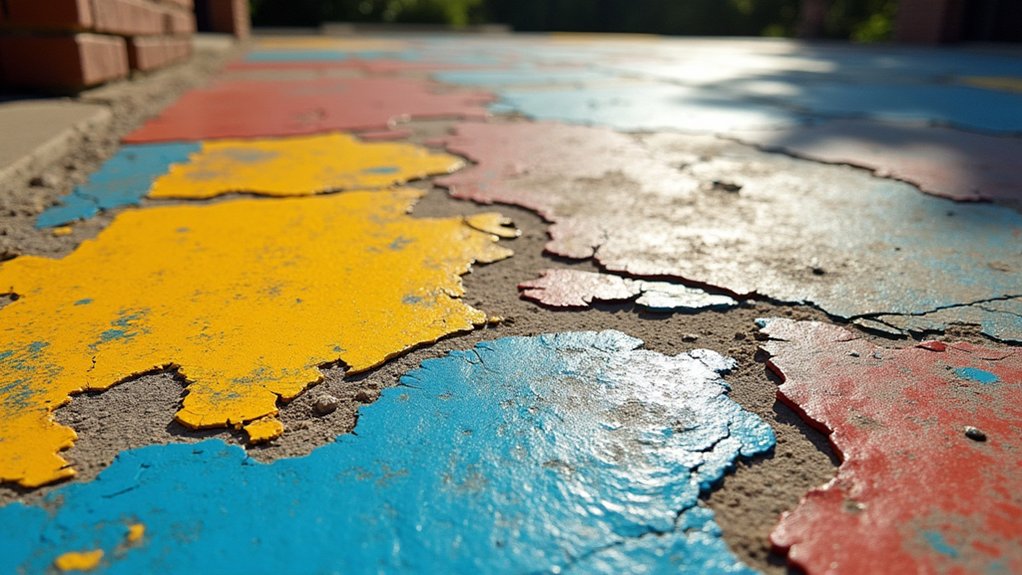
When you paint a concrete driveway, you’re committing to a maintenance cycle that repeats every 3-5 years—a stark contrast to unpainted concrete’s 25-30 year lifespan. Your concrete lifespan expectations change dramatically once paint enters the equation.
Several factors determine your coating lifetime estimates. UV exposure, moisture infiltration, and temperature swings accelerate degradation. Heavy vehicle traffic compounds these effects, causing premature chipping and peeling. Climate plays a critical role—humid summers and harsh winters compromise paint adhesion vastly. Minnesota’s frequent freeze-thaw cycles stress painted surfaces even more severely, causing accelerated cracking and peeling if the underlying concrete isn’t properly detailed.
You can prolong paint longevity through meticulous application and high-quality exterior concrete paint. Choosing epoxy paints specifically formulated for concrete provides superior durability and resistance to chemicals and abrasion compared to standard exterior paints. However, even ideal conditions won’t eliminate the fundamental maintenance requirement. Environmental exposure and daily use necessitate that repainting remains inevitable, making painted driveways inherently higher-maintenance than their unpainted counterparts. With excellent care and maintenance, unpainted concrete driveways can last up to 50 years or more, highlighting the significant trade-off you make when choosing to paint.
Why Surface Preparation Determines Coating Success
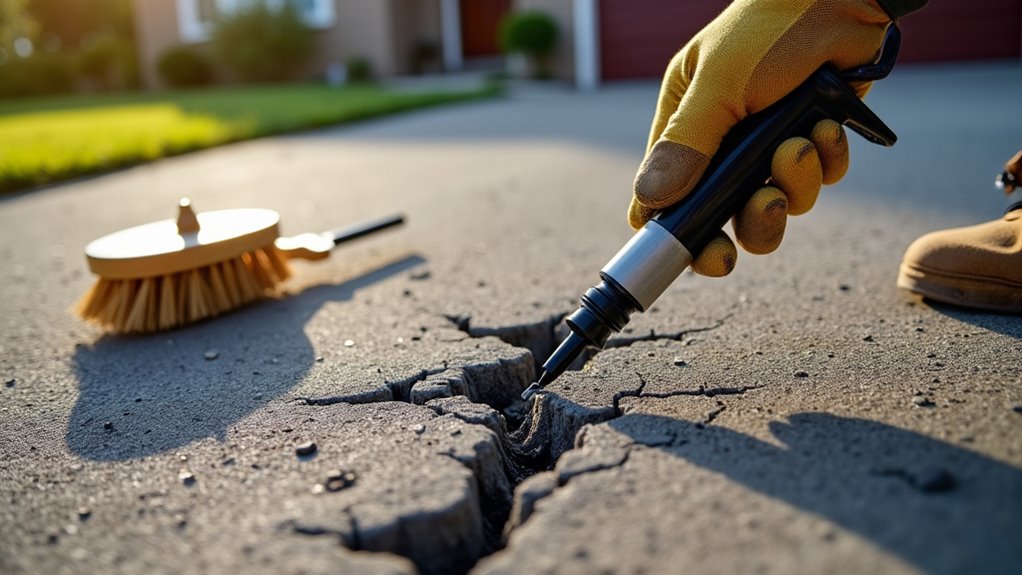
Before you apply any coating to your concrete driveway, you’ll need to master two critical preparation steps that directly impact adhesion and longevity. Cleaning and etching the surface removes contaminants like oil, grease, and curing compounds while creating the mechanical profile necessary for coatings to bond effectively. Professional contractors often use pressure washing and acid wash techniques to achieve optimal surface preparation for better adhesion. Additionally, conducting moisture testing prevents premature coating failure caused by vapor transmission through the concrete substrate. Skipping these essential steps can lead to peeling, bubbling, or delamination that compromises your investment. You should also verify that ambient temperature and humidity levels meet manufacturer specifications before beginning the application process.
Cleaning and Etching Essentials
Surface preparation accounts for the majority of coating failures on concrete driveways, so you’ll want to invest significant effort here before opening a single paint can.
Start by removing all surface debris through sweeping and vacuuming leaves, dirt, and rocks. Apply heavy-duty detergent for stains and grease, then pressure wash at no more than 1,750 PSI to prevent concrete damage. Clean crevices and edges thoroughly with a surface cleaner. Don’t forget to remove old paint completely before moving forward with etching. For stubborn existing coatings that resist scraping, apply a paint stripper to break down the finish before removing it down to sound concrete.
Once dry, acid etch application becomes critical for proper paint adhesion. Use a liquid etch product as a safer muriatic acid alternative. Scrub a 20-to-1 mixture into the surface and leave it for 15 minutes. This process removes efflorescence and salt deposits while brightening concrete. Concrete scoring techniques through etching create the microscopic profile paint needs to bond permanently. Before applying any coating, inspect the surface for cracks or holes and use a concrete patching compound to repair these imperfections for a smooth, even finish.
Moisture Testing Prevents Failure
Moisture trapped within concrete can sabotage even the most meticulous paint application, causing peeling, bubbling, and complete coating delamination within months. You’ll need to test your driveway before applying any coating to prevent costly failures.
The ASTM F2170-11 relative humidity test provides accurate moisture data by measuring conditions at 40% slab depth. You’ll drill holes, insert probes, and allow 24-72 hours for equilibration. This method detects moisture that surface tests miss entirely. Hygrometers measuring water vapor provide more comprehensive readings than traditional pin-type or pinless moisture meters, which only assess surface-level conditions. Hand-held moisture meters can also produce false readings from metal embedded within the concrete, further compromising their reliability.
Surface methods like the calcium chloride test only measure the top ½-¾ inch, missing deeper moisture problems. The plastic sheet method requires taping a 457 x 457-mm square to the concrete surface and waiting at least 24 hours before inspection. This method offers qualitative results but won’t reveal internal conditions. For timely test completion and reliable readings, RH testing remains your best predictor of whether your concrete is ready for paint application.
How Environmental Factors Affect Driveway Paint Durability
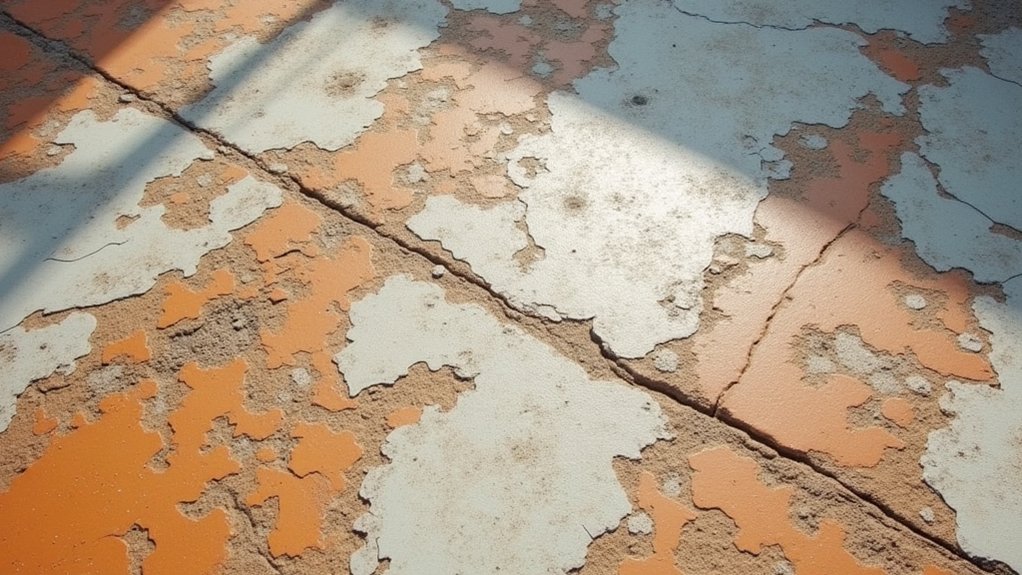
When you apply paint to a concrete driveway, environmental factors immediately begin testing its durability. Temperature fluctuation effects cause concrete to expand and contract, stressing paint bonds and creating cracks. Freeze thaw cycling impact proves particularly destructive—water seeps into porous concrete, freezes, expands, and breaks coatings from within.
The moment paint touches concrete, nature begins its relentless assault—testing every bond through temperature swings and freeze-thaw cycles.
Consider these critical environmental threats:
- UV exposure degrades paint molecules, causing fading, discoloration, and premature peeling without UV-resistant formulas. Direct sunlight dries out the surface, accelerating the breakdown of protective coatings over time.
- Moisture penetration softens adhesion bonds when poor drainage allows water to pool under coatings.
- Chemical exposure from automotive fluids, road salts, and de-icers strips protective layers and accelerates wear.
- Seasonal extremes demand flexible coating formulas that accommodate concrete movement without cracking.
Regular inspections help identify potential issues before they worsen, allowing homeowners to address minor damage from environmental stress before it escalates into costly repairs. Nearby trees can also threaten painted surfaces when root growth disrupts the concrete underneath, causing cracks and unevenness that compromise the coating’s integrity.
The Impact of Traffic and Daily Use on Painted Surfaces
Beyond environmental stressors, daily traffic inflicts significant mechanical damage on painted concrete driveways. You’ll notice that intensive wear patterns develop quickly when vehicles repeatedly compress the painted surface. Hot tires cause blistering and peeling, while the constant weight distribution creates cracks and flaking within one to two seasons of heavy use.
Heavy vehicle abuse from delivery trucks accelerates surface deterioration dramatically. The mechanical stress distributes pressure unevenly across your driveway, promoting premature scratching and coating breakdown. If you’re dealing with frequent deliveries or multiple vehicles daily, expect your paint’s typical 3-5 year lifespan to shorten considerably.
Foot traffic compounds these effects by introducing abrasive dirt and grit that erodes coatings. You’ll need paints specifically engineered for high-load conditions to withstand demanding use and avoid early recoating cycles. Conducting routine inspections for signs of wear helps you identify problem areas before minor damage escalates into costly repairs.
Maintenance Demands for Painted Concrete Driveways
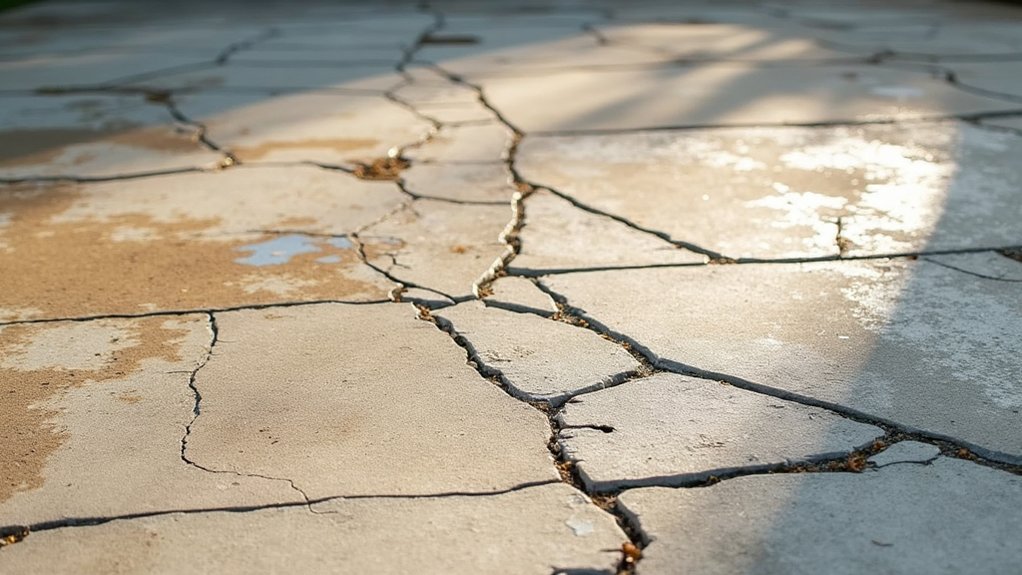
Maintaining a painted concrete driveway requires consistent attention to cleaning, sealing, and repair protocols that prevent accelerated deterioration. Your seasonal maintenance scheduling should address distinct challenges throughout the year, from spring crack inspections to wintertime snowplowing requirements that demand plastic shovels over metal blades.
Follow these essential maintenance tasks:
- Weekly sweeping removes abrasive grit that wears through paint layers and traps moisture against surfaces
- Maintenance recoating every 2-3 years preserves the protective barrier against UV damage and stains
- Immediate spill cleanup prevents oil and gasoline from penetrating compromised paint sections
- Prompt crack repair using concrete patching products stops water intrusion before freeze-thaw cycles cause expansion
You’ll need to avoid acidic cleaners and de-icing salts, which damage painted surfaces and dull color vibrancy.
Common Failures and Problems With Driveway Paint
When you paint a concrete driveway, you’ll likely encounter peeling and bubbling as the most common failure modes, often appearing within the first year of application. These problems stem from moisture trapped beneath the coating that forces its way out as vapor, creating blisters that eventually rupture and cause widespread delamination. Adhesion failures occur when concrete’s microscopic pits and valleys aren’t properly addressed during surface preparation, or when contaminants like oil and dirt block the mechanical bond between paint and substrate.
Peeling and Bubbling Issues
Peeling and bubbling represent the most visible signs that your driveway coating has failed, and understanding the mechanisms behind these defects helps you prevent them. Hydrostatic pressure from water vapor pushes coatings off the surface, while freeze-thaw cycles expand trapped water in concrete pores. Proper moisture intrusion mitigation and alkaline concrete treatment before painting considerably reduce these risks.
Common causes of peeling and bubbling include:
- Efflorescence leaching alkali through water movement, creating blisters beneath paint films
- Saponification occurring when oil-based finishes react with alkaline concrete, forming soap films
- Hot tire pickup softening coatings during summer temperatures, lifting them from the surface
- Spalling concrete producing flaky substrates that cause overlying coatings to delaminate
Address these factors before application to extend coating longevity.
Adhesion Failure Causes
Adhesion failure goes beyond the visible peeling and bubbling symptoms to address the root mechanisms that break the bond between coating and concrete. When you apply paint over excessive moisture trapped in the slab, vapor pressure builds beneath the film and forces it away from the substrate. Contaminants like oil, dust, and chalky residue create barrier layers that prevent direct contact between coating and concrete.
Your preparation quality determines adhesion success. Without proper profiling, you’re leaving a smooth surface that can’t mechanically interlock with the coating. Surface flaws you skip during inspection become failure points later. Incompatible products compound these issues—using coatings without cement binders or selecting inflexible formulas for surfaces requiring flexibility guarantees bond breakdown under traffic stress and environmental exposure.
Comparing Paint to Epoxy Coatings for Driveways
How do you choose between standard concrete paint and epoxy coatings for your driveway? The longevity comparison reveals significant differences. Paint applies at 2–4 mils thickness and lasts 1–5 years, while epoxy forms 10–20+ mils and performs 10–20+ years.
Consider these key factors for your decision:
Your driveway coating decision hinges on four critical factors: durability, maintenance demands, upfront versus long-term costs, and repair frequency.
- Durability: Epoxy resists impacts, chemicals, and hot tire marks; paint chips under heavy traffic.
- Maintenance: Paint requires frequent touch-ups and immediate spill cleanup; epoxy needs only occasional mopping.
- Cost: Paint’s low upfront price leads to higher long-term expenses from repeated recoating.
- Repair considerations: Paint’s porous surface demands more frequent intervention, while epoxy’s tight concrete bond maintains integrity for decades.
Epoxy proves cost-effective for demanding driveways despite its premium initial investment.
Polyurea and Polyaspartic Alternatives for Lasting Protection
When traditional paints and epoxies fall short, you’ll find polyurea and polyaspartic coatings deliver decade-long protection through their exceptional chemical bonding with concrete substrates. Polyurea cures in just 2-5 minutes and achieves extreme hardness, though its aromatic compounds make it vulnerable to UV yellowing without additives. Polyaspartic’s aliphatic structure provides 100% UV stability while resisting oil, gas, road salt, and hot tire pickup—eliminating the discoloration that plagues other coating options.
Polyurea’s Decade-Long Durability
Because polyurea coatings expand and contract alongside concrete rather than against it, they’ve established themselves as the industry benchmark for long-term driveway protection. When you combine proper curing techniques with thorough substrate preparation methods like diamond grinding, you’ll achieve coating lifespans exceeding 15 years with minimal upkeep.
- UV stability prevents yellowing and fading under harsh sunlight exposure
- Chemical resistance protects against oil, gasoline, and road salt damage
- Impact absorption flexes under vehicle traffic instead of cracking
- Limited lifetime warranties back performance claims, unlike epoxy’s 1-5 year coverage
High-end polyaspartic blends push durability even further, reaching 20-25 year lifespans. You can extend this timeline by revitalizing the top coat after approximately one decade.
Polyaspartic’s Superior UV Resistance
While polyurea coatings offer excellent flexibility and durability, polyaspartic formulations take UV resistance to an entirely different level through their aliphatic molecular structure.
Polyaspartic’s UV stability stems from aliphatic polyisocyanate compounds that resist photodegradation. Unlike aromatic formulations that break down under sunlight, these coatings maintain their glossy finish and color vibrancy for decades. Polyaspartic’s non yellowing properties make it ideal for driveways receiving direct sun exposure throughout the day.
You’ll notice traditional epoxy coatings eventually amber and lose their sheen, requiring replacement within a few years. Polyaspartic materials bond directly with concrete rather than simply adhering to the surface, creating a penetrating barrier that resists fading, staining, and environmental damage. This 100% UV-resistant formulation delivers lasting protection without the maintenance cycles that conventional driveway paints demand.
Chemical and Abrasion Protection
Given that driveways face constant exposure to automotive fluids, road salts, and de-icing chemicals, polyurea and polyaspartic coatings provide an impermeable barrier that traditional paints can’t match. These advanced coatings deliver harsh chemical resistance that prevents surface corrosion and substrate deterioration.
Key protective benefits include:
- Impermeable moisture barrier – Blocks water and chemical penetration that damages concrete substrates
- Salt and de-icer resistance – Eliminates corrosion from winter maintenance chemicals
- Abrasion protection – Withstands heavy vehicle traffic and equipment without cracking or peeling
- Anti slip protection – Maintains safe traction while resisting oil and fluid spills
You’ll find polyurea’s tough surface structure handles harsh chemicals, oils, and mechanical stress that would quickly degrade conventional paint, extending your driveway’s functional lifespan dramatically.
Choosing the Right Coating for Your Climate and Conditions
| Traffic Level | Recommended Coating |
|---|---|
| Under 10 vehicles/day | Acrylic paint |
| 10-50 vehicles/day | 1-part epoxy |
| Over 50 vehicles/day | 2-part epoxy |
| VOC-restricted areas | Water-based acrylic |
| High-sun exposure | UV-blocked epoxy |
Consider hot tire pickup resistance for sunny climates where surfaces heat considerably. If you’re in regions with temperature swings, avoid acrylic—it softens in heat and rigidifies in cold.
Professional Installation Vs DIY Painting for Long-Term Results
Deciding between DIY painting and professional installation directly impacts your driveway’s longevity, appearance, and total cost over time. Your DIY skill level determines whether you’ll achieve proper surface preparation—the critical factor preventing peeling and flaking. Professionals use industrial equipment and commercial-grade coatings unavailable to consumers, delivering superior adhesion and durability.
Consider these factors in your cost benefit analysis:
- Initial investment: DIY kits cost under $300; professional installation starts at $2,000+
- Longevity: Professional coatings last years longer due to quality application
- Warranty protection: Professionals offer limited lifetime coverage; DIY means full repair responsibility
- Time commitment: Large driveways require significant labor for DIY completion
For poor-condition driveways or those seeking lasting results, professional installation typically delivers better long-term value.
Frequently Asked Questions
Can Painted Concrete Driveways Be Pressure Washed Without Damaging the Coating?
Yes, you can pressure wash painted concrete driveways without damaging the coating if you use proper technique. Keep your PSI between 1,200-1,500, use wide-spray nozzles, and maintain consistent sweeping motions. You’ll want thorough surface preparation before cleaning—sweep debris and test cleaners on inconspicuous areas first. Establish a regular maintenance schedule with lower pressure settings to preserve your paint’s integrity while effectively removing dirt and grime.
How Much Does It Cost to Repaint a Concrete Driveway?
Repainting your concrete driveway typically costs $3.12 to $5.55 per square foot, including labor and supplies, with total projects ranging from $200 to $3,000. You’ll find affordable concrete sealers run $0.50 to $1.50 per square foot for basic protection. If you’re seeking longevity, durable epoxy coatings cost $3.00 to $7.00 per square foot but provide superior wear resistance. Your final price depends on driveway size, surface condition, and geographic location.
Is Driveway Paint Safe for Pets and Children After Drying?
Yes, driveway paint is safe for pets and children after drying, provided you’ve allowed proper drying duration and selected products with non-toxic paint ingredients. You’ll want to choose low-VOC options like DRYLOK E1 or AFM SafeCoat, which block harmful odors and minimize chemical exposure. Keep family members away until fumes fully dissipate—typically several days. Once cured, these paints create a stable, non-hazardous surface suitable for household environments.
Can You Apply New Paint Over an Existing Painted Concrete Driveway?
You can apply new paint over an existing painted concrete driveway if you follow proper surface preparation requirements. First, evaluate the current paint for peeling or flaking—you’ll only need to sand or wire brush loose areas. Clean and degrease the surface thoroughly, then allow complete drying. The durability of new paint typically lasts around five years before degradation begins. Consider epoxy-type products for tougher, longer-lasting results.
What Colors of Driveway Paint Hide Stains and Tire Marks Best?
You’ll find that darker hues, particularly browns and earth tones, hide tire marks and oil stains most effectively on driveways. These colors contain higher pigment concentrations that mask wear patterns better than lighter colors. Brown-toned epoxy paints resist hot tire pickup and chemical damage, while earth-toned acid stains create natural stone-like appearances that conceal imperfections. For high-traffic areas, choose satin-sheen darker tones to minimize visible marks long-term.