
You can extend aging asphalt’s life by sealing out water, repairing damage before it spreads, and renewing the surface while the base stays sound. Seal working cracks and patch potholes first; rubberized sealants in routed cracks last about 5 to 9 years. Then apply surface treatments: fog seal adds roughly 1 to 4 years, slurry seal 4 to 7, and chip seal or microsurfacing 3 to 8. A thin hot-mix overlay can add 3 to 23 years. Below, see how each step fits a plan.
Key Takeaways
- Parking lot restoration extends asphalt life by sealing out water, repairing damage early, and renewing surfaces while the base remains sound.
- Thin hot-mix asphalt overlays add roughly 3 to 23 years, while chip seal, microsurfacing, and slurry seal add roughly 3 to 8 years.
- Sealcoating blocks oxidation and water intrusion, keeping sound asphalt flexible, but structurally failing pavement requires rehabilitation instead.
- Sealing working cracks with rubberized sealant keeps water from weakening the base and can last about 5 to 9 years.
- Patch potholes and seal cracks before applying surface treatments, then restripe faded markings once repairs and seals have cured.
How does parking lot restoration extend the life of aging asphalt
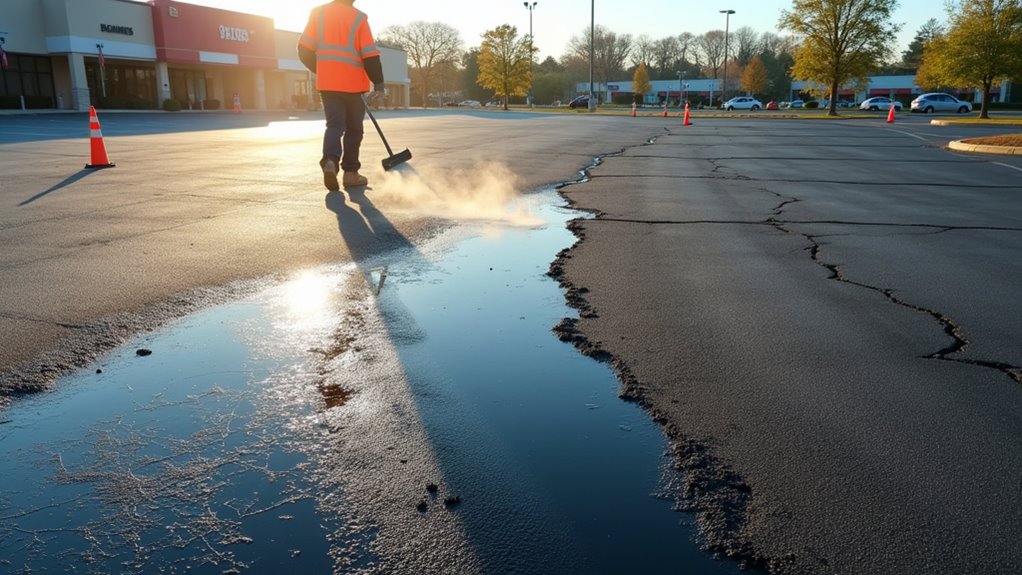
Parking lot restoration extends the life of aging asphalt by sealing out water, repairing damage before it spreads, and renewing the surface as long as the base is still sound. Stretch your pavement budget by treating restoration as a sequence of targeted interventions rather than a single fix. Effective parking lot restoration starts with inspection: you’ll document cracks, potholes, raveling, rutting, and ponding, then prioritize water-entry paths and safety hazards. Sealing working cracks keeps moisture from reaching the base, and rubberized sealants in routed cracks can last about 5 to 9 years. Complete asphalt parking lot repairs, including pothole patching, before applying any surface seal. On a sound surface, fog seals can add roughly 1 to 4 years, and slurry seals add 4 to 7. Keep drains clear so water doesn’t saturate edges. If the base remains sound, a thin overlay can extend service life 3 to 23 years. Reserve full parking lot renovation for failed bases that surface treatments can’t correct.
Which restoration steps add the most years
A hot-mix asphalt thin overlay adds the most years among standard restoration steps. FHWA reports 3, 23 years of extended service life, but only when your base remains sound. Resurfacing can’t fix a failed base, so verify structural condition first.
| Restoration Step | Years You Could Gain |
|---|---|
| Hot-mix asphalt thin overlay | 3 to 23 |
| Chip seal or microsurfacing | 3 to 8 |
| Slurry seal | 4 to 7 |
| Fog seal | 4 to 5 |
Seal working cracks first: rubberized sealants in routed cracks last about 5 to 9 years, while flush emulsion fillers last only 2 to 4. Patch potholes promptly, then apply surface treatments to protect those repairs. Clear drains so standing water can’t undo your investment. Sequence matters: you’ll gain the most years by repairing damage, sealing cracks, and resurfacing sound pavement before deterioration forces costly full reconstruction.
How does sealcoating protect aging asphalt
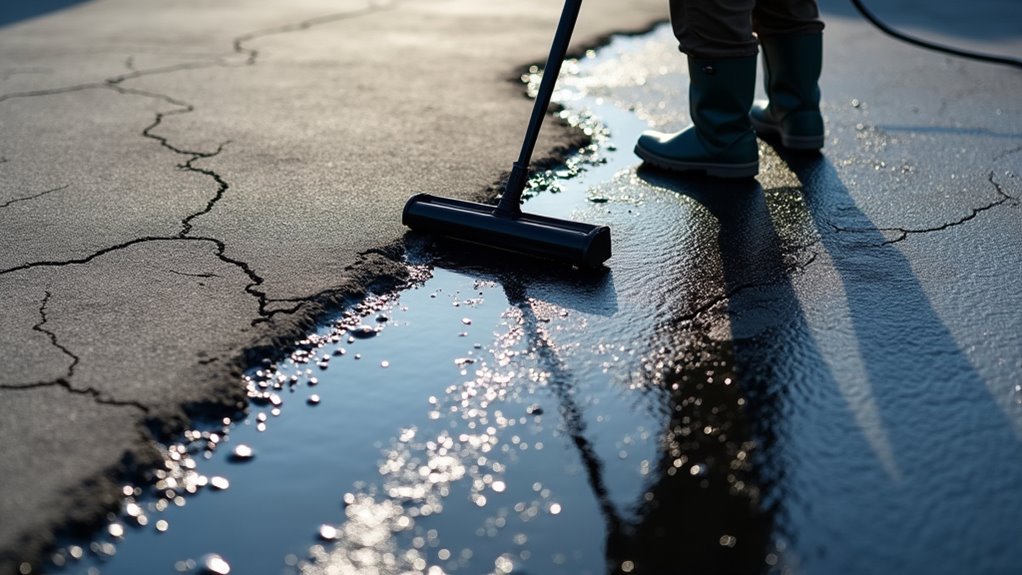
Sealcoating protects aging asphalt by blocking the oxidation and water intrusion that make pavement brittle and crack-prone. A fog seal penetrates the surface, seals narrow cracks, and restores flexibility that oxidized binder has lost. FHWA material reports that crack and fog seals can extend pavement life by approximately 1 to 4 years on pavement in excellent-to-good condition. Performance summaries cite 4 to 5 years for fog seals and 4 to 7 years for slurry seals.
Patch potholes and seal cracks before you apply any surface treatment. Sealing over defects traps damage instead of fixing it. Sealcoating won’t correct extensive cracking, base failure, or structural deterioration. Those conditions require rehabilitation. Apply it to sound pavement, and schedule reapplication from your inspection records to maintain continuous protection.
How does crack sealing stop damage from spreading
Crack sealing stops damage from spreading by keeping water and incompressible material out of the pavement structure. When water reaches the base, it weakens support, and debris lodged in cracks prevents normal expansion, widening the opening. You’ll get the best results by matching the method to the crack. Seal working cracks that have limited edge deterioration, and fill non-working cracks with moderate-to-no edge deterioration. FHWA guidance recommends sealing once working cracks are sufficiently developed, often in moderately cool weather around 7 to 18°C. Material choice affects longevity. Flush emulsion or asphalt fillers may last 2 to 4 years, while rubber- or fiber-modified fillers may last 6 to 8 years. Rubberized sealants in routed, working cracks can provide about 5 to 9 years, depending on installation and site conditions.
How does targeted patching restore a worn lot
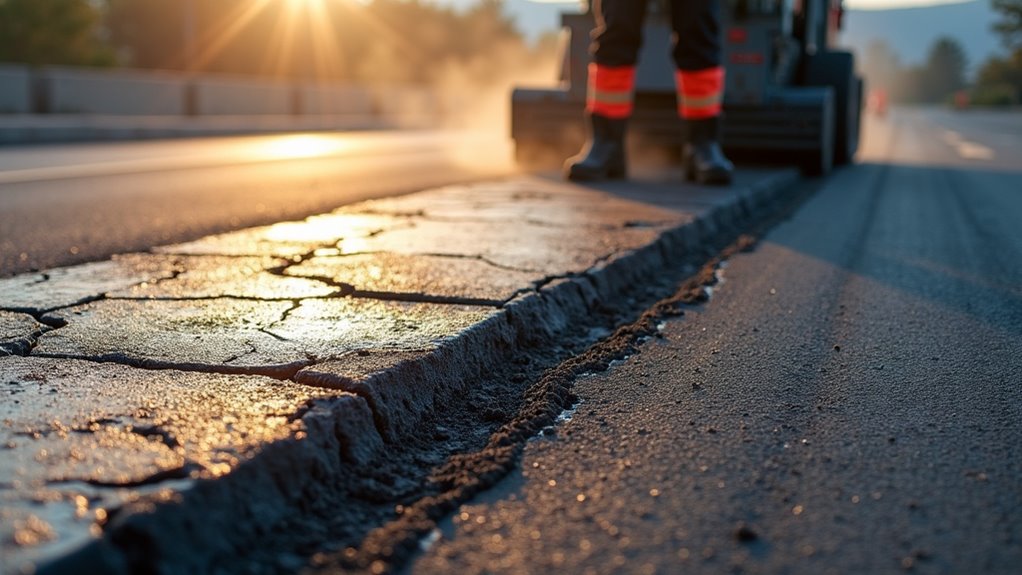
Targeted patching restores a worn lot by sealing potholes and deteriorated areas that let water into the pavement, stopping that infiltration before damage spreads to surrounding asphalt. You’ll get lasting results only if you diagnose the cause first. Recurring potholes often signal water intrusion or weak underlying material, and patching over either problem won’t hold.
Patching seals out water and stops damage from spreading, but it only lasts if you diagnose the cause first.
Match the repair to the scope of damage. Use localized patching for isolated failures. If deterioration is widespread or structural, repeated spot repairs waste money, and you should plan rehabilitation instead.
Sequence matters. Repair cracks and potholes before you apply any surface seal. The seal then protects the repaired areas and slows further surface degradation, but it can’t substitute for the repairs themselves.
Finally, reinspect patched areas after severe weather and heavy traffic. Document what you find so you can catch early failures and adjust future repairs.
How does restriping finish the job
Restriping finishes the job by restoring the markings that faded during years of oxidation and traffic, making it the final step in the restoration sequence. Patching and sealing correct the water-entry paths and safety hazards, and striping last keeps fresh paint off surfaces you’d otherwise patch or seal over.
- Confirm the surface is ready. Paint only after patches and seals have fully cured.
- Document existing faded markings. Use your inspection records to map stalls, arrows, and crosswalks before layout.
- Prioritize safety markings. Restripe fire lanes, crosswalks, and accessible stalls before cosmetic lines.
- Schedule restriping with preventive work. Fog seals add roughly 1 to 4 years of service, so align repainting with each seal cycle.
Log completion dates in your repair history to track marking wear.
How do you build a restoration plan for your lot
Build a restoration plan for your lot by inspecting the pavement, ranking repairs by severity, matching treatments to condition, and scheduling ongoing maintenance. Asphalt pavement typically lasts 15 to 20 years, and how well you plan maintenance determines how much of that range your lot reaches. Start by inspecting for cracks, potholes, raveling, rutting, standing water, and faded markings, then document each defect’s location and progression. Rank repairs by severity, addressing water-entry paths and safety hazards before cosmetic work. Next, match treatments to condition. Seal working cracks, patch potholes, and correct drainage before applying fog or slurry seals, which suit only pavement in excellent-to-good condition. If your base remains sound, consider an overlay. If it’s failed, budget for full-depth reconstruction. Finally, build a maintenance schedule from your repair history. Reinspect patched areas after severe weather and heavy traffic, and you’ll catch deterioration early, before it requires major rehabilitation.
Extend the Life of Your Aging Parking Lot
V&F Paving provides commercial asphalt paving and parking lot services for property owners looking to repair and maintain aging pavement before larger failures develop. A restoration plan can address cracks, potholes, drainage issues, and worn surfaces while the underlying pavement remains suitable for rehabilitation. Call (203) 624-2449 to discuss your parking lot and get an estimate.
Frequently Asked Questions
How Much Does Parking Lot Restoration Typically Cost per Square Foot?
Your per-square-foot cost depends on which treatment your pavement’s condition requires, and the available data doesn’t list prices. You’ll typically pay least for crack sealing and fog seals, which extend sound pavement life roughly 1 to 4 years. Slurry seals add 4 to 7 years, and thin overlays add 3 to 23 years. Full-depth replacement typically costs most. Get at least three local contractor quotes, then divide each price by its expected service-life extension to compare annualized value.
How Long Must a Parking Lot Stay Closed After Restoration Work?
Closure time depends on the treatment you choose. You’ll typically reopen crack-sealed areas within 1 to 3 hours, once sealant cures. You should keep fog- or seal-coated surfaces closed about 24 to 48 hours, and slurry seals several hours. After a hot-mix overlay, you’ll usually wait 24 to 72 hours before allowing vehicles. Temperature, humidity, and product specifications change these windows, so you’ll want to confirm cure times with your contractor before scheduling the lot’s reopening.
Can Parking Lot Restoration Be Done During Winter or Rainy Seasons?
Partly. You’ll get the best results when you schedule work by temperature and moisture. FHWA guidance places crack sealing in moderately cool weather, around 7 to 18°C, so winter isn’t ideal for sealing. You’ll still need to patch potholes and fix safety hazards promptly to limit water infiltration. Keep drains clear, document damage, then plan seals and overlays for suitable, drier conditions. Reinspect patches after severe weather.
Do ADA Requirements Affect How a Restored Parking Lot Must Be Laid Out?
Yes. ADA rules shape your layout. Resurfacing counts as an alteration under the 2010 ADA Standards, and restriping is a key barrier-removal opportunity. You’ll need one accessible space for lots of 1 to 25 spaces, scaling upward, with one in six being van-accessible. Car spaces need 96-inch widths and 60-inch aisles, and slopes can’t exceed 1:48. Place spaces on the shortest accessible route, and verify local codes.
Should I Hire a Contractor or Attempt Asphalt Repairs Myself?
You can handle minor work yourself, but hire a contractor for anything structural. You’ll manage inspection, debris removal, drain clearing, and sealing narrow non-working cracks. Bring in a pro when you’re facing recurring potholes, base failure, or surface seals and overlays. Fog seals extend life about 1 to 4 years only on sound pavement; HMA overlays range 3 to 23 years. A contractor can diagnose causes, so you don’t waste money on repeated repairs.