
You’ll typically pay $1 to $5 per square foot to resurface an asphalt parking lot. A basic overlay on a sound base runs $1 to $3, while milling and prep push you toward $2 to $5. For a 10,000-square-foot lot, that’s roughly $10,000 to $50,000. Larger lots often get lower per-foot rates. Extensive cracking, potholes, or a failed base raise costs fast. Striping, drainage, and curb work add more, so here’s what drives your final number.
Key Takeaways
- Parking lot resurfacing typically costs $1 to $5 per square foot, depending on damage, thickness, access, and regional material costs.
- Basic overlays on structurally sound bases usually run $1 to $3 per square foot, or $10,000 to $30,000 for a 10,000-square-foot lot.
- Overlays requiring milling or extensive prep generally cost $2 to $5 per square foot due to crack repair, patching, and leveling.
- Larger lots raise total price but often lower per-square-foot costs, since fixed mobilization expenses spread over more area.
- Striping, ADA markings, drainage, and curb work often add separate costs, so compare line-item quotes after an on-site assessment.
How much does it cost to resurface an asphalt parking lot
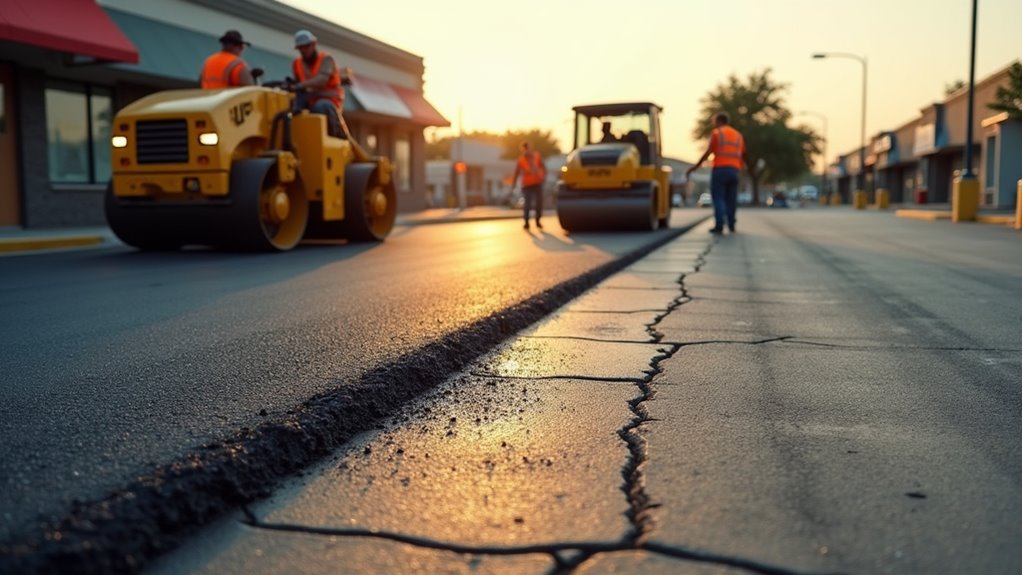
Your final cost to resurface asphalt parking lot surfaces depends on damage, thickness, access, and regional material costs. Treat these figures as planning ranges, not all-in prices. Striping, drainage, and curb work raise your resurface parking lot cost.
What does parking lot resurfacing cost per square foot
Parking lot resurfacing typically costs $1, $5 per square foot, depending on whether the job is a basic overlay or requires prep and milling.
| Project Type | Cost per Sq. Ft. | 10,000 Sq. Ft. Lot |
|---|---|---|
| Basic overlay | $1 to $3 | $10,000 to $30,000 |
| Overlay with prep or milling | $2 to $5 | $20,000 to $50,000 |
| Sealcoating only | $0.15 to $0.35 | $1,500 to $3,500 |
Larger, open lots often price lower per square foot because mobilization costs spread across more area. Tight access, phased work, and thicker lifts push prices up.
Treat these figures as planning ranges, not all-in prices. Striping, ADA markings, drainage, and curb repairs usually cost extra, so you’ll want quotes that clearly specify thickness, milling depth, and patching allowance in writing.
How does lot size change the price
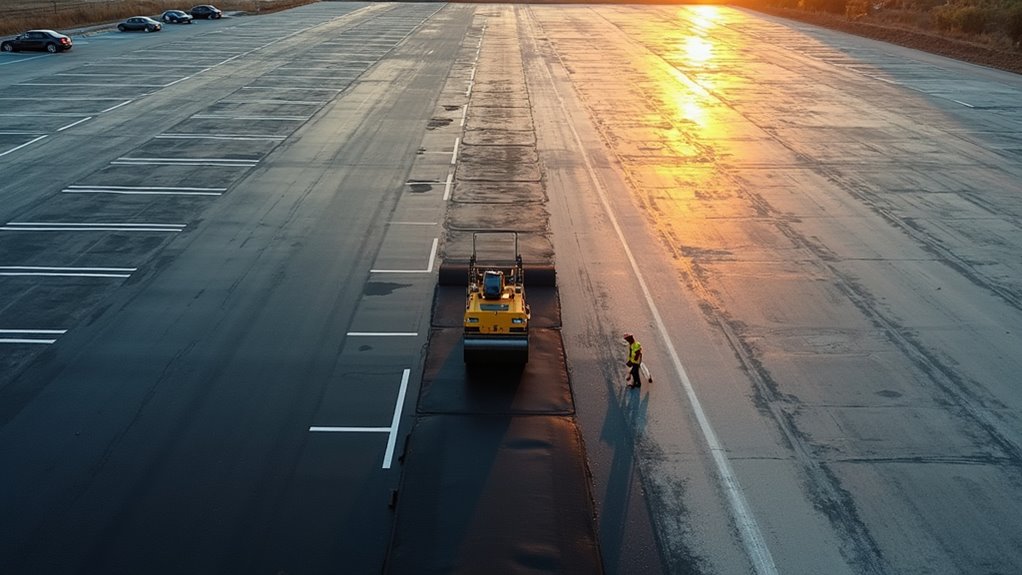
Lot size raises your total price but often lowers your cost per square foot. Your contractor spreads fixed mobilization costs, like hauling pavers, rollers, and crews to your site, over more area. Open layouts also let equipment run longer, efficient passes. Your total still climbs with size, so use these planning figures:
- Small lots: Expect the highest per-square-foot rates because setup costs dominate the bill.
- 10,000 square feet: At $1 to $3 per square foot, you’ll budget roughly $10,000 to $30,000.
- 17,500 square feet (50 spaces): At $2 to $5 per square foot, you’re looking at about $35,000 to $87,500.
- Per-space estimates: Plan on $300 to $900 per space, assuming about 300 square feet each, including drive aisles.
Size isn’t everything. Tight access, irregular layouts, or phased work can raise labor costs and erase volume savings.
How does the condition of the base affect cost
The worse the base condition, the more you’ll pay. With a structurally sound base, you’re paying mainly for surface prep and a 1.5 to 2-inch overlay, which keeps you near the $1 to $3 per square foot planning range. Prep usually covers cleaning, crack repair, pothole patching, leveling, and tack coat.
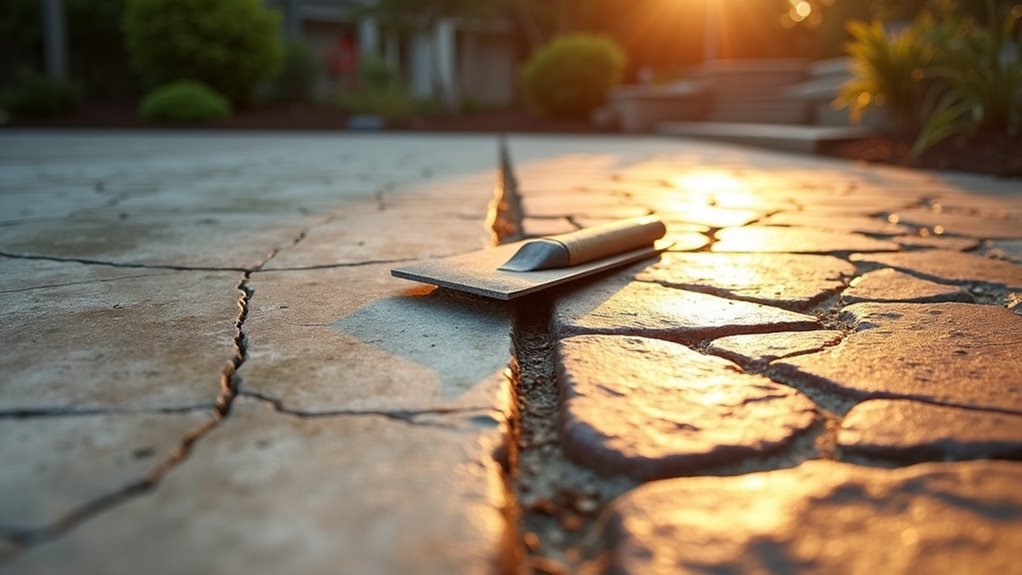
As base damage spreads, costs climb. Extensive cracking, potholes, uneven grades, or failed sections add repair work and can push pricing toward $2 to $5 per square foot. If the base or subgrade has failed, an overlay won’t hold, and you’ll likely need full-depth repairs or full replacement, which means demolition and reconstruction.
Sources set the overlay cutoff at roughly 25% or 30% damaged area, so get an on-site assessment. Check drainage too, because poor drainage causes premature failure. Ask for full-depth patching to be priced separately.
What extra work can raise the total
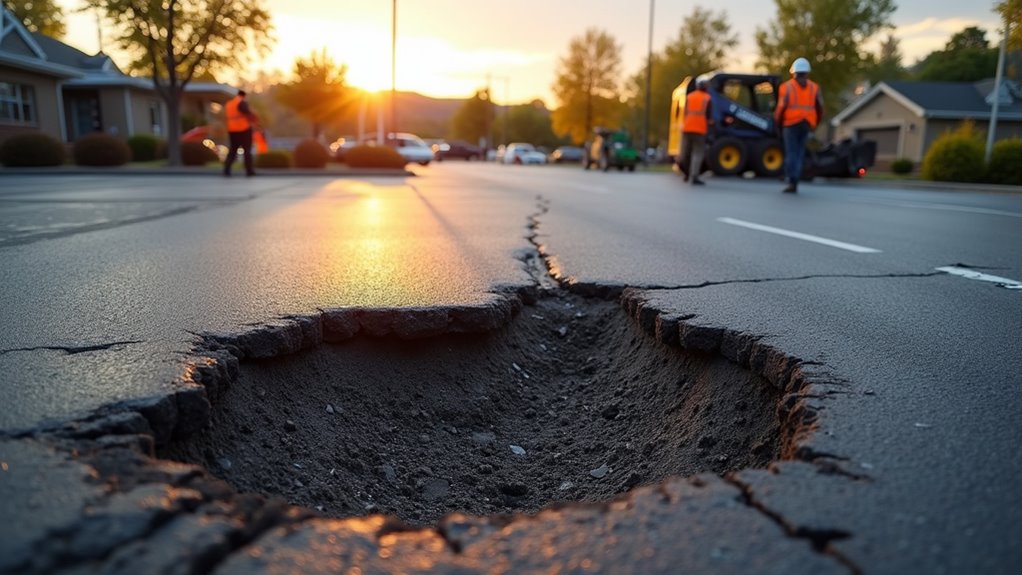
Milling, surface repairs, drainage and curb work, and striping can push your total well past the basic $1 to $3 per square foot range for the overlay itself. Your quote may treat these items separately, so you’ll want each one priced clearly:
Extras like milling, repairs, drainage, and striping can push your total well past the $1 to $3 per square foot overlay cost.
- Milling: If your contractor removes part of the old surface before paving, expect higher costs than a straightforward overlay, plus possible disposal fees.
- Surface repairs: Crack sealing, pothole patching, leveling, and full-depth patching of failed sections add labor and material.
- Drainage and curb work: Grading corrections, curb repairs, and utility-cover adjustments expand your project scope.
- Striping and ADA markings: Restriping parking spaces and meeting accessible-route requirements often show up as separate line items.
Phased paving that keeps your lot partly open also raises labor and mobilization costs, so confirm closure plans early.
How does resurfacing cost compare to full repaving
Resurfacing typically costs about 30% to 50% less than full replacement because it reuses your existing base, while full replacement requires tearing out the old pavement and rebuilding it. A basic overlay runs roughly $1 to $3 per square foot, so you’d pay about $10,000 to $30,000 for a 10,000-square-foot lot.
Those savings only hold if your base is structurally sound. If widespread cracking, potholes, or failed sections cover roughly 25% to 30% of the surface, an overlay may not last, and you’ll likely need full-depth repairs or replacement. On a sound base, resurfacing adds about 8 to 15 years of service life. Get an on-site condition assessment before choosing, since paving over base failure wastes your money and cracks quickly reflect through the new layer.
How do you get an accurate resurfacing quote
To get an accurate resurfacing quote, give every contractor the same project specs so you’re comparing equal scopes of work. Start with the total square footage, then request an on-site condition assessment before accepting any price.
Give every contractor identical project specs, starting with total square footage, and require an on-site condition assessment before accepting any resurfacing price.
- Specify the overlay details. List asphalt thickness (typically 1.5 to 2 inches), milling depth, and whether milling covers only junctions or the full surface.
- Define preparation scope. Ask for a patching allowance covering crack repair, pothole patching, leveling, and tack coat.
- Request separate line items. Have bidders price full-depth patching, drainage corrections, curb repairs, striping, and ADA markings individually.
- Clarify logistics. Confirm disposal, traffic control, and whether you’ll close the lot or need phased paving.
Use $1 to $3 per square foot as a baseline, but rely on local bids for your final budget.
Resurface Your Parking Lot With a Clear Plan
V&F Paving provides commercial paving services across Connecticut, including parking lot resurfacing, asphalt repairs, line striping, drainage, and new parking lot installation. If your lot has widespread surface wear but the underlying pavement remains structurally sound, resurfacing may be a practical alternative to full replacement. Call (203) 624-2449 to discuss your parking lot and get a free estimate.
Frequently Asked Questions
How Long Does a Resurfaced Asphalt Parking Lot Typically Last?
You can typically expect a resurfaced asphalt parking lot to last 8 to 15 years, depending on its condition, traffic, climate, materials, and workmanship. If your base is genuinely sound, you might get 15 to 20 years. You’ll protect that investment by sealing cracks, patching potholes, and fixing drainage before paving. If your base has failed, an overlay won’t hold up, so you’ll likely need full-depth repairs or replacement, which costs far more upfront.
What Signs Indicate a Parking Lot Needs Resurfacing Rather Than Sealcoating?
You’ll know sealcoating won’t cut it when you see widespread cracking, potholes, or uneven grades. Sealcoating’s a $0.15 to $0.35-per-square-foot maintenance treatment, and it won’t rebuild worn pavement. A $1 to $3-per-square-foot overlay adds 1.5 to 2 inches of new asphalt, but only if your base stays sound. If damage covers roughly 25 to 30% of the lot or drainage keeps failing, get an on-site assessment, since you may need full-depth repairs or replacement instead.
How Long Does It Take to Resurface an Asphalt Parking Lot?
You’ll usually see a small-to-midsize lot overlaid in one to three days, though you should confirm timing with your contractor since it isn’t fixed. Prep drives the schedule: crack repair, pothole patching, leveling, and milling all add time. If you keep the lot partly open, phased paving stretches the job and raises costs. You’ll also need to plan for curing and striping before reopening, so ask bidders for written timelines.
How Soon Can Vehicles Park on a Newly Resurfaced Lot?
You can usually park on a newly resurfaced lot within 24 to 72 hours, though your contractor should confirm timing based on temperature, overlay thickness, and mix. Hot weather slows cooling, so you’ll often wait longer. Ask whether striping and ADA markings come later, which may require another visit. If you can’t close the lot fully, phased paving keeps spaces open but can raise your labor and mobilization costs.
What Maintenance Helps Extend the Life of a Resurfaced Parking Lot?
You’ll extend your lot’s life most by sealing cracks and patching potholes early, before water reaches the base. Keep drainage working, since standing water causes premature failure. Budget for sealcoating at about $0.15, $0.35 per square foot. It’s a low-cost, periodic maintenance treatment, not a new overlay. Restripe as markings fade to keep ADA compliance current. With consistent care, you’ll protect the 8, 15 years of added service life resurfacing typically delivers.