

You can remove oil stains from your asphalt driveway by first absorbing fresh spills with clay-based kitty litter for 15-30 minutes. Next, scrub the area with baking soda, let it sit, then clean residue using dish soap and a stiff-bristled brush. For set-in stains, apply cola overnight or WD-40 for 30 minutes before rinsing. Commercial degreasers tackle the toughest spots, and the steps below cover each method in detail. You can remove oil stains from your asphalt driveway by first absorbing fresh spills with clay-based kitty litter for 15–30 minutes. If you’re working to remove old oil from asphalt, start by breaking down the residue before deep scrubbing. Next, scrub the area with baking soda, let it sit, then clean residue using dish soap and a stiff-bristled brush. For set-in stains, apply cola overnight or WD-40 for 30 minutes before rinsing. Commercial degreasers tackle the toughest spots, and the steps below cover each method in detail.
Absorb Fresh Oil Spills With Kitty Litter
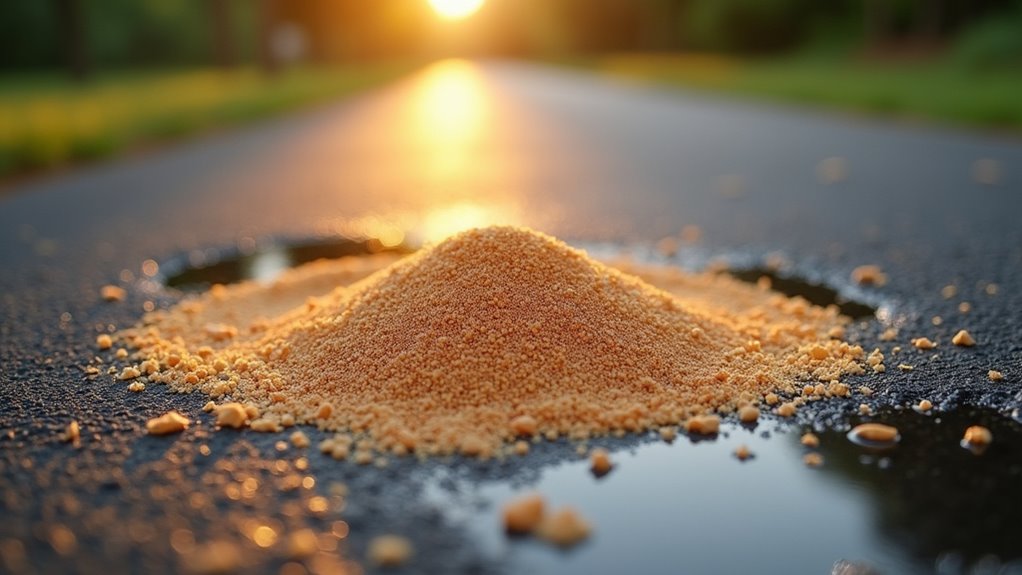
When oil first hits your asphalt driveway, you’ve got a narrow window to prevent it from penetrating the surface and weakening the binder. Clay-based, non-clumping kitty litter containing bentonite offers effective oil absorption for fresh spills.
Spread the litter generously over the stain to contain spreading. Let it sit for 15-30 minutes minimum—overnight delivers maximum oil absorption. The porous clay granules trap oil within their structure without chemically breaking it down.
After absorption, sweep up the saturated litter. This method works best for small to medium spills on smooth surfaces. For larger spills, kitty litter may leave behind oil residue that requires additional cleaning with scrubbing or specialized products. Knowing how to remove oil stains from asphalt driveway starts with quick action. Dispose of oil-soaked litter according to local hazardous waste regulations, as improper disposal causes environmental harm.
Scrub Light Stains With Baking Soda
Baking soda offers a gentle yet effective solution for light oil stains that haven’t fully penetrated your asphalt’s surface. This natural asphalt driveway oil stain remover absorbs oil through its porous structure without harsh chemicals.
| Step | Action |
|---|---|
| 1 | Spread baking soda generously over the stain |
| 2 | Moisten slightly with water for better absorption |
| 3 | Let sit 30 minutes to overnight |
| 4 | Scrub with a stiff bristle brush in circular motions |
| 5 | Rinse thoroughly with a garden hose |
When learning how to remove oil stains from asphalt driveway surfaces, this method proves to be the best way to remove oil stains from asphalt for fresh spills. Repeat applications as needed for stubborn areas. Acting quickly is essential because the longer oil sits on the surface, the more it interacts with the binder in the asphalt, making removal increasingly difficult.
Clean Remaining Residue With Dish Soap
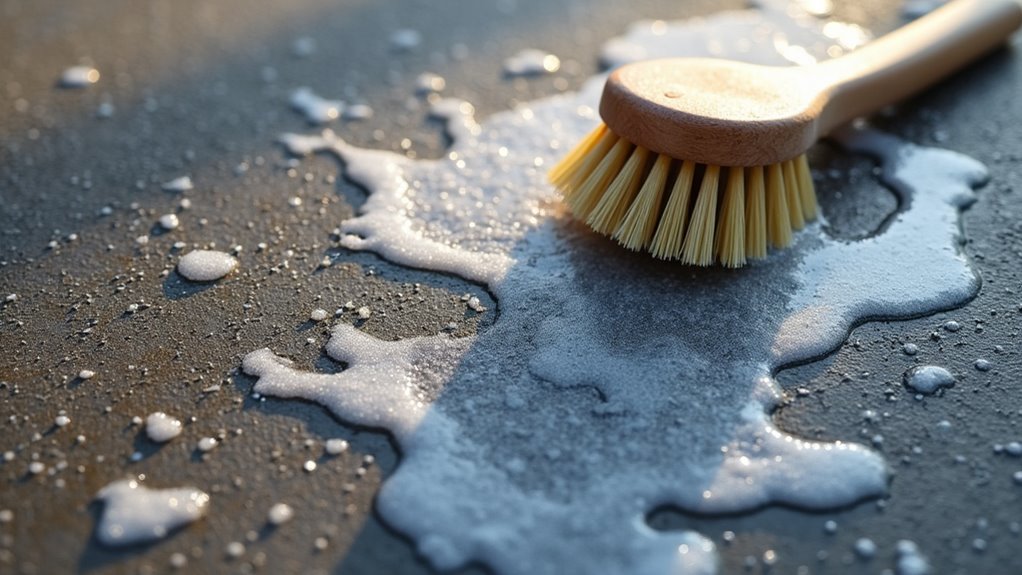
After treating the stain with baking soda, you’ll want to tackle any remaining residue using dish soap, which contains surfactants that effectively break down oil molecules on contact. Apply a generous amount of dish soap directly to the stained area, then use a stiff-bristled brush to scrub in circular motions, allowing the emulsifying action to lift the oil from the asphalt surface. Avoid using metal wire brushes as they can be too abrasive and harm the asphalt surface. Rinse thoroughly with warm water from a garden hose to wash away the loosened oil and soap residue.
Surfactants Break Down Oil
Most dish soaps contain surfactants that break down oil molecules through a dual-action chemical process. When you’re learning how to remove oil stains from asphalt driveway surfaces, understanding this mechanism helps you apply the right technique. Surfactants have hydrophobic tails that interact with nonpolar oil molecules while hydrophilic heads face outward to attract water.
This dual structure allows surfactants to disrupt the cohesive forces within grease, breaking oil into smaller particles. When removing oil stains from asphalt driveway areas, these particles form micelles that encapsulate oil and prevent re-deposition. If you need to know how to clean oil off asphalt driveway surfaces effectively, apply the soap solution and let it sit for 10-15 minutes before scrubbing with a stiff-bristled brush.
Scrub and Rinse Thoroughly
Once you’ve allowed the dish soap solution to penetrate the oil stain, you’ll need to scrub the area vigorously with a stiff-bristled brush. Use circular motions and apply consistent pressure for 5-10 minutes, focusing on porous areas and cracks where oil accumulates. Asphalt’s durable surface can handle rigorous scrubbing without damage.
After scrubbing, rinse the area thoroughly with warm water using a garden hose. A high-pressure setting helps prevent loosened oil from re-staining the surface. Remove all suds completely to avoid residue buildup.
Allow your driveway 1-2 days to dry before evaluating results. For older or stubborn stains, you’ll likely need to repeat the entire process multiple times. Check for stain lightening after each cycle, and consider power washing for deep residue that persists after soap treatment.
Remove Set-In Stains With Coca-Cola or WD-40
For stubborn, set-in oil stains that dish soap couldn’t fully eliminate, you can try two effective household alternatives: Coca-Cola or WD-40. The phosphoric acid in cola breaks down embedded oil residue when left to soak for several hours, while WD-40’s solvent properties penetrate and lift stains in as little as 30 minutes. Both methods work best after you’ve already removed the top layer of oil with absorbents and require thorough rinsing to prevent residue buildup.
Coca-Cola Overnight Method
While commercial degreasers remain the most effective option for stubborn oil stains, cola products like Coca-Cola or Pepsi offer a surprisingly practical alternative that’s already sitting in your refrigerator. The acidic properties in cola break down oil particles and prevent them from remaining congealed on your asphalt surface.
Follow these steps for best results:
- Mop up excess oil before applying cola
- Pour 1-2 cans generously over the stained area
- Allow the liquid to sit overnight for maximum penetration
- Scrub with a stiff brush and rinse thoroughly with a hose
For enhanced effectiveness, mix cola with Dawn dish soap and water. This combination produces stronger cleaning action than cola alone. Keep in mind that fresh stains respond better than established ones, and multiple applications may be necessary.
WD-40 Application Process
WD-40 provides another household solution for tackling oil stains that haven’t responded to gentler methods like cola treatments. Spray WD-40 directly onto the stain and let it penetrate for 30 minutes. The solvents thin the oil, making surface cleanup easier. Most stains won’t require scrubbing, though you can use a hard bristle brush for stubborn spots.
Rinse thoroughly with a garden hose or pressure washer after treatment. You’ll likely need multiple applications for set-in stains. Keep in mind that WD-40 works best on fresh stains—it’s less effective on deeply soaked, long-term deposits where microbial cleaners outperform it.
Wear protective gear during application and guarantee good ventilation. Test a small area first to confirm it won’t damage your asphalt surface.
Scrubbing and Rinsing Tips
Tackling set-in oil stains requires more aggressive techniques than fresh spills demand. After applying Coca-Cola or WD-40, you’ll need to employ proper scrubbing and rinsing methods to lift embedded oil from asphalt pores.
Use these effective techniques for ideal results:
- Scrub with a wire brush in circular motions to dislodge oil trapped in the asphalt surface
- Reapply your cleaning agent during scrubbing if the initial layer evaporates before you’ve finished
- Rinse immediately with a high-pressure water spray to prevent oil re-deposition
- Allow the surface to dry completely before evaluating stain reduction
For stubborn spots, repeat the scrub-rinse cycle multiple times. Sun exposure after rinsing helps fade any residual marks. Focus your scrubbing efforts on the darkest areas where oil concentration is highest.
Use Commercial Degreasers for Tough Asphalt Stains
When DIY methods like dish soap and cat litter fail to lift stubborn oil stains, it’s time to upgrade to commercial degreasers specifically formulated for asphalt surfaces. These products contain specialized surfactants and microbial agents that penetrate deep into asphalt pores to break down petroleum compounds.
| Product Type | Application Method | Best For |
|---|---|---|
| Liquid Degreaser | Apply with rag or broom | Fresh to moderate stains |
| Microbial Dry Powder | Sprinkle and mist with water | Old stubborn stains |
| Oil-Eating Microbes | Pour, dry overnight, sweep | Deep-set contamination |
You’ll want to avoid petroleum-based cleaners like paint thinner, which degrade asphalt binders. Always test products on unsealed surfaces first. Expect multiple applications for severe staining. These commercial solutions work effectively in extreme temperatures and leave no residue.
Steam Pressure Wash Deep Oil Stains
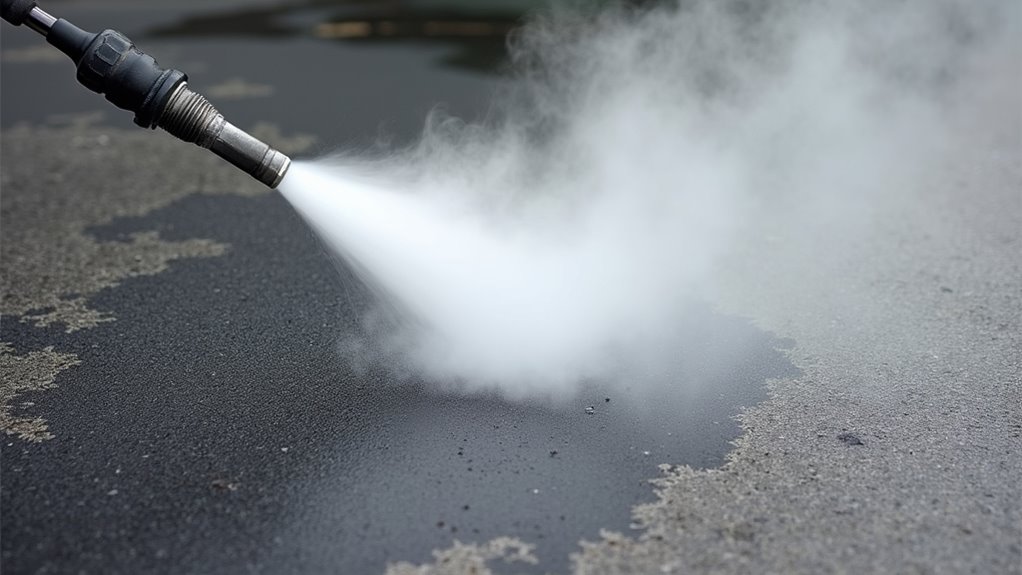
Steam pressure washing combines two powerful cleaning forces—extreme heat and high-pressure water—to tackle deep oil stains that resist conventional methods. The extreme heat liquefies embedded oil particles while penetrating asphalt pores to release deep stains. High-pressure water then dislodges and washes away the lifted contaminants.
Steam pressure washing unleashes extreme heat and high pressure to penetrate asphalt pores and lift stubborn oil stains conventional methods can’t touch.
For best results, follow this process:
- Apply a commercial degreaser to the stain before steaming
- Direct the steam jet across the stain using steady passes
- Rinse thoroughly with the high-pressure water stream
- Repeat for stubborn stains that don’t lift initially
Use a flat cleaning head for even application and avoid excessive pressure to prevent surface pitting. Test a small area first to confirm asphalt compatibility. This method works best when you pretreat older stains with degreaser before steaming.
Apply Muriatic Acid Only When Nothing Else Works
Muriatic acid represents the most aggressive chemical option for oil stain removal and should only enter your toolkit after every other method has failed. This hazardous chemical can etch, pockmark, or discolor asphalt surfaces, making it a last resort exclusively.
| Step | Action | Duration |
|---|---|---|
| Mix | 10 parts water to 1 part acid | — |
| Apply | Pour onto pre-wetted stain | 1 minute max |
| Neutralize | Spread baking soda layer | Before rinsing |
Wear chemical-resistant gloves, mask, and protective eyewear before handling. Pour the diluted mixture onto the stain, let it stand for only one minute on asphalt, then scrub with a coarse brush. Apply baking soda immediately to neutralize, then power wash thoroughly. Test a small area first.
Tackle Old, Dried Stains With Repeated Treatments
Old, dried oil stains won’t disappear with a single cleaning attempt—you’ll need patience and multiple treatment rounds to break down oil that has penetrated deep into the asphalt. Start with absorbents like cat litter crushed into the surface overnight, then follow up with liquid degreasers or powdered detergents, repeating each application until you see improvement. Combining methods—such as cola treatments followed by dish soap scrubbing and steam pressure washing—gives you the best chance of fully extracting stubborn, set-in stains.
Patience With Stubborn Stains
When tackling dried oil stains that have set into your asphalt driveway, you’ll need to adjust your expectations and approach. Old stains penetrate deeper into asphalt’s porous surface, making single treatments ineffective. Plan for multiple applications rather than expecting immediate results.
Extended saturation periods considerably improve treatment effectiveness:
- Soak Coca-Cola applications for 6+ hours overnight before scrubbing
- Let kitty litter sit overnight to maximize oil absorption
- Allow baking soda 30-60 minutes of contact time before rinsing
- Apply TSP paste for 30-minute absorption periods, repeating as needed
You’ll notice gradual improvement with each treatment cycle rather than complete removal on your first attempt. If household methods fail after several applications, consider professional assessment. Steam pressure washing or industrial-strength degreasers like Simple Green offer more aggressive alternatives for deeply embedded stains.
Multiple Application Rounds
Stubborn oil stains rarely yield to a single treatment, so you’ll need to commit to multiple application rounds using your chosen cleaning method. For baking soda, sprinkle a generous amount on the stain, wet it slightly, and scrub in circular motions. Rinse and repeat, allowing overnight dwell time for dried stains. With powdered detergent, cover the stain completely, add water, scrub, and let it sit for one hour before rinsing.
Cat litter requires overnight absorption after stomping it into the surface—sweep and repeat as needed. Dish soap treatments involve scrubbing with warm water and rinsing between each round. Commercial degreasers need 5-12 hours to dry and crack before removal. Each method demands patience; expect multiple cycles before old, penetrated stains fully disappear.
Combining Treatment Methods
Why settle for a single cleaning method when combining treatments often delivers better results on old, dried oil stains? You’ll achieve deeper penetration and more thorough removal by layering complementary techniques strategically.
Start with these proven combination approaches:
- Absorbent layering: Apply baking soda paste first, then cover with non-clumping kitty litter and stomp it in overnight to draw out embedded oil
- Detergent-emulsifier blends: Mix dish soap with laundry detergent, scrub into stains, let sit 30-60 minutes, then rinse and repeat
- Acidic activation: Pour Coca-Cola over baking soda-covered stains and let the fizzing action work overnight
- Degreaser-pressure combos: Pre-treat with TSP paste for 15-30 minutes, then follow with a 3000 PSI pressure washer
These hybrid methods tackle layered contaminants without damaging your asphalt surface.
Prevent Future Oil Stains on Your Asphalt
Although removing existing oil stains restores your driveway’s appearance, implementing preventive measures will save you significant time and effort over the long term.
Address spills immediately using absorbent materials like cat litter. Apply sealcoating every two to three years to create a protective barrier that blocks oil penetration. Wash your driveway routinely and rotate parking spots to distribute wear evenly.
| Prevention Method | Action Required |
|---|---|
| Prompt Cleanup | Apply absorbents within minutes of spills |
| Regular Maintenance | Pressure wash periodically; clear debris |
| Sealcoating | Reapply every 2-3 years |
| Absorbent Materials | Keep cat litter on hand for emergencies |
| Protective Products | Use asphalt-safe sealers and floor protectors |
Monitor weather conditions since hot sun softens asphalt, increasing vulnerability to oil penetration.
Call a Professional for Severely Stained Asphalt
When DIY methods fall short, it’s time to call in professional asphalt cleaners who have the equipment and expertise to address severe oil contamination.
Professionals use hot-water pressure washing at 200°F+ to emulsify oil trapped deep in asphalt pores. They apply eco-safe degreasers through a multi-step process that won’t compromise your driveway’s integrity.
Consider hiring professionals when you notice:
- Deep-seated stains causing permanent dark discoloration
- Years-old car leaks requiring specialized degreasing
- Large areas exceeding DIY treatment capabilities
- Aging asphalt that risks damage from amateur methods
Expect to pay $0.20–$0.45 per square foot, with total costs ranging $100–$500 depending on driveway size and stain severity. A typical 600-square-foot driveway runs $120–$270. Insured technicians guarantee proper handling while protecting your asphalt’s longevity.
Frequently Asked Questions
Can Oil Stains Cause Permanent Structural Damage to My Asphalt Driveway?
Yes, oil stains can cause permanent structural damage to your asphalt driveway. When oil penetrates the surface, it breaks down the asphalt binder, softening the pavement and compromising its integrity. Over six to twelve months, untreated oil seeps deeper, progressing from surface stains to soft spots, cracking, and eventually potholes. If the damage reaches your base layer, you’ll likely need full asphalt replacement rather than simple repairs.
How Long Does Motor Oil Take to Penetrate and Damage Asphalt Surfaces?
Motor oil begins penetrating asphalt within hours of contact, softening the binder almost immediately. During the first 24-48 hours, the oil oxidizes and bonds with the surface, causing permanent discoloration. If you don’t intervene, you’ll see visible degradation—including pitting and surface breaking—within weeks. Warm weather accelerates this process since heat increases asphalt malleability. You should remove excess oil as quickly as possible to prevent deeper structural damage.
Will Removing Oil Stains Leave Discolored Patches on My Asphalt Driveway?
Yes, removing oil stains can leave discolored patches on your asphalt driveway. Oil penetrates the surface and breaks down the binder, causing permanent color changes that standard cleaning won’t fully reverse. You’ll likely notice slight color variations even after professional removal. To minimize visible differences, you should apply sealcoating after complete stain removal—this helps mask minor discoloration and creates a uniform appearance across your driveway.
Are Oil Stain Removal Methods Safe for Newly Installed Asphalt Driveways?
You need extra caution with newly installed asphalt since the binder hasn’t fully cured. Stick to gentle methods—clay-based kitty litter for absorption, dish soap solutions, or enzyme-based degreasers diluted 1:1 with water. Avoid pressure washers at high settings and harsh solvents that can soften the uncured surface. Always test products on a small, hidden area first. Act quickly on fresh spills to prevent deep penetration into the sensitive binder.
Can I Seal My Asphalt Driveway Immediately After Removing Oil Stains?
You can seal your asphalt driveway immediately after removing oil stains, but only if the surface is completely clean and dry. For fresh stains treated with detergent, you’re ready to seal once you’ve rinsed and dried the area. Deep stains requiring heat treatment need full oil evaporation first. Always apply primer to treated areas for ideal sealant bonding, and never seal over untreated stains—oil prevents proper adhesion.