
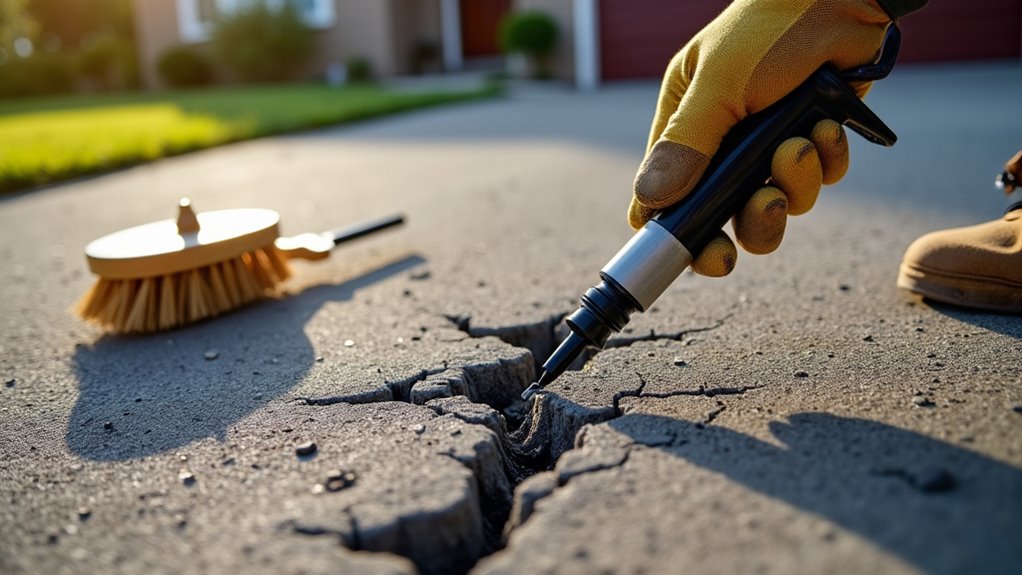
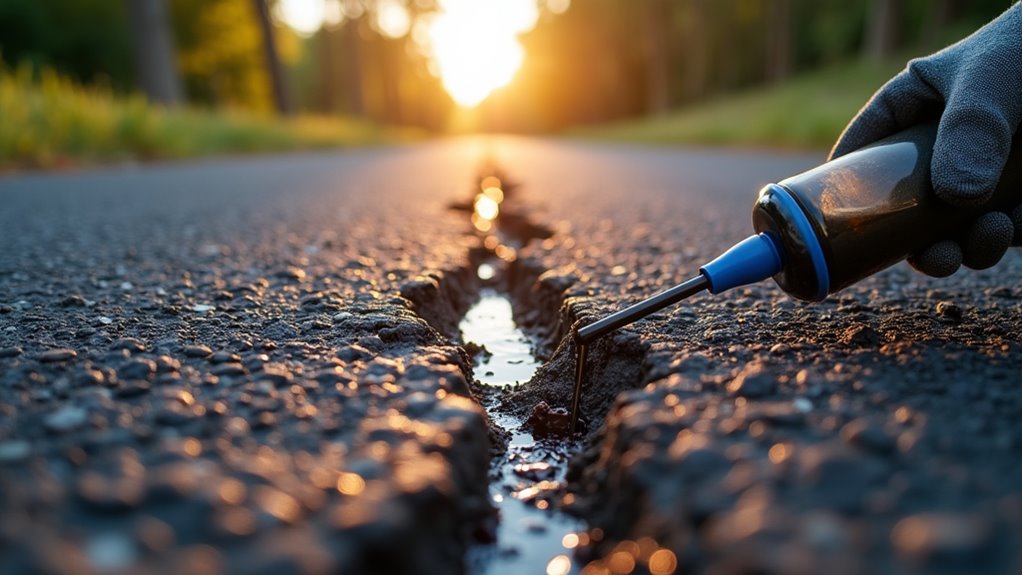
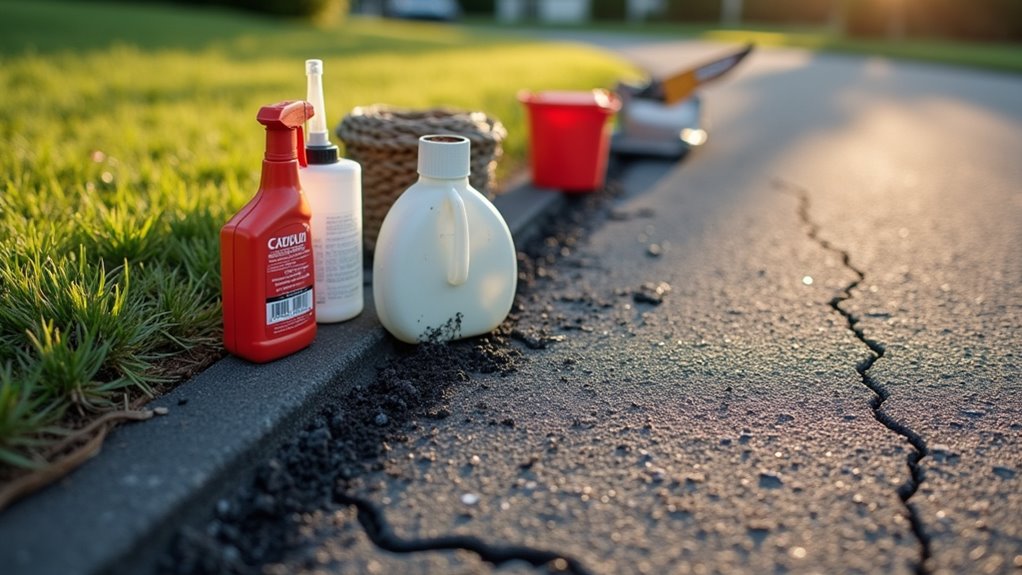

To repair crumbling asphalt driveway edges, you need to remove the broken asphalt back to solid pavement, cut a clean edge, rebuild the gravel base underneath, and fill the area with asphalt patch compacted in layers. Then support the new edge with soil, stone, or edging so it can’t break off again. Edges crumble because they’re the weakest part of a driveway. They often have little or no base underneath, nothing holding them in place on the outside, and tires that roll over them every day. Fixing the support is what makes the repair last.
Key Takeaways
- Asphalt driveway edges crumble because they lack support underneath and alongside, not just because the asphalt is old.
- A lasting repair removes loose material, cuts back to solid pavement, and rebuilds the gravel base before any patch goes in.
- Patching in 2-inch layers and compacting each one hard keeps the new edge dense and less likely to break off.
- Tapering the new edge and backfilling against it, or adding Belgian block edging, prevents the same edge from crumbling again.
- Long stretches of crumbling edge, sunken areas, or cracking that runs inward from the edge usually mean a professional repair is needed.
Why Are My Asphalt Driveway Edges Crumbling
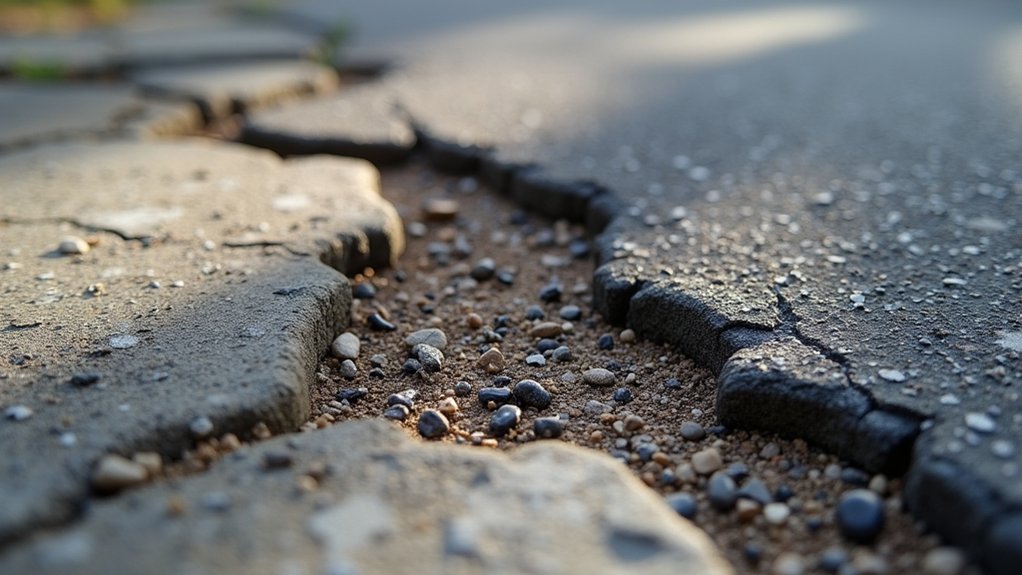
Your asphalt driveway edges are crumbling because the edge has lost its support. The middle of a driveway is held in place by the pavement around it, but the outer edge has nothing beside it except soil. If that soil washes away or the base under the edge is thin, every tire that rolls over the edge bends it until it cracks and breaks off.
| Cause | What You’ll See | How to Fix It |
|---|---|---|
| No base under the edge | Edge cracks parallel to the driveway, then breaks off in chunks | Rebuild the base past the edge |
| Vertical drop-off at the edge | Sharp, unsupported lip that crumbles when driven on | Taper the edge and backfill against it |
| Soil washing away beside the edge | Gap between the asphalt and the lawn | Backfill with soil or stone, fix drainage |
| Thin asphalt at the edges | Edges wear faster than the center | Patch to full depth |
| Tires driving off the edge | Damage concentrated on curves and near the garage | Widen the driveway or add edging |
| Water pooling along the edge | Soft, crumbly edge after freeze-thaw cycles | Regrade so water drains away |
Thin pavement makes every one of these worse. Our guide on how thick an asphalt driveway should be explains how base depth affects edges in particular.
How Do You Repair Crumbling Asphalt Driveway Edges in 10 Steps
You repair crumbling asphalt driveway edges by preparing the damaged area, rebuilding its base, patching it in layers, and then supporting it. These 10 steps work for edges you’re repairing yourself with cold patch, and they follow the same order a crew uses with hot mix.
1. Assess How Far the Damage Goes
Walk the edge and press on it with your heel. Mark everywhere the asphalt is loose, cracked, or sinking, including cracks running a few inches in from the edge. Those cracks usually mean the base under them has failed too.
2. Clear Weeds and Debris
Pull grass and weeds from along the edge and out of the cracks, and remove roots growing under the asphalt. Sweep or blow away dirt, leaves, and loose stone so you can see the real edge.
3. Remove Loose and Crumbling Asphalt
Break out every piece of asphalt that moves or crumbles, using a pry bar, chisel, or flat shovel. Keep going until you reach solid pavement that doesn’t flex when you step on it.
4. Cut a Clean, Straight Edge
Cut along the sound asphalt to create a straight, vertical edge to patch against. A circular saw with a diamond or masonry blade works best, though a hammer and chisel will do for short sections. Patches bond better against a clean cut than a ragged break.
5. Dig Out and Rebuild the Base
Remove soft soil from under the repair area and replace it with crushed stone, compacted in thin layers with a hand tamper or plate compactor. Extend the new base about 6 inches past where the finished edge will be. That extra width is what supports the outer edge.
6. Prime the Cut Edges
Brush a thin coat of asphalt emulsion tack coat onto the cut edges of the existing asphalt. This helps the patch bond to the old pavement and seals the seam against water.
7. Fill in 2-Inch Layers
Fill the area with cold patch asphalt for a DIY repair, or hot mix for a professional one. Add about 2 inches at a time, compacting each layer before adding the next. Overfill the final layer by about 1/2 inch, since it compresses as you tamp.
8. Compact and Taper the Edge
Compact the top layer hard with a tamper, then drive slowly back and forth over it with a car tire. Shape the outer edge into a gentle slope, about 45 degrees, rather than a vertical drop. A tapered edge spreads tire weight down into the base instead of snapping off.
9. Backfill and Support the Edge
Pack soil, crushed stone, or topsoil and grass seed tightly against the tapered edge so it’s level with the asphalt surface. This keeps water from undermining the edge and gives it side support. For a permanent solution, install edging, covered in the next section.
10. Seal the Repair and Maintain the Edge
Fill any cracks along the seam, and once the patch has hardened, usually 30 to 90 days for cold patch, sealcoat it along with the rest of the driveway. Our guide on how to repair asphalt yourself covers crack filling. Our driveway sealcoating cost guide explains what sealing adds.
A repaired edge is only as strong as what’s beside it. Without backfill or edging, the same edge will crumble again.
What Is the Best Edging for an Asphalt Driveway
The best edging for an asphalt driveway is Belgian block for durability and curb appeal, or a compacted stone shoulder for a lower-cost fix. Edging works by holding the asphalt edge in place and keeping tires from rolling off it.
| Edging Option | How It Supports the Edge | Best For |
|---|---|---|
| Belgian block (granite block) set in concrete | Creates a solid curb that locks the asphalt in place | Long-term durability and a finished look |
| Compacted stone shoulder | Gives the edge side support and drains water away | Rural or long driveways on a budget |
| Tapered edge with topsoil and grass | Spreads weight into the base, and roots hold the soil | Simple residential repairs |
| Concrete curb | Rigid barrier against tires and plows | Driveways with heavy edge traffic |
Belgian block is common on Connecticut driveways because it stands up to snowplows and freeze-thaw cycles and stops tires from wearing down the edge. It’s also often added to the apron where the driveway meets the street, which takes the most abuse.
Can You Fix Crumbling Driveway Edges With Cold Patch
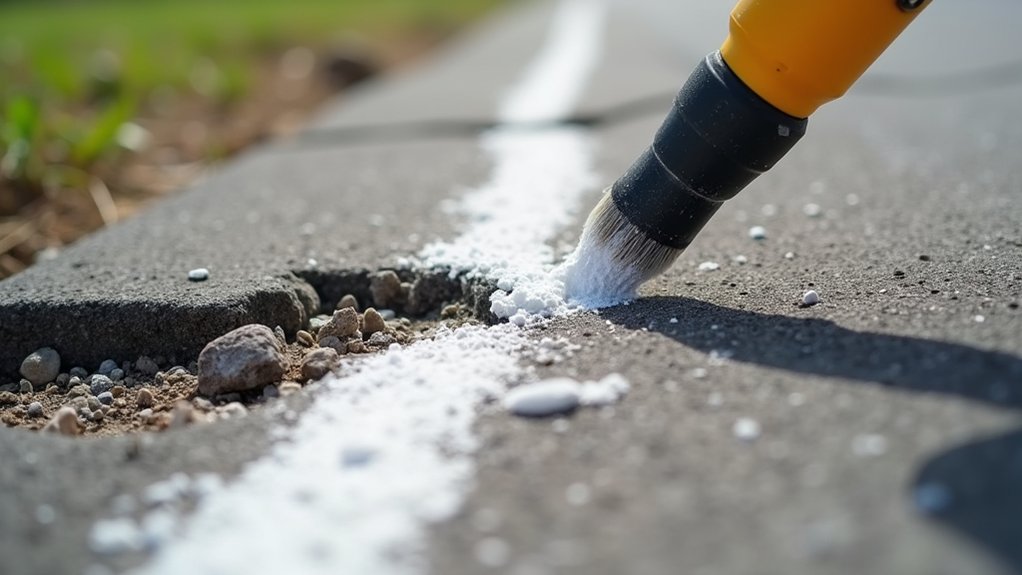
You can fix crumbling driveway edges with cold patch as a short-term repair, but edges are one of the hardest places for cold patch to hold. With nothing supporting the patch on the outside, it can push out under tires, especially before it fully hardens. If you use cold patch, rebuild the base first, compact the patch in layers, taper it, and backfill firmly against it.
For a repair that lasts years instead of a season, edges should be patched with hot mix asphalt, compacted with a roller, and supported with backfill or edging. Our cold patch asphalt guide explains how long each type of patch typically lasts.
When Do Crumbling Edges Need Professional Repair
Crumbling edges need professional repair when the damage runs along long stretches of the driveway, cracks spread inward from the edge, or the edge is sinking. These signs mean the base has failed over a wider area than a DIY patch can fix.
- More than a few feet of edge is breaking up
- Cracks run inward from the edge in a spiderweb or “alligator” pattern
- The edge has sunk below the lawn or the rest of the driveway
- Water pools along the edge after rain
- The apron at the street is crumbling. Our guide on how to repair a driveway apron covers that repair.
A crew can saw-cut the edge, rebuild the base with compacted stone, pave the strip with hot mix, and install Belgian block in a single job. Our guide to the best way to repair an asphalt driveway compares repair methods. If the damage has spread across much of the surface, read about when to replace an asphalt driveway.
How Do You Keep Driveway Edges From Crumbling Again
You keep driveway edges from crumbling again by keeping tires off them, keeping water away from them, and keeping them supported. A few habits make a big difference:
- Avoid driving or parking with tires on the outer edge, especially with heavy vehicles
- Mark edges with stakes before winter so plows don’t catch them
- Point downspouts away from the driveway and fix low spots where water pools
- Top up backfill along the edges each spring as the soil settles
- Fill cracks along the edges before winter, then sealcoat every 2 to 3 years
In Connecticut, edges take the most damage during freeze-thaw season, so a fall inspection and crack filling are worth the time.
Fix Crumbling Driveway Edges Before They Spread
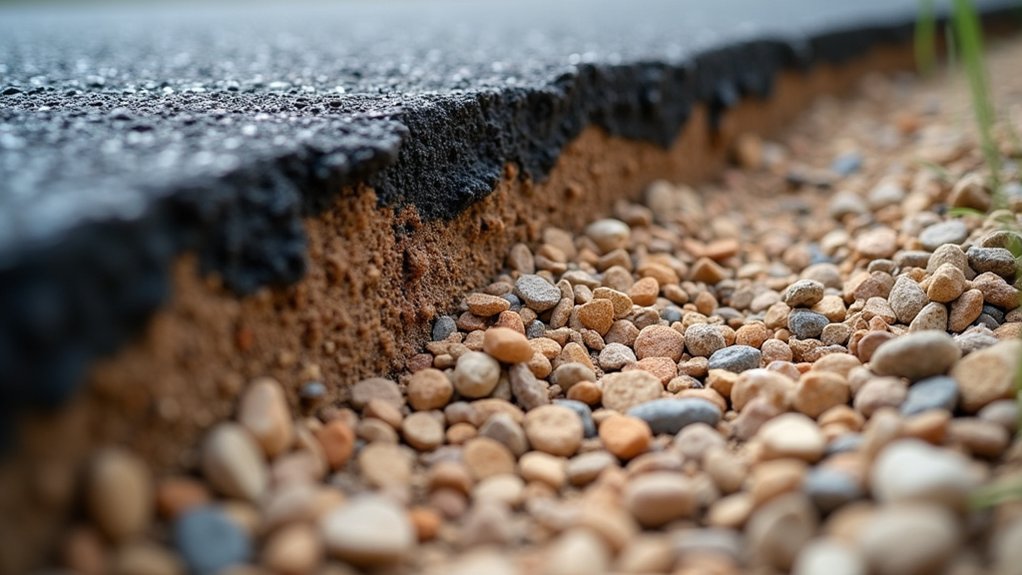
Crumbling edges get worse every winter, and a small edge repair now costs far less than a large section later. V&F Paving can rebuild damaged edges, add Belgian block edging, and repair your driveway through its asphalt driveway repair services. Call (203) 624-2449 or request a free estimate to discuss crumbling edges, base damage, and edging options for your driveway.
Frequently Asked Questions
How Long Should You Wait Before Driving on a Repaired Driveway Edge?
You can drive on a cold patch edge repair right after compacting it, but stay off the edge itself and avoid sharp turns for the first few weeks while it hardens. A hot mix repair is usually ready for normal traffic within a day or two, once it has cooled. Either way, keep heavy trucks off the repaired edge for at least a week.
Can You Repair Driveway Edges in Cold Weather?
You can patch driveway edges with cold patch in cold weather as a temporary fix, but a lasting repair should wait for warmer months. Hot mix asphalt isn’t widely available in Connecticut’s coldest months and needs warm ground to compact properly. Make a temporary repair in winter to stop the damage from spreading, then plan a permanent repair from late spring through early fall.
Does Homeowners Insurance Cover Driveway Edge Repairs?
Homeowners insurance usually doesn’t cover crumbling edges, since they’re considered wear and tear. Coverage may apply if a sudden event, such as a fallen tree or a vehicle accident, damaged the driveway. Check your policy and talk with your agent. Most edge repairs are paid for out of pocket.
Can You Widen a Driveway While Repairing the Edges?
Yes. Widening is often the best fix when edges keep crumbling because cars drive off them. The new strip gets a full gravel base and asphalt to match the rest of the driveway, and it may need a town permit if it changes the curb cut. Our guide on how much it costs to pave a driveway covers per-square-foot pricing for new sections.
How Much Does It Cost to Repair Crumbling Driveway Edges?
DIY edge repair costs about what the cold patch and crushed stone cost, often under $100 for a short section. Professional repair depends on how many linear feet need rebuilding, how deep the base damage goes, and whether you add Belgian block edging. Small edge repairs often start in the low hundreds of dollars. Long sections with full base rebuilds and edging cost more, so an on-site estimate is the best way to price it.